LG OLED83C6HUP 83-Inch OLED TV: Full Review and Real-World Verdict
TVsThere's a threshold in home cinema where a television stops being furniture and starts being an experience. The LG OLED83C6HUP sits squarely on the other side of that threshold. At 83 inches of self-emissive OLED panel, this is not a casual upgrade from a 55-inch set — it is a fundamental change in how a room feels when the lights go down. The question is not just whether this TV is good. It is whether you, your room, and your expectations are the right match for what it delivers.
Build Quality and Physical Presence
Scale That Demands Planning
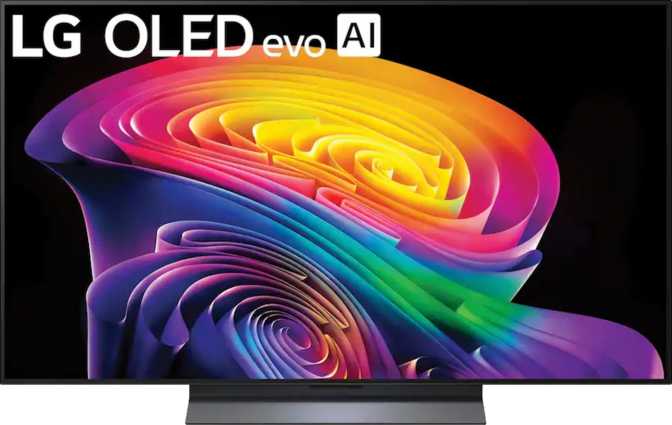
Before discussing what this television does, it is worth being direct about what it is physically. Spanning just over 72 inches wide and nearly 41 inches tall, the OLED83C6HUP dominates any wall it occupies. At roughly 73 pounds without a stand, this is a two-person installation at minimum — ideally with professional mounting assistance if you are planning a wall-mount setup.
LG has kept the chassis proportionally slim for a display of this size, with depth that prevents the panel from jutting awkwardly into the room. The bezels are minimal — the image begins almost immediately at the panel's physical edge, an effect that becomes genuinely striking once the set is on. VESA mounting standards are supported, making third-party wall bracket compatibility straightforward for professionals who need precise placement control.
Temperature and Environment Considerations
This panel is rated for operation between 0°C and 40°C (32°F to 104°F), which covers virtually all indoor living spaces. Take note if you are considering placement in a sunroom, garage conversion, or any environment where temperatures regularly climb above comfortable room levels. OLED panels are not inherently fragile, but sustained heat exposure shortens the lifespan of any display electronics.
Display Performance: Where OLED Does What LCD Cannot
Why Self-Emissive Technology Changes Everything
OLED stands for Organic Light-Emitting Diode. Unlike conventional LED-backlit LCD televisions — where a separate backlight illuminates layers of liquid crystal — each pixel in this panel generates its own light and can switch itself completely off. The practical result is black levels that are not merely "very dark." They are the literal absence of light.
Shadow detail in dark scenes, the night sky in a documentary, the contrast between a candle flame and a darkened room — all of these look categorically different on an OLED compared to even a premium LCD, regardless of how many brightness nits that LCD claims. This foundational advantage underpins every other image quality discussion that follows.
Color Depth and Tonal Accuracy
The panel renders over a billion distinct color gradations — approximately 64 times the palette available on a standard 8-bit display. Combined with 10-bit color processing, subtle transitions — a sunrise gradient, skin tones in a close-up, the bloom of light around a window — render with smooth, natural precision rather than the visible banding that appears on lesser panels. This matters most with premium source material: Ultra HD Blu-ray, high-tier streaming services, and HDR-capable gaming consoles.
Viewing Angles and Reflections
The viewing cone extends to 178 degrees both horizontally and vertically before any meaningful color shift or contrast loss occurs. In practice, everyone in the room sees the same image, including those seated at a wide angle on a side sofa. The anti-reflection coating reduces glare from indirect ambient lighting, though no coating neutralizes direct sunlight on a panel of this size. An ambient light sensor adjusts brightness automatically based on room conditions.
HDR Format Support
The most sophisticated HDR standard, using dynamic metadata that adapts color mapping scene by scene or frame by frame. Netflix, Disney+, and Apple TV+ all deliver Dolby Vision content — this is where the C6HUP performs at its best.
The universal HDR baseline. Nearly every HDR source supports it. The C6HUP handles it reliably using static metadata — a dependable fallback for content not encoded in Dolby Vision.
The broadcast HDR standard for live television and select streaming. Relevant for cord-cutters using the built-in tuner or an over-the-air antenna for HDR broadcast reception.
Motion, Response, and Gaming Performance
The 120Hz refresh rate means the panel can display up to 120 distinct frames per second — double what most broadcast content provides and the target for high-performance gaming on current-generation consoles and gaming PCs. The response time is essentially instantaneous: because each pixel switches itself on and off independently rather than waiting for a backlight response, there is virtually no motion blur originating from the display itself. Fast action sequences, sports content, and competitive gaming all benefit visibly.
- Nvidia G-Sync compatible — eliminates screen tearing on PC gaming setups without input lag penalties
- AMD FreeSync Premium — variable refresh rate support for AMD GPUs and compatible consoles
- All 4 HDMI ports run at HDMI 2.1 bandwidth — 4K at 120Hz on every single input simultaneously
- PS5 and Xbox Series X connect at full next-generation capability on any port — no dedicated "gaming" port required
- 0.1ms response time — the display itself contributes no meaningful lag from pixel transition delay
HDMI 2.1 is the only version capable of carrying 4K resolution and 120Hz simultaneously. Older HDMI 2.0 ports cannot do both at once. Having all four ports at this standard means no device is left connecting at reduced capability.
Audio: More Capable Than Most TVs, Less Than a Dedicated System
What's Built In
The C6HUP includes a built-in subwoofer alongside stereo speakers, immediately elevating it above the flat, thin output that plagues most slim televisions. It supports Dolby Atmos processing — the object-based surround format that places audio elements in three-dimensional space — along with Dolby Digital Plus and core Dolby Digital.
For integrated television audio, this is a genuinely strong configuration. Dialogue clarity is solid, and the subwoofer adds weight to action sequences and music that pure satellite speakers cannot match.
Where It Falls Short
Dolby Atmos from a television speaker array cannot physically replicate what the format achieves with overhead speakers or a properly configured soundbar. For casual viewing it performs adequately, but anyone investing in an 83-inch OLED display will likely find that a quality soundbar or AV receiver brings the overall experience to a level built-in speakers simply cannot reach.
DTS formats — including DTS-HD Master Audio — are not supported. Physical media collectors with Blu-ray discs mastered in DTS-HD MA will need to ensure their playback chain handles decoding externally before the signal reaches this TV.
Both HDMI ARC and HDMI eARC outputs are included. The enhanced eARC connection carries lossless Dolby Atmos back to a compatible soundbar or AV receiver — a meaningful inclusion for those building a proper audio system around this display. A 3.5mm headphone output is also present for straightforward private listening.
Smart TV Platform and Connectivity
The Smart Experience
The C6HUP runs LG's built-in smart platform with access to all major streaming services, a web browser, and both Google Assistant and Amazon Alexa voice control. Chromecast is built in, so Android devices and Chrome browsers cast content directly to the TV without additional hardware. AirPlay extends the same convenience to iPhones, iPads, and Macs.
One notable gap: Apple HomeKit and Siri platform integration are not supported. AirPlay content streaming still works from Apple devices, but this TV will not appear as a controllable HomeKit device for home automation scenes and routines — a relevant limitation for households deeply embedded in the Apple ecosystem.
Wireless and Wired Network
Wireless connectivity covers the 2.4GHz band via Wi-Fi 4 and the faster 5GHz band via Wi-Fi 5, handling streaming and smart features adequately for most households. Wi-Fi 6, which improves performance in congested wireless environments with many connected devices, is absent — something worth considering as device counts continue to grow.
Bluetooth 5.3 manages wireless audio to headphones and speakers, remote pairing, and accessory connections. The single Ethernet port provides a wired network connection that remains the recommended choice for stable 4K streaming and low-latency gaming.
Ports and Features Reference
| Feature | Specification |
|---|---|
| HDMI | 4 × HDMI 2.1 — includes HDMI ARC and eARC |
| USB | 2 ports — USB recording to external drives supported |
| Ethernet | 1 × RJ45 wired network port |
| Wi-Fi | Wi-Fi 4 (802.11n, 2.4GHz) + Wi-Fi 5 (802.11ac, 5GHz) |
| Bluetooth | Version 5.3 |
| Headphone Output | 3.5mm audio jack |
| External Memory | Not supported |
| Screen Sharing | Chromecast built-in, AirPlay, Miracast |
| Voice Assistants | Google Assistant, Amazon Alexa |
| Built-in Tuner | DVB-T, DVB-T2, DVB-C, DVB-S, DVB-S2 |
| Warranty | 1 year standard — extended coverage recommended |
Who Is This TV Built For?
- Home cinema enthusiasts with dedicated viewing space who invest in premium source material — Ultra HD Blu-ray, high-tier streaming — and want the best image a self-contained display can produce.
- Console gamers with a PlayStation 5 or Xbox Series X — four HDMI 2.1 ports, sub-millisecond response time, 120Hz, and full VRR support create a genuinely complete next-generation gaming setup.
- Open-plan living rooms with wide seating arrangements benefit from near-complete viewing angle retention — image quality holds even at extreme off-axis positions where other panel types shift noticeably.
- Existing soundbar owners with eARC-compatible audio systems will slot this TV into a complete home theater setup without any audio signal quality compromise.
- Bright sunlit rooms where direct sunlight regularly strikes the screen. High-brightness mini-LED LCD displays handle that condition far better — OLED's black level advantage requires darkness to appreciate fully.
- Casual or budget-conscious viewers primarily watching broadcast TV and standard streaming. The C6HUP's capabilities far exceed what everyday viewing requires — the investment is disproportionate for non-critical use.
- Apple HomeKit households wanting the TV to appear as a controllable device within HomeKit scenes and automations. AirPlay works, but platform-level HomeKit integration is not supported.
- Small viewing rooms with under six feet of viewing distance. At 83 inches, the screen becomes physically overwhelming at close range — a 65 or 77-inch model fits those proportions far more comfortably.
How It Compares to the Alternatives
Placing the OLED83C6HUP in competitive context requires honest acknowledgment that no single display technology wins every scenario. The trade-offs below reflect genuine engineering differences, not marketing positioning — knowing where each type excels is what leads to the right purchase.
| Feature | LG OLED83C6HUP | 77" OLED (Same Line) | 83" Mini-LED LCD | 100"+ Large Format |
|---|---|---|---|---|
| Black Level | True Black | True Black | Near-black with dimming | Technology dependent |
| Peak Brightness | Moderate | Moderate | Very High | High |
| Response Time | 0.1ms | 0.1ms | ~1–5ms typical | Varies |
| HDMI 2.1 Ports | All 4 Ports | All 4 Ports | Typically 2–4 | Often 1–2 |
| G-Sync / FreeSync | Both Supported | Both Supported | Often limited | Rarely available |
| Bright Room Use | Moderate | Moderate | Excellent | Good |
| HDR10+ | Not Supported | Not Supported | Often Included | Varies |
| Viewing Angle | 178° / 178° | 178° / 178° | Panel dependent | Varies |
Honest Assessment: Strengths and Weaknesses
The OLED83C6HUP earns its position on the strength of its panel. The image quality it produces for film, premium streaming, and high-fidelity gaming is genuinely difficult to fault in a light-controlled room. Pixel-level contrast — the ability of each individual screen point to be fully on or completely off — produces a result that backlit displays cannot replicate, regardless of how many local dimming zones they claim.
The gaming specification is a complete package. Four HDMI 2.1 ports means every modern device connects at full capability simultaneously — a meaningful differentiator over televisions that limit HDMI 2.1 bandwidth to just one or two inputs. VRR through both major adaptive sync standards, combined with a response time the human eye cannot meaningfully resolve, makes this one of the few televisions where the display's capabilities genuinely outpace what current gaming hardware can demand of it.
The absence of HDR10+ is a real and occasional limitation — particularly for Amazon Prime Video titles and select physical media releases that use that format for their enhanced dynamic metadata pass. Wi-Fi 6 would have strengthened the connectivity story in device-dense homes. The one-year warranty is standard for the category but underwhelming for a display at this scale and price — extended coverage is worth factoring into the overall purchase decision from day one.
The built-in audio performs above the television average, but the scale of an 83-inch display creates an expectation the stereo speaker configuration — even with the included subwoofer — cannot fully satisfy. The built-in speakers are best treated as a functional interim solution until a soundbar or AV receiver is added, which is the correct long-term path for any serious investment in a display of this caliber.
Common Questions Before Buying
Final Verdict
LG OLED83C6HUP — Our Recommendation
The LG OLED83C6HUP is the right television for buyers who have made a deliberate, informed decision to prioritize image quality and large-screen presence without compromise. It delivers the best static and dynamic contrast available from a production-volume display technology, paired with a gaming specification that covers every current-generation requirement, streaming format support spanning all three major HDR standards in active use, and multi-device connectivity that genuinely matches the display's overall caliber.
Where it asks for accommodation is in room conditions — light control amplifies its strengths significantly and removes its only real environmental vulnerability — in audio, where an external system is the correct long-term complement, and in a connectivity specification that Wi-Fi 6 and HDR10+ would have completed more thoroughly.
and serious gaming
or limited budget
Know your room and know your habits. If both align with what this display offers, very little in its category competes with what the OLED83C6HUP achieves.