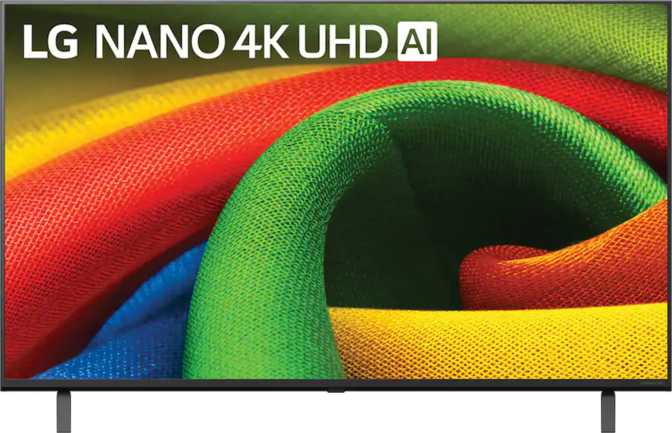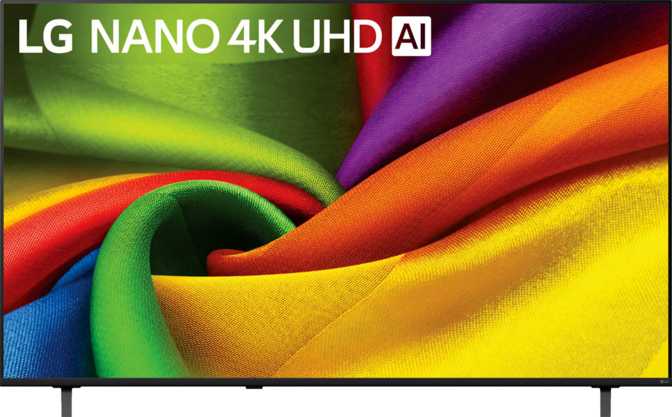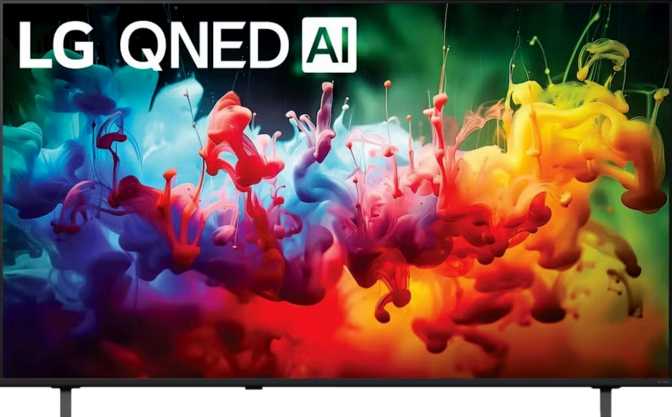
LG 85QNED75BAA 85-Inch 4K TV: Full Review and Honest Verdict
TVsThere's a particular sweet spot in the TV market that doesn't get enough attention — the space between entry-level 4K panels and the premium OLED tier. The LG 85QNED75BAA lives squarely in that territory: a large-screen television built around Mini-LED backlighting technology that makes an unmistakable statement in any room. Size and marketing language only tell part of the story. This review breaks down exactly what you're getting, who the QNED75 suits best, and where it asks you to compromise.
Jump to Section
Display Technology: What Mini-LED Actually Means
The QNED75 uses a Mini-LED backlight system layered beneath an LCD panel. Traditional LCD televisions use a relatively small number of LEDs behind the screen to produce light — the fewer the zones, the blunter the contrast. Bright scenes look fine, but dark scenes often look washed out or "bloomy" around bright objects. Mini-LED backlighting dramatically increases the number of individual light zones, allowing the TV to illuminate bright areas precisely while keeping darker sections of the same image genuinely dim. The result is noticeably punchier contrast than standard LED-backlit LCDs, and more visible depth in nighttime scenes, starfields, and cinematic content with mixed lighting.
Context matters: This is not OLED — individual pixels cannot go completely dark — but it is a meaningful step above a conventional LCD at this price and size point. Think of it as a middle tier: better than standard LED, not as pixel-precise as OLED or QD-OLED.
Resolution at 85 Inches: Does 4K Still Look Sharp?
At 3840 × 2160 pixels spread across an 85-inch panel, the pixel density is approximately 52 pixels per inch. At a typical sofa-to-TV viewing distance of 8–10 feet, this is more than sufficient for the human eye to lose individual pixels entirely. Native 4K content presents as clean and detailed with no visible jaggedness. Where this figure becomes a consideration is for buyers who sit unusually close or who plan to use this display for desktop computing — in those contexts, the density is moderate rather than exceptional. For living room TV use, it is a non-issue.
The 60Hz Refresh Rate: Critical Context for Gamers
The panel refreshes at 60 frames per second. For streaming movies, broadcast television, and casual gaming, this is perfectly adequate — almost all content is produced and delivered at 24, 30, or 60 frames per second anyway.
Color Depth and HDR Format Support
The 10-bit panel processes approximately 1.07 billion individual colors. In practice, this eliminates visible "banding" in gradients — sunsets, skin tones, and subtle sky transitions all render smoothly rather than stepping between visible color bands. This is the correct specification for consuming 4K HDR content. The HDR format support, however, is an area where informed buyers should pay close attention before purchasing:
| HDR Format | Supported | Key Platforms and Use Cases |
|---|---|---|
| HDR10 | Yes | Universal — all major streaming platforms, Ultra HD Blu-ray, and games consoles |
| HLG | Yes | Live broadcast and satellite HDR television channels |
| HDR10+ | No | Amazon Prime Video — content falls back to standard HDR10 |
| Dolby Vision | No | Netflix, Apple TV+, Disney+ — content falls back to standard HDR10 |
For most viewers the HDR10 fallback difference is subtle and context-dependent. For HDR enthusiasts or those who have invested in an Apple TV 4K specifically for Dolby Vision output, this omission is worth factoring into the decision.
Viewing Angles: A Genuine Wide-Room Advantage
The near-180-degree horizontal and vertical viewing angle specification reflects LG's use of an IPS-type panel in the QNED range. IPS-type panels genuinely maintain color accuracy and contrast for viewers sitting at angles from center — the trade-off is that peak contrast depth is lower than VA-type panels. For wide living rooms where multiple viewers sit at strong angles to the screen, this IPS characteristic is a real advantage over most competing VA-panel sets at this price tier.
Anti-Reflection Coating and Ambient Light Adaptation
An anti-reflection coating on the screen surface diffuses ambient light rather than mirroring it directly into the viewer's eyes. In brightly lit living rooms or rooms with windows, this noticeably reduces the kind of glare that makes an expensive television look like a cheap one. The built-in ambient light sensor reads room conditions and automatically adjusts screen brightness — a panel that looks correctly bright at noon steps down to comfortable levels for nighttime viewing without any manual adjustment required.
Connectivity: Ports, Wireless, and Casting Options
Wired Connections
-
3× HDMI 2.1 ports
Connect a console, streaming device, and Blu-ray player simultaneously. One port supports eARC for lossless audio output to a soundbar.
-
1× Ethernet (RJ45)
Wired network connections eliminate streaming variability. This should be the default setup whenever a wired run is practical.
-
1× USB port
Used for USB recording or media playback. A single port is functional but not generous — a USB hub resolves the limitation if multiple devices are needed.
Wireless and Casting
-
Wi-Fi 5 (802.11ac), dual-band
Fast enough for 4K HDR streaming under normal home network conditions. Wi-Fi 6 is absent, a minor point for very congested networks.
-
Bluetooth 5.3
Current-generation standard for stable wireless audio connections — ideal for late-night headphone listening without disturbing others.
-
Chromecast Built-in + AirPlay
Both ecosystems covered in a single panel. Any device with a Cast button or an Apple device with AirPlay can send content directly to this TV.
-
Miracast
Direct screen mirroring from Android phones and Windows laptops — no router required for this connection path.
Missing port: There is no 3.5mm headphone jack. Late-night listening requires a Bluetooth headset or an external workaround through another device. This is an increasingly common omission on large televisions but worth noting for households that rely on wired headphones.
Smart TV Experience: webOS and Platform Intelligence
The QNED75 runs LG's webOS smart TV platform — one of the more mature and refined operating systems in the category. The interface is fast relative to budget smart TV alternatives, app availability is broad, and the launcher bar remains one of the cleaner navigation experiences at this price tier.
Google Assistant
Full integration via built-in mic in remote
Amazon Alexa
Voice control and smart home integration
Chromecast Built-in
Cast from any compatible Android or browser app
AirPlay 2
Stream from iPhone, iPad, and Mac natively
No Siri or Apple HomeKit: While AirPlay works for content casting from Apple devices, this TV does not integrate into an Apple Home setup for automation or Siri voice control. Apple ecosystem households should note this distinction.
USB Recording and Live TV DVR
When a USB storage device is connected, the QNED75 records live broadcast television directly to that drive — and supports pausing live TV in this mode. This is a feature that rarely appears in competing sets at this price tier and provides genuine DVR-like functionality without a separate set-top box. The integrated tuner handles all major broadcast delivery formats:
Full tuner coverage means the QNED75 works as a plug-and-play set for antenna, cable, or satellite connections in most regions without requiring a separate receiver.
Audio Performance: Built-In vs. External Setup
The built-in speaker system is a stereo configuration with support for Dolby Atmos decoding and Dolby Digital Plus. This means the TV can take an incoming Dolby Atmos audio stream and render a virtualized spatial audio experience through its internal speakers. That is a meaningful capability on paper, but the physical constraints of a flat panel cabinet impose a ceiling on what any built-in TV speaker can deliver.
Built-In Audio Formats
- Dolby Atmos (virtualized)
- Dolby Digital Plus
- Dolby Digital
- Stereo speakers
- No built-in subwoofer
External Audio Path
- HDMI ARC (Audio Return Channel)
- HDMI eARC (full lossless audio)
- Digital optical out
- Bluetooth 5.3 headphone connection
- No 3.5mm headphone jack
For casual daytime viewing the internal speakers are serviceable. For movie nights where audio quality matters, the HDMI eARC connection to an external soundbar or AV receiver is where this television's audio potential is truly realized. A dedicated soundbar is a recommended companion purchase for this panel.
Physical Dimensions and Installation Requirements
At nearly 1.9 meters wide and approximately 30 kilograms without packaging, the QNED75 is a television that demands respect during installation. Two people are strongly recommended for wall-mounting or stand placement. The cabinet depth of just under 75mm is thin enough for a contemporary aesthetic while thick enough to house the Mini-LED backlight assembly.
| Specification | Value | Practical Implication |
|---|---|---|
| Width | 188.98 cm | Requires a minimum wall or console span of approximately 2 meters for safe clearance |
| Height (with stand) | 108.71 cm | Stand height combined with furniture determines sightline comfort — measure before purchase |
| Depth | 7.37 cm | Will not flush-mount to a wall bracket; a small gap is standard for LED-backlit LCD panels |
| Weight | ~30.3 kg | A heavy-duty, weight-rated VESA mount and studfinder are essential — this is not a light install |
| Operating Temperature | 5°C – 35°C | Not suitable for sunrooms, garages, or environments with extreme temperature swings |
Recommended viewing distance: For an 85-inch 4K panel, the sweet spot is roughly 7 to 11 feet from the screen. Shorter distances can feel overwhelming; greater distances begin to undermine the value of a large screen.
Who Should Buy the LG 85QNED75BAA — and Who Should Not
- Want the largest practical living room screen without crossing into OLED pricing territory
- Watch a mix of 4K streaming, broadcast TV, and movies in a room with moderate to good light control
- Have multiple source devices to connect simultaneously across three HDMI ports
- Use a mix of Apple and Android devices and need Chromecast and AirPlay in a single television
- Plan to add a soundbar or AV receiver and want a clean HDMI eARC audio setup
- Watch live TV and want built-in USB recording without a separate DVR box
- Need 120fps gaming — the 60Hz panel ceiling is fixed regardless of console capability or HDMI version
- Require Dolby Vision — Apple TV+, Netflix, and Disney+ all serve significant Dolby Vision libraries that fall back to standard HDR10 here
- Watch primarily in a very dark room and want near-perfect black levels — an OLED panel outperforms any Mini-LED LCD in cinema-style environments
- Need more than one USB port for connected peripherals without adding a hub
- Are building an Apple HomeKit smart home ecosystem — this TV supports AirPlay but not Siri or HomeKit integration
How the LG QNED75 Compares to Its Main Rivals
At 85 inches the QNED75 competes primarily with Samsung's QLED lineup and TCL's Mini-LED range. Understanding the trade-offs each panel makes helps clarify whether LG's position is the right fit for your priorities.
| Feature | LG QNED75 (This TV) |
Samsung QLED (QN85B tier) |
TCL 6-Series (Mini-LED tier) |
|---|---|---|---|
| Backlight Technology | Mini-LED | QLED / Mini-LED (QN90B+) | Mini-LED (QLED) |
| Panel Type | IPS (wide angles, moderate blacks) | VA (deeper blacks, narrower angles) | VA (deeper blacks, narrower angles) |
| Refresh Rate | 60Hz | 120Hz (most models) | 120Hz |
| Dolby Vision | No | No | Yes |
| AirPlay + Chromecast | Both | AirPlay only | Chromecast only |
| Smart Platform | webOS (fast, refined) | Tizen (fast, feature-rich) | Roku TV or Google TV |
| USB Recording | Yes | No (most models) | No |
The LG QNED75's IPS panel advantage in wide-room seating scenarios is offset by Samsung's 120Hz support for gaming-focused households. TCL's competitive pricing often appeals on value grounds, though LG's webOS platform and dual casting support (Chromecast plus AirPlay in a single unit) is genuinely rare and justifies the premium for multi-ecosystem households.
Questions Real Buyers Ask Before Purchasing
Final Verdict
A Well-Rounded Large-Screen TV for the Right Buyer
The LG 85QNED75BAA earns its position through a combination of genuine Mini-LED contrast performance, an exceptionally versatile smart platform, and a level of ecosystem flexibility — Chromecast plus AirPlay in a single device — that most rivals cannot match at this size. For households centered on streaming, broadcast viewing, wide-room seating, and cross-platform casting, this television delivers meaningfully more than standard LED competition and does so with one of the more polished software experiences in the category.
The limitations are real and specific: the 60Hz panel is a firm constraint for gaming households expecting 120fps output, and the absence of Dolby Vision will matter to dedicated HDR enthusiasts who consume Apple TV+, Netflix, or Disney+ content at the highest available quality tier. Neither compromise is hidden — they simply define who this television is designed for.
The one-year warranty reflects the category standard for large-display electronics. Buyers are advised to consider extended coverage through the retailer given the size and complexity of the panel.
Overall Rating
Full Specification Reference
| Screen Size | 84.5 inches (nominal 85″) |
| Resolution | 4K UHD — 3840 × 2160 |
| Panel & Backlight | Mini-LED, LED-backlit LCD |
| Pixel Density | 52 ppi |
| Bit Depth | 10-bit |
| Display Colors | 1.07 billion |
| Refresh Rate | 60Hz |
| HDR Support | HDR10, HLG |
| Adaptive Sync | AMD FreeSync, FreeSync Premium |
| Viewing Angle | 178° horizontal / 178° vertical |
| Anti-Reflection | Yes |
| Ambient Light Sensor | Yes |
| HDMI | 3× HDMI 2.1 (1 with eARC) |
| USB | 1× USB |
| Ethernet | 1× RJ45 |
| Wi-Fi | Wi-Fi 4 + Wi-Fi 5 (dual-band) |
| Bluetooth | 5.3 |
| Screen Mirroring | Miracast, Chromecast, AirPlay |
| Tuner Standards | DVB-T/T2, DVB-C, DVB-S/S2 |
| Headphone Jack | None |
| Audio Out | Digital optical, HDMI ARC/eARC |
| Smart Platform | LG webOS |
| Voice Assistants | Google Assistant, Amazon Alexa |
| Casting | Chromecast, AirPlay, Miracast |
| USB Recording | Yes (with live pause) |
| Browser | Yes |
| Sleep Timer | Yes |
| Child Lock | Yes |
| Width | 188.98 cm |
| Height | 108.71 cm |
| Depth | 7.37 cm |
| Weight | ~30.3 kg |
| VESA Mount | Yes |
| Operating Temp. | 5°C to 35°C |
| Standby Power | 0.5W |
| Warranty | 1 year |