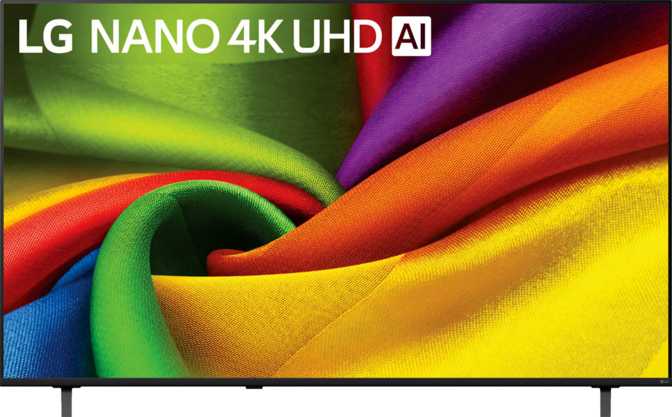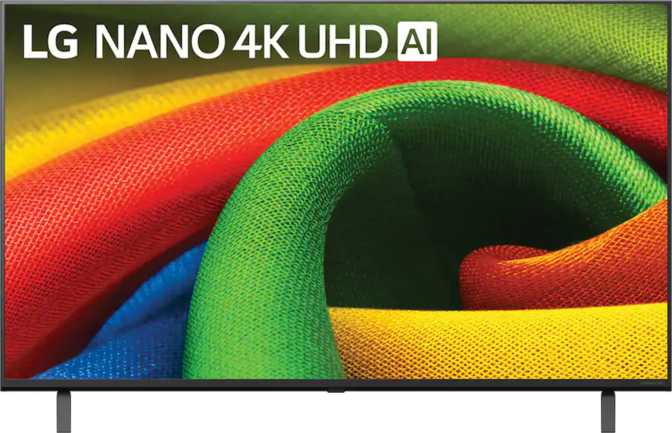
LG 85NU700BPUA 85-Inch 4K TV: An Honest Full Review
TVsThere is a threshold in home cinema where a TV stops being furniture and starts being an experience. At 85 inches, the LG 85NU700BPUA crosses that threshold decisively — this is the kind of screen that halts conversations when guests walk into the room. It targets buyers who want true large-format 4K without committing to OLED pricing, arriving with serious physical presence, a capable smart platform, and a broad feature set. It also carries real trade-offs around refresh rate and HDR coverage that no well-informed buyer should overlook. This review covers every angle honestly.
Best for family living rooms and casual streamers. Not suited for gaming or Dolby Vision content.
Build Quality and Physical Presence
A Screen That Demands Its Own Wall
The 85NU700BPUA measures roughly 187 cm wide and 108 cm tall with its stand — numbers that sound abstract until the box is sitting in your living room. At this diagonal, the ideal viewing distance for 4K content sits between approximately 1.7 and 2.1 meters for full immersion, though most households place seating slightly further back. Too close and pixel structure becomes visible at this panel density; too far and the scale advantage largely disappears.
Wall Mounting
VESA mount compatibility is included, which suits buyers wanting to mount flush to the wall. The panel sits just over 73mm deep at its thickest point — not truly flush, but standard for large-format LED at this price tier. Confirm your wall bracket's VESA pattern before purchasing, and budget for professional installation if needed.
Construction and Weight
At just over 30 kilograms, this is not a solo installation. Budget for a second set of hands at minimum, or hire a professional. The chassis is solidly built for its class — LG's large-format LED panels carry their weight well, and the bezels are appropriately slim without feeling fragile at this scale.
Thermal Considerations
Operating safely between 0°C and 40°C, the TV suits virtually every standard indoor environment. This matters most in home theater cabinetry installations where ventilation can be restricted. The LED backlight runs warmer than an OLED panel, so allow several centimeters of clearance when recessing the unit into built-in shelving.
Display Performance
Resolution and Pixel Density
The 3840 × 2160 pixel count is genuine 4K UHD, distributed across 84.5 inches at roughly 52 pixels per inch. This is far lower than a smartphone display, but precisely calibrated for standard living-room viewing distances. From 2.5 meters or more, images are detailed and clean. At closer ranges, pixel structure becomes visible. In a properly arranged cinema room, the immersive scale is genuinely impressive and the resolution holds up well for the format.
Color Depth and Accuracy
The 10-bit panel drives over one billion distinct colors — roughly 64 times the range of a standard 8-bit display. In practice, this means smooth, continuous gradients in skies, skin tones, and shadows where lesser panels produce visible banding. Sunset scenes, nature documentaries, and cinematic content all benefit noticeably. Color volume satisfies the HDR10 standard, meaning HDR10-mastered content renders fully within this panel's capabilities.
HDR Support — Know Exactly What You Are Getting
This TV supports HDR10 and HLG (Hybrid Log-Gamma). HDR10 is the baseline format for virtually all HDR content on streaming platforms, Blu-ray, and gaming consoles. HLG is the broadcast-oriented format used by over-the-air and cable HDR channels — directly relevant for antenna users and certain cable subscribers.
A growing share of premium streaming content on Netflix, Disney+, and Apple TV+ is mastered in Dolby Vision. That content will play on this TV, but falls back to standard HDR10 rendering — still visually strong, but not the full director-intended grade. For heavy users of these platforms, this is a meaningful long-term consideration.
Refresh Rate: 60Hz in Context
The panel refreshes 60 times per second. For television, film, and standard streaming this is sufficient — movies run at 24fps, broadcast TV at 30 or 60fps, both handled cleanly. Where 60Hz becomes a real limitation is gaming: modern consoles support 120fps on many titles, which this panel cannot display. There is also no adaptive synchronization, meaning screen tearing is possible with variable-framerate sources.
Dedicated gamers should look elsewhere. The 60Hz ceiling and absent VRR support make this a poor primary display for current-generation consoles or gaming PCs.
Viewing Angles and Glare Handling
The 178-degree viewing angles — both horizontal and vertical — essentially eliminate color shift and brightness falloff for anyone seated in front of the screen. For a large-format TV serving rooms where multiple viewers sit at varied positions, this is a practical advantage rather than a marketing figure. Corner-of-the-sofa viewers see virtually the same image as someone centered directly in front.
An anti-reflection coating reduces glare from windows and overhead lights. An ambient light sensor adjusts screen brightness automatically throughout the day. Together, these help the TV perform well in real-world living rooms rather than only in idealized, controlled environments.
Audio: Better Than Expected, With Clear Limits
The Built-In Speaker System
The TV ships with a stereo speaker array and Dolby Atmos processing. Dolby Atmos through built-in TV speakers produces a simulated spatial effect rather than true three-dimensional audio — the latter requires multiple physical speaker units positioned around the room. The result is noticeably wider than standard stereo, and for casual viewing it is genuinely impressive at this screen size.
The absence of a built-in subwoofer limits bass extension. Action sequences and music with strong low frequencies will feel thin. At 85 inches of screen, the audio mismatch is particularly noticeable — plan for a soundbar as part of the purchase budget, not as an optional future upgrade.
Connections for External Audio
Both HDMI ARC and HDMI eARC outputs are present. eARC is the enhanced version that passes full-resolution Dolby Atmos to a compatible soundbar or AV receiver without any quality loss. For buyers adding external audio — strongly advisable at this screen size — the eARC port ensures the best available signal reaches the equipment.
Digital audio output supports older soundbars and receivers via an optical connection. Both Dolby Digital and Dolby Digital Plus decoding are handled natively, covering the audio format used by virtually all streaming services, Blu-ray, and broadcast television without requiring external decoding hardware.
Smart TV Platform and Connectivity
Smart Platform and Voice Control
The NU700BPUA runs a full smart TV platform with an integrated web browser, Chromecast built-in, and AirPlay — covering both Android and Apple ecosystems for casting and screen mirroring. Google Assistant voice control is built in, enabling content search, app launching, and smart home commands through the remote or a paired microphone.
Alexa compatibility and Apple HomeKit/Siri integration are absent. Households embedded in the Amazon smart home ecosystem will find voice assistant integration limited to Google's platform on this TV.
Physical Ports
Two HDMI 2.1 ports handle video input. HDMI 2.1 supports the bandwidth needed for 4K at 60Hz, matching the panel's capabilities, and is backward compatible with all earlier HDMI standards. Two ports is, however, a lean count at this size and price tier. A user with a game console, Blu-ray player, set-top box, and streaming stick will immediately need an HDMI switch — factor that into the total budget.
A single USB port handles both recording and media playback, which can create conflicts when both functions are needed at the same time.
Ports and Wireless at a Glance
-
2×
HDMI 2.1Backward-compatible with all HDMI versions
-
1×
USB PortRecording and media playback
-
1×
Ethernet (RJ45)Wired connection for stable 4K streaming
-
Wi-Fi 5 (802.11ac)Sufficient speed for 4K wireless streaming
-
Bluetooth 5.3Wireless headphones, keyboards, audio devices
Power Consumption and Running Costs
At 210 watts during active use, this TV draws more power than smaller panels simply because the backlight must illuminate nearly twice the area of a 65-inch display. A household watching approximately five hours of television per day will consume roughly 386 kWh from this screen annually — comparable to running a full-size refrigerator for a year. That figure is worth factoring into total cost of ownership, particularly in regions with high electricity rates.
Standby draw is negligible at half a watt — responsible engineering that adds essentially nothing to a quarterly energy bill. The built-in sleep timer powers the TV down automatically after a set period, and the ambient light sensor reduces backlight output in bright rooms, delivering indirect energy savings during daytime viewing.
Who Should Buy the LG 85NU700BPUA?
This TV Is Ideal For
- Family living rooms where multiple viewers sit at varied angles and large screen coverage matters more than close-range sharpness.
- Casual streamers and broadcast viewers consuming Netflix, cable, sports, and standard HDR10 content — the HDR coverage fully serves this use case.
- Mixed Apple and Android households wanting flexible casting from both ecosystems — the combination of AirPlay and Chromecast together is uncommon at this size.
- Buyers upgrading from 55 or 65 inches who want a step-change in room presence without paying OLED prices.
- Cord-cutters with a local antenna who want USB recording of over-the-air programming without a DVR subscription.
This TV Is Not Right For
- Console or PC gamers needing 120fps output or VRR support — the 60Hz ceiling and absent adaptive sync disqualify this as a gaming display.
- Home theater purists wanting the full Dolby Vision grade on Netflix or Apple TV+ — content plays, but the Dolby Vision mastering is lost in translation.
- Small rooms under 4 meters wide — at 85 inches the TV is physically imposing, and close-seated viewers will notice pixel structure in 4K content.
- Audio-first buyers expecting built-in speakers to carry a room — at this screen size, a soundbar is effectively a requirement for a matched experience.
- Multi-device setups needing more than two HDMI connections — two ports is a lean allocation at this price and size tier.
How It Compares to the Competition
The NU700B's clearest competitive advantages are its dual-ecosystem casting support — AirPlay and Chromecast together is a combination many rivals omit — alongside Bluetooth 5.3 and wide viewing angles. Its main competitive gaps are the HDMI port count and absent Dolby Vision tier; Samsung and TCL alternatives at similar pricing often include four HDMI ports and broader HDR format coverage.
| Feature | LG 85NU700BPUA | Typical 85" Rival |
|---|---|---|
| Panel Type | LED-LCD | LED-LCD (standard) |
| Refresh Rate | 60Hz | Often 60Hz; some offer 120Hz |
| HDR Support | HDR10, HLG | HDR10; some add Dolby Vision |
| Smart Platform | Google TV — Chromecast + AirPlay | Varies: Roku, Fire TV, Tizen |
| HDMI Ports | 2 × HDMI 2.1 | Typically 3–4 ports |
| Gaming Features | None (no VRR / ALLM) | Some models offer VRR and ALLM |
| Voice Assistant | Google Assistant built-in | Varies by platform |
| Viewing Angles | 178° H and V | Comparable on similar panel tech |
| Bluetooth | Bluetooth 5.3 | Often 5.0 or 5.2 |
| Warranty | 1 Year | Typically 1–2 Years |
Honest Assessment: Strengths and Weaknesses
What It Does Well
The 178-degree viewing angles are a genuine practical advantage for households, not a marketing figure. AirPlay alongside Chromecast is uncommon at this size and shows real consideration for mixed-device homes. The 10-bit panel produces smooth, natural gradations in daily viewing content, and the anti-reflection coating combined with the ambient light sensor makes this TV tolerable in rooms with natural light — a real-world test many large LED panels fail quietly.
Bluetooth 5.3 enables reliable pairing of wireless headphones for private listening — a useful feature at this screen size. Miracast combined with Chromecast and AirPlay gives this TV the broadest wireless casting compatibility in its class. USB recording of live broadcast television is a genuinely useful cord-cutter feature that many rivals at this price level omit entirely.
Where It Falls Short
Two HDMI ports is genuinely limiting for a TV positioned as a premium home entertainment hub. At this size and price, four ports is a reasonable expectation, and needing an HDMI switch adds cost and setup steps buyers should not face here. This is the NU700B's most frustrating practical limitation in daily use.
The one-year warranty is short for a product in this size category. Repair or replacement at 85 inches and 30-plus kilograms is expensive and inconvenient — extended warranty consideration is worth budgeting alongside the purchase price itself from day one.
The built-in audio is outpaced by the visual scale of the screen. The 60Hz ceiling limits versatility for current-generation gaming. The absent Dolby Vision, manageable today for many viewers, becomes a more meaningful gap as major streaming platforms continue expanding the format across their libraries.
Questions Buyers Ask Before Purchasing
Recommended for Families and Entertainment-Focused Homes
The LG 85NU700BPUA is a confident choice for one specific buyer profile: households that prioritize screen scale, flexible casting across Apple and Android devices, and clean wide-angle viewing for multiple simultaneous viewers — without needing gaming performance or a premium HDR tier. This is a TV built for watching, in the most direct sense. Film, sports, nature documentaries, broadcast television, and standard streaming content all look genuinely impressive at this scale on a well-calibrated 10-bit panel with strong wide-angle performance.
The purchase requires honest acknowledgment of its ceilings: 60Hz refresh, HDR10 as the highest HDR grade, and two HDMI ports as the connectivity limit. None of these disqualify the TV for the right buyer — but anyone expecting 120Hz gaming, Dolby Vision grading, or a four-device entertainment hub will find the compromises outlast the initial excitement of an 85-inch screen. Budget in a soundbar, plan for an HDMI switch if needed, and consider extended warranty coverage beyond the one-year standard included.