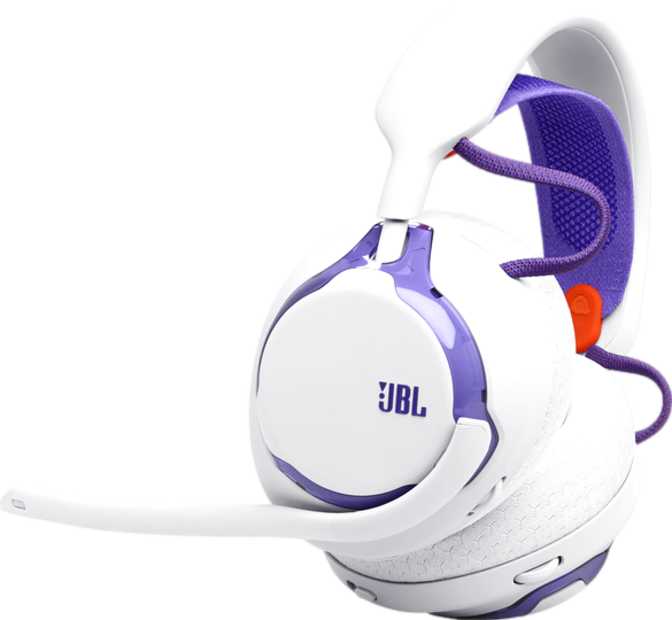
JBL Quantum 650 Review: Multi-Platform Endurance Put to the Test
PC and Gaming HeadsetsThe wireless gaming headset market is crowded with options that promise a lot and deliver just enough. The JBL Quantum 650 takes a different approach — instead of chasing every feature on the checklist, it doubles down on the things that matter most during a five-hour gaming session: comfort, connectivity flexibility, and endurance. Whether you're switching between a PC setup and a PlayStation after work, or grinding through a long weekend on Nintendo Switch, this headset is built to move with you. The question is whether JBL's trade-offs hold up under scrutiny.
Design and Build: Understated, Purposeful, and Heavier Than It Looks
The Quantum 650 wears a restrained look. There's no RGB lighting — not a single LED zone to be found — which will disappoint anyone who wants their headset to match a glowing battlestation, but will appeal to everyone else who prefers not to look like a Christmas tree during a late-night gaming session.
What you get instead is a closed-back, over-ear design that prioritizes acoustic isolation over visual spectacle. Closed-back means sound doesn't leak out significantly, and external noise is physically blocked by the earcup shells rather than electronically suppressed. This is passive noise isolation done through engineering rather than software.
At 331.5 grams, the Quantum 650 sits at the heavier end of the wireless headset spectrum. It's not uncomfortable for most users, but those who wear glasses or have narrower heads may notice fatigue creeping in during sessions longer than two or three hours. It's worth calibrating expectations here: this is not an ultralight headset designed for all-day wear.
Build Highlights
- Closed-back over-ear cups for passive noise isolation
- Detachable, tangle-resistant cable — replaceable if it fails
- USB-C charging port for modern cable compatibility
- On-device earcup controls — no inline remote needed
- 331.5g weight — noticeable during very long sessions
Sound Quality: Wide Drivers, Real-World Performance
The Drivers
Each earcup houses a 50-millimeter dynamic driver. Most consumer headphones ship with drivers in the 30–40mm range. Larger drivers generally have more physical surface area to move air, which tends to produce fuller bass and a broader sense of soundstage. For gaming — especially in titles with deep environmental audio, explosions, and orchestral scores — this physical advantage is meaningful.
The impedance sits at 32 ohms, a consumer-friendly rating. You don't need a headphone amplifier or a high-output audio interface to drive these properly. A PC, PlayStation controller, or phone headphone jack will power them to full volume without strain.
Frequency Response
The headset covers the full range of human hearing: from the lowest bass frequencies to the upper ceiling of what the ear can detect. In practice, this means the headset is spec'd to reproduce everything from the rumble of footsteps below you to the crackle of gunfire above.
Gaming headsets at this tier typically lean toward enhanced bass and vocal clarity in the midrange to make game audio more cinematic. Whether the actual tuning leans that way is where JBL's engineers have made their decisions beyond what raw numbers reveal.
Spatial Audio
Spatial audio processing creates a three-dimensional sound field that helps you locate enemies, track movement, and feel more immersed in a game world — all from a stereo pair of physical drivers. For gaming purposes, effective spatial audio processing can be a genuine tactical advantage in competitive titles and a deeply immersive experience in single-player games.
No Active Noise Cancellation
The Quantum 650 does not include ANC. It relies entirely on passive isolation from its closed earcup design. This isn't catastrophic — a well-fitted closed-back headset blocks a meaningful amount of ambient noise on its own. But if you're gaming in a genuinely loud environment and expect the headset to silence it, you'll need to manage expectations.
Microphone: Noise-Canceling, But Fixed in Place
A single built-in microphone with noise-cancellation processing handles voice pickup. It's designed to focus on your voice while filtering out background sounds — keyboard clicks, household noise, fan hum — that would otherwise bleed into your teammates' audio.
The microphone is not removable. There's no boom arm you can fold away or detach when using the headset for music. It's integrated into the design permanently, which is worth noting if you're sensitive to having a visible mic while using the headset in public or for casual listening.
One microphone also means there's no redundancy — no secondary pickup for wind rejection or enhanced directional audio capture. For casual team communication and online gaming, this is entirely sufficient. For content creation or streaming where microphone quality is a primary concern, this isn't the tool for that job.
Mic Spec Summary
- Count
- 1 Built-in
- Noise Canceling
- Yes
- Removable
- No
- Best For
- Gaming chat
Battery Life: 45 Hours Is the Real Standout Spec
Forty-five hours of wireless playback is exceptional by any standard in this category. Most competing wireless gaming headsets offer somewhere between 20 and 35 hours before needing a charge. The Quantum 650's endurance means that for most users — even those gaming three to four hours daily — a weekly charge is plenty.
A battery level indicator is built in, so you're never caught off guard with a sudden shutdown mid-session. The battery is not user-replaceable, meaning when the cell eventually degrades after years of charge cycles, you're looking at a manufacturer service rather than a quick swap — though this is standard practice across virtually all wireless headsets.
When wireless isn't an option or when the battery is genuinely depleted, the detachable cable lets you continue playing wired while the headset charges over USB-C.
Connectivity: The Quantum 650's Core Selling Point
The Quantum 650 connects in three ways: Bluetooth, USB, and 3.5mm analog cable. This combination is what makes the headset genuinely versatile rather than just nominally multi-platform.
Bluetooth 5.3
10-meter range. Connects to phones, PCs, and consoles wirelessly. Supports two simultaneous device connections via multipoint.
USB-C
Zero-latency audio on PC and PlayStation. Bypasses Bluetooth entirely for the most reliable, lowest-latency gaming audio.
3.5mm Analog
Works universally including Nintendo Switch handheld mode. Enables wired play while charging. No battery required.
Platform Compatibility at a Glance
| Platform | USB | Bluetooth | 3.5mm |
|---|---|---|---|
| PC | |||
| PlayStation | |||
| Nintendo Switch | |||
| Xbox | Unconfirmed |
Who This Headset Is For — and Who Should Look Elsewhere
- Split gaming time between PC and PlayStation and want one headset for both
- Play long sessions and hate charging your headset every other day
- Prefer a cleaner aesthetic with no RGB clutter
- Value a reliable built-in mic that reduces background noise in online play
- Want the flexibility to go wired or wireless depending on the situation
- Primarily play on Xbox — compatibility is not confirmed for that ecosystem
- Game in a genuinely loud environment where active noise cancellation would help
- Care about premium codec support for Bluetooth music listening
- Need an ultralight headset for all-day wear without fatigue
- Need a detachable boom microphone for streaming-quality audio capture
Competitive Context: How It Stands Against Alternatives
At this tier of the wireless gaming headset market, the Quantum 650 competes against options from SteelSeries, HyperX, Razer, and Sony. The battery figure is where it most clearly differentiates itself. The lack of ANC and premium codec support are the concessions made to get there.
| Feature | JBL Quantum 650 | Typical Competitor |
|---|---|---|
| Battery Life | 45 hours | 20–35 hours |
| Active Noise Cancellation | Some have it | |
| Spatial Audio | Varies by model | |
| Bluetooth Codec Support | SBC only | Often aptX or AAC |
| RGB Lighting | Common in category | |
| Platform Support | PC, PS, Switch | Varies |
| Connection Options | BT + USB + 3.5mm | Usually 2 of 3 |
Honest Assessment: Strengths and Where It Falls Short
What It Gets Right
The Quantum 650's strengths are concentrated and genuine. The battery life is class-leading and reduces the friction of wireless headset ownership significantly. The three-connection system with simultaneous multipoint pairing is more flexible than most competitors offer, and the 50mm drivers have the physical foundation for strong gaming audio.
Spatial audio processing adds real value for immersive play, and the no-frills aesthetic means this headset fits equally well on a gaming desk and in a carry bag — no garish lighting to apologize for in other contexts.
Where It Falls Short
The absence of ANC is a meaningful omission for a headset competing at this price level, and the limited Bluetooth codec support signals that the headset was engineered specifically for gaming rather than dual-purpose use as an everyday listening device.
The fixed microphone design is a minor inconvenience but not a dealbreaker for most users. At 331.5 grams, extended comfort is something to consider honestly — this isn't unusually heavy, but it's not light either, and comfort over long sessions is worth weighing if you have prior experience with headset fatigue.
Common Questions Answered
Final Verdict
The JBL Quantum 650 is a focused, well-built wireless gaming headset that earns its place through endurance and versatility rather than feature excess. The 45-hour battery alone puts it ahead of most competitors in practical daily use, and the three-connection system with simultaneous multipoint pairing genuinely solves the multi-platform problem for PC and PlayStation users.
It is not an audiophile Bluetooth headset. It is not a noise-cancellation headset. It is not the right tool for Xbox gaming. But if you split time between PC and PlayStation, play long sessions, and want a headset that largely takes care of itself between charges, the Quantum 650 delivers exactly what it sets out to do — without the unnecessary complexity that inflates price without improving the core experience.