Insta360 X4 Air Full Review: 360 Camera for Serious Creators
Action CamerasThe 360-degree camera market has a focus problem. Most options sit at one of two extremes: bulky, feature-heavy rigs that demand a learning curve, or stripped-down action cameras that barely qualify as 360. The Insta360 X4 Air lands deliberately between those poles — a compact, dual-lens 360 camera that brings serious imaging credentials into a body light enough to forget you're wearing it. Whether you're new to 360 content or upgrading from an older generation, this camera earns a serious look. But it isn't for everyone, and the reasons why are worth understanding clearly before you decide.
Overall Rating
4.2 / 5
Based on full specification analysis
29MP
Dual-Lens Sensor
4K/30
fps Video
180
Mbps Bitrate
15m
Waterproof
165g
Body Weight
~1hr
Removable Battery
Design and Build Quality
Physical dimensions, durability, and weatherproofing
A Body That Disappears Into Your Kit
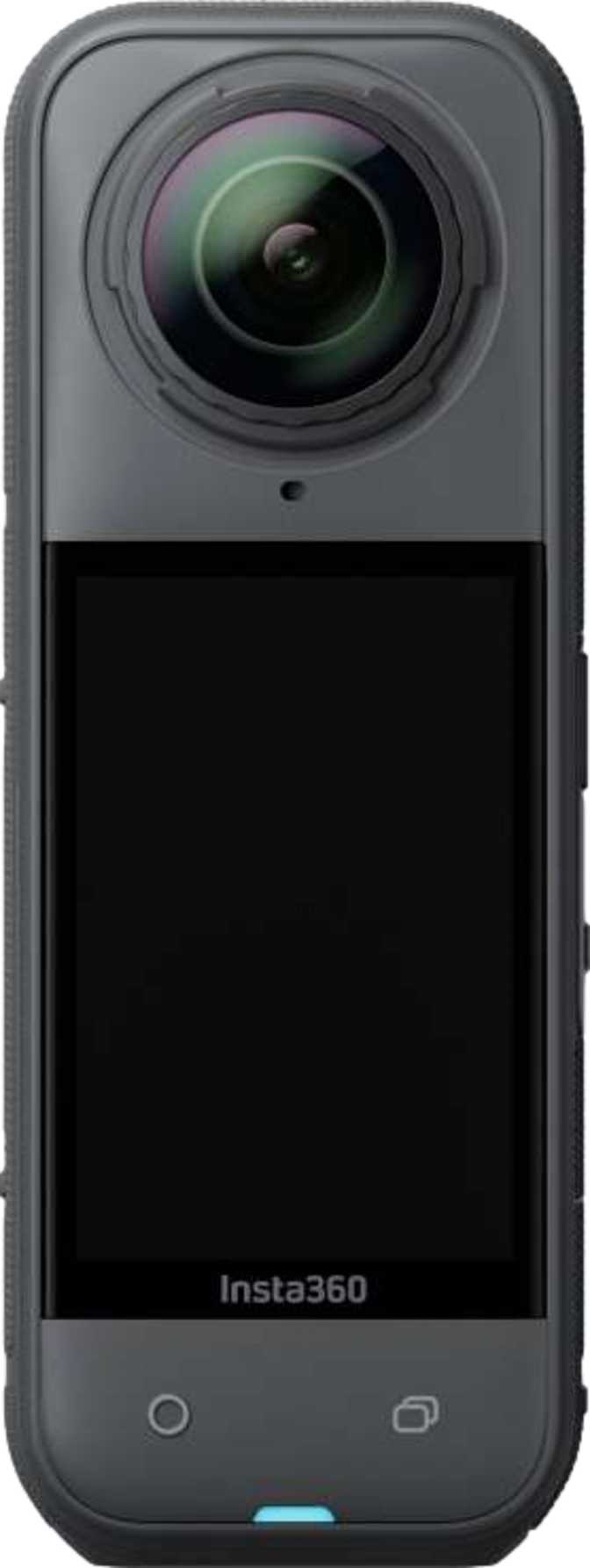
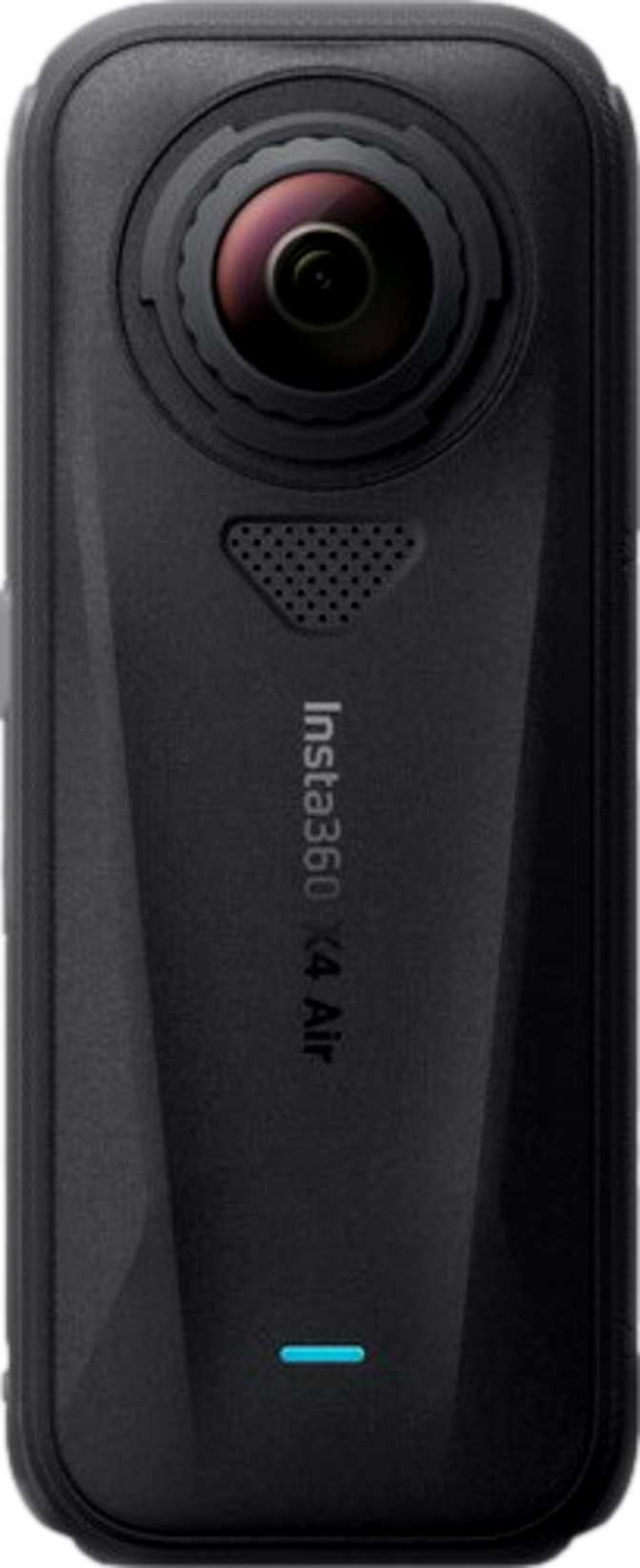
At 165 grams and roughly the size of a thick TV remote, the X4 Air is genuinely pocketable. Its 113.8mm height and 46mm width keep it narrow enough to clip to a bag strap, a helmet mount, or a selfie stick without affecting your balance or center of gravity in any meaningful way. This is notably lighter than most action cameras with a waterproof housing attached — and the X4 Air achieves its weather resistance natively, with no case required.
The 37mm thickness is worth flagging for mount compatibility. It's slimmer than many predecessors in this category, which means it sits lower-profile on a chest harness and creates less wind drag on cycling rigs.
Waterproofing You Can Actually Use
A 15-meter waterproof rating without any additional housing is one of the X4 Air's most practical advantages. That depth covers recreational snorkeling, swimming, kayaking, and rainy-day shooting without a second thought. It's not rated for serious scuba depth, but for the vast majority of water-based adventure use cases, it's more than sufficient. Not needing a waterproof case means you're always ready to shoot — not fiddling with seals and latches at the critical moment.
The operating temperature range extends from -20°C at the cold end to 40°C at the upper limit. That cold-weather figure is significant: most consumer electronics become unreliable around freezing point. The X4 Air's ability to function in deep winter conditions — ski slopes, winter hikes, northern climates — makes it genuinely versatile across seasons.
The Touch Screen Experience
The touch screen handles navigation, framing, and settings access directly on the camera body. There is no secondary or flip-out screen. For 360 shooting, this matters less than it might on a conventional camera, since every direction is captured simultaneously. Framing and composition happen in post, or through the connected smartphone app, which functions as a full wireless viewfinder and remote.
| Height | 113.8 mm |
| Width | 46 mm |
| Thickness | 37 mm |
| Weight | 165 g |
| Waterproof Depth | 15 m (native) |
| Operating Range | -20°C to 40°C |
| Touch Screen | Yes |
| Memory Card Slot | Yes |
| Internal Storage | None |
| Gyroscope | Yes |
Image Quality and Optics
Sensor technology, resolution, aperture, and low-light performance
Two Lenses Working as One
The X4 Air uses a dual-lens system — two wide-angle lenses mounted back-to-back — to capture the full 360-degree sphere around the camera. The 170-degree field of view per lens, combined with spherical stitching, creates seamless spherical imagery. This means true 360 coverage: you can reframe any direction after the fact, in editing, without committing to a framing decision at the time of shooting.
The main camera resolves at 29 megapixels. That resolution is what enables smooth reframing — when you crop a 360 sphere down to a standard widescreen frame, you need substantial pixel density to maintain sharpness in the output. At 29MP, the X4 Air preserves enough detail that final edited clips look clean even after significant digital zoom or reframe.
Low-Light Capability
The f/1.95 aperture is wide for a 360 camera. Wider apertures let in more light, which translates directly to better performance when natural light drops. The back-side illuminated (BSI) CMOS sensor design improves the way light is captured at a hardware level, reducing noise in challenging conditions. The ISO ceiling is a respectable figure for the category — it won't match full-frame mirrorless cameras in near-darkness, but for dawn, dusk, indoor ambient, and overcast outdoor shooting, the combination of lens aperture and sensor design holds up well.
HDR mode is built in and works across both photo and video capture, helping preserve detail in high-contrast scenes — bright sky against shadowed ground, for example — where a standard exposure would either blow out the highlights or lose shadow detail entirely.
Manual Control for Serious Shooters
Full manual override is available for ISO, shutter speed, and white balance. This matters because auto exposure systems on 360 cameras can make inconsistent decisions across the two lenses, creating visible exposure mismatches at the stitch line. Manual control lets experienced shooters lock exposure across both lenses for consistent, predictable results — essential for professional deliverables, hyperlapse sequences, or any situation where auto exposure drift would ruin a shot.
| Resolution | 29 MP |
| Aperture | f/1.95 |
| Sensor Type | BSI CMOS |
| Field of View | 170° |
| Max ISO | 3200 |
| HDR Mode | Yes |
| Manual ISO | Yes |
| Manual Shutter | Yes |
| Manual White Bal. | Yes |
Video Performance
Resolution, bitrate, stabilization, autofocus, and cinematic features
4K at the Core
The X4 Air records at 4K — 3840-pixel horizontal resolution — at 30 frames per second as its primary output. 4K is the professional delivery standard for streaming, social platforms, and editorial workflows, and 30fps is the natural cadence for most online content. The video bitrate reaches 180 Mbps, representing how much image data is captured per second. Higher bitrates preserve more detail, especially during fast motion or complex scenes with lots of texture. 180 Mbps puts the X4 Air in a category typically associated with professional tools — most consumer action cameras operate well below this threshold — and it means footage holds up better when edited, color-graded, or compressed for delivery.
Cinema Mode and Frame Rates
A 24p cinema mode gives the X4 Air access to the traditional cinematic frame rate that produces the characteristic motion cadence associated with film. For creators producing narrative content, branded videos, or any work aiming for a more deliberate, filmic aesthetic, 24p is essential to have available.
Stabilization and Autofocus
The built-in gyroscope feeds the stabilization system, delivering horizon leveling — the camera electronically corrects for tilt and lean so footage stays level even when the camera body moves. For active shooting on a bike, surfboard, or body harness, this matters enormously. Shaky, tilted footage immediately reads as amateur; horizon leveling is one of the most impactful features for viewer comfort.
Phase-detection autofocus is available during video recording, complemented by continuous autofocus and subject tracking. Phase detection — the same focusing technology used in high-end interchangeable-lens cameras — is significantly faster and more accurate than contrast-detect systems. It locks focus quickly and maintains it, which is critical for moving subjects in 360 content where the subject might pass through different areas of the frame.
The Invisible Selfie Stick Effect
When the X4 Air is mounted on a selfie stick or monopod, the stick itself can be digitally removed from the final footage in post-processing. The result looks like the camera is floating in space, creating impossibly smooth, dynamic footage that would require a professional drone or stabilizer rig to replicate with a conventional camera. For solo creators documenting travel, sport, or outdoor adventure, this changes what content is achievable without a second person or additional equipment.
Timelapse
Timelapse mode allows the camera to compress extended scenes into short clips. Combined with the 360 field of view, this opens up creative options — a timelapse of a busy intersection can be reframed in any direction during editing, effectively giving you multiple timelapse perspectives from a single recording session.
| Max Resolution | 4K (3840px) |
| Max Frame Rate | 30 fps |
| Video Bitrate | 180 Mbps |
| Field of View | 170° |
| Cinema Mode | 24p |
| Horizon Leveling | Yes |
| Autofocus Type | Phase-detect |
| AF Tracking | Yes |
| Timelapse | Yes |
| Invisible Selfie Stick | Yes |
| Live Streaming | Yes |
Memory Card Requirement
At 180 Mbps, one hour of 4K footage consumes approximately 80 gigabytes. A 128GB card covers one full battery cycle with margin; 256GB gives comfortable headroom across multiple battery swaps. No memory card is included.
Battery Life and Power
Runtime, charging options, and practical field management
The One-Hour Reality
The X4 Air carries a removable battery with approximately one hour of active recording life per charge. This is the most significant operational constraint of the camera and deserves honest treatment: if you're planning multi-hour sessions — a full day of skiing, a long hike, an all-day event — you will need multiple batteries. Treat spare cells as a non-negotiable accessory purchase, not an optional extra.
The removable battery design is a genuine advantage over cameras with sealed, built-in cells. You can carry two or three spare batteries in a jacket pocket and swap them in seconds, effectively extending your day to however many batteries you're willing to carry. This approach is faster than waiting for a charge and more practical in the field than hunting for a power outlet.
There is no wireless charging, so recharging happens over USB-C. The USB implementation is USB 3.0, meaning fast data transfers when offloading footage — a practical benefit given that high-bitrate 4K 360 video files accumulate quickly in size.
The camera includes a battery level indicator, so you're never guessing when to swap. Running out of battery mid-shot without warning is one of the more frustrating field experiences; a clear, visible charge indicator prevents it entirely.
| Capacity | 2010 mAh |
| Runtime | ~1 hour |
| Removable | Yes |
| Charging Port | USB-C 3.0 |
| Wireless Charging | No |
| Level Indicator | Yes |
Connectivity and App Integration
Wireless standards, smartphone control, audio, and what's missing
Wi-Fi and Wireless Control
Wi-Fi 6 (802.11ax) is the top-tier wireless standard available here, alongside Wi-Fi 5 and Wi-Fi 4 backward compatibility. The practical benefit of Wi-Fi 6 is faster transfer of large video files to a connected smartphone and more stable connections in congested wireless environments. If you're offloading footage from a location with many competing wireless devices — a sporting event, a crowded venue — Wi-Fi 6 handles that environment more gracefully than older standards.
Bluetooth 5.2 handles the persistent low-energy connection between the camera and the companion smartphone app, enabling remote control, settings adjustment, and live preview without draining the camera's battery. The architecture is clean and efficient: Bluetooth for control, Wi-Fi for data transfer.
Remote smartphone control is fully supported on both Android and iOS. The companion app functions as a viewfinder, settings panel, and editing starting point — you can review footage, trim clips, and export directly from the phone without touching a desktop.
Live Streaming
First-party live streaming support is built in. The X4 Air can broadcast directly to compatible platforms without requiring an additional capture card or encoder device. For creators who want to stream live events or experiences in real time, this is a meaningful native capability — not a workaround.
What's Missing from Connectivity
There is no GPS module. Location tagging for footage has to happen through the companion smartphone app, introducing dependency on your phone's location services. For most recreational users this is a non-issue; for mapping, geolocation workflows, or travel documentation where precise GPS metadata has editorial value, it's worth knowing upfront.
There is no HDMI output, no 3.5mm microphone input, and no NFC. The external microphone limitation is the most practically relevant: the built-in stereo microphone captures serviceable audio, but there is no path to an external lavalier or boom microphone via the camera body itself. Creators with demanding audio requirements — interviews, documentary work, event coverage — will need to record audio separately.
| Wi-Fi | Wi-Fi 4 / 5 / 6 |
| Bluetooth | 5.2 |
| USB | Type-C 3.0 |
| Android Support | Yes |
| iOS Support | Yes |
| Live Streaming | Yes |
| Built-in Stereo Mic | Yes |
| 3.5mm Mic Input | No |
| HDMI Output | No |
| GPS | No |
| NFC | No |
Who This Camera Is For
Real-world use cases and honest limitations by shooter type
-
Solo Adventure Creators
The invisible selfie stick effect and 360 reframing are built for this — angles impossible with a traditional camera, achievable alone without extra crew or equipment.
-
Travel Documentarians
One camera captures every direction simultaneously. Shoot first, frame later — no more choosing where to point the lens in the moment.
-
Action Sports Participants
Cyclists, skiers, surfers, and hikers get hands-free stabilized footage that holds up in physical conditions and 15 meters of water.
-
Social Content Creators
Regularly producing short-form video? 360 reframing and cinematic 4K output give you maximum flexibility in the edit from a single shooting session.
-
Prepared Shooters With Spare Batteries
Short battery life is manageable with preparation. It only becomes a problem if you treat this camera as if it has all-day endurance built in.
-
You Need Built-In GPS
For mapping, geolocation workflows, or footage with precise GPS metadata, competing cameras have a clear advantage this model doesn't offer.
-
Professional Audio Is Core to Your Work
No 3.5mm microphone input means no external lavalier or boom. For interviews or documentary work, plan to record audio on a separate device.
-
You Shoot Primarily in Near-Darkness
For truly demanding low-light conditions, a larger-sensor camera will outperform what any compact 360 can achieve at this body size.
-
You Expect Multi-Hour Battery Life
Without spare batteries in your kit, this camera becomes limiting quickly. One hour per charge is the operational reality.
-
You Have No Interest in 360 Content
If conventional-perspective video is all you need, the 360 format's creative possibilities won't justify the trade-offs inherent to this camera design.
Competitive Positioning
How the X4 Air stacks up across the 360-camera market spectrum
| Feature | Entry-Level 360 | Insta360 X4 Air | Premium 360 |
|---|---|---|---|
| Video Resolution | 4K or below | 4K (3840px) / 30fps | 5.7K–8K |
| Video Bitrate | 60–100 Mbps | 180 Mbps | 200+ Mbps |
| Waterproofing | 0–5m (often needs housing) | 15m native | 10–15m native |
| Battery | 45–75 min, often sealed | ~1hr, removable | 60–90 min, removable |
| Body Weight | 100–150g | 165g | 170–200g+ |
| Manual Controls | Limited or none | Full (ISO, SS, WB) | Full |
| Wi-Fi Standard | Wi-Fi 4–5 | Wi-Fi 6 | Wi-Fi 5–6 |
| Autofocus System | Contrast-detect or fixed | Phase-detect + tracking | Phase-detect |
| Live Streaming | Sometimes | ||
| Built-in GPS | Sometimes | Often yes |
The X4 Air's positioning is clear: it delivers bitrate and control depth closer to premium-tier cameras, in a body closer to entry-level weight. The absence of GPS and external audio are the two areas where premium alternatives maintain an edge. For image and video quality metrics, the X4 Air holds its own against cameras at considerably higher price points.
Honest Assessment
Where the X4 Air genuinely excels and where it falls short
What It Gets Right
The X4 Air's most compelling quality is its combination of serious imaging capability with a body that genuinely disappears during use. A video bitrate at 180 Mbps, full manual control, phase-detection autofocus, a wide-aperture BSI sensor, and 15-meter native waterproofing together represent a specification set that would have been considered premium-only a generation ago. That these features now arrive at sub-200-gram weight speaks to how mature this camera category has become.
The invisible selfie stick feature deserves special mention as something that actively changes what content is possible. Solo creators who previously needed a second person, a drone, or elaborate rigging to achieve certain shots can now do it alone with a stick and this camera. That is a genuine creative unlock, not a marketing checkbox.
Wi-Fi 6 connectivity, Bluetooth 5.2 control, and phase-detection autofocus represent specifications where the X4 Air punches well above its weight class. The removable battery, while limited in runtime, means the limitation is solvable with preparation: spare cells in your kit turn a one-hour camera into an all-day camera.
Where It Falls Short
The weaknesses are real and deserve plain statement. One hour of battery life demands an operational mindset shift: this is a camera you plan for, not one you simply take out and shoot with all day. The wrong user — one who expects a camera to last through an activity without battery management — will find this genuinely frustrating in the field.
The lack of a 3.5mm microphone input is a hard ceiling on audio quality for professional workflows. Built-in stereo audio is perfectly adequate for casual content, but for anything requiring clean, isolated voice capture — an interview on a busy street, commentary in wind — there's no hardware solution available through the camera body itself.
The absence of GPS removes a convenience that competing cameras often provide. If your content involves mapping routes, logging locations, or producing travel content where geolocation metadata has editorial value, this gap matters. The honest position: none of these weaknesses are dealbreakers for the right user — but for the wrong user, any one of them could be.
Common Questions Before Buying
Answers to what real buyers search for before deciding
Final Verdict
Our direct purchase recommendation
Insta360 X4 Air
Compact 360 Camera — Full Specification Review
4.2 out of 5.0
Video Quality
9.0 / 10
Build Quality
9.0 / 10
Battery Life
6.0 / 10
Value
8.5 / 10
The Insta360 X4 Air is a focused product with a clear identity. It is built for active creators who want 360-degree flexibility, serious video quality, and a camera that can go anywhere they go — into water, into cold, into physical situations where a traditional camera wouldn't survive unprotected.
Its 4K video at 180 Mbps, full manual controls, phase-detection autofocus, and wide-aperture BSI sensor mean you're not compromising on image quality to get the 360 format. The waterproofing, operating temperature range, and light 165-gram body mean you're not compromising on portability either.
The battery life requires planning and spare cells — treat them as a non-negotiable accessory purchase. The absence of external microphone input is a genuine limitation for audio-critical workflows. No GPS is a gap for some users and entirely irrelevant to others.
For solo adventure creators, travel documentarians, action sports enthusiasts, and content creators who want maximum creative flexibility in a camera that goes everywhere: this is a strong choice. The invisible selfie stick effect alone changes how you think about shooting solo content, and 360 reframing means you're never committed to a single perspective in the moment — a freedom that, once used, makes conventional fixed-angle shooting feel limiting by comparison. If the battery constraint is manageable for your shooting style and your audio needs are met by built-in stereo, the X4 Air delivers at a level above what its size and weight suggest should be possible.