Insta360 Go Ultra Review: Big Camera Performance in a Tiny Body
Action CamerasExceptional imaging in a near-weightless body. Battery life needs managing, but the trade-off holds up for active creators.
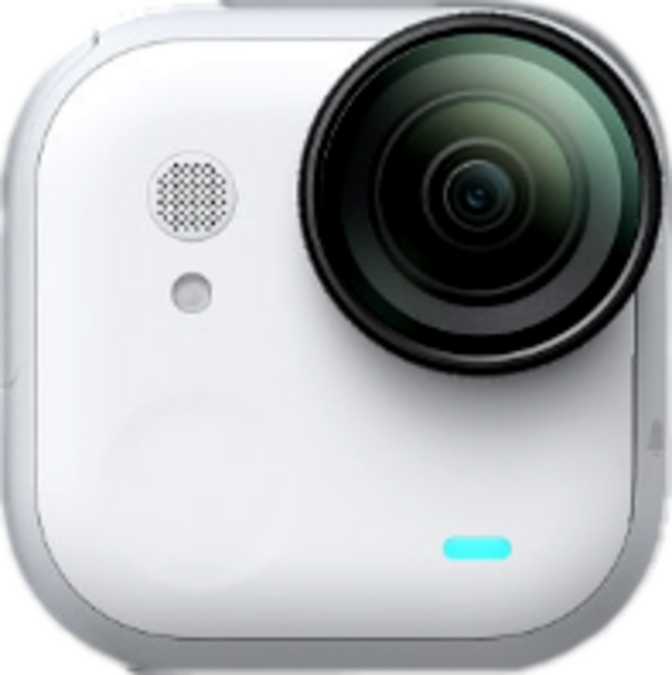
Action cameras have always forced a trade-off: go small and sacrifice quality, or go capable and deal with the bulk. The Insta360 Go Ultra makes a compelling argument that you no longer have to choose. Weighing less than a set of car keys and small enough to sit in the palm of a child's hand, it shoots 4K video at 60 frames per second with a 50-megapixel sensor — specifications that, until recently, belonged exclusively to cameras twice its size and three times its price.
Whether that promise holds up in practice is exactly what this review unpacks. From the sensor's real-world performance to the honest truth about battery endurance, every detail you need to make a confident purchase decision is here.
Key Specifications at a Glance
The numbers that define this camera, translated into what they mean in practice
Design, Build Quality, and Physical Experience
Pocket-Sized, Not Toy-Sized
The Go Ultra measures 46mm wide, 45.7mm tall, and 18.3mm thick — roughly the footprint of a large postage stamp. At 52.9 grams, it registers as almost nothing on a chest mount or clip. That lightness is not a compromise born of cheap materials; it is the result of deliberate engineering to make the camera genuinely wearable rather than merely mountable.
The total body volume sits under 39 cubic centimeters — smaller than a golf ball. That matters practically: you can clip it to a shirt collar, slide it under a helmet strap, or tuck it onto a backpack buckle without the camera becoming the story.
A Display Worth Having
Despite its miniature footprint, the Go Ultra includes a built-in display — a notable omission on many competitors at this size. It provides visual confirmation of recording status, battery level, and basic settings, meaning you are never operating blind. There is no secondary screen on the opposite face, which keeps the overall profile lean.
The display is not touch-sensitive. Navigation happens through physical controls and, more practically, through the companion app or voice commands — a sensible decision given that the camera's primary use cases involve gloves, wet hands, or a body in motion.
Storage Flexibility
An external memory card slot is present — not guaranteed at this size class. You are not locked into fixed internal storage or a cloud-upload workflow. Shoot long sessions, swap the card, and keep going.
Built to Get Wet
IPX8-rated for submersion well beyond casual splash resistance. The 10-meter depth rating covers snorkeling, shallow dives, and surf sessions without a housing.
The operating temperature range spans from a hard winter freeze to a hot-day maximum, making this a genuinely all-season camera rather than a fair-weather tool.
- Width
- 46 mm
- Height
- 45.7 mm
- Thickness
- 18.3 mm
- Weight
- 52.9 g
- Volume
- 38.5 cm³
Sensor and Imaging Performance
50 Megapixels in a Body This Small
The main sensor resolves 50 megapixels — a figure that would have seemed absurd at this form factor just a few years ago. High-resolution stills carry enough data to crop aggressively in post without losing detail, which compensates for the fixed mounting positions that action cameras often require. You do not always get to reframe in the field, but you can reframe at the desk later.
The aperture sits at f/2.85. That is not a fast lens by studio photography standards, but for an action-oriented fixed optic it lets in a reasonable amount of light and helps maintain consistent depth of field across varied shooting environments.
Dynamic Range and Low-Light
Built-in HDR mode automatically blends exposures to recover highlights and shadows in high-contrast scenes — a beach at noon, a shadowed canyon, a forest trail with dappled light. This is processed in-camera rather than relying on RAW capture, since the Go Ultra does not shoot RAW files. That is a legitimate trade-off for most users: RAW requires post-processing software and time; HDR JPEG delivers a usable image immediately.
Manual ISO control is available with a ceiling that allows meaningful flexibility in lower-light territory. A maximum mechanical shutter speed equivalent to roughly 1/8000th of a second is fast enough to freeze almost any motion in bright conditions.
Adjustable Field of View
The field of view is not fixed — an important distinction from many small cameras locked to a single wide angle. The Go Ultra lets you shift framing from a narrower perspective for distant subjects to a wider capture for environmental context, removing one of the classic frustrations of action camera footage where everything appears the same distance away.
Video Capabilities
What the Insta360 Go Ultra can do with footage — and what that means for your content
4K at 60 Frames Per Second
The headline video specification matters for two distinct reasons. First, footage is sharp enough for large-screen playback and still has headroom for moderate cropping or reframing in editing. Second, 60fps at 4K provides smooth motion during fast action — cycling, surfing, skiing — without resorting to slow-motion mode.
The data rate behind that video sits at 180 megabits per second. Many consumer action cameras max out around 100 Mbps. At 180 Mbps, considerably more visual information is captured per second — translating directly to better detail retention in fast-moving scenes and less compression artifacting in high-contrast content.
Stabilization and Horizon Leveling
A built-in gyroscope and active horizon leveling keep the frame flat even as the camera tilts. For hands-free mounting — helmet, chest, belt clip — this is essential. Without it, footage from a moving body looks nauseating. With it, the horizon stays level even through aggressive movement.
Continuous autofocus runs during video recording, and AF tracking means the camera can lock onto a subject and follow it through the frame. For solo creators filming without a dedicated operator, this removes a layer of manual adjustment that would otherwise break the shot.
Creative Video Modes
Capture footage for dramatic reduced-speed playback — ideal for cinematic emphasis or fine detail review in fast-action content.
Compress hours into seconds — sunsets, construction sequences, crowd movement, or any scene that rewards time compression.
Frames at the cadence of traditional film — a subtle but meaningful preference for narrative and documentary-style content.
Native portrait orientation support for platforms where vertical framing is not just accepted but expected as the standard format.
Controls and Connectivity
Hands-Free Operation
Voice commands let you start and stop recording, take a photo, or trigger other functions without touching the camera. On a ski run with poles in both hands, or mid-swim, you do not need to reach for a button — voice control removes a friction point that would otherwise ruin real-world usability.
Gesture control adds a second layer. Wave at the camera, and it responds — useful for solo shooting where you want to trigger a capture from a distance without appearing to reach for your phone in the shot.
Smartphone Integration and Streaming
The companion app connects via Bluetooth 5.4 — a current-generation implementation offering improved connection stability and lower power draw compared to older versions. Both Android and iOS are supported. Your smartphone functions as a remote viewfinder and full control interface, compensating for the small on-device screen. A dedicated physical remote control is also available for situations where pulling out a phone is impractical.
Live streaming is supported natively — no third-party workarounds required for creators who broadcast from action scenarios.
- Voice CommandsTrigger recording and capture without physical contact — essential for hands-busy shooting scenarios
- Gesture ControlWave to trigger capture from a distance — no phone needed, no reaching into the frame
- Bluetooth 5.4Current-generation wireless connection to companion app on iOS and Android
- Smartphone RemoteFull viewfinder and control interface via app; physical remote also available separately
- Live StreamingNative first-party support — no third-party workarounds needed for action broadcasts
- USB-C with Fast ChargingModern connector; charges meaningfully faster than the battery capacity alone would suggest
Battery Life: The Honest Conversation
The Go Ultra carries a 500mAh cell — a number that needs immediate context. This is a physically tiny battery inside a physically tiny camera, and it powers sustained 4K video at a data rate most cameras in a larger chassis cannot match. The result is approximately 69 minutes of continuous recording per charge under typical conditions.
That figure will polarize buyers. For users who pull the camera out for 10–20 minute sessions — a lunch run, a surf session, a kid's soccer match — 69 minutes is more than sufficient per charge. For users expecting all-day continuous recording without access to power, it is not.
Fast charging partially addresses this: the camera charges meaningfully faster than its internal capacity might suggest, shortening downtime between sessions. Charging while reviewing footage on the app is a natural workflow. The battery is not removable, so carrying a spare cell is not an option. A compact power bank and cable is the practical solution for extended shoots.
Session Coverage at a Glance
Estimates based on 4K/60fps continuous recording. Fast charging and USB-C top-up via power bank extend practical shooting time considerably.
Who the Insta360 Go Ultra Is For
This Camera Excels For
- Active lifestyle creators who want high-quality footage without adding bulk to their kit
- Solo creators and vloggers who rely on hands-free operation via voice commands, gesture control, and AF tracking
- Water sports enthusiasts who need a camera that goes 10 meters underwater without a separate housing
- Travel and documentary filmmakers needing a compact, discreet camera that deploys quickly as a second angle
- Parents and casual users who want effortless recording of family moments without managing a complex system
- Cold-weather outdoor enthusiasts — the -20°C minimum operating temperature outperforms most competitors in this size class
Not the Right Fit If
- You need all-day continuous recording without access to a charging source between sessions
- Your workflow depends on RAW image or video files for extensive post-processing control
- External microphone capability is non-negotiable — there is no 3.5mm input or mic adapter port on this body
- You need GPS data logging baked into footage for route tracking or geo-tagged video documentation
- Your primary output is broadcast-quality audio-visual production where audio capture is as critical as video quality
Competitive Positioning
How the Insta360 Go Ultra measures up against logical alternatives at similar price points
| Feature | Insta360 Go Ultra | Typical Compact Action Cam | Full-Size Action Cam |
|---|---|---|---|
| Weight | ~53 g | 70–100 g | 130–180 g |
| 4K Max Framerate | 60fps | Varies (often 30fps) | Often 60fps |
| Waterproof (no housing) | 10 m | Typically 5–10 m | 10 m+ |
| Wearable Form Factor | Yes | Limited | No |
| Microphone Input | No | Varies | Most models |
| RAW Capture | No | Rarely | Sometimes |
| Battery Endurance | ~69 min | 60–90 min | 90–150 min |
| Voice / Gesture Control | Both | Rarely | Sometimes |
| Video Bitrate | 180 Mbps | ~50–100 Mbps | ~100–200 Mbps |
Strengths and Weaknesses
Where It Excels
The Go Ultra's core strength is coherence. It does not make compromises in strange places. The sensor is excellent for the form factor. The waterproofing is serious rather than token. The stabilization and hands-free controls are thoughtfully implemented. The result is a camera that works the way a wearable action camera should — it disappears into your activity rather than demanding attention.
The video specifications — 4K at 60fps and 180 Mbps — are strong enough that this camera does not feel like a satellite product to a "real" camera. It holds its own as a primary capture device for many use cases. The 50-megapixel sensor, 10-meter waterproofing, and sub-55-gram weight is a combination that is genuinely rare at any price.
Where It Asks for Patience
Battery duration and audio are where the Go Ultra demands the most patience. The 69-minute runtime will define user satisfaction more directly than any other specification — not because it is inadequate for most use cases, but because it requires planning. Users coming from smartphones, where all-day use is assumed, will need to adjust their expectations and workflow.
The absence of microphone input is a harder constraint. It is not a failure — it is a physical reality of the body size — but creators who care deeply about audio must either rely on in-camera audio, capture sound separately, or choose a different category of camera. The lack of GPS and RAW capture are additional considerations for demanding production workflows where those capabilities matter.
Questions Buyers Ask Before Purchasing
Final Verdict
The Insta360 Go Ultra is the right answer to a question the action camera market has been circling for years: can a camera be genuinely small, genuinely capable, and genuinely water-resistant at the same time? The answer is yes, with one acknowledged asterisk — battery life requires active management rather than passive assumption.
For active users, solo creators, water sports participants, and anyone who wants high-quality footage from a camera they will actually keep on their person, this is among the most compelling options available at this physical scale. The 50-megapixel sensor, 4K/60fps video, 10-meter waterproofing, and sub-55-gram weight is a combination that is genuinely rare.
If unlimited battery life, external microphone support, RAW capture, or GPS are hard requirements for your workflow, those needs will be better served by a larger camera in a different category. For everyone else — particularly those who have avoided action cameras because they found them too bulky or too complex — the Insta360 Go Ultra is the most persuasive case for rethinking that position.