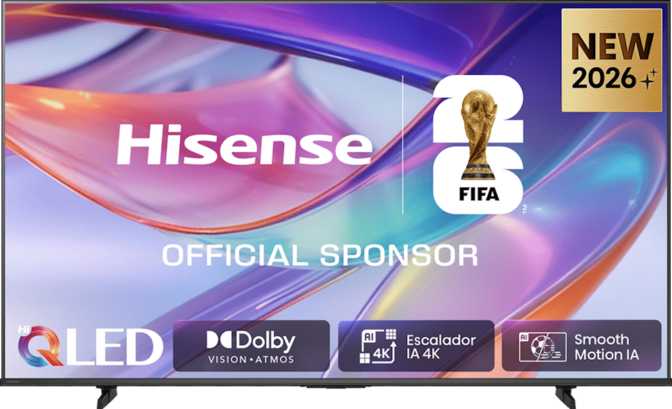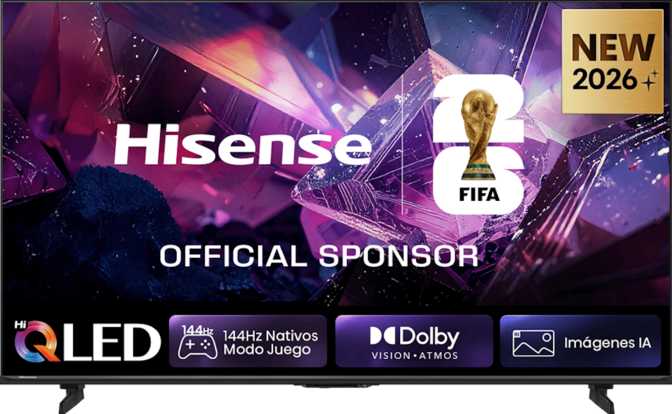
Hisense 85E7S Pro 85-Inch Review: Big Screen, Smart Value
TVsAn 85-inch television is a commitment — to a wall, to a room, and to a budget. The Hisense 85E7S Pro sits at an interesting crossroads: large enough to dominate any living space, equipped with features that only appeared on premium flagship screens a few years ago, yet priced to appeal to buyers who want scale and specification without paying a luxury tax. Whether that combination holds up under scrutiny is exactly what this review answers.
This is a genuinely capable large-format TV that earns its place in the market — but with trade-offs that matter depending on your room and how you plan to use it. Gaming credentials are exceptional for the price, the feature list is unusually complete, and the viewing angles serve a whole room rather than a single seat. The compromises centre on peak brightness and audio — both of which deserve honest treatment before you spend your money.
Design and Physical Presence
Build quality, dimensions, and what to expect before installation day
Size, Weight, and Placement Reality
At just under 190cm wide and nearly 109cm tall, the 85E7S Pro physically commands whatever space it enters. These are not dimensions to eyeball — measure your wall and your viewing distance before committing. Most home cinema guidance suggests a minimum viewing distance of around 2.1 to 2.5 metres for an 85-inch 4K panel; any closer and you risk sitting inside the picture rather than watching it.
The panel measures 84.6 inches diagonally — the half-inch rounding to 85 is standard across the industry. At just under 33 kilograms, this is a two-person installation job without exception. Wall-mounting via the VESA-compatible rear is the cleaner aesthetic choice, but factor in professional installation if your walls are anything other than solid masonry or structural timber.
Build Quality
The chassis uses a predominantly plastic construction — expected at this price and size — but the finish is controlled and panel rigidity is solid with no perceptible flex when handling. The included stand provides stable footing. It is not a decorative statement in the way premium-tier competitors position themselves, but it is well-assembled and purposeful.
- Width
- 189.1 cm
- Height
- 108.7 cm
- Depth
- 66 mm
- Weight
- 32.8 kg
- VESA Mount
- Supported
- Operating Temperature
- 5°C – 35°C
Installation note: At 32.8 kg, safe wall-mounting requires two people minimum. Budget for professional installation unless your setup is straightforward and your walls are structurally suitable.
Display Performance
Panel technology, brightness, HDR, motion handling, and viewing angles — in plain English
What QLED Actually Means
QLED is a marketing term describing an LED-backlit LCD panel using a quantum dot enhancement film to improve colour output. It is not an emissive technology like OLED — individual pixels cannot switch off independently. This single distinction shapes every honest performance claim that follows, and understanding it is the most important thing you can do before evaluating this TV.
What quantum dot technology genuinely delivers is a wider colour gamut and higher colour volume than a conventional LED LCD. The E7S Pro is a true 10-bit panel rendering over a billion distinct colour shades — a palette that standard 8-bit displays physically cannot reproduce. A forest appears green in multiple dimensions rather than a single flat hue; a sunset transitions through amber, coral, and crimson rather than blending into uniform orange.
At 85 inches with a 4K resolution of 3,840 × 2,160 pixels, the pixel density sits at around 52 pixels per inch. On paper that sounds modest compared to a phone or monitor, but at the recommended 2-plus metre viewing distance for a screen this size, individual pixels are not distinguishable. The density is entirely appropriate for the format — you get a clean, resolved image without the viewing-distance issues that affect smaller high-density screens.
Brightness, Contrast, and What 400 Nits Gets You
The typical panel brightness of 400 nits sits at the boundary between mid-range and capable. Entry-level TVs often manage 250–300 nits; high-end OLED and mini-LED panels can reach 1,000 nits or well beyond at peak highlights. Four hundred nits is adequate for moderately lit rooms and entirely sufficient for standard SDR viewing.
For HDR content — where the format's impact depends on specular highlights punching well above baseline — this brightness means the HDR experience is real but restrained. The native contrast ratio of 3,800:1 is the E7S Pro's compensating strength: blacks are reasonably deep relative to peak whites, creating a picture with genuine depth rather than the washed-out grey that plagues lower-contrast LCD panels. Dark scenes retain shadow detail; bright scenes stay clean.
HDR Format Support — Full Coverage
Universal HDR baseline. Supported by all streaming services and 4K Blu-ray discs without exception.
Dynamic metadata HDR with scene-by-scene tone mapping. Used on Amazon Prime Video and select 4K Blu-rays.
Premium dynamic HDR used on Netflix, Disney+, and Apple TV+. Widely regarded as the most capable HDR format available.
Broadcast HDR standard used in live TV and terrestrial digital transmissions. Essential for broadcast HDR content.
Motion Handling and the 144Hz Advantage
The native 144Hz refresh rate is one of the E7S Pro's headline competitive advantages. Most TVs — including many more expensive ones — still use 60Hz panels with motion processing doing the heavy lifting. A genuine 144Hz display has more physical frames per second to work with, producing cleaner motion with less artificial interpolation artefact.
For sport, fast lateral camera pans during a football match or ball-tracking in tennis look dramatically more natural at 144Hz. For gaming, the combination of 144Hz and AMD FreeSync Premium Pro is genuinely premium territory at this price. FreeSync Premium Pro requires support for low-framerate compensation and HDR at variable refresh rates — connected gaming PCs and compatible consoles sync their output frame rate dynamically to the display, eliminating tearing and reducing stutter without the penalties of V-Sync.
For competitive gamers: The 6ms pixel response time is entirely acceptable for console gaming and casual PC play. Competitive PC gamers accustomed to sub-2ms monitors will feel the difference in fast-twitch precision titles where reaction margins are measured in milliseconds.
Viewing Angles and Room Suitability
Near-180-degree horizontal and vertical viewing angles indicate an IPS-type or similarly wide-angle panel technology. For a TV this size — where family members routinely watch from chairs at the edges of a room — this is more practically important than any headline specification. Traditional VA-type LCD panels darken and shift colour noticeably beyond 45 degrees off-axis. The E7S Pro delivers consistent colour for every seat in the house.
The anti-reflection coating reduces mirror-like glare from windows and overhead lighting — a practical feature that matters significantly in rooms that are not dedicated dark home cinemas. The ambient light sensor automatically adjusts brightness based on room conditions, handling the transition from bright afternoon to dark evening without requiring manual recalibration.
Connectivity
Ports, wireless standards, and ecosystem compatibility — in full detail
Four HDMI 2.1 Ports: Why This Matters
HDMI 2.1 supports 4K at up to 120Hz, the full 48Gbps bandwidth required for uncompressed high-frame-rate video, Variable Refresh Rate (VRR), and Auto Low Latency Mode (ALLM) natively. Having all four ports at this specification — rather than the common two HDMI 2.1 and two HDMI 2.0 configuration — means every device connected operates at full capability simultaneously. A PlayStation 5, an Xbox Series X, an Apple TV 4K, and a streaming stick: all connected, none compromised, no cable-swapping.
One port supports eARC (Enhanced Audio Return Channel), enabling high-quality audio formats including Dolby Atmos and DTS:X to pass from the TV to a compatible soundbar via the same HDMI cable that carries video in. The two USB ports support direct file playback from flash drives and external hard drives.
Wireless Connectivity and Ecosystem
Bluetooth 5.4 supports headphone pairing, keyboard and mouse input, and wireless audio accessories with current-generation connection stability. Miracast enables wireless screen mirroring from compatible Android devices and Windows PCs without additional hardware. AirPlay 2 is built directly into the smart platform, so iPhones, iPads, and Macs cast content directly to the TV without a separate Apple TV device.
Wi-Fi 5 (802.11ac) provides sufficient bandwidth for 4K streaming from all major services. It does not support Wi-Fi 6 or 6E — functionally adequate for typical TV use, but not forward-looking if your network infrastructure is newer generation.
- HDMI 2.1 Ports4
- HDMI ARC / eARCBoth
- USB Ports2
- Ethernet (RJ45)Yes
- Wi-FiWi-Fi 5 (802.11ac)
- Bluetooth5.4
- AirPlay 2
- Miracast
- USB Recording
- 3.5mm Headphone Jack
Full DVB suite — operates without a set-top box in most regions:
Smart TV Platform and Voice Control
Built-in intelligence, voice assistants, and smart home compatibility
The built-in smart TV platform provides access to a built-in browser and all major streaming applications. Google Assistant and Amazon Alexa are both natively compatible, supporting voice search across content and basic smart home commands. The absence of Siri and HomeKit means iOS and Mac users can cast content via AirPlay but cannot issue Siri voice commands to control the TV, nor will it appear as a device in the Apple Home app.
Voice commands are accessible directly through the remote, and smartphone remote control is supported via the companion app — useful when the physical remote is elsewhere. The remote itself is battery-powered rather than rechargeable: a minor recurring cost and environmental footnote worth knowing before purchase.
The USB recording feature allows live broadcast TV to be recorded directly to an attached USB storage device — no set-top box required — provided your broadcast region's DVB signal is supported. Given the full DVB tuner suite covering terrestrial, cable, and satellite standards, this covers virtually all European and many international broadcast environments.
- Google Assistant
- Amazon Alexa
- AirPlay 2
- Apple HomeKit / Siri
- Smartphone Remote App
- Voice Commands
- Built-in Browser
- Sleep Timer
- Child Lock
- Rechargeable Remote
Audio Performance
What 20 watts of built-in audio can and cannot do — and what to do about it
The integrated audio system comprises two 10-watt drivers — 20 watts total in stereo configuration. The system supports Dolby Atmos and DTS:X decoding, which means it processes the spatial audio metadata embedded in premium streaming content. This is worth understanding clearly: decoding Dolby Atmos and actually delivering the Dolby Atmos experience are two different things without the physical hardware to support it.
Any honest assessment of built-in TV audio must acknowledge the physical constraint: 20 watts from a panel 66mm deep is competent background audio, not cinematic sound. Dolby Atmos from flat built-in speakers is a processing standard — the immersive spatial audio effect requires multiple directional drivers that no flat TV panel can accommodate.
The audio is adequate for news, casual daytime viewing, and smaller rooms. For the scale of experience that an 85-inch picture creates, a soundbar is not an optional luxury — it is a functionally necessary companion if the TV is to live up to its visual ambition. There is no built-in subwoofer. The low-frequency foundation that makes action sequences and music feel genuinely large requires an external audio solution.
Practical recommendation: Budget for a soundbar with eARC connectivity at purchase time. The HDMI eARC port on the E7S Pro enables lossless Dolby Atmos passthrough via a single HDMI cable — clean, simple, and future-ready.
- Speaker Output2 × 10W
- Dolby Atmos
- DTS:X
- Dolby Audio
- Dolby Digital Plus
- Stereo Speakers
- Digital Output (Optical)
- HDMI ARC / eARC
- Built-in Subwoofer
Who Should Buy the Hisense 85E7S Pro — And Who Should Not
Matching the right buyer to the right TV before spending money
- Maximum screen for your budget.At 85 inches with QLED 4K and 144Hz, the E7S Pro delivers more screen for money than most direct competitors in this size category from established brands.
- Gaming is a primary use case.Four HDMI 2.1 ports, native 144Hz, AMD FreeSync Premium Pro, and 85 inches of display create a stand-out gaming environment for console and PC players alike.
- Your room is well-lit.The anti-reflection coating, strong native contrast, and ambient light sensor make it practical for living rooms that are not permanently darkened for viewing.
- You have a mixed device ecosystem.Google Assistant, Alexa, AirPlay, Miracast, and four HDMI 2.1 ports cover virtually every device combination a modern household uses.
- You want to run without a set-top box.The full DVB tuner suite — satellite, cable, and terrestrial — eliminates the need for additional broadcast hardware in most regions.
- Perfect black levels are your priority.OLED or high-end mini-LED TVs produce deeply superior blacks. The physics of edge-lit LCD set a ceiling the E7S Pro cannot transcend.
- You have a dedicated dark home cinema.In controlled dark environments, the contrast limitations of edge-lit LCD become more visible. OLED panels reward dark-room viewing far more convincingly.
- Built-in audio is your only plan.The speaker system does not match the scale of the display. Include a soundbar in the total budget — it is not optional at this screen size.
- Energy efficiency is a priority.The EU G energy label is the lowest classification band. Running costs across a full year of typical daily use are a meaningful number in any total cost calculation.
- You need Apple HomeKit control.AirPlay works; HomeKit and Siri voice control do not. The TV will not appear or be controllable within the Apple Home app.
Competitive Positioning
How the Hisense 85E7S Pro stacks up against logical 85-inch alternatives
| Feature | Hisense 85E7S Pro | Similar-Price LED LCD 85" | Premium Mini-LED 85" |
|---|---|---|---|
| Panel Technology | QLED (quantum dot LCD) | Standard LED LCD | Mini-LED QLED |
| Typical Brightness | 400 nits | 300–400 nits | 600–1,500 nits |
| Refresh Rate | 144Hz native | 60Hz or 100Hz | 100–144Hz |
| HDMI 2.1 Ports | 4 | 1–2 | 2–4 |
| Adaptive Sync | FreeSync Premium Pro | Basic or none | FreeSync or G-Sync |
| Dolby Vision | Rarely at this price | ||
| HDR10+ | Sometimes | ||
| Warranty | 3 years | 1–2 years | 1–2 years |
| Price Bracket | Mid-range | Mid-range | Premium |
The E7S Pro's most distinctive competitive position is its four HDMI 2.1 ports combined with 144Hz and FreeSync Premium Pro — a specification set that competing brands in the same price bracket rarely match at 85 inches. Where premium competitors justify their additional cost is peak brightness and local dimming sophistication. If the budget stretches to a mini-LED TV, the jump in HDR impact and dark-scene performance is real. If it does not, the E7S Pro concedes less than the price difference implies.
Frequently Asked Questions
The questions real buyers ask before purchasing an 85-inch TV
Honest Assessment
The strengths and limitations stated plainly — not softened, not exaggerated
Where the E7S Pro Overdelivers
The Hisense 85E7S Pro is over-specified for its price point in several key respects, and that is its core market identity. Four HDMI 2.1 ports across all connections — not just two — is the rarest and most valuable feature at this budget. Competing brands in the same price band rarely match it at 85 inches, and the gaming implications of that connectivity are significant.
Native 144Hz, FreeSync Premium Pro, full Dolby Vision plus HDR10+ coverage, Bluetooth 5.4, AirPlay, a complete DVB broadcast tuner suite, and a three-year warranty represent a collective feature set that buyers at this price have no right to expect in full. The three-year warranty particularly stands out — it signals manufacturer confidence in longevity that the industry norm of one year does not convey.
The 178-degree viewing angles deliver consistent colour for every seat in a family room — not just the perfectly centred one. Combined with the anti-reflection coating and ambient sensor, the E7S Pro is built for real rooms with real lighting conditions and multiple viewers, not idealised home cinema environments.
Where the E7S Pro Compromises
The picture performance ceiling, rather than the floor, is where compromises are made. The 400-nit typical brightness is honest and functional — but HDR impact is present rather than overwhelming. Viewers who have experienced high-end mini-LED or OLED panels at 1,000-plus nits will notice the difference in the punch of specular highlights: a window behind a character, a streetlight in a night scene, an explosion in an action film.
The absence of sophisticated local dimming control — inherent to edge-lit LCD technology — means dark scenes in a dark room reveal backlight bleed or grayish blacks that a mini-LED or OLED panel handles more convincingly. This is a horror film and space epic problem more than a sports or gaming problem.
The audio system is a consistent truth across all large flat-panel TVs at this price, not a specific failing of this model — but 20 watts of stereo sound from a 66mm-deep panel does not match what 85 inches of picture creates. A soundbar is a necessary companion purchase.
The EU G energy rating and absence of Wi-Fi 6 are the remaining limitations. Neither is a dealbreaker in isolation, but together with the brightness ceiling, they constitute the honest total picture of where this TV sits in the market.
Final Verdict
The Hisense 85E7S Pro 85" earns a confident recommendation for buyers whose priority is maximising screen size, gaming capability, and feature completeness within a realistic budget.
Its four HDMI 2.1 ports and 144Hz native panel make it the single most practical choice in its segment for multi-console gaming households. Full HDR format coverage — including Dolby Vision — means every major streaming platform delivers the best picture the TV's brightness ceiling permits. Wide viewing angles make it a genuine family-room display rather than a single-seat panel.
Buyers willing to spend meaningfully more on a premium mini-LED TV will see a real improvement in HDR impact and dark-scene performance. Buyers who want absolute black levels should look to OLED — at a significantly different price and not yet widely available at this screen size.
For the majority of buyers — those prioritising scale, connectivity, motion performance, and feature breadth over peak picture performance in controlled viewing environments — the Hisense 85E7S Pro represents strong value and a well-considered package. Budget separately for audio, measure your room, and this TV will reward you.