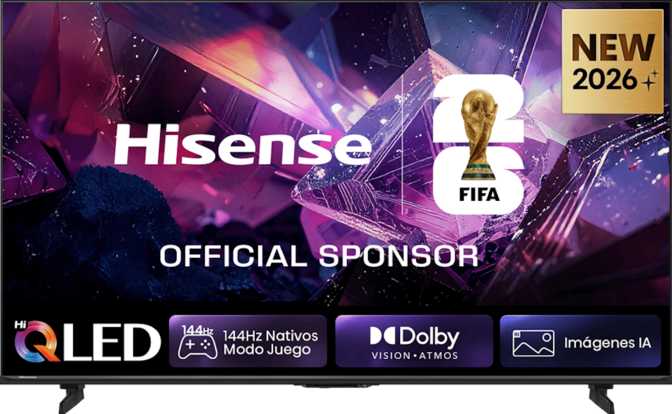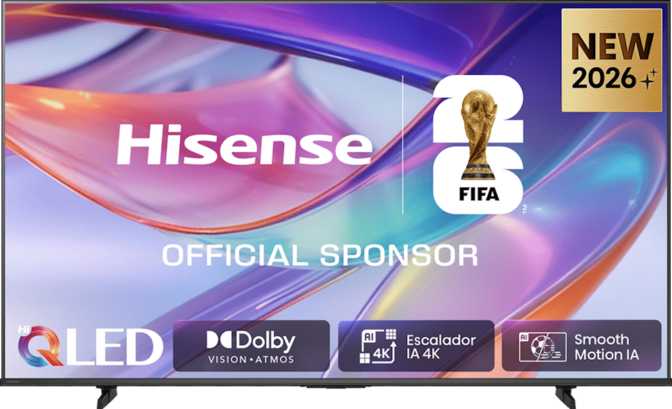
Hisense 85E7S 85-Inch QLED TV: Full Review and Honest Verdict
TVsAt 85 inches, the Hisense 85E7S crosses the line where a screen stops being furniture and starts being an event. Quantum dot colour science, coverage of every current HDR standard, and three complete HDMI 2.1 ports — at a price that makes similarly specified rivals difficult to justify. The native 60Hz panel is the sharpest trade-off in the package; understanding it clearly defines who this television serves best and who should keep looking.
Design, Build Quality, and Physical Presence
Size, Weight, and Room Planning
This TV is genuinely large. At just over 1.89 metres wide and nearly 1.09 metres tall, positioning requires more than finding a wall with space — sightline planning is essential. At the 3 to 3.5 metre viewing distances typical in living rooms, 85 inches lands precisely at the sweet spot display engineers recommend for 4K resolution: close enough for full pixel density, far enough for the picture to fill peripheral vision naturally.
At approximately 27.8 kilograms without a stand, wall mounting is a two-person job at minimum. VESA mount compatibility allows any standard bracket, including full-motion arms that eliminate glare from different seating positions throughout the day. Professional installation is strongly advisable at this weight and scale.
Cabinet Depth and Aesthetics
The cabinet sits 75mm deep — standard for a backlit LCD at this scale, where meaningful backlighting depth is a physical requirement rather than a design oversight. Hisense's E-series design language stays clean and restrained: slim bezels, matte rear finish, centred stand. No statement branding, no premium flourishes. On a screen this large, that restraint is the right call — when the picture is on, the hardware disappears.
| Screen Size | 84.6" (nominal 85") |
|---|---|
| Width | 1,890 mm |
| Height | 1,087 mm |
| Depth | 75 mm |
| Weight | 27.8 kg |
| VESA Mount | Supported |
| Operating Temp. | 5°C – 35°C |
Display Performance: What QLED Means at This Price
Quantum Dot Technology: Why It Matters
QLED means the LED backlight passes through a layer of nanoscale semiconductor particles — quantum dots — that convert it into more precise wavelengths of red and green before reaching the liquid crystal layer. The result is a substantially wider colour gamut than standard LED LCD: you see significantly more of what the director intended and less of the approximation a budget panel delivers. Modern streaming services and Blu-ray mastering assume a wide colour space; a QLED panel delivers far more of that colour volume at any comparable price point.
Brightness and Contrast: Honest Expectations
Four hundred nits places this panel in a solid but not exceptional brightness tier. For evening and night viewing, or in a room with controlled natural light, it delivers convincing HDR — punchy highlights, genuine colour volume, and visible depth between bright and dark areas of the frame. In direct afternoon sunlight through uncovered windows, the brightness ceiling becomes apparent. The built-in ambient light sensor adjusts the backlight automatically to help perceived contrast, but it cannot conjure luminance that isn't physically present.
The 3800:1 native contrast ratio deserves more credit than brightness figures alone suggest. LCD contrast measures the gap between the panel's brightest white and deepest simultaneous black — 3800:1 produces convincingly dark shadows in film content without the grey-wash that plagues cheaper LCD panels. OLED achieves this at pixel level and wins on absolute black depth, but the E7S's contrast is competitive and meaningful for its price tier.
HDR Format Coverage: All Four Standards
Full coverage of all four current HDR formats is not guaranteed at this price — some competitors omit HDR10+ or Dolby Vision to cut licensing costs. The Hisense 85E7S supports all four, meaning any content from any service plays at its intended quality without signal downgrading.
The universal baseline. Supported by every major streaming service and disc format on the market.
Dynamic metadata adjusts tone mapping scene-by-scene. Used by Amazon Prime Video and select Blu-ray titles.
Premium HDR pipeline with frame-accurate dynamic metadata. Used by Netflix, Apple TV+, Disney+, and more.
The broadcast standard used by the BBC, NHK, and live sports HDR transmissions worldwide.
Refresh Rate, Motion, and Gaming
The native refresh rate is 60Hz. For cinematic content at 24fps, broadcast TV at 25 or 30fps, and standard 60fps gaming, 60Hz handles everything natively. The constraint is clear for high-frame-rate gaming: 4K at 120fps output from current-generation consoles in performance mode cannot be displayed at full frame rate. This is deliberate tier positioning, not an engineering failure — but buyers must understand it before purchasing.
The 9.5ms response time is comfortable for casual gaming and all standard TV viewing. AMD FreeSync support synchronises the panel's refresh to a compatible GPU's variable frame output, eliminating screen tearing — a genuine benefit for PC gamers and VRR-enabled console players. Anti-reflection coating and the 178-degree viewing angle keep picture accuracy consistent from wide off-axis seating positions, which matters considerably on a screen this wide.
Connectivity: Future-Ready Where It Counts
HDMI 2.1 — Three Ports, One Standard
Three HDMI 2.1 ports is a specification that many televisions at twice the price don't match. Each port supports 48Gbps bandwidth — enough for uncompressed 4K at 60Hz with full HDR, and in principle for higher frame rates as hardware allows. In practice, it means a gaming console, a Blu-ray player, and a soundbar or AV receiver can all stay connected simultaneously without swapping cables.
One port combines ARC and eARC. ARC (Audio Return Channel) sends TV audio to a connected soundbar over the same HDMI cable, eliminating a separate optical connection. eARC upgrades this to lossless audio — a capable soundbar or receiver connected here receives Dolby TrueHD or DTS-HD Master Audio in full uncompressed form from compatible content, rather than a lossy approximation.
Wireless, Wired, and Broadcast Tuners
Wi-Fi 5 on the 5GHz band handles 4K HDR streaming without buffering on a healthy home network. An Ethernet port rewards fixed installations where cable routing is possible — wired always beats wireless for streaming stability. Bluetooth 5.4 is current-generation, covering headphones, keyboards, and audio accessories with low latency. DVB tuner coverage spans terrestrial HD, cable, and satellite — replacing a separate set-top box in most European markets. USB recording writes live broadcast content directly to an attached drive, enabling time-shifting without extra hardware.
- HDMI 2.13 ports
- HDMI ARC / eARCBoth
- USB Ports2 ports
- Ethernet (RJ45)Yes
- Wi-Fi 4 & 52.4 & 5GHz
- Bluetooth 5.4Yes
- 3.5mm Audio JackYes
- USB RecordingYes
- MiracastYes
- DVB TunersT, T2, C, S, S2
Audio: Built-In Capabilities and Real-World Expectations
The E7S delivers 30 watts total from two stereo drivers — 15 watts per channel. For a screen this size, that output produces adequate room-filling volume in medium to large living spaces. The system supports Dolby Atmos and DTS:X — both object-based surround formats that position individual sounds in three-dimensional space rather than mixing them to fixed speaker channels.
On a two-channel system, object-based audio means virtual surround processing: the TV interprets the spatial metadata and widens the sound stage beyond standard stereo. This is not equivalent to a dedicated multi-speaker Atmos array, but it produces a noticeably more immersive result than basic two-channel output at no additional cost. Dolby Digital and Dolby Digital Plus are fully decoded on board, and a digital audio output allows pass-through to an external processor or receiver.
| Output Power | 2 × 15W (30W) |
|---|---|
| Channels | Stereo (2.0) |
| Dolby Atmos | Yes |
| DTS:X | Yes |
| Dolby Digital+ | Yes |
| Digital Out | Yes |
| Subwoofer | Not built-in |
| Headphone Jack | 3.5mm |
Smart TV Platform and Voice Integration
VIDAA Smart Platform
The E7S runs VIDAA, Hisense's proprietary operating system. VIDAA covers all major streaming services — Netflix, Disney+, Prime Video, Apple TV+, YouTube, and most regional platforms — in a clean, fast, and comparatively uncluttered interface. App selection serves the vast majority of users, though some niche regional applications available on Android TV may be absent.
Voice Assistants and Smart Home
Google Assistant and Amazon Alexa are both supported natively — voice control works through the TV itself without an external hub or smart speaker. Apple AirPlay enables video streaming and screen mirroring from iPhones, iPads, and Macs over Wi-Fi. Apple HomeKit integration is absent: AirPlay content streaming works fully, but the TV cannot be enrolled as a HomeKit-controlled device for home automation purposes.
Smartphone remote support, a built-in browser, sleep timer, child lock, and Miracast wireless mirroring from Android and Windows devices complete the platform. Voice commands are accessible through the remote control as well as the smart assistant integrations. The remote runs on standard replaceable batteries rather than a rechargeable internal cell — typical at this price tier, but worth noting for buyers who prefer rechargeable accessories.
- Google AssistantBuilt-in
- Amazon AlexaBuilt-in
- Apple AirPlayStreaming & mirroring
- Apple HomeKitNot supported
- MiracastAndroid & Windows
- Smartphone RemoteApp control
- Voice CommandsRemote & assistants
- USB RecordingLive TV to USB drive
- Web BrowserBuilt-in
- Sleep TimerYes
- Child LockYes
- Rechargeable RemoteStandard batteries
Power Consumption and Running Costs
At 128 watts of operating consumption, the E7S is moderate in its energy demands for its screen class. Running the TV for four hours daily across a year produces roughly 187 kilowatt-hours of annual consumption — multiply by your local electricity rate for the exact figure, but it is competitive for an 85-inch display and well below the power draw of many older screens in this size range.
Standby consumption of 0.5 watts is negligible — the TV draws almost nothing when not in active use, adding minimally to idle electricity costs even when left plugged in continuously.
The EU energy label of G should be read in context. European ratings for televisions apply increasingly strict standards as screen size increases. A large panel consuming 128 watts may carry a lower letter grade than a much smaller panel drawing 50 watts — even if the larger panel is more efficient per inch of screen area. The G rating reflects absolute energy consumption at 85 inches and is consistent across every display in this size class. It is not an indicator of poor engineering.
Who Should Buy the Hisense 85E7S — and Who Should Not
- Home cinema enthusiasts on a realistic budgetFull HDR format coverage, QLED colour science, and a 3800:1 contrast ratio in a controlled-light room delivers genuine cinematic results at a mid-range price point.
- Families with wide seating arrangementsNear-180-degree viewing angles keep picture accuracy consistent from the outer edges of a wide sofa, not only from the seat directly in front of the screen.
- Console gamers playing primarily at 4K/60fpsThree HDMI 2.1 ports and AMD FreeSync serve current-generation 4K gaming without cable juggling, and the picture quality rewards cinematic single-player titles.
- Cord-cutters and broadcast TV usersFull DVB tuner coverage, USB PVR recording, and a comprehensive smart streaming platform replace a set-top box entirely in most markets.
- Need 4K/120fps gaming performanceThe 60Hz native panel is a genuine constraint for competitive and high-frame-rate gaming. Players who need 120fps output from their console or PC should look at native 120Hz panels.
- Have a persistently bright viewing roomSouth-facing rooms with large uncovered windows will expose the 400-nit brightness ceiling. A higher-brightness mini-LED panel would handle these conditions more capably.
- Prioritise audio impact above all elseThe built-in two-channel system is functional but clearly built to be paired with a soundbar. Without one, the cinematic bass impact this screen size deserves will be absent.
How the Hisense 85E7S Compares in Its Class
The following comparison covers specification positioning across three market tiers. Prices change frequently and are not included — the specification differences are the meaningful benchmark for a purchase decision.
| Feature | Hisense 85E7S | Typical 85" Budget LCD | Typical 85" Premium QLED |
|---|---|---|---|
| Panel Type | QLED | Standard LED LCD | QLED / Mini-LED |
| Brightness | ~400 nits | ~300–350 nits | 600–1,500+ nits |
| Refresh Rate | 60Hz native | 60Hz native | 120Hz native |
| HDR Formats | All 4 formats | HDR10 only | All formats |
| HDMI 2.1 Ports | 3 | 1–2 | 2–4 |
| Smart Platform | VIDAA | Varies | Tizen / Google TV |
| AirPlay | Rarely | Often | |
| AMD FreeSync | Rarely | Often | |
| Warranty | 3 years | 1–2 years | 1–2 years |
| USB Recording | Occasionally | Rarely |
Strengths and Weaknesses: An Honest Assessment
The connectivity architecture stands out immediately. Three HDMI 2.1 ports combined with full ARC and eARC support is a specification that many televisions at twice the price don't deliver. This setup is genuinely future-ready — add source devices as your entertainment system grows without ever reaching for a cable swap.
Full Dolby Vision and HDR10+ coverage alongside HDR10 and HLG means the Hisense 85E7S handles any content from any service at its intended quality. At this screen size and price, having all four formats in a single panel remains genuinely uncommon across the competitive landscape.
The three-year warranty is one of the most buyer-friendly specifications in this product's class. Separately purchased extended coverage for a screen this size carries real cost; Hisense includes three years as standard. It removes financial risk from a significant household purchase and signals real confidence in build quality.
AMD FreeSync, near-180-degree viewing angles, a 3800:1 contrast ratio, and QLED colour science round out a feature set that sits meaningfully ahead of the competition at this price tier.
The 60Hz native refresh rate is the most consequential limitation in the specification — a deliberate tier positioning decision, but a real one. Buyers who want 4K/120fps gaming capability now or in the near future need to either accept this constraint knowingly or look at a different panel entirely.
Four hundred nits of brightness is adequate in controlled lighting conditions but not competitive against persistent ambient light. This TV rewards a darkened room. Buyers with large south-facing windows and minimal curtain cover should factor this limitation clearly into their decision.
The built-in audio system requires a soundbar partner to reach the cinematic impact a screen this size deserves. The 30W two-channel system handles dialogue and mid-range content competently, but physics limits what a flat panel can do with bass reproduction — there is no built-in subwoofer.
Apple HomeKit integration is absent, and the remote runs on standard replaceable batteries. Minor points individually, but worth flagging for buyers embedded in the Apple home automation ecosystem or who prefer rechargeable accessories.
Frequently Asked Questions
Final Verdict: Is the Hisense 85E7S Worth Buying?
The Hisense 85E7S is a carefully assembled package that makes smart compromises rather than random ones. The 60Hz native panel is a deliberate cost allocation — the savings go directly into QLED colour science, three full HDMI 2.1 ports, complete HDR format coverage across all four standards, and a three-year warranty that most rivals at any price tier don't come close to matching.
What you receive is an 85-inch QLED display that handles every current streaming and disc HDR format without downgrading the signal, connects to every major smart home ecosystem except Apple HomeKit, accommodates three source devices simultaneously without adapters, and protects your investment for three full years. What you trade away is 4K/120fps gaming performance and the peak brightness that would neutralise a sunlit room.
For buyers who watch films, sport, and streaming more than they play competitive multiplayer — and who want an oversized, feature-complete living room or home cinema screen — the Hisense 85E7S is a strong and confident recommendation. For the dedicated high-refresh-rate gamer or the buyer with a genuinely bright viewing room, the honest advice is to spend more or look elsewhere. This TV will not pretend to be something it isn't, and neither should a recommendation.
Best for: Home cinema, families, casual gamers, cord-cutters