Hisense 58QD50R 58-Inch QLED TV: An Honest Full Review
TVsHisense 58QD50R at a Glance
Six defining specifications decoded into real-world meaning
Design and Build Quality
What to expect when the box arrives
Physical Presence and Dimensions
At just over 1.28 meters wide and 75 centimeters tall, the 58QD50R commands attention without demanding an oversized wall. The panel sits approximately 81mm deep — slim enough to look intentional on a stand, though not the wafer-thin profile of a premium OLED competitor. Total weight is just under 11.4 kilograms, meaning two people can handle unboxing and mounting without professional installation.
- Width
- 1,287.8 mm
- Height
- 754.4 mm
- Depth
- 81.3 mm
- Weight
- Approx. 11.4 kg
Stand, Mounting, and Finish
VESA wall mounting is fully supported — a welcome confirmation for buyers who already own a universal bracket or prefer a flush-wall installation. Verify the exact VESA hole pattern dimensions against your bracket specification before purchasing a separate mount.
The narrow bezel profile keeps the frame from interrupting the viewing experience, and the matte-style rear casing presents cleanly from the side. Build quality is solid and free of the flex or creak found on entry-level panels. This television blends into its environment rather than competing with it as a design statement.
Display Performance
QLED, 4K, and HDR — what these actually mean for your daily viewing
What QLED Means Here
QLED uses a Quantum Dot filter layer over a conventional LED-backlit LCD panel. The filter expands the range of colors the display can produce from the same backlight — resulting in more vivid reds and greens, purer whites, and better color accuracy than standard LED televisions at equivalent prices. Colors appear natural rather than artificially punchy, and the improvement is most visible in brightly lit scenes and nature content.
4K at 58 Inches — Does It Show?
The panel resolves 3,840 × 2,160 pixels across 58 inches, producing a pixel density of 76 pixels per inch. At a typical viewing distance of seven to ten feet, individual pixels are invisible and the image appears genuinely sharp. The jump from 1080p to native 4K content — from streaming platforms, 4K Blu-ray, or modern consoles — is visible to casual viewers, not just enthusiasts.
10-Bit Color: Why It Matters
Many budget televisions use 8-bit panels that simulate additional color shades through dithering. A native 10-bit display renders over one billion distinct color values — exactly what this panel supports — eliminating the visible color banding that appears in gradient skies, sunsets, and smooth skin tones. For streaming HDR content or watching nature documentaries, this difference is perceptible even without knowing the technical reason behind it.
HDR Format Support
Dolby Vision
Scene-by-scene brightness and color metadata. The premium HDR experience on Netflix, Disney+, and Apple TV+ content.
HDR10
The universal HDR baseline. Every HDR source falls back to HDR10 — an essential inclusion for any HDR-capable television.
HLG
Hybrid Log-Gamma for broadcast HDR. Future-proofing for live sports and TV broadcasts in HDR-capable regions.
HDR10+
Not supported. Content in this format plays as HDR10. Most viewers will not notice; relevant mainly for heavy Amazon Prime Video users.
60Hz Refresh Rate in Context
Standard broadcast television, films, and streaming content originate at 24, 25, or 30 frames per second — well within 60Hz capability. The ceiling matters specifically for gaming: users who prioritize frame rates above 60fps will hit a hard hardware limit. For sports fans, film watchers, and series streamers, 60Hz is fully adequate and the limitation is invisible.
Viewing Angles
Both horizontal and vertical viewing angles extend to 178 degrees — approaching the theoretical maximum. Viewers seated well off to the side or in elevated positions will not experience significant color shift or contrast degradation.
Glare and Ambient Light Handling
The anti-reflection coating reduces visible glare in rooms with windows facing the television or lights kept on during viewing. The built-in ambient light sensor automatically adjusts screen brightness to match the room's lighting conditions — preventing eye strain in dark rooms and screen washout in afternoon light. Once configured, it operates in the background without requiring attention.
Smart TV Platform and Voice Control
Streaming, voice assistants, and smart home integration explained
Built-In Streaming and Apps
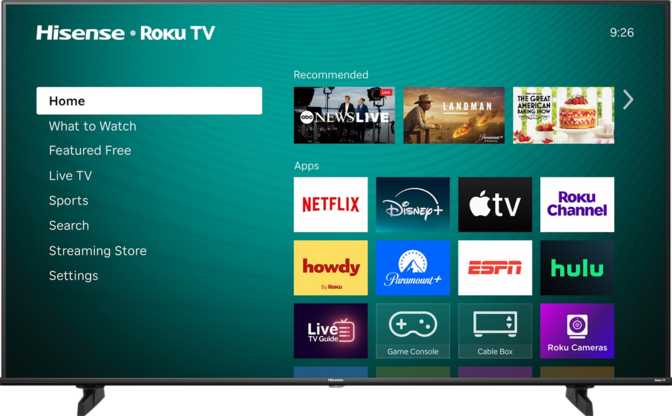
The 58QD50R's smart platform provides direct access to major streaming applications without requiring an external streaming stick or box. A built-in web browser extends access further for services without dedicated apps. App availability varies by regional software build — confirm your preferred services are supported in your market before purchase.
Smartphone remote control is supported, allowing your phone to substitute as an input device through compatible apps. The included physical remote uses standard batteries rather than a rechargeable setup — a minor note for those accustomed to premium models.
Voice Assistant Integration
- Google AssistantControl the TV via Google Home devices on the same network — inputs, volume, and content search all supported.
- Amazon AlexaFull Alexa compatibility for existing Amazon smart home routines and voice-based TV control.
- AirPlayiPhone and iPad users cast or mirror content directly. No Apple TV hardware required — a genuine value advantage.
- Siri / Apple HomeKitNot supported. AirPlay functions independently, but Siri commands and HomeKit scenes cannot include this TV.
Built-In Voice Commands
Beyond third-party assistant integration, the TV includes built-in voice command support accessible through a microphone button on the remote. This enables quick content searches and navigation without on-screen keyboard typing — a practical shortcut for everyday use.
Miracast Screen Mirroring
Android device users can cast content wirelessly to the TV without a shared network connection — useful for presentations, sharing photos, or displaying mobile content on the large screen without additional hardware requirements.
Audio Performance
What the built-in speakers can deliver — and where to go from there
Speaker Setup and Real-World Sound
The built-in audio uses a dual stereo arrangement delivering 8 watts per channel — 16 watts total — with no integrated subwoofer. At normal room volumes, dialogue clarity and mid-range frequency reproduction are well-managed. What the speakers cannot do is reproduce meaningful bass — film scores, action sequences, and music will lack the physical weight that an external audio solution provides.
For everyday television use — news, cooking shows, sports commentary, and streaming series — the internal audio is functional. For a cinematic experience that matches the display quality on offer, pairing this television with a soundbar is strongly recommended from day one.
Supported Audio Formats
- Dolby Atmos
- DTS:X
- Dolby Digital Plus
- Dolby Digital
- Dolby Audio
- No integrated subwoofer
- No 3.5mm headphone jack
External Audio Connection Options
Carries lossless audio — Dolby TrueHD and full Dolby Atmos — to a soundbar or AV receiver over a single HDMI cable.
Standard two-way audio return for soundbars using a single HDMI cable. Supports most compressed audio formats.
For soundbars and receivers without HDMI ARC — ensures compatibility with older or mid-range audio equipment.
Connectivity
Every port and wireless standard — including what is absent
Wired Ports
| Port Type | Qty | Notes |
|---|---|---|
| HDMI 2.0 | 3 | One port supports ARC/eARC. 4K at 60Hz maximum throughput. |
| USB | 1 | Supports live broadcast recording to an external drive. |
| RJ45 (Ethernet) | 1 | Wired network connection. Preferred over Wi-Fi for 4K streaming. |
| Digital Audio Out | 1 | Optical output for soundbars and AV receivers. |
| 3.5mm Headphone | — | Not present. Use Bluetooth 5.0 headphones instead. |
| Memory Card Slot | — | No card reader. Local storage access via USB port only. |
| VGA / DVI | — | Legacy video connectors not included. |
Wireless Connectivity
- Wi-Fi 5 (802.11ac)5GHz band for fast, stable 4K streaming. Wi-Fi 4 (2.4GHz) also supported for older router environments.
- Bluetooth 5.0Improved range and connection stability over earlier versions. Pairs with wireless headphones, soundbars, and keyboards.
- MiracastAndroid screen mirroring without a shared network connection required.
- AirPlayiOS and iPadOS content mirroring and casting. No Apple TV hardware required.
Power Consumption
The television draws 160 watts during active use — typical for a 58-inch QLED-class display. Standby consumption drops to just 0.5 watts, making idle energy draw negligible. The ambient light sensor's automatic brightness adjustment keeps average real-world consumption meaningfully below the peak figure during typical viewing sessions.
Who This Television Is For
Match your household's needs against this TV's strengths and limitations before committing
- Streaming-first households — Dolby Vision, 4K, and a wide app library without needing an external streaming stick.
- Mixed-use living rooms — 178-degree viewing angles ensure no seat in a wide room is a poor one.
- Apple ecosystem users — AirPlay built in means no extra Apple TV device needed for casting or mirroring.
- Soundbar owners — eARC ensures full lossless audio compatibility with existing external audio setups.
- Google and Alexa smart home users — integrates cleanly with existing voice automation without additional hardware.
- Live broadcast viewers — USB recording to a drive replaces a dedicated DVR for live television content.
- 120Hz gaming is a priority — this panel caps at 60Hz. HDMI 2.1 and a 120Hz display are required for high-frame-rate gaming.
- You are a home theater purist — no local dimming zone control, 60Hz ceiling, and 16W internal audio will leave serious AV enthusiasts underserved.
- You rely on wired headphone listening — no 3.5mm output means late-night listening requires a Bluetooth workaround.
- Your primary service uses HDR10+ — that content will default to HDR10 presentation on this television.
- Close-range desk use is needed — 76ppi is comfortable at viewing distance but too low for daily text-heavy work up close.
Competitive Comparison
How the 58QD50R stacks up against typical 58-inch alternatives at the same price tier
| Feature | Hisense 58QD50R | Standard LED (Non-QLED) | QLED with HDR10+ Only |
|---|---|---|---|
| Quantum Dot Color | |||
| Dolby Vision HDR | |||
| HDR10+ | |||
| HDMI eARC | Sometimes | ||
| AirPlay | Rarely | Sometimes | |
| Bluetooth Version | 5.0 | 4.2 | 5.0 |
| Refresh Rate | 60Hz | 60Hz | 60Hz |
Comparison reflects typical competing models at the same 58-inch price tier. Specific availability varies by region and retailer.
Honest Strengths and Weaknesses
A candid assessment without the marketing language
What This TV Does Well
The 58QD50R's strongest quality is what appears on screen. Quantum Dot color combined with a 10-bit panel and Dolby Vision HDR produces an image that competes with televisions sold at higher prices. Colors are vivid without looking artificially saturated, HDR highlights genuinely pop in Dolby Vision content, and the picture holds up convincingly for its primary use case — streaming films and live sports in a real living room.
The anti-reflection coating is a practical advantage that buyers often overlook until they have a screen that lacks it. Combined with the ambient light sensor's automatic brightness adaptation, this television handles real-world lighting conditions far better than uncoated panels at equivalent prices.
The near-full 178-degree viewing angle range means the picture holds up across a wide seating area. Families with wide sofas or rooms where the screen is not always watched head-on will genuinely notice the difference over competing budget panels.
Where It Falls Short
Sixteen watts of internal speaker power handles dialogue and casual entertainment, but it cannot deliver what the display quality deserves in terms of cinematic sound. This is a universal limitation of thin flat panels rather than a unique failure of this specific model — but it remains relevant. Factor a soundbar into your budget if audio is part of the experience you are building.
The 60Hz refresh rate is a meaningful constraint only for high-frame-rate gaming. For all other content it matches current broadcast standards and requires no apology. The single USB port and absence of a memory card slot reflect cost decisions that will not affect most buyers, but may frustrate specific workflows.
The one-year warranty period is shorter than some competitors at comparable price points — worth including in your total cost-of-ownership assessment for a large-format display expected to run daily for several years.
Common Buyer Questions Answered
Real questions from people considering this television
Final Verdict
Hisense 58QD50R — 58" QLED 4K Smart TV
The Hisense 58QD50R earns its place in the market by combining features that buyers at this price tier routinely have to trade off against each other. Dolby Vision HDR and Quantum Dot color in the same 58-inch panel is not a common pairing at this price. Add eARC, AirPlay, Dolby Atmos processing, and near-full viewing angles — and the value case is clear for the right buyer.
This is a television built for households that stream the majority of their content, watch films and sports, and want a picture that holds up in real living conditions — varying ambient light, multiple viewers, and different seating positions. It delivers all of that convincingly, and outperforms its price point on picture quality alone.