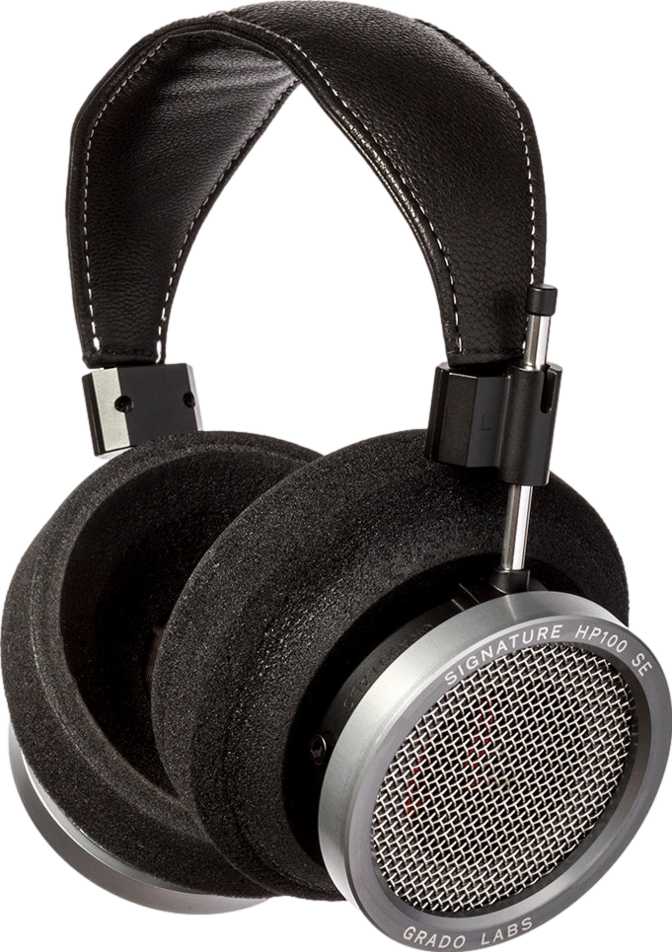
Grado Signature HP100 SE: An Honest Open-Back Headphone Review
HeadphonesAn open-back design that refuses to compromise on intimacy with your music. No noise cancellation to get between you and the recording. No Bluetooth chip diluting the signal path. The Grado Signature HP100 SE is built for one specific kind of listener — the one who treats a listening session as an event, not background noise. Before you decide if that's you, here's everything the spec sheet implies and what it actually means once these are on your head.
Design and Build: Honest About What It's For
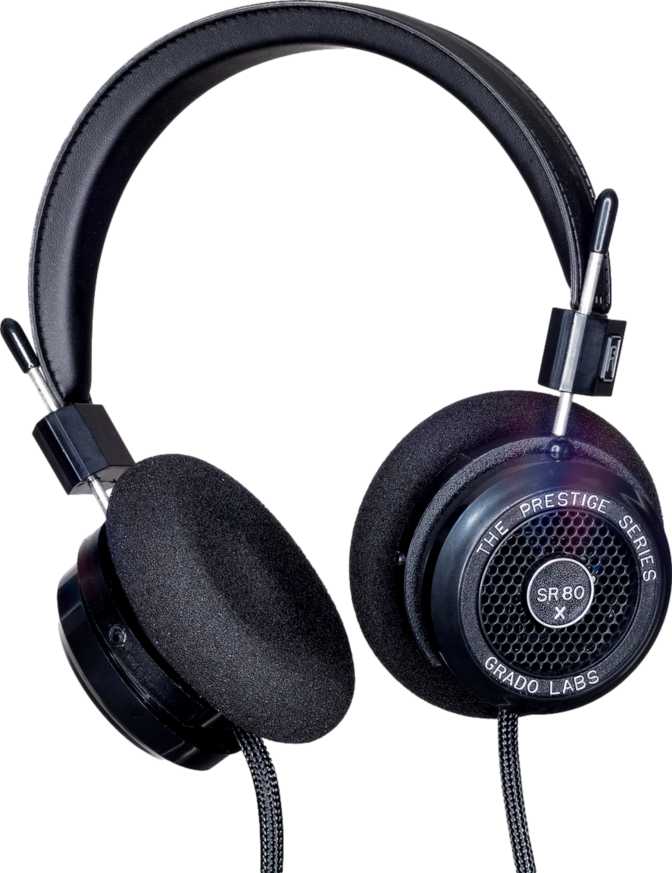
The HP100 SE wears its purpose openly — literally. This is an over-ear, open-backed headphone, meaning the outer housing behind each driver isn't sealed shut. Instead of trapping sound inside a closed chamber, the back of each earcup is vented, letting air — and sound — move freely in both directions. That single design choice shapes almost everything else about how this headphone behaves.
Because there's no sealed enclosure trapping resonance and reflecting sound back at your eardrum, open-back headphones generally produce a more natural, less boxed-in sense of space. Instruments don't feel like they're playing inside your skull; they feel like they're arranged in a room around you. The trade-off, and it's a real one, is that sound leaks out freely in both directions. People near you will hear your music, and you'll hear them right back. There's no escaping that with this design — it's not a flaw to be fixed, it's the entire point.
Comfort for Long Listening Sessions
The over-ear fit is designed to fully surround the ear rather than press against it, which typically reduces the clamping fatigue that on-ear designs cause during extended sessions. Paired with the open-back venting, there's also far less heat buildup against your ears than you'd get from a sealed pair — a small but genuinely appreciated comfort factor if you're the type to listen for hours at a stretch.
Built to Last, Not to Travel
A few choices here make it clear this headphone was designed for a desk or a listening chair, not a backpack. There's no folding hinge, so it doesn't collapse down for storage — you'll want a dedicated spot for it rather than tossing it loose into a bag. There's no included travel case either, reinforcing that this is meant to live in one place. It also carries no water or sweat resistance rating, so it's not the headphone you reach for during a workout or a walk in the rain.
None of this should be read as a weakness. It's a headphone built for a stationary, dedicated listening setup, and it makes no apologies for that.
Inside the Driver: What's Actually Producing Your Sound
At the heart of each earcup sits a 52mm driver — large by headphone standards, where many on-ear and portable models use drivers in the 30–40mm range. A bigger driver has more physical surface area to move air, which generally makes it easier to produce deep, controlled bass without straining, and gives the driver more headroom before distortion creeps in at higher volumes.
One detail worth pausing on: this driver doesn't use a neodymium magnet, which is the magnet type found in the vast majority of modern headphones because it offers strong magnetic force in a very small, light package. Skipping neodymium in favor of a different magnetic structure is a deliberate engineering trade-off rather than an oversight — it suggests the driver was tuned around a specific tonal character rather than built purely for compactness or efficiency. In practice, this is the kind of detail that matters far more to a critical listener chasing a particular sound signature than to someone who just wants louder bass for a workout playlist.
The Sound Signature: Why Open-Back Changes the Math
The frequency range on the HP100 SE runs from 3.5 Hz up to 51,500 Hz. Human hearing, even at its absolute best, tops out around 20 Hz to 20,000 Hz — so why build a driver that reaches so far beyond what we can technically hear?
Two reasons. First, headroom at both extremes generally means the audible range in between — where virtually all music actually lives — is reproduced with more accuracy and less strain, because the driver isn't working at the ragged edge of its capability. Second, those frequencies just outside human hearing aren't entirely irrelevant: extreme low frequencies can be felt as physical pressure rather than heard as pitch, and extreme high frequencies contribute to the harmonic overtones and "air" around instruments that listeners often describe as detail or sparkle, even without consciously hearing the fundamental tone itself.
Sensitivity, Impedance, and the Amplifier Question
Two numbers determine how loud this headphone gets and how hard your source device has to work to drive it: sensitivity and impedance.
The HP100 SE rates at 117 dB per milliwatt of sound pressure level, which is high sensitivity — it takes very little power to reach loud, room-filling volume. Impedance sits at 38 Ohms, which lands in a middle zone: notably higher than the 16–32 Ohm range typical of phone-friendly earbuds and portable headphones, but nowhere near the 250–600 Ohm territory of studio headphones explicitly designed to demand a dedicated amplifier.
117 dB/mW Sensitivity
Your phone or laptop headphone jack will drive these to a comfortable listening volume without any additional hardware. Very little power is needed to reach satisfying listening levels.
38 Ohm Impedance
Mid-range impedance works reliably from standard outputs but noticeably rewards a dedicated amplifier or DAC — tighter bass and more controlled dynamics. It performs well on a phone and better on proper source gear.
No ANC, No Spatial Audio, No Passive Isolation — By Design
This headphone has no active noise cancellation, no passive noise isolation, and no spatial audio processing. None of these are oversights — they're incompatible with an open-back design by definition. You cannot seal out ambient noise on a headphone whose entire back panel is intentionally open, and processed spatial audio effects tend to work against the kind of natural, unprocessed soundstage that open-back designs are built to deliver in the first place.
If you're shopping for noise cancellation or virtualized surround effects, this category of headphone simply isn't engineered to provide them.
Cable, Connections, and the Case for Simplicity
The HP100 SE connects via a detachable, tangle-free cable — both details matter more than they might seem. A detachable cable means that if the cable ever frays, kinks, or fails (historically the single most common failure point on any wired headphone), you replace the cable, not the headphone. The tangle-free construction means it resists the coiling and knotting that loose round cables are notorious for when stored in a bag or draped over a desk.
This is a fully wired connection with no Bluetooth and no USB-C port, meaning it relies entirely on an analog connection to your source device rather than a digital one. There's also no in-line remote, no microphone, and no headset functionality — you can't take calls, trigger a voice assistant, or control playback from the cable itself. Volume and track changes have to happen at the source. For a headphone built purely around listening fidelity, this isn't a missing feature so much as an intentional omission — every component left out is one less thing standing between the recording and your ears.
Who the Grado Signature HP100 SE Is Actually For
This headphone makes the most sense for someone who has a consistent, quiet place to listen — a home office, a studio, a listening room — and wants the most natural, spacious presentation possible from a wired connection. If you already own or are considering a dedicated headphone amp or DAC, this is exactly the kind of headphone that rewards that investment. It also suits anyone who's grown tired of replacing entire headphones because a cable wore out, since the detachable design solves that problem directly.
- Have a quiet, dedicated space for focused listening at home or in a studio
- Value a natural, spacious soundstage over external noise blocking
- Own or plan to pair it with a dedicated headphone amp or DAC
- Want a long-lasting headphone with a cable that can be independently replaced
- Prioritize pure audio fidelity over wireless convenience and feature count
- Commute, exercise, or regularly listen in shared or public spaces
- Need active noise cancellation or any level of passive noise isolation
- Require a built-in microphone for calls, voice chat, or voice assistant access
- Want Bluetooth freedom or a wireless listening experience
- Need a foldable, portable headphone suited to frequent travel
How It Compares to the Alternatives
Measured against the headphone types buyers most often consider at this level.
| Attribute | Open-Back Wired (HP100 SE) | Closed-Back ANC Wireless | Closed-Back Wired Studio |
|---|---|---|---|
| Soundstage | Spacious and natural | Narrower, more processed | Tight and focused |
| Noise Blocking | None — fully open | Strong (active) | Moderate (passive seal) |
| Best Environment | Quiet home or studio | Commuting, travel, offices | Studio, mixing, monitoring |
| Source Flexibility | Wired; rewards a dedicated amp | Works wirelessly with any device | Needs wired connection |
| Calls / Mic Use | Not supported | Usually supported | Sometimes supported |
| Portability | Low — stationary use only | High | Moderate |
The HP100 SE isn't competing on convenience. It's competing on how accurately and naturally it reproduces a recording in a controlled listening environment, and within that specific lane, the open-back design and large driver give it a meaningful edge over sealed alternatives that sacrifice soundstage for noise blocking.
Strengths and Trade-Offs, Honestly
What It Does Well
The clearest strength is the listening experience itself — a large 52mm driver, an exceptionally wide frequency range, and an open-back enclosure combine to produce the kind of spacious, unforced sound that closed-back headphones in a similar price bracket typically can't match.
The detachable cable is a genuinely practical long-term advantage that's easy to overlook until the day a cheaper, fixed-cable headphone dies from a frayed wire. Comfort over long sessions also stands out, helped by both the over-ear design and the breathability that comes from an open back.
Where It Falls Short
There is zero isolation from the outside world in either direction — this is not a private listening experience. There's no wireless option, no microphone, no in-line controls, and no portability features, so it asks you to build your listening habits around it rather than the other way around.
While it doesn't strictly require a headphone amp, it's clearly engineered to reward one, which means buyers chasing its full potential should budget for source gear beyond just the headphone itself.
Common Questions Before You Buy
The Verdict
The Grado Signature HP100 SE is a deliberately specialized headphone, and it should be judged as one. It isn't trying to be your commute companion, your gym partner, or your work-call headset — it has no features aimed at any of those use cases, and pretending otherwise would do readers a disservice.
What it is built to do, it does with real conviction: a large driver, an unusually wide frequency range, and a genuinely open soundstage come together to deliver the kind of spacious, natural presentation that sealed headphones in its class typically can't replicate.
Buy this if your listening happens in one consistent, quiet space, and you care more about how natural your music sounds than how conveniently it travels with you.
Skip it if you need noise isolation, wireless freedom, call support, or anything resembling portability — those needs point you toward an entirely different category of headphone. For the listener it's built for, this is a confident, honestly engineered choice.