Grado SR80x Review: An Honest Look at a Home Listening Classic
HeadphonesThere is a very specific kind of headphone buyer the Grado SR80x was built for — and if you are that person, these headphones will likely be the best thing you have ever put on your ears at this price. Getting that distinction right is the entire point of this review. The SR80x is a wired, open-back, on-ear headphone made by a family-owned company in Brooklyn, and it wears that identity without apology.
Editor's Ratings
Design and Build: Retro by Conviction, Not Accident
Physical experience, materials, and construction
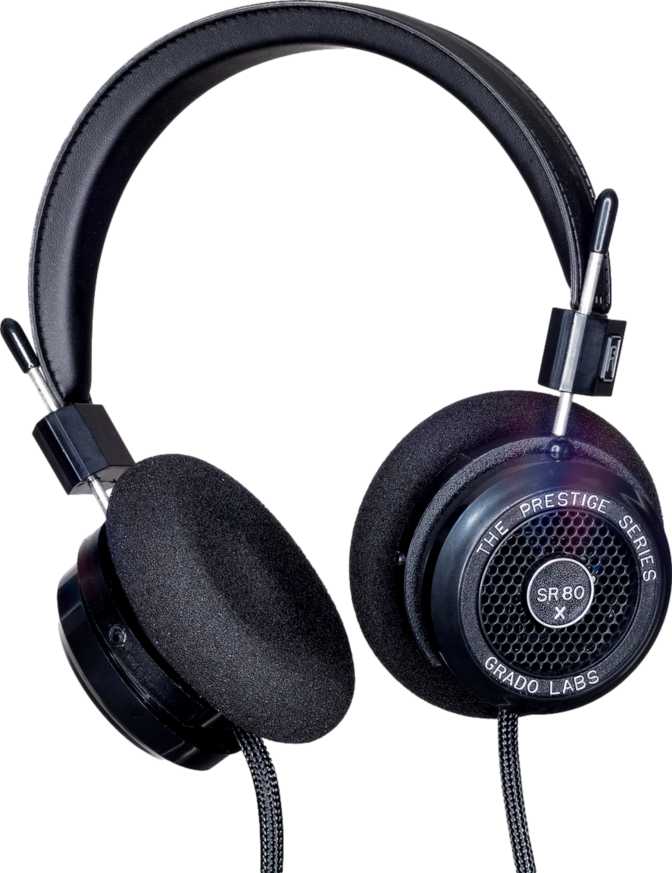
The SR80x does not look like a modern consumer headphone. There are no touch panels, no folding hinges for a carrying case, no LED indicators, and no sculpted plastic pods. What you get instead is a straightforward headband, foam ear cushions, and a utilitarian construction that prioritizes acoustics over aesthetics.
The headband is a simple adjustable metal frame with a soft padded underside. The ear cups are round, lightly cushioned foam pads that sit directly on the outer ear — this is the on-ear, or supra-aural, design. On-ear headphones tend to be lighter and more breathable than over-ear alternatives, but they create pressure against the ear itself during long sessions rather than distributing weight around it. This is worth understanding before you commit.
The cable is permanently attached — there is no port for swapping it out. That said, Grado has constructed it to resist tangling, making day-to-day handling less frustrating than it might otherwise be. The cable terminates in a standard 3.5mm plug with an included screw-on 6.35mm (quarter-inch) adapter, allowing direct connection to home audio equipment, guitar amplifiers, and professional audio interfaces without a separate accessory.
At a Glance: Physical Specs
-
Fit Type
On-ear (supra-aural) — sits on, not around, the ear -
Cable
Fixed, tangle-resistant; 3.5mm + 6.35mm adapter included -
Weather Resistance
None — not rated for moisture or sweat -
Travel Case
Not included — not designed for portability -
Stereo Output
Full stereo, left and right channel separation
The Open-Back Design: The Feature That Defines Everything
Why this architectural choice is a philosophy, not a budget compromise
Understanding the SR80x means understanding what an open-back headphone actually does differently. Most consumer headphones are closed-back: the rear of each ear cup is sealed, trapping sound in and keeping environmental noise out passively. Open-back headphones have a perforated or vented rear enclosure that allows air and sound to move freely through the driver housing.
- A natural soundstage — music feels like it exists around you, not trapped inside your head
- Reduced listening fatigue from the absence of pressure buildup common in sealed designs
- An experience closer to sitting in front of a quality pair of speakers than wearing headphones
- A cleaner, more natural low-end response without bass bloom or resonance artifacts
- Sound leaks outward — people near you will hear your music at reduced volume
- Ambient noise leaks in — you hear your environment alongside your music
- Completely unsuitable for commuting, open offices, libraries, or shared spaces
- Zero passive noise isolation — no engineering can change this; it is the design
For critical listening, music appreciation, and extended sessions at home, the open-back trade-off is not a compromise — it is precisely the point. If you need isolation, this is the wrong headphone. If isolation is irrelevant to your listening environment, the open-back design is a meaningful advantage.
Sound Performance: The Engineering Behind the Listening Experience
Driver, sensitivity, impedance, and tonal character explained in plain terms
Driver Size and What It Means
The SR80x uses 44mm dynamic drivers — the physical transducers that convert electrical signals into sound. At this diameter, the drivers are large enough to move significant air and reproduce the full frequency range with authority, particularly in the lower midrange and bass regions. Dynamic drivers of this type are the same fundamental technology found in high-end audiophile headphones costing many times the SR80x's price. The execution and materials are what differentiate them — the underlying principle is shared.
Sensitivity and Impedance: Will Your Device Drive These?
The SR80x has a sensitivity rating of 98 dB per milliwatt and an impedance of 38 ohms. For a non-technical reader, here is what that actually means in practice: 38 ohms places the SR80x in a range that is manageable for many source devices, but not trivially so. A smartphone headphone jack can technically power these headphones to audible levels. However, a dedicated headphone amplifier, desktop DAC/amp unit, or quality audio interface will make a noticeable difference — more dynamic range, better bass control, and a more authoritative presentation.
Frequency Response and Tonal Character
The SR80x covers the full range of human hearing from the lowest bass frequencies to the upper limit of audible treble. Grado headphones are known for a particular sonic character: a forward midrange that brings vocals and lead instruments into sharp focus, with treble that leans toward brightness and presence rather than warmth or smoothness. Bass is present and accurate rather than emphasized or exaggerated.
This tuning is beloved by listeners who prioritize detail and clarity. Jazz, acoustic music, classic rock, and orchestral recordings tend to shine on Grado headphones. Listeners who prefer the deep, boosted bass typical of consumer-oriented headphones will find the SR80x's low-end approach more restrained and neutral. Neither preference is wrong — they reflect different priorities.
Technical Specs Translated
- Driver Diameter
- 44mm dynamic — large enough for full-range authority without sacrificing speed
- Impedance (38 ohms)
- Needs a decent source; rewards amplification significantly over phone jacks
- Sensitivity (98 dB/mW)
- Efficient enough to produce volume from portable sources, but efficiency alone doesn't equal quality output
- Frequency Range
- Full spectrum — 20Hz to 20,000Hz, covering everything audible to the human ear
- Noise Cancellation
- None — intentionally omitted to preserve signal path purity
No Active Noise Cancellation — Intentionally
The SR80x has no active noise cancellation and no passive noise isolation. This is not an oversight. Electronic noise cancellation requires onboard processing, batteries, and microphones — all of which add components that can color or compromise the audio signal path. Grado's design philosophy keeps the signal chain as clean and simple as possible, prioritizing sonic purity over lifestyle convenience features. If you need noise cancellation, this is the wrong headphone. If it is irrelevant to your listening environment, you are not paying for technology you do not need.
Connectivity: Wired and Proud of It
Why the absence of wireless is a deliberate engineering decision
The SR80x connects via a single wired cable. There is no Bluetooth, no wireless pairing, no latency from codec compression, and no battery to charge. The audio signal travels from your source to your ears without digital-to-analog conversion happening inside the headphone itself — your source device or external DAC handles that entirely.
For audiophiles, this is a meaningful advantage. Wireless codecs — even high-quality ones — introduce compression artifacts and processing steps that trained ears can detect on revealing recordings. A wired connection delivers exactly what your source outputs, nothing more and nothing less.
The SR80x's cable is long enough for comfortable desktop use and has a tangle-resistant construction, but it is permanently attached, so cable management around a workspace is something to plan for. General consumers accustomed to wireless headphones will find the cable an adjustment — but within a static home listening setup, it quickly becomes invisible.
Connection Type Summary
What the SR80x Does Not Have — and Who That Affects
Clear-eyed about the omissions that matter for specific buyers
The following absences are all consequences of a focused design philosophy. None of them are engineering flaws — but they are real constraints for buyers who need any of these capabilities.
Cannot be used for calls, video conferencing, gaming communication, or voice commands. The SR80x is a pure listening device — no boom mic, no inline capsule, nothing.
No play/pause buttons, volume adjustments, or track-skip controls on the cable. All playback is managed entirely from your source device.
No Bluetooth, no NFC, no wireless pairing of any kind. The cable is always part of the experience.
Not rated for moisture of any kind. Exercise, rain, or a humid environment are all situations where the SR80x does not belong.
The open-back design means zero passive isolation. You hear your environment and your environment hears you — by design.
Portability is not part of the design intent. No carrying pouch or case is included, and the fixed cable makes bag storage awkward.
Who Should Buy the SR80x — and Who Should Not
Real-world usage scenarios and buyer profiles
The Right Buyer
The SR80x is purpose-built for home listening. If you sit at a desk, work from a home office, listen to music through a stereo setup, or simply want a headphone to use in a quiet room where you can focus on the music, these headphones are exceptional for the money.
Particularly well suited to:
- Music enthusiasts who listen critically to rock, jazz, acoustic, classical, or vocal-focused recordings
- Home studio users who want an honest, revealing monitoring option at an accessible price
- Audiophiles building their first quality desktop listening setup
- Vinyl and hi-fi enthusiasts who want headphones that match the quality of their source equipment
The Wrong Buyer
If any of the following applies to your situation, the SR80x is not the right headphone for you — not because it fails, but because it was simply not designed for these use cases.
Look elsewhere if you:
- Need to take calls or join video meetings through your headphones
- Commute on public transit or work in a noisy shared environment
- Want wireless freedom from your source device
- Prioritize deep, prominent bass in your music listening
- Need headphones that travel well and survive daily bag use
How the SR80x Compares to Its Natural Alternatives
Competitive positioning against logical alternatives in the same consideration set
| Feature | Grado SR80x | Sennheiser HD 599 | Audio-Technica ATH-M50x | Sony WH-1000XM5 |
|---|---|---|---|---|
| Design Type | Open-back, on-ear | Open-back, over-ear | Closed-back, over-ear | Closed-back, over-ear |
| Connection | Wired only | Wired only | Wired only | Wireless + wired |
| Noise Isolation | None | None | Moderate (passive) | High (active ANC) |
| Microphone | No | No | No | Yes |
| Target Use | Home listening | Home listening | Studio / monitoring | Travel / commute |
| Sound Character | Forward, detailed, bright | Warm, wide soundstage | Flat, analytical | Consumer-tuned, bass-boosted |
| Portability | Low | Low | Moderate | High |
The HD 599 is the most direct open-back alternative in the same category — larger over-ear cushions make it more comfortable for extended sessions, and its soundstage is notably wide. The SR80x tends to edge ahead in midrange detail and presence. The ATH-M50x is often mentioned in the same conversations but serves a fundamentally different purpose: closed-back monitoring rather than open listening. The Sony WH-1000XM5 appears here because many buyers cross-shop across a broad price range; the SR80x and the WH-1000XM5 serve almost completely opposite use cases.
Honest Strengths and Weaknesses
A balanced assessment — because credibility comes from honesty
Where the SR80x Excels
The SR80x's greatest strength is that it sounds like music rather than like a headphone trying to impress you. The midrange is immediate and uncolored, vocals have weight and presence, and detail retrieval at this price point is genuinely impressive. Listening fatigue over long sessions tends to be low despite the forward tuning, largely because the open-back design prevents the pressure buildup common in sealed headphones.
Source transparency is a real strength for analytical listeners. These headphones are honest — they reveal what your source actually sounds like, including its limitations. That transparency rewards better sources and amplification, and the headphone's sonic character scales noticeably with improved upstream equipment.
The user-replaceable foam ear pads add meaningful long-term value. Grado sells a range of aftermarket pads that can change both the comfort profile and the tonal balance, giving the SR80x a degree of customization unusual at this price point.
Where the SR80x Falls Short
The foam ear pads are the most consistent point of contention among SR80x owners. They are softer than they look, but after extended sessions — particularly for glasses wearers — pressure on the ear becomes noticeable. This is an inherent consequence of on-ear design, not a manufacturing defect, but it is worth factoring in if you plan multi-hour sessions.
The non-detachable cable is the one engineering decision that feels like an unnecessary limitation. A cable failure means sending the headphones for service rather than simply replacing a cable. At this price point, a detachable cable would have added meaningful convenience without compromising the design intent.
The brightness of the SR80x's high-frequency presentation, while a strength for detail retrieval, can fatigue listeners who are sensitive to treble energy on poorly mastered recordings or extended listening to compressed audio streams. The headphone is unforgiving of poor source material.
Questions Buyers Ask Before Purchasing
Answers to the most common pre-purchase concerns about the Grado SR80x
Final Verdict
Should You Buy the Grado SR80x?
The Grado SR80x is one of the most musically satisfying headphones available at its price point — full stop. It makes no effort to be anything other than exactly what it is: a home listening headphone tuned for honesty, detail, and the genuine pleasure of music reproduced well.
Buy the SR80x if you listen to music at a desk or at home in a quiet environment, you want headphones that prioritize sonic accuracy over feature sets, and you either already own a headphone amplifier or are willing to get one. This is a headphone that rewards investment in the listening chain around it and will remain genuinely enjoyable years from now.
Do not buy the SR80x if you need wireless freedom, noise cancellation, a built-in microphone, or a headphone that travels with you. In those cases, the SR80x is not a compromise — it is simply the wrong product. For the buyer who fits the right profile, however, the SR80x is one of the few headphones at this price that sounds like it has no agenda beyond the music itself.
RECOMMENDED FOR
Home audiophiles & music enthusiasts
NOT RECOMMENDED FOR
Commuters, remote workers needing a mic, wireless users