Garmin Venu 4 Review: Where Lifestyle Meets Clinical Health Monitoring
Smartwatches12
Day Battery Life
458
PPI AMOLED Display
38g
Case Weight
50m
Water Resistance
A Smartwatch That Refuses to Choose Between Style and Science
The smartwatch market is crowded with devices that either look great but measure little, or measure everything but look like a sports instrument strapped to your wrist. The Garmin Venu 4 refuses that compromise. It arrives as Garmin's most polished attempt to marry a genuinely attractive wearable with the kind of health intelligence that was, until recently, reserved for medical-grade devices.
If you've been weighing whether to upgrade from a basic fitness tracker or switch ecosystems, this review gives you everything you need — the specifications, their real-world meaning, and an honest assessment of where the Venu 4 wins and where it makes trade-offs.
Editor's Verdict
Outstanding health depth in an elegant, long-lasting design
Design, Build Quality, and Physical Experience
A Case That Earns Compliments
Garmin has historically made watches that announce themselves as athletic tools. The Venu 4 takes a different approach. At 45mm across and just 12mm thin, it sits comfortably in the sweet spot between sporty and dress-casual — large enough to display information clearly, refined enough to wear to dinner without prompting questions. The circular case respects traditional watch proportions, and at only 38 grams it's the kind of watch you frequently forget you're wearing.
The 22mm band is a standard width, meaning the aftermarket strap ecosystem is enormous. Garmin ships replaceable bands as standard, so personalizing the look costs very little and takes seconds.
The Display Is Genuinely Exceptional
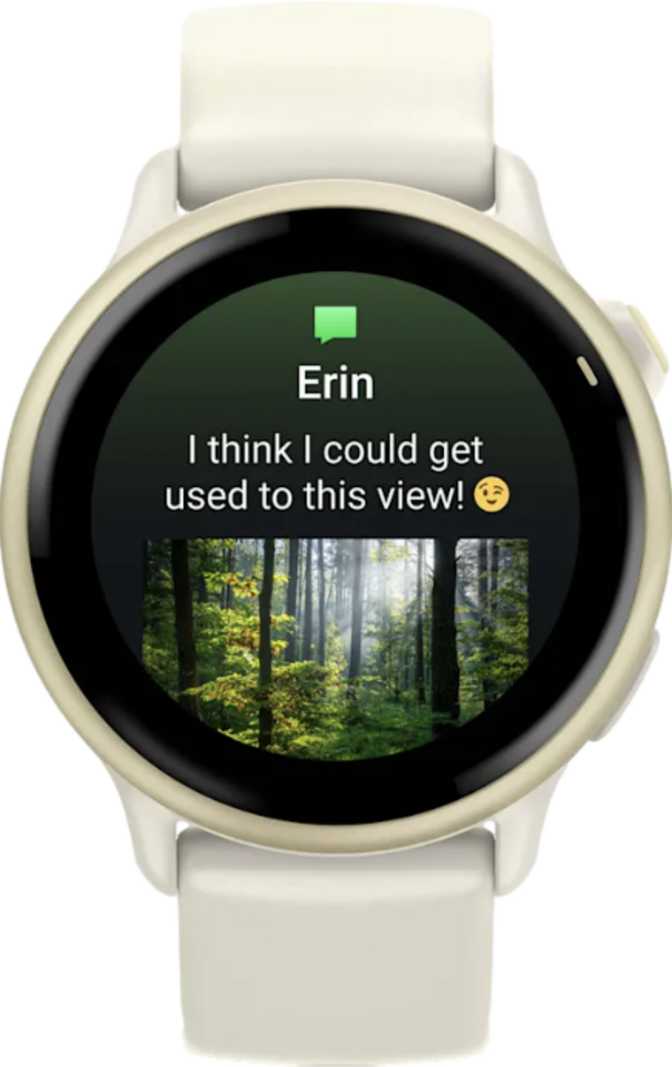
The 1.4-inch AMOLED panel delivers a pixel density of 458 pixels per inch — comparable to a premium smartphone screen and dramatically sharper than most smartwatch displays. At this density, individual pixels are completely invisible to the naked eye. Text is razor sharp, health data is legible mid-run, and watch faces look like printed designs rather than digital approximations.
AMOLED technology produces true blacks by simply switching off pixels displaying black content, which dramatically improves contrast and makes colors appear luminous. An always-on display option is available for users who prefer a natural wrist-glance over a tilt-to-wake gesture — though activating this reduces battery endurance, making it a trade-off worth considering based on your habits.
Durability and Temperature Range
The lens uses Gorilla Glass 3, which handles everyday drops, gym equipment contact, and bag scratches reliably. It is not sapphire crystal — the tougher option found on some premium Garmin models — but for the vast majority of users it provides ample protection without sacrificing optical clarity.
Physical Specifications at a Glance
- Case Diameter
- 45 mm
- Thickness
- 12 mm
- Weight
- 38 g
- Band Width
- 22 mm (replaceable)
- Display Size
- 1.4″ AMOLED
- Resolution
- 454 × 454 px / 458 ppi
- Glass Protection
- Gorilla Glass 3
- Water Resistance
- 5 ATM / 50 m
- Temperature Range
- −20°C to +55°C
Water Resistance Explained
The 5 ATM / 50-meter rating means swimming laps, open-water swims, and snorkeling are all within scope — far beyond shower or splash protection. The Venu 4 is not designed for scuba diving, but almost no smartwatch buyer needs that.
Sensor Suite: The Engine Behind the Health Intelligence
The Venu 4 carries a sensor stack that would have been extraordinary on a medical device a decade ago. Each sensor plays a specific role in the health data the watch produces — understanding what they measure helps clarify why the metrics are trustworthy.
Optical Heart Rate
Continuously reads heart rate from the wrist using light reflection, powering zone-based workout tracking, resting heart rate trends, and all cardiovascular health metrics.
Pulse Oximeter (SpO2)
Estimates blood oxygen saturation — how much hemoglobin is actively carrying oxygen. Monitors altitude adaptation, sleep quality, and flags breathing irregularities during rest.
Body Temperature
Tracks skin temperature trends throughout the day and night, contributing to menstrual cycle predictions and early illness detection when combined with other health signals.
Barometer
Measures atmospheric pressure for accurate elevation tracking during hikes and runs — meaningfully more precise than GPS-only altitude readings, which can drift significantly over time.
Compass & Gyroscope
Tracks movement direction and orientation in three dimensions, enabling turn-by-turn navigation accuracy and powering automatic activity detection without manual input.
Accelerometer
Measures motion across all axes, powering step counting, fall detection, workout auto-detection, and swimming stroke analysis including lap and stroke-type recognition.
What Is Not Included
The Venu 4 omits a dedicated cadence sensor — primarily relevant to cyclists wanting pedaling rate data — and a perspiration monitor. The cadence gap is bridged through ANT+ accessory pairing. Sweat-based metrics remain emerging technology and are not yet a primary health signal, so their absence does not represent a meaningful gap for most buyers.
Battery Life: The Full Picture
Battery performance is one of the most practically important factors in any smartwatch purchase. The Venu 4's numbers deserve honest analysis rather than headline marketing claims.
| Usage Mode | Duration | Practical Meaning |
|---|---|---|
| Standard Smartwatch | Up to 12 days | Charge once or twice per month with full health tracking active |
| GPS Active | Up to 19 hours | Covers ultramarathon events and full-day outdoor navigation |
| Power-Saving Mode | Up to 25 hours | Basic time and step tracking with extended reserve for travel |
| Full Recharge Time | ~1 hour | A 30-minute morning charge meaningfully extends the day's use |
What 12 Days Actually Means
Twelve days of standard smartwatch use — with notifications, continuous heart rate monitoring, and all health tracking active — means most wearers charge once every one to two weeks. That's a meaningful quality-of-life advantage over watches requiring nightly charging, particularly for sleep tracking, where a dead battery at 2am means a lost night of data.
The one-hour full recharge is fast enough to matter when your morning routine is the only charging window available. A brief charge during breakfast can restore enough reserve to cover an afternoon long run with GPS on.
Battery Life at a Glance
Standard Mode — 12 days
Maximum endurance
Power Save Mode — 25 hours
Scaled to 30-hour baseline
GPS Active Mode — 19 hours
Scaled to 30-hour baseline
Notable Limitations
The Venu 4 does not support wireless charging. A proprietary Garmin cable is the only charging method — an inconvenience for those already organized around wireless pads, and worth factoring in when traveling.
There is no solar charging option. Garmin's Fenix and Instinct Solar lines serve that need. For the Venu 4's target audience — health-focused daily users rather than remote wilderness explorers — cable charging and 12-day endurance are an acceptable balance.
Health and Wellness Tracking: Where the Venu 4 Differentiates Itself
This is the Venu 4's clearest argument against the competition. The depth of health monitoring packed into a 38-gram case includes features that command premium pricing on rival platforms — here, they come standard with no subscription required.
Cardiovascular Intelligence
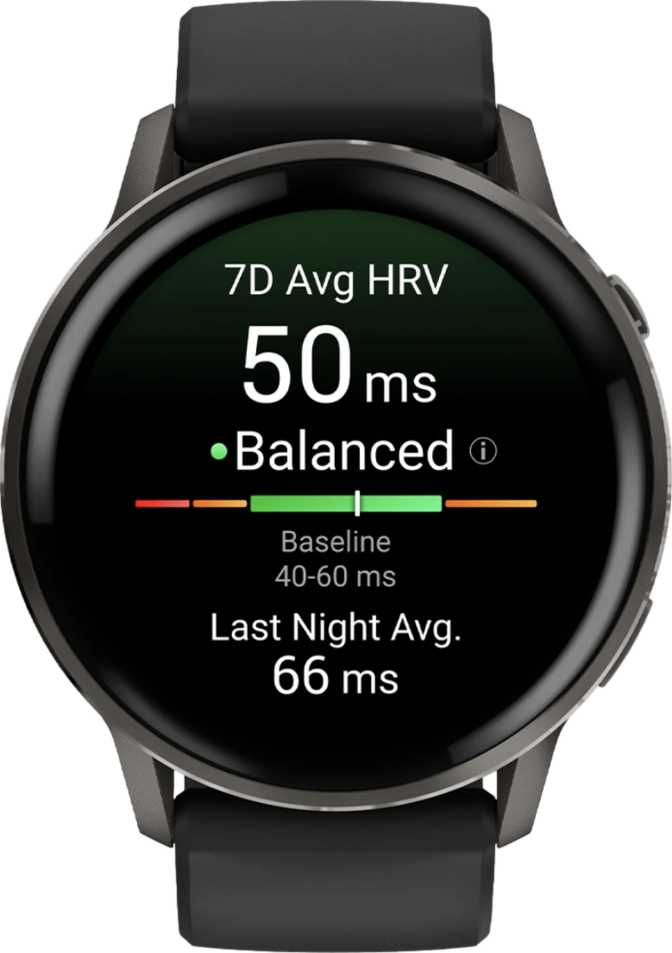
Heart rate variability (HRV) tracking measures the variation in time between heartbeats — a clinically recognized marker of autonomic nervous system health, stress load, and recovery status. The Venu 4 tracks this continuously and feeds it into Garmin's Body Battery score, giving you a practical morning number that indicates whether today is a day to push hard or recover smart.
VO2 max estimation benchmarks your aerobic fitness — how efficiently your cardiovascular system delivers oxygen to working muscles during sustained effort. The watch estimates this during outdoor runs using pace and heart rate data, producing results that correlate closely with lab-measured values without a treadmill test.
ECG functionality generates a single-lead electrocardiogram reading on demand, helping detect atrial fibrillation — an irregular rhythm that substantially raises stroke risk and is frequently undiagnosed. Passive irregular heart rate warnings alert you when patterns look unusual during rest.
Fall detection provides a meaningful safety layer for older wearers, solo athletes in remote terrain, or anyone with a condition that raises fall risk.
Sleep Tracking
Sleep data from the Venu 4 goes beyond total hours logged. The watch distinguishes between light sleep, deep sleep, REM sleep, and wakefulness — providing a layered view of sleep quality rather than a simple on/off count.
The pulse oximeter monitors breathing regularity during sleep, contributing to a morning sleep score and Body Battery recovery estimate. For anyone managing sleep quality due to stress, training load, or health conditions, this data becomes actionable over weeks of trend observation.
Women's Health Features
The Venu 4 includes a complete set of reproductive health tools: menstrual cycle logging, period start date prediction, ovulation prediction, and fertile window notifications.
These draw on body temperature sensor data as well as cycle history, making predictions more personalized over time. For users who currently rely on a separate fertility tracking app, the Venu 4 consolidates this at the wrist with no additional app required.
Activity and Sport Modes
Multi-sport mode covers running, cycling, swimming, hiking, golf, and beyond. Swim stroke counting tracks stroke type and laps with genuine accuracy. Golf-specific features include course mapping and round tracking.
Activity auto-detection recognizes when you start walking, running, or swimming without a manual workout start — a detail that matters on days when remembering to press a button is the last thing on your mind. Food intake, water consumption, calorie expenditure, BMI, and weight tracking round out the wellness picture.
Connectivity: What Plugs In and What Does Not
| Feature | Supported | Practical Use |
|---|---|---|
| Bluetooth | Phone pairing, notifications, call control when phone is nearby | |
| Wi-Fi | Sync data and download music independently of your phone | |
| NFC / Garmin Pay | Contactless payments at terminals — no wallet or phone needed | |
| ANT+ | Connect chest HR straps, power meters, cadence sensors, smart gym gear | |
| Galileo Satellite | Dual-constellation GPS for improved accuracy in challenging terrain | |
| iOS Compatible | Full feature parity on iPhone — no degradation vs Android | |
| Android Compatible | Full feature parity on Android — no degradation vs iOS | |
| Cellular / LTE | Not available — Bluetooth phone proximity required for full function |
ANT+: The Training Ecosystem Advantage
ANT+ support is the gateway to a wider training ecosystem that Apple Watch and Samsung Galaxy Watch cannot access. It allows the Venu 4 to pair with external chest-strap heart rate monitors for greater accuracy during high-intensity intervals, cycling power meters, cadence sensors, and compatible smart gym equipment. For athletes who want data beyond wrist-based sensing, this single feature is a decisive advantage.
No Cellular: The Trade-Off
The Venu 4 cannot independently receive calls beyond Bluetooth range or stream music without pre-downloading content. For users who want to leave their phone behind entirely during workouts, this is a meaningful limitation.
For most buyers, the trade-off is reasonable — the absence of a cellular radio is a key reason battery life reaches 12 days rather than 2.
Software and App Experience
Garmin Connect: No Subscription, No Ads
The companion app is Garmin Connect — available free of charge, with no paid tier required for any health feature and no advertising anywhere in the platform. Activity reports, workout history, health trend graphs, goal setting, adaptive coaching plans, and social challenges are all included from day one. The platform syncs with external calendar apps and is available on both mobile and desktop across Windows and macOS.
8 gigabytes of onboard storage holds a meaningful music library — enough for several hundred songs downloaded from compatible streaming services or uploaded personal files. Wi-Fi download means loading new playlists is possible without connecting to a computer.
Training Intelligence and Voice Feedback
Garmin Coach provides adaptive training plans that adjust based on current fitness level and measurable progress — structured programs for 5K through marathon distances and beyond. Voice feedback during workouts delivers real-time audio cues for pace, distance, and coaching without requiring a wrist glance mid-effort.
Live tracking lets designated contacts follow your location in real time during runs or rides — a genuine safety feature for solo athletes. Voice commands allow hands-free control, and the watch supports video tutorials for new users, customizable watch faces, and fully personalized data screen layouts.
Free App
No subscription ever
Ad-Free
No advertising anywhere
8GB Music
Onboard local storage
Live Tracking
Real-time location sharing
Who Should Buy the Garmin Venu 4 — and Who Should Not
This Watch Is Right For
- Health-focused daily wearers who want clinical-grade monitoring — ECG, SpO2, HRV, body temperature, fall detection — in a watch appropriate for work and evening wear.
- Casual to intermediate athletes training across multiple disciplines — running, swimming, cycling, hiking, golf — who want one watch to cover all of it.
- Women prioritizing reproductive health tracking at the wrist, including cycle logging, fertility, and ovulation predictions powered by body temperature data.
- Older adults or those with cardiovascular concerns for whom ECG, irregular heart rate alerts, and fall detection provide meaningful reassurance.
- Existing Garmin ecosystem users who want a lifestyle-oriented body to anchor their Garmin Connect data history.
This Watch Is Not Right For
- Multi-day expedition hikers and ultra-endurance athletes who need solar charging or week-long GPS endurance. Garmin's Fenix and Instinct Solar lines are built for those scenarios.
- Users who want full LTE independence — making calls, streaming music, or receiving alerts without a paired smartphone requires cellular, which the Venu 4 does not have.
- Serious cyclists focused on power training without the willingness to pair external accessories. There is no native cadence sensor, though ANT+ bridges this gap with a compatible device.
- Buyers expecting wireless charging — a proprietary cable is the only charging option, creating friction for travelers organized around wireless pads.
How the Garmin Venu 4 Compares to the Alternatives
Positioned against the logical alternatives in the same price and feature tier:
| Feature | Garmin Venu 4 | Apple Watch (comparable tier) | Samsung Galaxy Watch (comparable tier) | Garmin Fenix (comparable tier) |
|---|---|---|---|---|
| Display Type | AMOLED | LTPO OLED | AMOLED | MIP / AMOLED |
| Battery (Standard) | ~12 days | ~18–36 hours | ~3–5 days | 16–18+ days |
| ECG | ||||
| Cellular Option | Yes (some models) | |||
| Solar Charging | Yes (some models) | |||
| ANT+ Support | ||||
| GPS Constellations | GPS + Galileo | GPS + L5 | GPS + Galileo | GPS + Multiple |
| Platform Support | iOS + Android | iOS Only | Android-First | iOS + Android |
| Onboard Maps | With phone | Limited | ||
| App Subscription | None | Some features | Some features | None |
Honest Assessment: Strengths and Weaknesses
Where the Venu 4 Excels
The Venu 4's strongest argument is the combination of display excellence and health depth inside a form factor that does not alienate non-athletes. The 458 ppi AMOLED screen is best-in-class at this watch size, and the health feature set — ECG, HRV, SpO2, body temperature, fall detection — matches or exceeds what competing platforms charge a premium tier to unlock.
- Best-in-class 458 ppi AMOLED display for this case size and price point
- 12-day battery with continuous health tracking — no daily charging ritual
- ECG, HRV, SpO2, body temperature, and fall detection — all included, no premium
- ANT+ unlocks a wide professional training accessory ecosystem
- Equal full-featured experience on both iOS and Android
- Free, ad-free Garmin Connect — no ongoing subscription cost
- 8GB onboard storage eliminates phone dependency for music during workouts
- 38g weight is remarkably light given the sensor and feature density it carries
Where It Makes Compromises
No watch at this price point delivers everything. The Venu 4's compromises are real and worth weighing honestly against your specific priorities before committing to a purchase.
- Proprietary cable charging only — no wireless pad support creates friction for travelers and cable-averse users
- No cellular radio — phone proximity required for full functionality including call answering and on-demand music streaming
- Gorilla Glass 3, not sapphire crystal — adequate for most users but more scratch-prone under sustained rough conditions
- No solar charging option — expedition athletes needing multi-week off-grid endurance should look at Garmin's Fenix or Instinct Solar lines
- One-year warranty — standard for the category but some premium competitors extend to two years
Questions Real Buyers Are Asking
The most commonly searched questions before purchasing the Garmin Venu 4, answered directly.
Final Recommendation
The Garmin Venu 4 is the right watch for someone who wants health monitoring that a physician would find credible, paired with a display that a designer would find impressive, inside a case that does not announce "I run marathons" at the office. It handles everyday life, serious training, and medical-adjacent health monitoring — all without requiring a nightly charge.
It is not a replacement for a rugged expedition watch, and it will not satisfy buyers who need LTE independence or wireless charging. But for the large majority of health-conscious adults — whether training for a 10K, managing cardiovascular health, tracking a menstrual cycle, or simply wanting to understand their body better — the Venu 4 delivers a depth of insight and quality of experience that is difficult to match at its price point.
Highly Recommended
Purchase Verdict: If your priority is health intelligence in a genuinely attractive, long-lasting smartwatch that works across both major phone platforms, the Garmin Venu 4 earns a clear recommendation. The display alone justifies serious consideration; the health feature set closes the deal.