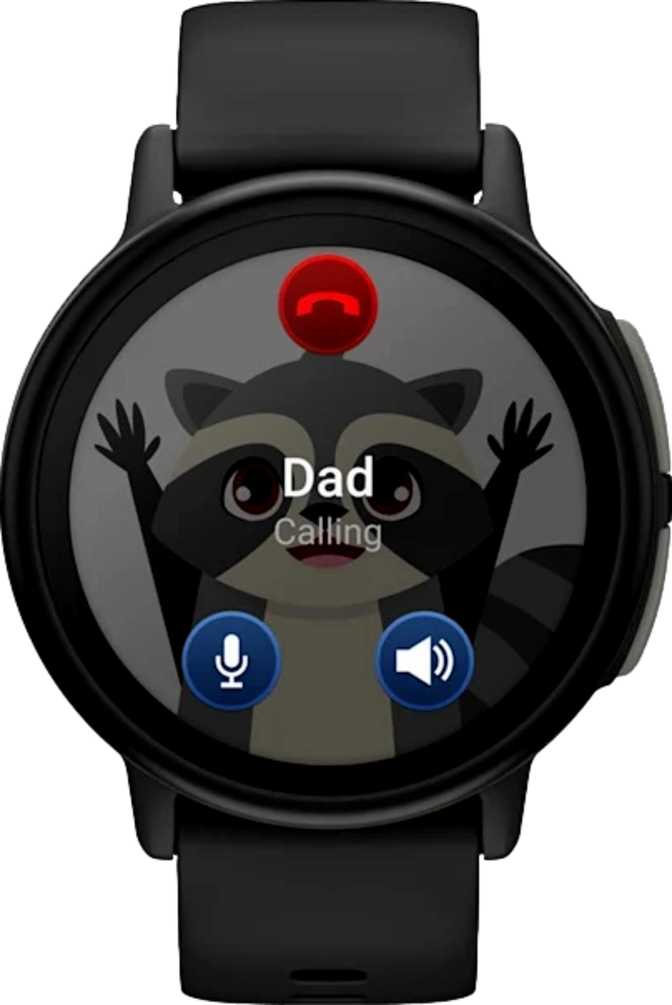
Garmin Bounce 2 Review: A Kids' Safety Smartwatch That Earns Attention
SmartwatchesMost children's wearables fall into one of two camps: cheap fitness trackers with colorful bands that kids abandon in a week, or watered-down adult smartwatches that miss what parents actually need. The Garmin Bounce 2 is a deliberate attempt to occupy neither of those spaces. Purpose-built for kids, it pairs Garmin's reliable GPS and activity-tracking heritage with cellular independence, voice calling, and fall detection — all in a package light enough that a child won't even notice it's there. Whether it delivers on that promise depends heavily on what you expect from it.
Design and Build Quality: Built Small, Built to Last Runs
At 43mm across and just 26.5 grams, the Garmin Bounce 2 is genuinely wearable for smaller wrists. For context, most adult smartwatches start around 45mm and often exceed 50 grams — the Bounce 2 is closer to wearing a standard watch than a tech brick. The slim 12.4mm profile means it won't snag on jacket cuffs or interfere with backpack straps during a school day.
The band is user-replaceable, which matters more on a kids' watch than almost any other category. Bands wear out, get chewed, get lost. The ability to swap them without tools or a warranty claim is a practical everyday convenience.
Water resistance is rated at 5 ATM, which translates to protection against swimming, rain, splashing, and shower water. It handles everything a child's day can throw at it — pools, puddles, and summer sprinklers included.
- Size43 × 43 mm
- Thickness12.4 mm
- Weight26.5 g
- Water Resistance5 ATM
- BandReplaceable
- Screen GlassStandard (unhardened)
Display: Sharp, Vivid, and Appropriately Compact
The 1.2-inch OLED screen runs at 390 × 390 pixels with a pixel density of 459 pixels per inch. At that density, text and icons appear crisp and clean at normal viewing distance with no visible pixelation. For a kid's wrist — where glanceable clarity matters — the screen does its job well.
OLED technology means deep blacks and high contrast rather than the flat, washed-out look of cheaper LCD panels. Colors are vivid in most lighting. The trade-off with OLED is power consumption during always-on use, which is likely why always-on display mode is not available on the Bounce 2. The screen activates on wrist raise or tap — a sensible engineering decision for a watch with a two-day battery window, not an oversight.
Cellular Independence: The Feature That Changes Everything
The watch carries a built-in eSIM — a digital SIM embedded in the hardware — meaning it can connect to a cellular network without needing to be tethered to a phone nearby. In practice, a child wearing the Bounce 2 can receive calls, make calls, and be tracked via GPS whether or not a smartphone is in the same building, same neighborhood, or same country.
For parents, the implications are significant. A child walking to school, at a friend's house, or at an after-school activity can be reached directly on the watch. Combined with Wi-Fi connectivity, the watch can stay connected in environments where cellular signal is weak — at home or in school buildings — without dropping off the network.
GPS and Location Tracking: Garmin's Strongest Card
Garmin's GPS implementation on the Bounce 2 supports both the standard GPS satellite constellation and Europe's Galileo system. Using two independent satellite networks improves location accuracy and reduces fix wait times, particularly in areas where one system has limited sky coverage — dense urban environments, heavily forested areas, or locations near tall structures.
For parents using this watch as a location safety device, this dual-network approach is meaningful. It increases the likelihood that the watch correctly reports a child's position in challenging environments, rather than showing a location that's 50 meters off or a last-known position that's several minutes stale.
- Dual constellation (GPS + Galileo) for improved accuracy in urban canyons, forests, and covered environments
- Real-time location reporting so parents see current position, not outdated cached data
- No barometer or elevation tracking — not designed as a hiking tool or junior adventure GPS
- No route-building or turn-by-turn navigation — tracks where the child has been, not where they're going
Activity Tracking: Fitness Without the Complexity
The Bounce 2 tracks the fundamentals that matter for an active child: steps taken throughout the day, distance covered, pace during activity, and automatic detection of when a physical activity begins. For swim-active families, the watch includes a stroke counter — useful for parents coaching technique or simply logging pool sessions.
Sleep tracking with detailed reports gives parents visibility into sleep duration and patterns. For children with inconsistent sleep habits or parents reinforcing bedtime routines, this data is genuinely useful. Food and calorie logging, water intake tracking, weight tracking, and goal-setting are all available through the companion app — structured around motivational achievements rather than clinical obsession.
What the Bounce 2 does not do is health monitoring in the medical or fitness-enthusiast sense. There is no heart rate sensor, no blood oxygen measurement, no HRV tracking, no VO2 max estimation, and no temperature monitoring. This is a conscious product decision, and for the target age group it is almost certainly the right one.
What It Tracks
- Daily steps and total distance
- Activity pace and auto-detection
- Sleep duration and quality reports
- Swim stroke counting
- Calories burned and food intake logging
- Water intake and weight tracking
What It Does Not Track
- Heart rate (no sensor present)
- Blood oxygen (SpO2)
- HRV and recovery metrics
- VO2 max estimation
- Elevation gain and altitude
- Multi-sport GPS routing
Fall Detection: A Safety Net That Works in the Background
Fall detection is a feature more commonly associated with senior-focused wearables, but its presence on the Bounce 2 reflects how Garmin is thinking about the full spectrum of child safety scenarios. The accelerometer continuously monitors for impact patterns consistent with a fall. If one is detected, the watch can initiate an alert — a meaningful reassurance for parents of younger children, children who cycle to school, or kids with health conditions that increase fall risk.
Battery Life: The Most Important Conversation Before Buying
Two days is short. Most adults are accustomed to charging their smartwatches nightly, but on a children's device, charging compliance becomes a shared responsibility. A forgotten charge one night means a dead watch mid-school day — no GPS tracking, no call capability, and no fall detection for the hours that matter most.
There is no wireless charging. The watch charges via cable only, and there is no solar assist. The battery is not removable or swappable.
For families willing to build a nightly charging habit into the routine, this is manageable. For families with inconsistent routines or children who are forgetful about charging, this is a real operational challenge that should be considered seriously before purchase. It is the single most significant practical limitation of the device.
Internal Storage and the 3.5mm Jack: A Curious Bonus
The Bounce 2 includes 4 gigabytes of onboard storage — meaningful capacity on a device this size. Given that the watch handles calls and voice commands but does not include a camera or large media apps, this storage likely accommodates music files, app data, and offline content.
The presence of a 3.5mm headphone jack is unusual enough to mention. Most wearables have eliminated the port entirely. On a kids' watch, it suggests the possibility of wired headphone use — perhaps for listening to stored audio during long car journeys or quiet time. This is not a primary feature, but it adds versatility that competing devices typically lack.
Who This Watch Is For — and Who It Is Not
The Bounce 2 has a clear target audience. The question is whether your family is in it.
- Your child is roughly 6–12 years old and does not yet carry a personal smartphone
- Location visibility and the ability to reach your child directly is the primary concern
- Your family can commit to a nightly charging routine without fail
- You want fitness and activity motivation without clinical health monitoring
- Swimming is a regular part of your child's activities
- You need more than two days of battery life — there is no workaround for this constraint
- Heart rate monitoring or physiological health data matters to your use case
- Your child is a serious young athlete needing GPS routes, elevation tracking, or performance metrics
- You want NFC contactless payments as a cashless tool for your child
- Forgotten chargers are already a recurring household problem
How the Garmin Bounce 2 Compares
The Bounce 2 trades battery endurance for cellular independence and a premium OLED display. Here is how that trade-off plays out against the broader market.
| Feature | Garmin Bounce 2 | Typical Kids Fitness Band |
Standard Kids GPS Watch |
|---|---|---|---|
| Cellular / eSIM | Yes | No | Sometimes |
| OLED Display | Yes | Rarely | Rarely |
| GPS Accuracy | Dual-Network (GPS + Galileo) |
GPS only or none | GPS only |
| Fall Detection | Yes | No | Rarely |
| Heart Rate Monitor | No | Sometimes | Rarely |
| Water Resistance | 5 ATM (swim-safe) |
1–3 ATM (splash only) |
Varies |
| Battery Life | ~2 days | 3–7 days | 2–5 days |
| Voice Commands | Yes | No | No |
| Build Weight | 26.5 g | 20–35 g | 30–50 g |
Honest Assessment: Strengths and Limitations
Where It Earns Its Place
- The eSIM cellular capability, dual-constellation GPS, fall detection, and call functionality form a genuinely useful safety package — not a collection of marketing checkboxes.
- Display quality is well above what this category typically delivers. At 459 pixels per inch on OLED, it looks like a premium wearable regardless of the kids' category it sits in.
- At 26.5 grams, children are unlikely to resist wearing it — the silent failure mode of most kids' wearables solved by a featherlight build.
- Garmin has not simply slapped kid-friendly colors on an adult fitness tracker. This is a purpose-built product with a clear understanding of what parents worry about.
- 5 ATM water resistance means swim sessions, puddle stomping, and summer water play are all covered without a second thought.
Where It Falls Short
- Two-day battery is not a footnote — it is the defining constraint of daily ownership. A GPS safety watch that dies mid-afternoon is no longer a safety device.
- Wireless charging would meaningfully reduce daily friction. Cable-only charging on a children's device adds a daily ritual that requires active participation from parent or child.
- No hardened glass is a genuine concern given the target demographic's relationship with playground surfaces. Screen protectors are strongly recommended from day one.
- The absence of heart rate monitoring limits fitness tracking depth for families who want a junior fitness partner as the child grows into adolescence.
- No always-on display means the watch face goes dark, which can feel less “watch-like” for older children who may find this socially noticeable.
Questions Real Buyers Ask First
Answers to the searches you're probably running alongside reading this review.
Recommended — With One Non-Negotiable Condition
The Garmin Bounce 2 earns its place as one of the more thoughtfully designed kids' smartwatches available. The combination of eSIM cellular, dual-network GPS, fall detection, and OLED display quality represents a clear value proposition for parents whose primary concern is staying connected with and informed about their child's safety and location.
The verdict: Recommended for parents of younger children who value communication and location safety over fitness depth or battery endurance. For families who can build the charging habit in, the Bounce 2 delivers meaningful peace of mind in a featherlight package.
For families where forgotten chargers are already a known household problem, that promise will regularly go unfulfilled. Go in with open eyes on the battery, and this is a well-executed, purpose-built device from a brand with a proven track record in GPS reliability.