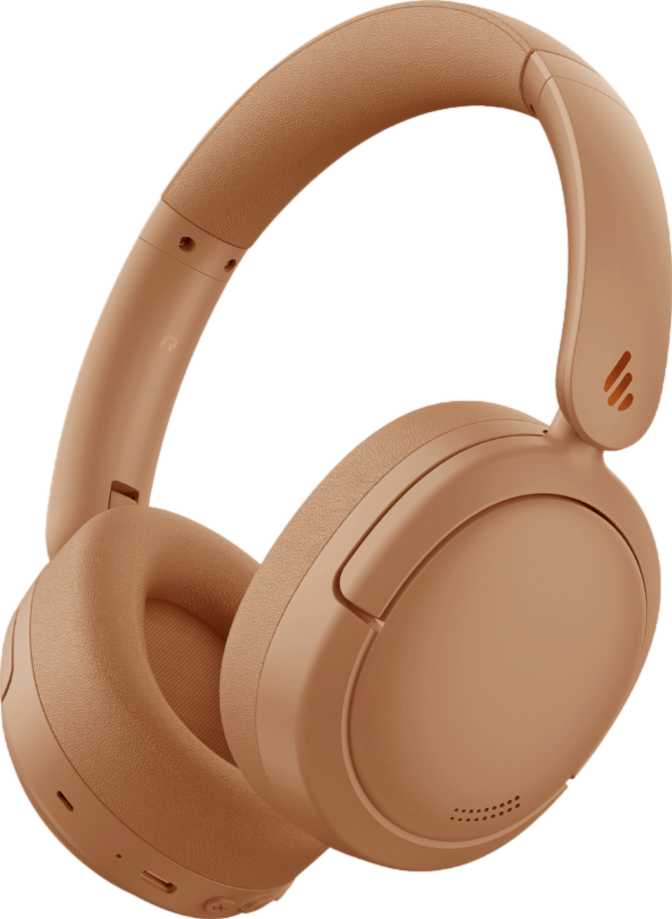
Edifier V80 Full Review: Class-Leading Battery With Real Trade-offs
HeadphonesQuick Summary
Edifier V80 — At a Glance
The Edifier V80 is a closed-back, wireless ANC headphone built around one defining advantage: battery endurance. It enters a competitive market where buyers want active noise cancellation without premium pricing — and its specification sheet reflects both genuine strengths and genuine compromises. Which side of that ledger matters most to you is exactly what this review will determine.
- Form Factor
- Over-Ear
- ANC
- Included
- Ambient Mode
- Yes
- Bluetooth
- v 5.4
- Multipoint
- 2 Devices
- Weight
- 480 g
- Water Resistance
- None
- Warranty
- 1 Year
Performance at a Glance
Design and Build
Physical Experience & Portability
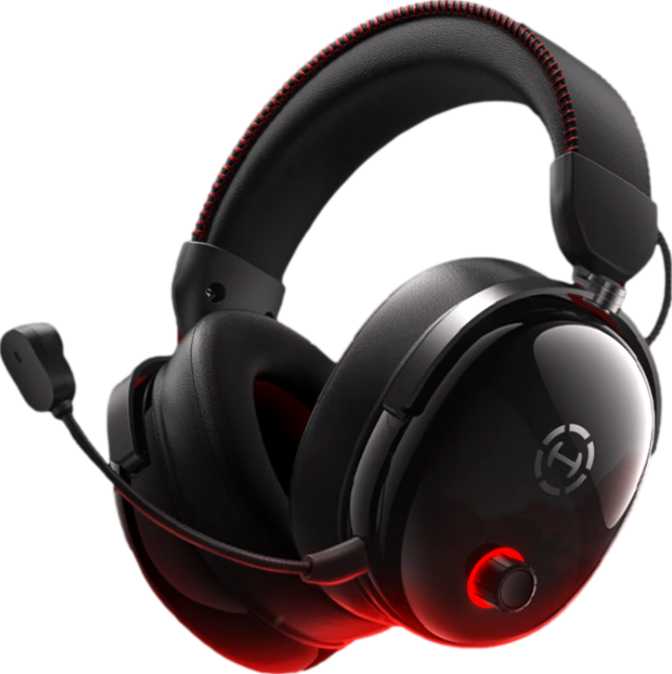
The V80 is a closed-back, over-ear headphone. The ear cups fully enclose your ears and the back of each cup is sealed — a structural choice that reinforces both passive isolation and the ANC system, creating a layered noise-blocking approach rather than relying on electronics alone.
For everyday portability, the V80 folds flat and the audio cable detaches. Together, these two features allow the headphone to compress for bag storage while retaining a wired fallback if the battery runs out. No single point of failure silences you mid-session. The tangle-free cable earns its keep in daily bag-in, bag-out use.
Portability and Physical Features
-
Foldable frame — compresses flat for packing and travel storage without a bulky case
-
Detachable cable — wired connection is always available when the battery is exhausted
-
Tangle-free cable — a daily convenience that holds up in consistent grab-and-go use
-
Closed-back design — passive isolation reinforces ANC and prevents audio leaking to people nearby
-
On-device controls — playback and call management handled directly from the ear cup panel
At 480 grams, the V80 is substantially heavier than the 230–320 gram range typical for ANC headphones in this tier. Even premium metal-framed models from established brands rarely reach this figure.
Short sessions may not surface this issue. Three-to-four hour continuous wear is where the accumulated mass begins to matter. Anyone with a history of headphone fatigue or pressure sensitivity should strongly consider an in-store trial before committing.
The V80 carries no water or sweat rating — not even basic splash protection. It is strictly an indoor headphone. Gym sessions, outdoor runs, and rainy commutes are not suitable use cases.
The V80 uses non-neodymium drivers — uncommon in this category. Most modern headphones use neodymium for its efficiency in compact form. The likely alternative, ferrite magnets, are denser and are a probable contributor to the headphone's above-average weight.
Sound Performance
Driver Capability & Wireless Audio Quality
Driver and Frequency Range
Each ear cup houses a 40mm driver — a standard diameter for over-ear headphones that, in well-engineered implementations, handles the complete audible frequency spectrum with headroom. The V80's drivers extend from the deepest notes human hearing can detect up to 40,000 Hz, a ceiling that runs twice as high as the upper limit of typical human hearing.
That extended high-frequency reach is associated with Hi-Res Audio capability and becomes relevant with recordings made at higher sample rates. Whether its practical perceptibility is audible to most listeners is a longstanding audiophile debate — but it signals that Edifier engineered these drivers with overhead rather than optimizing only for the midrange. The sensitivity is moderate, reaching comfortable volumes from any modern smartphone without easily hitting extreme loudness.
Wireless Codec Support
Audio quality over Bluetooth depends on the codec — the compression algorithm that determines how much of your original recording survives the wireless journey to the headphone. This is where the V80's wireless ceiling becomes clear.
AAC performs consistently on Apple devices — iPhones and iPads handle it well, and streaming services deliver solid results. For Android users, AAC implementation varies across manufacturers and can be less predictable. Listeners who stream at maximum resolution on Android or use LDAC-capable services will encounter a wireless audio ceiling noticeably lower than what they may be accustomed to.
Bypass the Codec Entirely
When connected via the included cable, the Bluetooth codec is irrelevant. The physical connection delivers the full driver frequency range without compression — giving quality-focused listeners complete access to the V80's audio capability regardless of wireless codec limitations.
Who Notices the Codec Ceiling?
- Android users with LDAC-enabled devices or hi-res streaming subscriptions
- Audiophiles who have experienced aptX HD or aptX Adaptive headphones
- Apple users and standard-quality streamers — AAC delivers a reliable result for this group
Active Noise Cancellation & Ambient Mode
Blocking Out the World — and Letting It Back In
Active Noise Cancellation
The V80's ANC targets sustained, continuous ambient noise — the type that surrounds most desk workers, commuters, and travelers. Airplane cabin hum, open-plan office HVAC, and the steady rumble of public transit are what it handles best.
The closed-back over-ear design adds a physical sound barrier on top of the electronic system. The combination creates layered protection effective for focus work and travel. Sharp sudden sounds — a door slam, a shout — won't be neutralized, but sustained background noise is meaningfully reduced.
Ambient Sound Mode
Ambient mode works in the opposite direction — instead of filtering the world out, it uses the external microphones to pipe environmental sound into your listening experience.
This is practically useful for city commuters who need to hear platform announcements, for moments in shared spaces where full isolation would be antisocial, or for any situation requiring situational awareness without removing the headphones.
ANC Battery Impact
Running ANC draws additional power — a 19-hour trade-off between maximum endurance and maximum noise isolation. Knowing which mode you use most often determines the real-world battery life you should plan around.
The V80 has no ear-detection sensor. Unlike many competitors, it will not automatically pause playback when you lift the headphones off your head or lower them around your neck. You pause manually — small daily friction that accumulates for anyone who regularly takes headphones on and off throughout the day.
Battery Life
The V80's Most Compelling Specification
A listener who uses the V80 for three hours every day with ANC off would recharge it roughly every two weeks. Even with ANC running constantly — the more demanding mode — the same usage pattern means a charge every two to three days. Both numbers sit meaningfully above what most competing ANC headphones in this price tier deliver.
For frequent travelers or users who regularly forget to charge their headphones, this endurance advantage is a genuine daily-life benefit rather than a marketing stat. Among all the V80's specifications, this one argues most clearly for its purchase.
Charging Details
-
USB-C charging port — use any standard cable already in your bag; no proprietary connector to track down or replace
-
On-device battery indicator — remaining charge is visible at a glance; no surprise shutdowns mid-session
-
No wireless charging — a cable is always required; Qi charging is absent at this price tier
Connectivity
Bluetooth 5.4 & Wireless Performance Realities
The V80 uses Bluetooth 5.4, the most current generation of the standard. In practical terms, this brings improved connection stability and lower power consumption compared to earlier versions — positioning it well for ongoing device compatibility even as the broader Bluetooth ecosystem evolves.
Connectivity Specifications
Multipoint: Two Devices at Once
The V80 stays paired to two devices simultaneously — a laptop and a phone, for example. Audio switches automatically when a call arrives or video starts on one of them.
For desk workers who move between work and personal devices throughout the day, this removes the manual disconnect-and-reconnect step entirely.
A 10-meter specified range is shorter than the 30+ meters many competitors advertise. Real-world Bluetooth always falls short of specification — meaning walking between rooms with your device in another may cause dropouts. For stationary desk or commute use, this is not an issue.
At 60ms latency, the V80 creates a noticeable delay between in-game action and audio response. There is no low-latency wireless mode. For any gaming application beyond purely passive listening, look elsewhere.
Microphone & Call Quality
Voice Transmission and Headset Performance
The V80 includes a built-in noise-canceling microphone that suppresses background sounds from the voice signal it transmits — so people on the other end hear your voice rather than your environment. For remote workers calling from home or commuters on loud transit, this processing provides a meaningful improvement in perceived call clarity.
Headset Capabilities
-
Full headset functionality — audio output and microphone input for calls, video conferences, and voice applications
-
Noise-canceling mic processing — filters ambient background sound from transmitted voice for cleaner call quality
-
On-device controls — call and playback management via the ear cup panel; no in-line cable remote needed
-
No hardware mute button — muting during calls requires using the calling application (Teams, Zoom, Meet) rather than a single tap on the headphone itself
Best Use Case: Remote Work
The combination of noise-canceling microphone, multipoint pairing for two devices, and extended ANC battery creates a capable work-from-home headset. A full day of meetings is achievable on a single charge.
The one daily friction point is the absent hardware mute button. In a meeting-heavy schedule where muting and unmuting is frequent, toggling within the application rather than on the headphone adds a small but consistent extra step.
For Teams, Zoom, or Meet users: consider whether your keyboard shortcut for software mute adequately compensates for the absent hardware button before purchasing.
Who Should Buy the Edifier V80
Matching the Headphone to the Right Buyer
Strong Fit — Buy the V80 If...
- Battery endurance is your top priority and frequent charging genuinely disrupts your workflow or travel
- You primarily use an iPhone or iPad — AAC codec performance is most consistent and reliable within Apple's ecosystem
- You work remotely and need a headset that handles calls, stays connected to two devices, and runs through a full workday
- You commute via transit or travel frequently and want strong ANC with a battery that outlasts the journey
- You stream music at standard quality over Bluetooth and won't encounter the wireless codec ceiling
Poor Fit — Look Elsewhere If...
- You have a history of headphone fatigue or pressure sensitivity — the 480g mass becomes apparent in extended sessions
- You stream at maximum quality on Android and rely on LDAC or aptX codecs for high-resolution wireless audio
- Gaming is a primary use case — the latency makes real-time audio feedback impractical for any active gaming
- You plan to exercise or use headphones outdoors in variable weather — the complete absence of water resistance disqualifies this
- You regularly move between rooms and need reliable wireless coverage at distances beyond 10 meters
Competitive Positioning
How the V80 Compares to the Market Tier
The V80 occupies a price tier where competition is dense and every manufacturer is fighting for the same buyer. The table below compares the V80's key specifications against the general profile of headphones in adjacent price tiers. Competitor figures represent typical market ranges rather than any single named product.
| Feature | Edifier V80 | Budget ANC Tier | Mid-Range ANC Tier |
|---|---|---|---|
| Battery (ANC Off) | 45 hours | 20–30 hrs typical | 30–40 hrs typical |
| Battery (ANC On) | 26 hours | 15–20 hrs typical | 20–30 hrs typical |
| Bluetooth Version | 5.4 | 5.0–5.2 common | 5.2–5.3 common |
| Premium Codecs (LDAC / aptX) | Not Supported | Rarely included | Available at upper end |
| Foldable Design | Varies | Usually yes | |
| Detachable Cable | Rarely included | Sometimes | |
| Multipoint Pairing | 2 Devices | Sometimes | Usually yes |
| Water Resistance | None | Sometimes IPX4 | Sometimes IPX4 |
| Weight | 480 g | 250–350 g typical | 230–300 g typical |
Competitor ranges reflect general market profiles, not specific named products. Verify current specifications with individual manufacturers before purchasing.
The Honest Assessment
Strengths and Weaknesses Stated Plainly
Where the V80 Genuinely Earns Its Place
The battery is the lead story, and it earns that position honestly. Forty-five hours of wireless endurance with ANC off — and twenty-six hours with it on — outpaces most competition at this price. For buyers whose primary frustration with previous headphones was charging frequency, the V80 addresses this directly and convincingly.
The functional feature set is coherent: ANC, ambient sound mode, USB-C charging, dual-device pairing, foldable design, and a detachable cable all present in one package. For a desk worker, commuter, or frequent traveler, this covers most of what daily-use headphones need to do. The wired fallback via the detachable cable is a practical safety net that sealed-cable competitors don't offer.
Where the V80 Falls Short
The weight deserves plain acknowledgment: 480 grams is heavy for this category, and it will be felt in extended sessions. Not unusable — many people wear heavy headphones comfortably — but it is a genuine concern that should inform the purchase decision, not a footnote to overlook.
The wireless codec situation caps audio quality for quality-focused listeners on Android. The Bluetooth range is tighter than competitors, and the 60ms latency keeps the V80 off the gaming table and at the edge of comfortable video watching. The absent auto-pause and missing hardware mute button are smaller-scale omissions but create consistent daily friction.
None of these weaknesses are disqualifying for the right buyer — but they are real, and a purchase decision made without awareness of them leads to returns, not satisfaction.
Frequently Asked Questions
Questions Real Buyers Ask Before Purchasing
Edifier V80 — Our Recommendation
The Edifier V80 is the right headphone for a specific buyer: someone who places battery endurance at the top of their priority list, primarily uses Apple devices or streams at standard quality over Bluetooth, and needs a functionally complete feature set — ANC, ambient mode, USB-C charging, dual-device pairing — for desk work, commuting, or travel in stationary contexts.
The battery advantage is genuine and measurable. It is one of the longer-running ANC headphones available in this price tier, and for users whose main frustration is charging frequency, that fact alone will carry the decision.
Buyers who prioritize lightweight comfort for extended daily wear, high-resolution wireless audio on Android, low-latency gaming performance, or outdoor and athletic use should invest the time to compare alternatives that trade the battery lead for advantages in those areas. The decision is clearer once you know which column matters most to you.