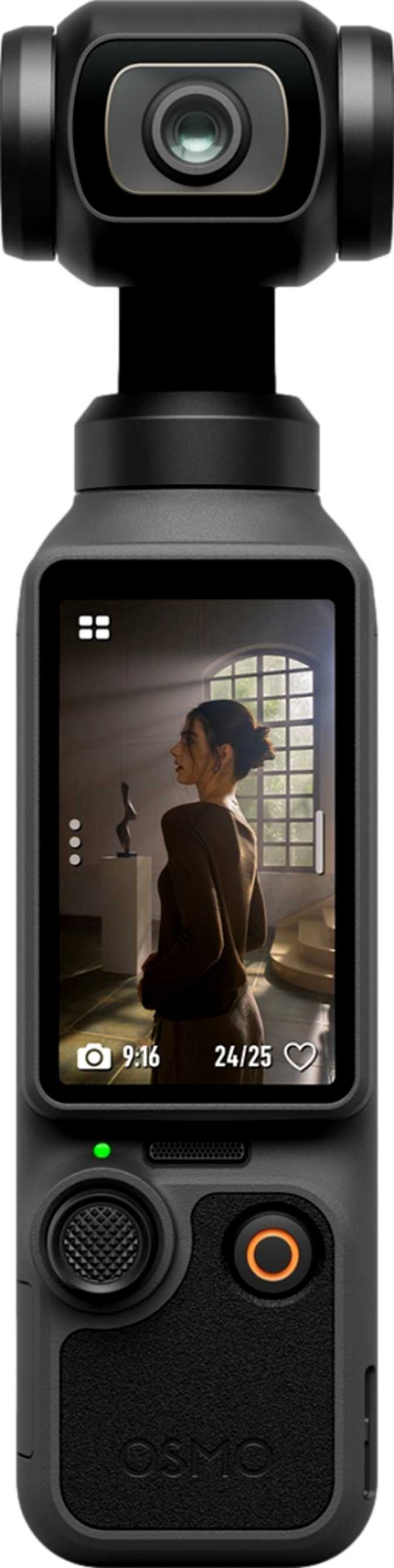
DJI Osmo Pocket 4 Full Review: Serious Camera, Pocket-Sized Form
Action CamerasMost people own a camera that sits in a drawer. The DJI Osmo Pocket 4 is designed to be the one that doesn't. Compact cameras have always promised portability, but they force painful trade-offs — image quality sacrificed for size, stabilization that frustrates, and sensors so small that anything shot indoors looks like a memory rather than a moment. The Osmo Pocket 4 attacks all of those trade-offs directly, packing a 37-megapixel imaging system, genuine 4K video capability, and mechanical stabilization into a form factor you can slip into a shirt pocket. The question isn't whether it's impressive on paper — it clearly is. The question is whether it translates into something genuinely useful in your hands, for your life.
Build, Design, and Physical Experience
A Pocket Camera That Actually Fits in a Pocket
At 144mm tall, just over 44mm wide, and 33.5mm thick — and weighing 190.5 grams — the Osmo Pocket 4 occupies roughly the same space as a thick smartphone but with a more purposeful shape. It is light enough to forget in a jacket pocket and dense enough to feel like real equipment, not a toy.
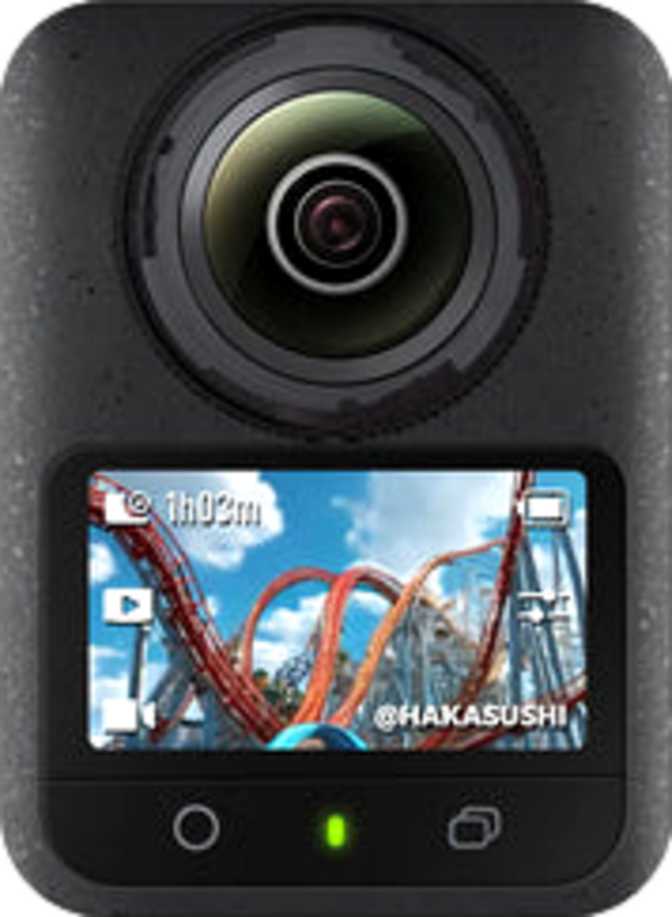
The 2-inch touchscreen on the front is a meaningful upgrade over the thumbnail-sized displays that have historically plagued compact cameras in this class. It is large enough for confident framing and menu navigation without demanding two hands or squinting. The lack of a flip-out or articulating screen is worth stating upfront: for significant front-facing video work, you will be framing blind unless you pair the camera with a smartphone via Wi-Fi. For the majority of use cases — travel, events, documentary-style shooting — the fixed screen is a non-issue.
There is no secondary screen on the back, which keeps the design clean and the body slim. What you do get is a hot shoe mount, opening the door to external accessories like lighting panels or microphone adapters. That is a welcome addition on a camera this size, and a signal that DJI is positioning this as a genuine creative tool rather than a lifestyle gadget.
Internal storage sits at 107GB — enough for hours of 4K footage without touching a memory card. An external memory slot provides a safety valve for heavy shooters. The USB-C port handles both charging and data transfer, though it operates at USB 1 speeds, meaning large 4K libraries transferred via cable will test your patience.
- Height
- 144.2 mm
- Width
- 44.4 mm
- Thickness
- 33.5 mm
- Weight
- 190.5 g
- Screen
- 2-inch touch, fixed
- Hot Shoe
- Yes
- Internal Storage
- 107 GB
- Memory Card
- External slot included
- USB
- Type-C (USB 1)
Imaging Performance: What 37 Megapixels Actually Means
Sensor Architecture
The Osmo Pocket 4's imaging foundation is a back-illuminated CMOS sensor — BSI for short — resolving 37 megapixels. Back-illumination repositions the sensor's light-gathering circuitry to maximize the area exposed to incoming light. In practical terms: cleaner shadows, less noise when shooting indoors, and more usable footage at dusk or dawn without heavy noise reduction in post.
Thirty-seven megapixels is a significant count for a camera of this size. For stills, it provides enough resolution to crop aggressively and still retain detail — useful when you cannot physically get closer to a subject. For video shooters, high-resolution sensors allow oversampling, which generally produces sharper, more detailed 4K output than a native 4K sensor would deliver.
Optics and Field of View
The lens opens to f/2 — a wide maximum aperture that allows significantly more light to reach the sensor under challenging conditions. Combined with the BSI sensor, this gives the Osmo Pocket 4 a genuine low-light advantage over cameras in its class that pair smaller apertures with smaller sensors.
The adjustable field of view is practical rather than gimmicky. Shifting between wider and tighter perspectives without physically moving gives you editorial flexibility on the fly — useful when documenting a landscape one moment and a conversation the next. Two times optical zoom extends reach without the image degradation that digital zoom produces, maintaining the same output quality as the standard field of view.
Manual Controls
For beginners, these options can simply stay untouched — the camera handles everything automatically with competent results. For photographers and videographers who know what they are doing, having full manual control available means the camera respects your craft rather than overriding it.
Video Capabilities: Where This Camera Earns Its Reputation
Resolution and Frame Rates
The headline video specification is 4K resolution combined with support for frame rates up to 240 frames per second. Standard video runs at 24 to 30 frames per second. Shooting at 240fps and playing back at 30fps produces footage that moves at one-eighth of normal speed, revealing motion the human eye cannot register in real time. A breaking wave, a dancer mid-jump, a child's laugh — all become something different when unfolded at that frame rate.
Slow motion at this level has until recently been the domain of cameras costing many times more. Its presence here meaningfully expands what a solo creator, travel vlogger, or event filmmaker can produce without a production budget. Timelapse is built in natively, requiring no third-party apps or post-production assembly.
Stabilization and Autofocus
Stabilization combines optical image stabilization — physical lens element movement counteracting camera shake — with a gyroscope-assisted system. The gyroscope reads motion data continuously and feeds it into the stabilization logic, making output noticeably smoother during walking shots than optical stabilization alone can achieve. For handheld video, this matters more than nearly any other single specification.
Autofocus uses phase-detection while recording, acquiring and locking focus faster and more reliably than older contrast-detection systems. Combined with continuous autofocus and subject tracking, the camera actively follows a moving subject across the frame without hunting or losing lock — a significant workflow advantage for solo creators filming themselves or documentarians following unpredictable action.
Audio: Capable With Known Limits
The Osmo Pocket 4 has a stereo microphone array built in — two channels of audio that capture left-right separation, giving recorded sound more dimensionality than mono recording. For casual use, travel documentation, and spoken content in quiet environments, the built-in microphone performs credibly.
The limitations are real and worth stating plainly. There is no 3.5mm audio input jack and no dedicated microphone input on the body. If you need professional-grade audio — interviews in noisy environments, broadcast-quality narration, or separate lavalier microphone feeds — the Osmo Pocket 4 cannot accommodate an external microphone through a wired connection directly.
The hot shoe accessory mount partially compensates by allowing compatible wireless audio receivers to attach to the body. This path adds cost and bulk that slightly undermines the pocketability argument. Audio-critical shooters need to factor this into their workflow planning before purchasing.
- Built-in stereo microphoneLeft-right channel separation
- Hot shoe for wireless accessoriesSupports compatible wireless receivers
- No 3.5mm microphone jackWired external mics not supported
- No dedicated audio inputNo XLR or standard mic connector
Battery and Power: Four Hours, Then What?
Four hours of continuous battery life represents a full working half-day of shooting before you need to recharge. For most use cases — a morning of travel, an afternoon event, a day of b-roll gathering — this is sufficient. The battery is removable, which is a genuine operational advantage: carry a spare, swap in seconds, and never find yourself tethered to a wall outlet during golden hour.
Fast charging support means that when you do need to top up, you are not waiting hours. The USB-C port handles charging, so any modern phone charger or power bank works. A battery level indicator keeps you informed without forcing menu navigation — a small detail that matters when moving fast in the field.
For multi-day expeditions or marathon shoot days without reliable power access, the removable battery design invites carrying two or three cells. Rather than engineering a larger, heavier battery into the body, DJI kept the form factor trim and left endurance management in your hands. For a camera at this size, that is the right call.
- Fast ChargingVia USB-C — any modern charger works
- Removable BatteryCarry spares, swap without tools
- Level IndicatorAlways visible, no menu required
- 4-Hour RuntimeFull half-day of continuous shooting
Connectivity and Ecosystem
Wi-Fi support allows the Osmo Pocket 4 to pair with both Android and iOS devices through DJI's companion app. This pairing unlocks remote control of the camera, live preview on your smartphone screen — which solves the fixed-screen limitation for front-facing use — and wireless file transfer, which is considerably more practical than the USB cable for moving footage in the field.
There is no NFC for instant pairing and no HDMI output for connecting to an external monitor or capture card. The absence of HDMI limits live-streaming setups or monitor-heavy production workflows, but this is an expected compromise for a camera at this size. Hot shoe compatibility extends the accessory range meaningfully for lighting and audio solutions without altering the core body design.
- Wi-Fi — app control and wireless transfer
- USB-C — charging and data transfer
- Hot shoe — lighting and audio accessories
- Android and iOS compatible
- No HDMI output
- No NFC pairing
Who This Camera Is For — and Who It Isn't
Ideal For
- Travelers and adventurersNeeds a capable camera that genuinely fits in a pocket without requiring a dedicated camera bag
- Solo vloggers and content creatorsRelies on reliable subject-tracking autofocus and strong stabilization to replace a dedicated camera operator
- Documentary and event shootersWorking alone and needing professional output without professional-scale gear or a crew
- Smartphone upgradersWants meaningfully better image quality and creative control without committing to a large camera system
Not the Right Fit
- Audio-first creatorsDepends on wired external microphones and requires high-quality audio capture as a primary workflow need
- Studio and controlled-environment photographersWhere portability offers no advantage and a larger sensor system would consistently outperform
- Broadcast and live-streaming operatorsNeeds HDMI output to feed signal to a capture device or video switcher
- Flip-screen vloggersRelies on an articulating screen for self-facing framing and prefers not to depend on a paired smartphone
How It Compares to the Logical Alternatives
The Osmo Pocket 4 occupies a distinct position. Action cameras match it on portability but consistently deliver lower image quality and less creative control. Entry-level compact mirrorless systems outperform it on sensor size and audio flexibility but give up the pocket-friendly form factor entirely. Within its specific niche — high-quality, stabilized, intelligent video in the smallest reasonable package — it has very few direct competitors offering this combination of resolution, frame rate, and autofocus capability.
| Feature | DJI Osmo Pocket 4 | Typical Action Camera | Compact Mirrorless (Entry) |
|---|---|---|---|
| Stabilization | Optical + gyroscope | Digital / electronic only | Optical (body or lens) |
| Sensor Quality | Large for class, BSI | Small | Larger, interchangeable lens |
| Slow Motion | Up to 240fps | Up to 240fps | Often limited at 4K |
| External Audio | No wired input | Varies by model | Usually available |
| Form Factor | Truly pocketable | Very small | Too large for a pocket |
| Video Autofocus | Phase-detect + tracking | Basic to moderate | Generally excellent |
| Internal Storage | 107 GB | None to minimal | None |
| Removable Battery | Yes | Yes | Yes |
| Screen | 2-inch touch, fixed | Small, limited | Larger, often articulating |
Strengths and Honest Weaknesses
What It Does Well
Produces image quality that consistently outclasses what the form factor would suggest is possible
Walking shots are noticeably smoother than what optical stabilization alone delivers
Reliable enough to replace a second pair of hands for solo shooting situations
Eliminates the pre-shoot friction of forgotten memory cards and mid-trip storage panics
Carry spares and keep shooting without hunting for a power outlet mid-day
Frame rates previously confined to cameras costing many times more
Where It Asks for Compromise
Self-facing shooting requires pairing with a smartphone for proper framing
Wired external microphones are not supported; wireless via hot shoe adds cost and bulk
Cabled offloading of large 4K libraries is impractically slow; card removal or Wi-Fi is faster
Live-streaming setups and external monitor connections are not possible
Partially addresses the audio gap, but at a cost to the core pocketability advantage
Answers to Questions Real Buyers Ask
Final Recommendation
Strongly RecommendedThe DJI Osmo Pocket 4 is the right camera for a specific kind of person: someone who wants to capture life at a genuinely high technical standard but refuses to carry dedicated camera gear to do it.
The imaging system is serious. The stabilization is effective. The autofocus is reliable enough to be trusted without babysitting. The 107GB of internal storage removes friction. The removable battery keeps the power situation manageable. These are not incremental improvements on a previous formula — they represent a camera that competes meaningfully with equipment in much larger and more expensive categories. The audio limitations and fixed screen are real, and they warrant careful consideration if either clashes with your primary use case. But for travelers, solo creators, and anyone who currently reaches for their smartphone because their real camera is too inconvenient — this is a direct, compelling answer to that problem.
You are a traveler, solo creator, event shooter, or smartphone upgrader who needs professional-quality video in a genuinely pocketable package.
Professional wired audio or HDMI output is a core requirement of your primary workflow — both are real constraints that this camera does not resolve.