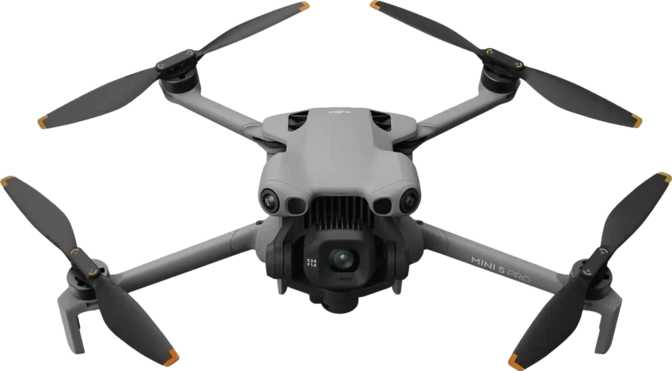
DJI Mini 5 Pro Review: A Professional Camera Drone Under 250 Grams
DronesThe DJI Mini 5 Pro packs a large imaging sensor, 4K 120fps slow-motion video, 50MP RAW photography, and active safety systems into a frame that weighs just under the 250-gram regulatory threshold—with weather sealing included. It is the most capable sub-250g drone available.
There is a number that governs recreational drone flying across most of the world: 250 grams. Cross it, and you enter a new tier of registration requirements, flight restrictions, and regulatory paperwork. Stay under it, and the skies become considerably more accessible. The DJI Mini 5 Pro weighs 249.9 grams—and that is not a coincidence.
What makes this drone remarkable is not just what it weighs, but what it manages to pack inside that weight. Previous drones that chased the sub-250g classification typically made compromises in camera quality, flight time, or safety systems that seasoned pilots could feel in their footage and workflow. The Mini 5 Pro proposes a different equation: full professional imaging capability, extended endurance, active safety systems, and weather resistance—all without triggering the next regulatory category.
Design, Build Quality & Physical Experience
A Compact Frame That Punches Above Its Category
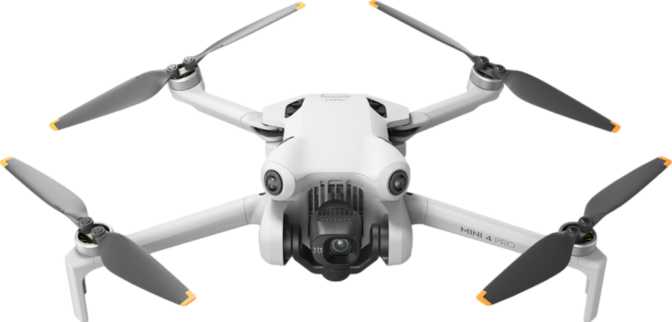
When folded, the Mini 5 Pro closes down to a form factor that fits comfortably inside a jacket pocket or small camera bag compartment—its footprint slightly larger than a thick paperback novel. Unfolded and ready to fly, it extends into a conventional quadcopter layout with arms that lock firmly into position. There is no flex, no rattle, and no sense that weight has been saved at the expense of structural integrity.
The build quality reflects what you would expect from DJI’s mature manufacturing at this size: tight panel tolerances, a matte finish that resists fingerprints, and motors that feel well-seated in their housings. Nothing about holding this drone suggests fragility.
Weather Sealing—A Genuine Working Tool Feature
The Mini 5 Pro carries splash resistance, meaning it handles light rain, coastal spray, and morning dew without issue. In a weight class where most competitors stay grounded on cloudy days, this transforms the drone from a fair-weather accessory into a reliable working tool. It operates from well below freezing down to conditions warm enough to cause heat shimmer in footage—a thermal window covering the vast majority of real-world shooting environments, including winter landscape work and summer desert productions.
Portability in Practice
The folded dimensions place this firmly in “travels with you, not for you” territory. For drone photographers who already carry a mirrorless camera kit, this is exactly the right size equation: the Mini 5 Pro adds meaningful aerial capability without demanding its own dedicated backpack.
Camera System: Where the Real Story Lives
A Sensor That Reframes This Category
The imaging sensor spans roughly 10 by 15 millimeters across its active area—substantially larger than sensors found in typical sub-250g drones, which historically used hardware not much bigger than what you find inside a smartphone. At this size, the Mini 5 Pro’s sensor sits in the same neighborhood as a high-end compact camera. More sensor area means each captured photon lands on a physically larger photosite: cleaner images in difficult light, better dynamic range, and footage that holds up when you push the shadows in an editing suite.
This is not an academic distinction. It is the difference between footage that holds up at full resolution on a large display and footage that quietly disintegrates the moment post-production begins.
Still Photography: 50 Megapixels with Room to Crop
At 50 megapixels, the stills output gives aerial photographers extraordinary flexibility in post. Frame wide for context, then crop aggressively to isolate the subject—the final image retains meaningful sharpness throughout. For real estate, architecture, surveying, or editorial aerial work, that headroom matters considerably.
The camera shoots RAW format, preserving the full latitude of the sensor so highlights and shadows remain recoverable—detail that compressed formats discard permanently. Burst shooting handles sequences, and in-camera panorama stitching handles wide-angle compositions without requiring post-processing software. The high-sensitivity ceiling extends into a range suitable for golden hour, blue hour, and any scenario where ambient light drops fast.
Video: 4K at 120 Frames Per Second
Filmed at 120 frames per second and played back at the standard 24fps cinematic rate, footage slows to one-fifth speed while retaining full 4K resolution. A surfer carving a wave, a runner crossing a finish line, or a bird taking flight becomes a multi-second slow-motion sequence that holds sharpness throughout. This capability exists on professional cinema cameras. It now lives inside a drone that fits in a jacket pocket.
The 130 megabits-per-second recording bitrate means the drone captures enough data per second of footage to support serious post-production color grading—not just deliver acceptable social media content. The 84-degree field of view provides a natural, wide perspective suited to landscape, architecture, and environmental storytelling without the distorted fisheye effect of an overly wide lens.
Cinema Features and the FPV Camera
Matches broadcast and film production frame rates for direct footage integration without retiming in post
Preserves bright sky and shadowed ground detail simultaneously—essential for aerial work where you’re almost always shooting toward the light
Dedicated forward-facing navigation camera for tight spaces, fast subject tracking, and confident flight at range
Flight Performance: What the Numbers Mean in the Air
Budget 25–30 minutes of active shooting time per battery in real conditions—strong for a drone in this weight class
Engineered for 21km, meaning essentially no signal degradation in the distances where you’ll realistically be operating
Fast enough to pace cyclists, runners, and most ground-level subjects for tracking shots and dynamic aerial cinematography
Active sensors scan the flight path and either warn the pilot or stop the drone automatically before a collision. For beginners, this is genuinely confidence-building. For experienced pilots, it’s the background safety net that allows focus on the shot rather than spatial management. Note: thin wires, power lines, and fine branches remain difficult for any obstacle avoidance system—visual awareness from the pilot is always essential.
If the control signal drops, the battery reaches a critical threshold, or the pilot triggers it manually, the drone navigates back to its launch point and lands autonomously. Combined with GPS, compass, and accelerometer sensors that continuously orient it in three-dimensional space, the Mini 5 Pro always knows where it is and exactly how to get home.
Intelligent Flight Modes: Automation That Serves Creativity
The intelligent flight mode suite handles cinematographic maneuvers that would otherwise require a skilled second operator or years of manual flying experience. These modes automate complex motion paths—orbiting a subject, pulling away from a point of interest, following a moving target—so the pilot can focus on timing and framing rather than stick inputs.
For solo operators, this is transformative. A single person can achieve footage that previously required a dedicated pilot plus a camera operator working in coordination. For beginners, the intelligent modes serve as a learning tool: watching how the drone executes a well-formed orbit teaches the manual inputs needed to replicate it later.
The included remote control has a built-in screen—no smartphone required. This eliminates setup time, removes your phone’s screen brightness and battery as variables, and creates a fully self-contained flying system right out of the box.
Battery & Storage
-
~46-minute full charge Fast enough to turn around a depleted pack during a lunch break and have it ready before the afternoon light fades. Meaningfully faster than the 60–90-minute cycles typical in this category.
-
Removable and swappable Slides out and swaps in seconds. Extending a shoot is as simple as carrying charged spares—no waiting in the field. Two or three batteries plus a fast charger is the standard professional kit.
-
Cold-weather capable to −10°C Keep batteries warm in a jacket before cold-weather flight. Standard practice that preserves usable capacity in low temperatures.
-
42GB built-in storage Enough to hold a substantial shoot’s worth of 4K footage and high-resolution stills without ever inserting a memory card. Start shooting immediately, no setup required.
-
Up to 1TB expandable The card slot supports up to one terabyte. At the drone’s maximum recording bitrate, that translates to hours of continuous 4K capture. Use a high-speed card rated for sustained sequential writes.
-
Storage that never holds you back Generous built-in storage plus high-capacity expansion means storage management becomes a non-issue rather than a shoot-day constraint.
Who Should Buy the DJI Mini 5 Pro
Right For You If
- You travel internationally and need to stay below registration thresholds without compromising image quality.
- You create content solo and want cinematic slow-motion footage without carrying a separate gimbal camera.
- You shoot real estate or architecture and need reliable daily output in varied weather, with stills capable of large-format display.
- Your shoots happen outdoors in unpredictable conditions where splash resistance is a genuine operational requirement.
- You are ready to step up from an entry-level drone and want a system capable of genuinely professional results.
- You deliver content to clients requiring RAW stills, high-bitrate 4K footage, or cinema-standard frame rates.
May Not Be the Right Fit If
- You need automated flight routes requiring 45-plus minutes of continuous operation per battery for mapping or survey work.
- Your primary use is competitive FPV racing. The Mini 5 Pro is a stable camera platform, not a speed-optimized racing frame.
- You need to film in complete darkness. The large sensor handles low light well, but this is not a dedicated night-flight specialist.
- Budget is the primary driver and most of your footage will be casual social media content where a simpler drone is more than sufficient.
How It Compares to the Logical Alternatives
| Feature | DJI Mini 5 Pro | Typical Sub-250g Competitor | Mid-Size Step-Up Drone |
|---|---|---|---|
| Weight / Regulatory Class | Under 250g threshold | Under 250g threshold | 300g–900g; requires registration |
| 4K Slow Motion | Up to 120fps | Usually 30–60fps | 60–120fps on premium models |
| Sensor Size | Large (~10×15mm) | Small to medium | Medium to large |
| RAW Stills | Yes | Often absent in this class | Yes on most models |
| Weather Sealing | Yes | Rarely included | Often included |
| Internal Storage | 42GB built-in | Rarely offered | Sometimes included |
| Fast Charging | Under 46 minutes | Typically 60–90 minutes | Varies |
| Max Flight Time | ~36 min | 25–34 min typical | 30–46 min |
The core competitive tension is clear: drones matching this imaging capability typically exceed 250g, pulling buyers into a more restricted regulatory category. Drones that stay sub-250g typically accept imaging trade-offs. The Mini 5 Pro refuses both trade-offs simultaneously.
Honest Assessment: Strengths and Real Weaknesses
Where It Excels
The strengths of this drone concentrate in the imaging system and the portability equation, and that concentration is intentional. DJI built this for people who care about what the footage looks like. The large sensor, the 4K 120fps capability, the RAW file support, and the high-bitrate recording combine into a camera system that competes with hardware at two or three times the price point and several times the size and weight.
The quick charging and removable battery reflect good operational thinking—choices made by people who shoot in the field rather than in a lab. Forty-two gigabytes of internal storage plus terabyte card support means the storage architecture actively stays out of your way.
The weather sealing adds a dimension of professional reliability that changes how and where you can schedule shoots. Not needing to reschedule around light rain is a genuine workflow advantage that compounds over time.
Where Honest Criticism Applies
At 36 minutes of theoretical flight time, the real-world shooting window per battery—once you account for safety reserves, wind drain, and the buffer a careful pilot maintains—runs closer to 25 to 28 minutes in typical conditions. Carrying two or three batteries is not optional for a full professional shoot day; it is mandatory.
The obstacle detection system, while genuinely useful, has inherent physical limitations. Thin wires, power lines, and fine branches are notoriously difficult for any drone’s avoidance sensors to detect reliably. Active visual awareness from the pilot remains essential—the sensors are a backup, not a substitute for attention.
The FPV camera is a navigational tool, not a high-resolution creative output. Pilots expecting full-quality stills or cinematic video from the FPV feed will need to calibrate those expectations accordingly.
Questions Real Buyers Ask Before Purchasing
Final Verdict
The DJI Mini 5 Pro is the most complete imaging tool ever placed inside a sub-250g drone. That sentence is not hyperbole—it is the product’s defining achievement. DJI has taken every meaningful concession that defined the Mini series and eliminated it: the sensor is large, the slow-motion capability matches professional cinema standards, the stills shoot RAW at 50 megapixels, the video bitrate supports serious post-production, the body handles weather, and the charging is fast enough to fit real workflows.
What you are getting is a professional aerial camera that happens to live below the regulatory weight line—not a lightweight drone that happens to have a decent camera attached.
The target buyer is clear: if you create content where the aerial perspective is central to the final result, if you work in conditions where weather does not cooperate, if you cross borders and need regulatory simplicity, or if you need footage that holds up in post without falling apart—this drone is almost certainly the right tool.
The competitive alternatives ask you to either accept imaging compromises at this weight class, or accept registration complexity and a larger physical footprint at the next tier. The DJI Mini 5 Pro declines both of those trade-offs, and that is ultimately why it earns an unambiguous recommendation for serious aerial imaging at any experience level.