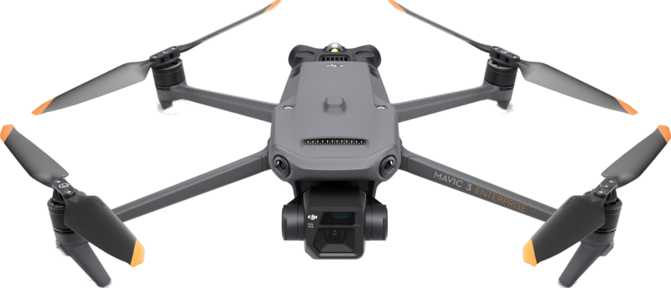
DJI Mavic 3T Review: An Honest Look at This Inspection Drone
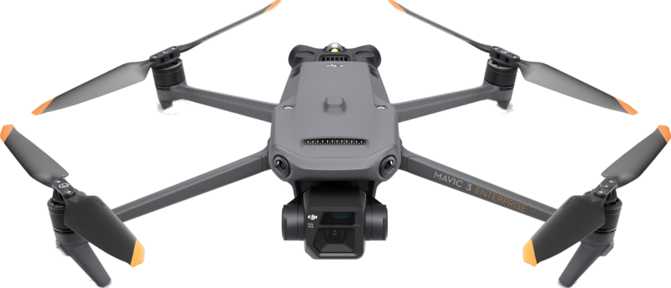
DronesSearch for "best camera drone" and you'll mostly find lightweight, vlogger-friendly quadcopters built to fit in a jacket pocket and shoot pretty sunsets. The DJI Mavic 3T is not that drone, and pretending otherwise would do readers a disservice. This is a heavier, longer-range, safety-focused aircraft that trades pocketability for endurance, precision optics, and the kind of flight characteristics that matter to someone inspecting a transmission tower, scouting a wildfire perimeter, or documenting a construction site, not someone chasing likes on a beach.
Design and Build: Compact for Its Class, But Don't Mistake That for Toughness
Size, Weight, and Portability
Pick up the Mavic 3T and the first thing you'll notice is heft. At roughly two pounds ready to fly, it's noticeably denser than the sub-250-gram drones that dominate casual photography conversations, and that extra mass is doing real work: housing a bigger battery, a more capable camera payload, and the structural rigidity needed for stable flight in less-than-perfect air. Folded down, its footprint is closer to a thick hardcover book than a phone-sized gadget, which means it'll live in a dedicated case or backpack compartment rather than slipping into a pocket.
No Weather Sealing: The Most Important Caveat
Operating Temperature Range
The aircraft is rated to fly between -10°C and 40°C (14°F to 104°F). That's a comfortably wide window for spring, summer, and most autumn conditions, but it has real edges.
Flight Performance: Speed, Range, and What "Maximum" Really Means
On paper, the numbers here are genuinely strong for the category: a top-end flight time around 45 minutes per battery, a maximum transmission range near 32 kilometers (about 20 miles), and a top speed of roughly 21 meters per second, call it 75 km/h or 47 mph. That puts this comfortably ahead of entry-level camera drones in raw capability.
The expert-level nuance worth understanding is what these numbers actually represent. Manufacturer flight-time and range ratings are almost always measured in close-to-ideal conditions: still air, moderate temperatures, steady cruising speed, no aggressive maneuvering. Wind resistance, cold temperatures, hovering for a shot instead of cruising, and carrying a thermal payload all eat into that ceiling. Treat the 45-minute figure as a best-case benchmark for planning, not a guarantee.
The range figure deserves a similar reality check. Thirty-two kilometers describes signal and transmission capability, not a round-trip guarantee. Flying that far out means flying that far back, and battery endurance, not signal strength, is usually the limiting factor on how far you can responsibly venture before turning around.
GPS Positioning
Reliable positioning and stable hovering, the foundation of confident manual flight.
Obstacle Detection
Active collision awareness, especially valuable for close work around towers and structures.
Return to Home
A genuine safety net if you misjudge timing, lose visual contact, or the connection drops.
The Camera System: More Capability Than the Spec Sheet Lets On
Still Photography
The main camera captures stills at 48 megapixels, enough detail to crop deeply into a frame and still pull out a usable, sharp result, which matters enormously for inspection work where you might photograph an entire structure and then zoom into one bolt or crack during post-flight review. Maximum sensitivity reaches ISO 25,600, extending usable shooting into dawn, dusk, and dim conditions, though expect visible noise creeping in as you approach that ceiling. Treat the top of the ISO range as an emergency option, not your everyday setting.
Full RAW capture support is included, and it matters more here than on a typical content-creation drone. Because there's no built-in HDR mode, high-contrast scenes are where this drone is most likely to lose detail in the highlights or shadows if you're shooting compressed images. RAW capture is your workaround: it preserves the sensor's full dynamic range so you can recover detail in post-production. The camera also captures in-app panoramas, stitching multiple frames into one wide composite, a genuinely useful convenience for documenting an entire facility or a sweeping vista.
Video Recording
Video tops out at 4K resolution at 30 frames per second, recorded at a sustained bitrate around 85 megabits per second. That bitrate sits well above typical smartphone or action-camera compression, preserving more fine detail in motion, useful for inspection footage where small defects matter. It is not, however, in the territory of dedicated cinema-grade multirotors that push far higher bitrates for maximum post-production latitude.
The capped frame rate at 4K means no smooth slow-motion video in your highest-resolution mode. Field of view sits at 84°, roughly the perspective of a 24mm lens on a full-frame camera: a natural, moderately wide angle that renders structures and landscapes with minimal distortion, favoring accuracy over a dramatic, fisheye-style sweep.
The Multi-Camera Setup, and What the "T" Likely Signals
Pay attention to the wording here: the resolution and video figures are explicitly attributed to the "main camera," and a separate first-person-view (FPV) camera is confirmed as present. That phrasing only makes sense if there's more than one imaging system onboard, and combined with the "3T" in this aircraft's name, the implication is hard to miss. DJI's naming convention typically uses letter suffixes to denote feature variants, and "T" strongly points to thermal-imaging capability layered alongside the standard visual camera.
Battery Life and Field Workflow
Endurance is built around a high-capacity, removable battery pack that supports that roughly 45-minute flight ceiling per charge. The removability matters more than it might seem on paper: professionals doing a full day of inspection or shoot work don't wait around for a single pack to recharge between flights. Instead, the realistic workflow is carrying two, three, or more charged spares and swapping packs in the field, turning what would otherwise be a battery-limited tool into something that can run an entire workday with the right preparation.
Storage deserves the same forward planning. Shooting 48-megapixel RAW stills alongside 4K video at a substantial bitrate adds up to large file sizes quickly, and the aircraft's expandable memory slot means you're not locked into whatever fixed storage came in the box, but you'll want to pair it with a high-capacity, fast card. Treat spare batteries and spare storage as standard kit, the same way a working photographer treats spare lenses.
Smart Features, Safety Nets, and Control Setup
The safety architecture here is built around three pillars: GPS for reliable positioning and stable hovering, Return to Home for automatic recovery if you lose signal or run low on battery, and active obstacle detection to reduce collision risk during close-quarters flying. Together, these form a genuine safety net, not full autonomy, but enough automated protection that a careful intermediate pilot can operate confidently around structures and terrain without constant fear of a costly mistake.
Control comes through a dedicated, purpose-built remote rather than a phone-only flying mode; there's no option to skip the physical controller and fly using just a smartphone's touchscreen. The controller itself doesn't include a built-in display, so you'll pair your own phone or tablet to it for the live camera feed and flight settings through the companion app. Input is entirely traditional stick-and-button flying as well, which experienced pilots will likely prefer for precision, even if newcomers expecting a more gamified control scheme should know what to expect.
Who This Drone Is For, and Who Should Look Elsewhere
This Drone Makes Sense If
- You need long flight sessions and real operating range, not a 10-minute backyard toy
- Your work involves inspecting structures or terrain where obstacle awareness and RTH matter
- You want RAW image flexibility since there's no automatic HDR safety net
- You're comfortable manually planning and flying every shot
- Heat-signature visibility adds real value to your inspection or rescue work
- You can commit to registration requirements and fair-weather-only flying
Look Elsewhere If
- You want the lightest, most pocketable drone for casual travel photography
- You need guaranteed weatherproof or splash-resistant operation
- You're a beginner hoping for automated subject-tracking or cinematic presets
- Smooth 4K slow-motion footage is a priority for your content
- You frequently fly in deep winter cold or extreme desert heat
How the Mavic 3T Stacks Up Against Other Drone Categories
| Category | Portability | Flight Endurance | Image/Video Quality | Safety Automation | Creative Autopilot | Best Suited For |
|---|---|---|---|---|---|---|
| Ultra-compact sub-250g drones | Excellent, pocket-sized | Typically shorter, lighter packs | Good for casual content, smaller sensors | Basic, often limited obstacle awareness | Often strong, beginner-friendly presets | Travel, social content, first-time flyers |
| DJI Mavic 3T (this drone) | Moderate, backpack-sized | Strong, rated around 45 min, swappable packs | High resolution, RAW support, no built-in HDR | Strong, GPS, RTH, active obstacle detection | None, fully manual flight planning | Inspection, thermal-driven fieldwork, RAW photography |
| Cinema-grade multi-sensor drones | Larger, often case-required | Varies, often shorter with heavier payloads | Highest tier, broader codec and dynamic range | Strong, sensor-dependent | Often includes advanced cinematic automation | Professional film and commercial video |
Strengths and Weaknesses: An Honest Take
The Case For It
The case for the Mavic 3T rests on substance over flash. Its flight time and range genuinely outclass casual camera drones, its obstacle detection and Return to Home give nervous or careful pilots real peace of mind, and its RAW-capable, high-resolution camera system provides the post-production flexibility that inspection and professional photography work demands. The likely thermal capability, inferred from its naming and multi-camera architecture, pushes it further into genuinely useful working-tool territory rather than hobbyist gear.
Where It Falls Short
The lack of weather sealing is a real constraint for a drone whose use cases often live outdoors and unpredictably. The absence of HDR and the 30fps ceiling on 4K video mean you'll need to actively manage tricky lighting and accept the limits on slow-motion creativity. And the complete absence of intelligent autopilot flight modes means every shot, every orbit, every tracking pass is on you, the pilot. None of these are dealbreakers for the buyer this drone is built for, but they would frustrate someone expecting an all-automated, weatherproof, beginner-first experience.
Frequently Asked Questions
Final Verdict
The DJI Mavic 3T is not a drone for someone weighing it against the lightest, cheapest, most automated camera drone on the market, and it shouldn't be judged as one. It earns its place with genuinely strong flight endurance, meaningful range, RAW-capable high-resolution imaging, and a safety architecture solid enough for serious fieldwork around structures and terrain. The trade-offs, no weatherproofing, no HDR, no slow-motion 4K, no autopilot creative modes, are real, but they're the predictable cost of a tool built for working professionals rather than weekend hobbyists.
Buy This If
Your work or serious hobby involves inspection-style flying, RAW photography workflows, or scenarios where the likely thermal-imaging capability adds real value, and you're comfortable flying manually and respecting its weather limits.
Skip This If
You want a lightweight, beginner-friendly, weatherproof drone with automated cinematic flight modes and smooth slow-motion video, there are better-suited tools in the consumer category for that brief.