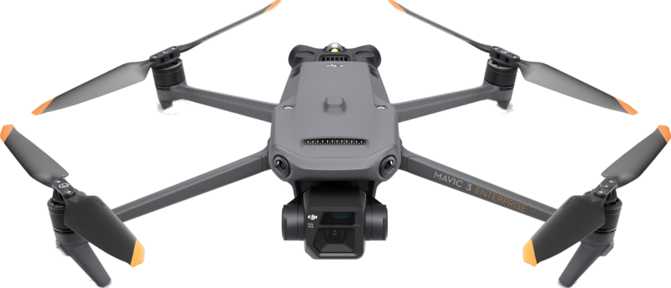
DJI Mavic 3E Review: An Honest Look at the Enterprise Drone
DronesPerformance At a Glance
What Sets the DJI Mavic 3E Apart in the Enterprise Drone Market
There is a version of aerial work where consumer drones are genuinely sufficient — weekend photography, casual video projects, experimental flights over open fields. Then there is the other version: surveying a construction site across multiple battery cycles, inspecting infrastructure where a dropped frame of reference costs a re-flight, or delivering photographic documentation that a client will scrutinize in detail. The DJI Mavic 3E exists for that second version.
It is not trying to be the most automated drone, the lightest, or the easiest for a first-time flier to pick up. Its design priorities are endurance, imaging quality, and reliable field operation — and on those metrics, it makes a compelling argument. Understanding what you are and are not getting is the entire point of this review.
Physical Build — Size, Weight, and What the Field Actually Demands
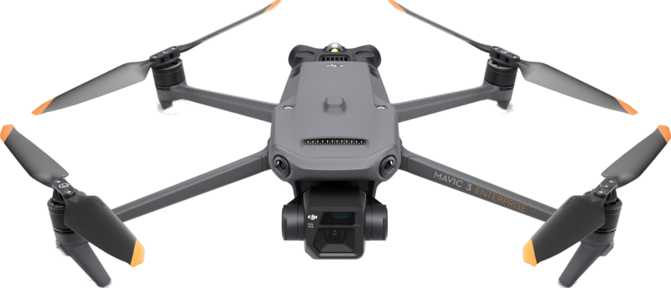
The Mavic 3E weighs 915 grams — roughly equivalent to a professional compact camera body with a lens attached. That is not light by consumer drone standards, but it belongs in a different reference frame. This is a professional instrument, and its mass reflects the battery, optics, and processing hardware required to support genuine commercial operations.
The unfolded flight footprint is substantial: approximately 348mm across, 283mm tall, and 108mm deep. This is not a drone you can mistake for a toy or slip into a jacket pocket. It occupies space in a carry bag with authority, and operators should plan their transport accordingly.
Regulatory Weight Class
At over 900 grams, the Mavic 3E exceeds the 250-gram threshold that triggers registration requirements in virtually every major aviation jurisdiction. Commercial operators will almost certainly require a certification from their national aviation authority. This is not optional — it is part of the cost of professional drone operation.
Operating Temperature Range
Rated from -10°C to 40°C. Light winter operations are supported, which is useful for shoulder-season agricultural surveys and year-round construction monitoring in temperate climates. Extreme cold below that threshold moves the aircraft outside its designed envelope — a meaningful consideration for operators in northern regions.
Flight Performance — The Numbers That Define Its Professional Value
Three specifications set the operational baseline for the Mavic 3E: how long it stays in the air, how far it can fly, and how quickly it moves. All three carry real-world consequences for professional mission planning.
Endurance That Reframes Mission Planning
The headline specification for the Mavic 3E's performance is its maximum flight time — and it earns genuine attention. A single charge supports up to 45 minutes of flight. To understand why this matters, consider that most drones at this performance tier offer between 25 and 35 minutes on an optimistic charge. The Mavic 3E's endurance advantage is not incremental — it meaningfully changes how operators plan missions.
A 45-minute window allows comprehensive site coverage without forced battery swaps mid-operation. For a surveyor mapping a construction site, an inspector working a transmission line, or an agricultural professional reviewing crop health, uninterrupted flight time translates directly into mission efficiency and reduced operator fatigue.
Operational Range That Exceeds Most Professional Missions
The Mavic 3E's maximum operational range is specified at 32 kilometers. Stated plainly, this exceeds what most professional operations will ever need. The average commercial inspection or survey mission happens within 2 kilometers of the operator. What this range specification actually communicates is the underlying transmission system quality — reliable, low-latency communication even at distances where signal interference would compromise lesser platforms.
For standard operations, it means link dropouts and interference are practically eliminated concerns. The headroom is reassurance, not a specification to fully exploit on every deployment.
Speed, Stability, and Autonomous Safety
Maximum flight speed sits at approximately 75 kilometers per hour. For commercial applications — documentation runs, inspection approaches, mapping transects — this is well-calibrated. The aircraft can cover ground efficiently without demanding the kind of precise high-speed control that racing applications require. It is built for deliberate, purposeful operation.
Built in and active during flight, providing environmental awareness to identify and respond to objects in the drone's path. Critical for inspection work near structures, towers, cables, and vegetation where manually maintaining clearance at all times is operationally unrealistic.
If the control link drops, battery reserves reach a critical threshold, or the operator triggers it manually, the aircraft navigates back to its launch point autonomously. For commercial operators, RTH is insurance against losing an expensive professionally-deployed aircraft to a signal anomaly or distraction.
The Camera System — Imaging Capable of Professional Deliverables
The Mavic 3E carries a main imaging camera and a secondary FPV unit. Together, they define what the aircraft can deliver to professional clients.
Still Photography
The main camera captures 20-megapixel images and, critically, supports RAW format. RAW files preserve the complete data captured by the sensor, giving post-processing software full latitude to recover highlights, lift shadows, and accurately represent color. For documentation, inspection reports, or deliverables that need to hold up to professional scrutiny, RAW capture is the baseline expectation — and its inclusion here is non-negotiable for serious work.
The sensor reads a maximum light sensitivity of ISO 6400 — adequate for golden hour work and dawn/dusk operations but not positioned as a low-light specialist. Operators expecting to shoot in very dark conditions should plan flights around available light rather than lean on the ISO ceiling.
In-camera panorama capture allows the aircraft to generate wide-coverage overview imagery directly, without requiring post-stitching workflows for every overview shot — a useful shortcut in fast-paced field deployments.
Video Recording
Video tops out at 4K at 30 frames per second, encoded at 130 Mbps. That encoding rate is the important detail: higher data rates mean more image information captured per second, resulting in finer detail, better color gradation, and footage that holds up better under color grading. At 130 Mbps, the Mavic 3E's video output is solidly in professional territory for commercial deliverables.
The field of view sits at 84 degrees — a moderate wide angle that provides broad coverage without extreme perspective distortion, appropriate for both documentation imaging and photogrammetry data collection.
No 4K/60fps and no built-in HDR mode. Filmmakers needing slow-motion or high-frame-rate flexibility at full resolution will hit a confirmed ceiling here. High-contrast scenes require careful exposure management during capture or HDR compositing in post-production.
The FPV Camera
A secondary FPV (first-person view) camera is included alongside the main imaging unit. This forward-facing camera provides the operator with live positional reference during flight — particularly useful during approaches to inspection targets, navigating into tight spaces, or maintaining situational awareness in complex environments. It is an operational tool, not a primary imaging system, and its presence reflects a platform designed around professional operational realities rather than simplified recreational flying.
Battery and Operational Continuity — Beyond the Single-Charge Flight
The battery powering the Mavic 3E's exceptional endurance is large by the standards of this aircraft class. The more operationally important detail is that it is fully removable. This distinction converts the Mavic 3E from a 45-minute-per-deployment aircraft into an all-day operational platform limited only by how many charged cells the team brings to site.
In practice, professional drone operations rarely run on a single battery per site. A construction site documentation crew carries multiple batteries and rotates through them across a full morning. An agricultural survey team covering hundreds of acres plans battery swap intervals into their ground logistics. The Mavic 3E's swappable design supports this entirely — charged batteries can be swapped in the field in minutes, with the aircraft back in the air before the spent cell has finished cooling.
For single-operator deployments where the primary constraint is mission coverage rather than total session time, the 45-minute single-battery endurance often covers an entire mission in one continuous run. For larger operations, the removable architecture extends the aircraft's usefulness well beyond what the single-battery specification suggests.
Battery at a Glance
- Removable for in-field battery swaps
- Supports multi-battery extended operations
- 45-minute rated maximum single-charge endurance
- Real-world endurance varies with wind, temperature, and flight profile — plan conservatively
Control, Storage, and Field Workflow
The Mavic 3E requires a dedicated remote controller — smartphone-only operation is not an option. For professional use, this is a functional advantage: a purpose-built controller provides dedicated hardware inputs, consistent response, and eliminates the variables introduced by smartphone compatibility, lock screens, or battery drain under load. The controller is a piece of professional equipment and should be treated accordingly.
Dedicated Remote Control
A purpose-built controller is included. Smartphone-only piloting is not supported — a professional workflow advantage that delivers consistent controls and reliable input without phone-compatibility variables on every deployment.
External Memory Card Slot
A memory card slot is built in, allowing footage and survey data to be stored on removable media. During extended multi-battery sessions, cards can be swapped and handed to a ground processing team while the aircraft continues flying on fresh media.
GPS Positioning
GPS anchors the aircraft geographically, enabling precise hover and location-referenced data collection. Combined with obstacle detection and Return-to-Home, this creates a stable foundation for repeatable, reliable professional missions across multiple sessions.
Who the DJI Mavic 3E Is For — and Who It Isn't
The Mavic 3E is built for a specific professional profile. Identifying your alignment with that profile before purchase is essential to making the right call.
Built for These Operators
-
Commercial Surveyors and Mapping Professionals
GPS-anchored positioning, consistent image overlap, and long flight windows support comprehensive area coverage per session without mid-mission interruptions.
-
Infrastructure Inspectors
Power lines, towers, bridges, and pipelines — obstacle detection and extended endurance allow thorough, unrushed inspection passes of complex routes.
-
Agricultural Professionals
Crop health assessments, land boundary surveys, and irrigation planning across large parcels benefit directly from the aircraft's extended coverage window per battery.
-
Construction Documentation Teams
RAW stills and high-bitrate 4K video meet the professional reporting standards that regular site-progress client deliverables demand.
-
Licensed Commercial Aerial Photographers
Client deliverables requiring full post-production workflows are supported by RAW capture and 130 Mbps video output that holds up under professional color grading.
-
Emergency Services and Public Safety Operators
Mission endurance and reliable autonomous safety features — obstacle detection, RTH, GPS anchor — directly affect outcomes in time-critical operational scenarios.
Not the Right Fit For
-
Recreational Hobbyists
The regulatory weight, absence of consumer shot-automation features, and likely price point all work against casual recreational use. DJI's consumer lineup serves this audience substantially better.
-
Filmmakers Needing Cinematic Frame Rates
No 4K at 60fps option exists. Workflows that require slow-motion footage or high-frame-rate flexibility at full resolution will hit a confirmed, non-negotiable ceiling here.
-
Pilots Expecting Consumer Shot Automation
Automated subject tracking, orbit modes, and similar consumer intelligent flight features are absent by design. The Mavic 3E is built for deliberate, manual professional operation — not one-tap cinematic shots.
-
Operators in Wet or Moisture-Heavy Environments
Zero weather sealing means rain, snow, coastal spray, and high humidity are outside supported operating conditions with no workaround. This is a hard operational boundary with no exceptions.
Competitive Positioning — Where the Mavic 3E Sits in the Market
The professional drone market spans three broad tiers: enhanced consumer models that offer improved imaging but retain recreational priorities; mid-weight enterprise platforms that balance portability with professional-grade output; and heavy enterprise systems that carry larger payloads and redundant components at the cost of transport weight and operational complexity.
The Mavic 3E occupies the mid-weight enterprise tier and argues its case through endurance and imaging quality. Against enhanced consumer alternatives, it offers substantially more flight time and a workflow designed for professional data collection. Against heavier enterprise platforms, it argues for efficiency — single-operator deployability, transportable in a standard carry bag, with setup time measured in minutes.
- Automated shot modes and tracking
- Sub-250g lightweight options available
- Lower entry price point
- Shorter flight windows per charge
- Limited transmission range and reliability
- Not designed for professional data volume
- 45-minute flight endurance (rated)
- 32 km operational transmission range
- RAW capture and 130 Mbps 4K video
- Removable battery for field swaps
- No weather sealing of any kind
- No consumer intelligent shot modes
- Often weather-sealed for adverse conditions
- Larger payload capacity and configurations
- Redundant motor systems on some models
- Requires crew and dedicated transport cases
- Longer setup and calibration procedures
- Higher operational complexity per deployment
DJI Mavic 3E — Full Feature Summary
| Capability | DJI Mavic 3E |
|---|---|
| Maximum flight endurance | 45 minutes (rated) |
| Maximum operational range | 32 km |
| Still image resolution | 20 MP with RAW capture |
| Video data rate at 4K | 130 Mbps |
| Maximum video frame rate at 4K | 30 fps |
| In-field battery replacement | |
| Removable external media storage | |
| Obstacle detection | |
| Return-to-Home (RTH) | |
| GPS positioning | |
| Weather protection | None |
| Built-in HDR mode | Not present |
| Consumer intelligent shot automation | Not present |
| Smartphone-only control | Not supported |
The Honest Assessment — Strengths and Weaknesses in Plain Terms
Where It Excels
The Mavic 3E's strongest argument is its flight endurance in a portable package. Forty-five minutes of air time, in an aircraft a single operator can carry and deploy without ground support, is a genuine operational advantage that compounds across every professional use case this platform targets — more coverage per battery, more mission flexibility, less time on the ground waiting to recharge.
The 32-kilometer transmission range reinforces this. In practical terms, it means the communication link is not a limiting factor in any standard professional operation. Operators can focus on the mission itself, not on maintaining link margins or worrying about interference dropping the signal.
The imaging system justifies professional confidence. RAW-capable 20-megapixel stills, combined with 4K video at a 130 Mbps data rate, produce output that meets commercial client standards consistently. These reflect a camera system built to deliver usable, graded, deliverable-quality imagery — not specs padded for marketing purposes.
Swappable batteries and external card storage are practical acknowledgments of how professional operations actually work in the field. These architectural choices extend the aircraft's operational usefulness well beyond what single-battery hardware specifications alone would suggest.
Where It Falls Short
The complete absence of weather sealing is the most significant operational constraint this aircraft carries. Professional drone work does not always happen in ideal conditions, and the lack of any moisture protection limits where and when the Mavic 3E can be safely deployed. Operators in maritime environments, humid tropical climates, or regions with frequent light rain need to build careful weather protocols around this gap — and accept that some missions simply cannot go ahead.
The 30fps ceiling at 4K will create friction for anyone whose production requirements extend beyond it. For inspection and survey applications, this matters very little. For operators with cinematic deliverable requirements, it is a real consideration that should not be dismissed in the purchasing decision.
The absence of consumer intelligent flight modes reflects a deliberate professional positioning, but it is not automatically the right trade-off for every buyer. Operators coming from recreational drone backgrounds should expect to develop more deliberate, manual operational skills to use this aircraft to its full potential.
At 915 grams, the weight carries registration and certification obligations in virtually every market. That is a professional compliance overhead that belongs in the total cost calculation — in time, fees, and ongoing procedural requirements — not just the purchase price.
Questions Buyers Actually Ask Before Purchasing
Answers to the most common questions real buyers search for before committing to the DJI Mavic 3E.
Final Verdict — Who Should Buy the DJI Mavic 3E
The DJI Mavic 3E earns a confident recommendation for its intended audience: commercial operators who deploy drones as professional instruments rather than recreational devices.
The flight endurance is the clearest differentiator — 45 minutes in a portable package changes what single-battery missions can accomplish and how efficiently multi-battery operations run. The imaging system, with RAW capture and high-bitrate 4K output, consistently meets professional deliverable standards. The operational design — swappable batteries, external card storage, dedicated controller, obstacle detection, and RTH — reflects a platform built for repeatable, reliable field work.
The limitations are specific enough to evaluate clearly. No weather sealing is a genuine operational constraint that some professional buyers cannot accept. No 4K at 60fps is a confirmed ceiling that some production workflows will not tolerate. No consumer shot automation means this aircraft requires more deliberate, skilled piloting than recreational drones demand.
For surveyors, inspectors, agricultural professionals, construction documentarians, and licensed commercial aerial photographers whose work fits within these boundaries, the Mavic 3E is a serious, capable aircraft that takes the job seriously. If its limitations conflict with your core requirements, look elsewhere — and know precisely what you are passing on.
- Exceptional flight endurance
- Professional-grade RAW imaging
- Field-ready battery swaps
- 32 km operational range
- No weather sealing
- No 4K at 60 fps