Bose QuietComfort Ultra Headphones (2nd Gen): Full Honest Review

Bose QuietComfort Ultra Headphones (2nd Gen): Full Honest Review

Headphones

The QuietComfort Ultra 2nd Gen at a Glance

The Bose QuietComfort Ultra Headphones (2nd Gen) deliver category-leading noise cancellation and wearing comfort in a travel-ready package with outstanding battery endurance. Specific codec limitations and the complete absence of water resistance narrow who it best serves — but for its core audience, this is a compelling package at the premium tier.

Best For: Travel & Focus Work Caution: iPhone Users & Active Lifestyles
4.2/5
Expert Review Score
ANC Performance
5.0
Wearing Comfort
4.9
Sound Quality
4.0
Connectivity
3.5
Battery Life
4.5

Spending serious money on over-ear headphones used to feel like a safer bet than it does today. The competition at the top of this category has sharpened considerably, with Sony, Apple, and Sennheiser all pushing credible alternatives. Against that backdrop, the Bose QuietComfort Ultra Headphones (2nd Gen) arrive carrying the weight of a legacy: the QuietComfort line is the reason many people associate Bose specifically with noise cancellation, and this generation needs to defend that association rather than coast on it.

The short version is that it mostly does — but with a set of specific trade-offs that matter enormously to some buyers and not at all to others. Understanding which camp you are in is the whole point of this review.

Design and Build Quality: Where Comfort Becomes a Competitive Advantage

Weight, Fit and Ergonomics

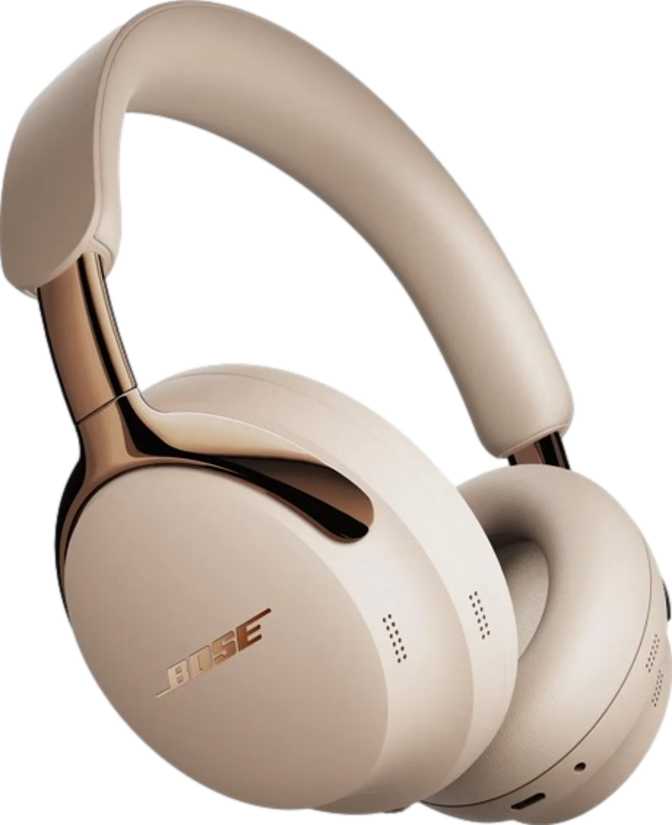
At 265 grams, the QuietComfort Ultra 2nd Gen sits toward the lighter end of the premium over-ear segment. That number does not sound dramatic until you have worn heavier competitors for four hours on a transatlantic flight and arrived with a headache. The weight difference between "light" and "heavy" headphones compounds over time — barely perceptible in the first thirty minutes and quite noticeable by hour three.

The ear cups are oval and generously sized, designed to enclose the ear completely rather than rest against it. This contributes directly to wearing comfort and creates a better seal for passive noise isolation. Glasses wearers will find the soft cushioning accommodating of temple arms, which is not universally true at this price tier.

Portability and Travel Design

These headphones fold flat — not just swivel — which is a genuine distinction for frequent travelers. The fold is repeatable, allowing the headphones to pack into the included case in a way that takes up substantially less space than headphones that only pivot. For anyone whose bag has already been optimized to the millimeter, this matters.

The cable is both detachable and tangle-resistant. Detachable means that when the battery runs down on a long journey, a wired connection remains a practical fallback option. Tangle-resistant means you can retrieve the cable from your bag without the ten-second frustration ritual before boarding.

The Durability Gap Worth Knowing

There is no water or sweat resistance here. None. At a price point where this feature has become increasingly common, its total absence is conspicuous. Commuters who walk in rain, anyone who wears headphones during workouts, and users in humid climates should factor this in as a genuine risk — moisture damage voids warranties and shortens product life.

This is not a minor oversight; it is a deliberate product decision that defines who these headphones are — and are not — for. If your use case includes any moisture exposure, weigh this carefully before spending at this tier.

Sound Quality: A Tuning Philosophy That Rewards Listeners Over Analysts

The Core Sound Character

The 40mm dynamic drivers cover the full spectrum of human hearing — from the low-end frequencies you feel in your chest during bass-heavy music to the upper reaches where cymbal shimmer and vocal air live. What differentiates them is how Bose has chosen to voice those drivers.

Bose leans warm and full-bodied. Vocals are pushed slightly forward — present and intimate in a way that makes spoken-word content and vocals-led music particularly engaging. Bass is weighted and textured without losing definition. Treble is smooth, rolled off just enough to prevent harshness on poorly mastered recordings without dulling the sparkle on well-recorded material.

This is not a neutral, studio-monitor presentation. Audiophiles hunting for clinical accuracy will find it colored. Everyone else will likely find it extremely pleasant — a sound signature engineered for enjoyment rather than analysis, which is the right call for headphones designed to be worn for hours at a time. Classical and acoustic jazz listeners who prefer an open, reference-grade presentation may find the warmth slightly excessive. For pop, hip-hop, electronic, podcasts, and film, it is excellent.

Who This Sound Signature Suits

  • Pop, hip-hop, and electronic music listeners
  • Podcast and spoken-word audiences
  • Film and streaming video viewers
  • Classical listeners who prefer neutral presentation
  • Audiophiles seeking studio-reference accuracy

Active Noise Cancellation: The Defining Feature

The QuietComfort name exists because of noise cancellation, and this generation continues to take it seriously. The system deploys microphones on both the outside and inside of the ear cups — one set monitors the environment, the other checks what actually reaches your ears, and the processing continuously adjusts the cancellation signal in real time.

The result eliminates the steady, low-frequency drone of aircraft engines and HVAC systems with a completeness that remains genuinely impressive. Open-plan office noise — the blur of conversations, keyboard clicks, and distant phone calls — drops away. What the system handles less completely is sharp, sudden, unpredictable sounds — a door slamming or something dropped nearby. That is a fundamental physical limitation, not a flaw in the implementation.

The closed-back design adds a passive layer on top of the active one. Even with ANC switched off, the physical ear cups themselves block a meaningful portion of ambient sound. The two layers reinforce each other, which is part of why the overall cancellation experience tends to outperform competitors in real-world conditions rather than just controlled testing environments.

Category-Leading ANC Performance

Spatial Audio: Dimensionality Where It Counts

Spatial audio support means compatible content can create a three-dimensional sound field rather than a flat left-right stereo image. The practical impact varies entirely by what you are listening to. A Dolby Atmos-mixed film or a spatially produced music track feels enveloping and convincingly immersive. Standard stereo music from any mainstream streaming source plays as it always has — the spatial processing does not manufacture dimensionality from content that does not contain it.

For film watching and gaming, this is a meaningful upgrade in experience. For day-to-day music streaming, it is a feature you will occasionally appreciate rather than one that transforms every session.

Connectivity: Bluetooth 5.4 and a Codec Trade-Off Worth Understanding

Wireless Architecture

Bluetooth 5.4 is the current generation of the standard. In practical terms: more stable connections in environments dense with competing wireless signals — airports, open offices, conference centers — and a more efficient power relationship between headphones and source device.

The wireless range is consistent within a standard room; it degrades gradually rather than cutting abruptly at its limit, which is preferable behavior when moving around a home or office.

Multipoint: Connecting Two Devices at Once

These headphones pair with two devices simultaneously. For the dual-device user — laptop for work, phone for personal calls — this changes daily workflow in a way that becomes quickly indispensable. When a call comes in on your phone while you are listening to a presentation on your laptop, the headphones handle the handoff automatically.

Business users and remote workers who live across multiple devices will use this feature every single day. It is one of the most practically valuable features in the package.

Codec Support: Read This Before You Buy

The codec situation deserves careful attention because the implications depend significantly on which device you use. A codec determines how audio is transmitted wirelessly from your phone or laptop to your headphones — and the quality ceiling that connection can reach.

Codec Supported Practical Meaning
aptX Adaptive High-resolution wireless audio and low latency for compatible Android devices
AAC Apple's preferred Bluetooth codec — absent here. iPhone and Mac users fall back to baseline SBC transmission
LDAC Sony's hi-res wireless codec — not available, even on LDAC-capable Android devices
aptX (standard) Older Qualcomm codec — not needed when aptX Adaptive is present
Bluetooth LE Audio Next-generation efficiency standard — not yet implemented
NFC Pairing No tap-to-pair — minor convenience omission, standard Bluetooth pairing takes seconds

The key takeaway for Apple users

Without AAC support, iPhones, iPads, and Macs transmit audio using the SBC fallback codec. SBC is functional but falls below the wireless audio quality tier you are paying for at this price. If you use Apple devices and care about audio fidelity, this gap is material — not theoretical.

Battery Life: Built for Endurance, Not Speed

Thirty hours of continuous playback is the rated endurance figure. To put that in context: it covers a full-length international flight with hours to spare. It covers an entire workweek of eight-hour listening days. For average commuters using headphones two to three hours daily, a single charge lasts well over a week before you need to reach for a cable.

The headphones communicate their remaining charge clearly through a battery level indicator — you are not caught mid-meeting by a sudden shutdown without warning. A quick top-up session while you shower in the morning adds meaningful hours back to your day.

Charging from depleted to full takes three hours over the included USB-C cable — the universal standard that means no proprietary cable hunting required. The connection is the same one used by modern phones, laptops, and tablets.

What Is Missing at This Price

Two omissions stand out against comparable competition. There is no wireless charging — these cannot be placed on a Qi charging pad overnight, which competing headphones at this tier increasingly offer as standard. There is also no documented rapid-charge capability — the short-burst charging that delivers several hours of playback in an emergency. The practical workaround for most users is keeping the headphones plugged in at a desk during the workday, which is sufficient but not ideal.

Battery Life in Real-World Terms

Long-Haul International Flight
Covered with hours remaining
Workweek (8 hours daily)
Full five days on a single charge
Average Commuter Use (2-3 hrs/day)
10+ days before recharging
Full Recharge Time
Three hours via USB-C

Smart Features: The Details That Accumulate Into a Better Day

Wear Detection

Playback pauses automatically when you lift the headphones off your head, resuming when you put them back on — no phone interaction required.

Ambient Sound Mode

Environmental audio passes through naturally, allowing conversation and situational awareness without removing the headphones.

On-Device Controls

Physical and touch controls on the ear cups manage volume, playback, ANC mode, and calls — directly, without opening an app.

No Hardware Mute

There is no dedicated mute button. Remote workers on frequent video calls must mute and unmute from their device — a meaningful friction point for heavy conferencing use.

Call Quality and Microphone Performance

The noise-canceling microphone system isolates your voice from background noise effectively. In the kinds of environments where these headphones are actually worn — cafes, airports, open offices — callers consistently report hearing you clearly without significant background intrusion.

Full headset functionality means video conferencing, voice calls, and voice commands work over the wireless connection without separate hardware. The mic performance is professional-grade — it holds up in real-world noisy conditions, which is where it matters. The mute limitation applies here as well: the capability is excellent; the hardware convenience of controlling it from the headphones themselves is constrained.

Microphone at a Glance

  • Multi-microphone noise-canceling array
  • Strong voice isolation in loud environments
  • Full headset functionality for calls and conferencing
  • No hardware mute button on the headphones

Who Should Buy the QuietComfort Ultra 2nd Gen — and Who Should Not

Strong Match For

  • Open-Office and Focused Work Professionals

    The ANC depth transforms noisy coworking spaces and open plans into productive environments. This is arguably the primary use case the QuietComfort line was designed for.

  • Frequent Flyers

    Thirty hours of battery, effective cancellation of aircraft engine noise, and a foldable frame that travels without compromising bag space. This is what business-class ears choose.

  • Android Users with aptX Adaptive Devices

    The aptX Adaptive codec delivers genuine high-resolution wireless audio. Android users with a compatible device get the full capability of what these drivers can produce.

  • Remote Workers on Multiple Devices

    Simultaneous dual-device pairing makes switching between a work laptop and a personal phone seamless — a feature that compounds in value across a full workweek.

  • Long-Wear Endurance Listeners

    If wearing comfort over a four-to-eight hour stretch matters as much as audio performance, few alternatives at any price match this combination.

Consider Alternatives If You

  • Use an iPhone and Prioritize Wireless Audio Fidelity

    Without AAC codec support, Apple devices fall back to SBC transmission. Basic listening and calls function fine — but the wireless audio quality ceiling is lower than this product's price implies.

  • Do Any Exercise or Outdoor Activity While Wearing Headphones

    Zero water and sweat resistance means moisture damage is a real risk. Gym sessions, runs, and commuting in rain are all outside the product's safe operating envelope.

  • Spend Most of the Day on Video Conferences

    No hardware mute button means muting and unmuting during calls requires your device screen. For five or more calls per day, this friction accumulates.

  • Rely on Wireless Charging for Overnight Habits

    No Qi or MagSafe charging pad support. If your current headphone or earbuds charge on a pad overnight, this product requires a cable instead.

  • Prefer a Neutral, Reference-Tuned Sound Signature

    Bose's warm tuning is designed for enjoyment, not accuracy. Critical listeners and classical enthusiasts who want a flat, transparent presentation will find it too colored.

How It Compares: The Premium ANC Competitive Landscape

The natural competitors sit at the top of the over-ear ANC segment — Sony's flagship over-ear offering, Apple's AirPods Max, and Sennheiser's Momentum line. Here is an honest side-by-side of the key decision factors.

Feature Area Bose QC Ultra 2nd Gen Sony Flagship Rival Apple AirPods Max
ANC Performance Category-Leading Closely Competitive Good, Apple-Optimized
Wearing Comfort Excellent Broadly Comparable Heavier Frame
Codec Support aptX Adaptive Only LDAC + AAC AAC Optimized
Battery Endurance 30 Hours — Strong Comparable Falls Short
Wireless Charging Absent Varies by Model MagSafe Included
Water Resistance None IPX4 on Some Models Limited
Multipoint Pairing 2 Devices 2 Devices Apple Ecosystem
Hardware Mute Absent Varies Varies

Comparison notes: Competing product specifications and capabilities are based on category-level knowledge and may vary by specific model variant or software version. This table is a directional guide to key differentiators, not a point-for-point spec match.

Honest Strengths and Weaknesses

Where It Excels

The QuietComfort Ultra 2nd Gen's greatest asset is the combination it assembles. Few headphones bring together this level of noise cancellation effectiveness, this degree of all-day wearing comfort, and this battery endurance in a package that folds for travel. For the frequent flyer and the open-office professional, that combination is nearly unmatched.

Bluetooth 5.4 is a genuinely forward-looking decision. The stability and efficiency benefits compound in exactly the environments these headphones are built for, and the connection performance will remain relevant as more source devices adopt the standard. The multipoint handling is clean and reliable — daily device-switching is frictionless in a way that competing implementations often are not.

The ambient sound mode is notably natural in quality. The processed, metallic character that plagues cheaper transparency implementations is absent here. You can hold a real conversation through these headphones without sounding like you are on the moon.

Where It Falls Short

The missing AAC codec is the most underappreciated limitation in the product's specification sheet. It does not appear in marketing materials and does not affect Android users with aptX Adaptive support — but for the substantial portion of premium headphone buyers who use iPhones, it represents a ceiling on wireless audio quality that is disproportionate to the asking price.

The water resistance gap is harder to defend. A modest splash resistance rating — standard on several competing products — would remove a real uncertainty for commuters without fundamentally changing what these headphones are. Its total absence draws a hard boundary around usability that many buyers will not notice until they need to cross it.

The missing hardware mute button is the kind of oversight that reveals itself gradually. The missing wireless charging won't disrupt desk workers who plug in daily, but it compares unfavorably when competitors include it without surcharging for the privilege.

Questions Real Buyers Ask Before Purchasing

They function with iPhones — calls work, music plays, and ANC operates normally. What they cannot deliver on iOS is the highest tier of wireless audio fidelity, because the AAC codec that Apple devices rely on for efficient, high-quality audio transmission is not supported. Devices fall back to the SBC baseline instead. For casual listening, this is not noticeable. For listeners who have chosen premium headphones partly for audio quality, it represents unused potential.

The large oval ear cups and soft cushioning are among the more glasses-friendly designs in the over-ear category. The lighter weight reduces the clamping pressure that causes headaches when temple arms from glasses press against the ears over extended wear. This is not universally perfect for every glasses frame geometry — very thick arms on some frames may require an adjustment period — but it performs better than most competitors at this tier.

Yes. The detachable cable means a wired connection is always available, allowing passive listening even with a completely depleted battery. Active noise cancellation is inactive in wired passive mode, but the closed ear cups continue to provide meaningful physical isolation. The tangle-resistant cable makes this a practical fallback rather than an awkward last resort — especially during flights when charging options are limited.

Yes — this is arguably the ideal use case for the QuietComfort line. The combination of active cancellation and passive isolation handles the kind of mixed-frequency ambient noise that defines open offices: overlapping conversations, HVAC hum, keyboard sounds, and distant phone calls. The result is a level of acoustic separation that makes sustained focus genuinely achievable in environments where it otherwise would not be.

Not recommended. There is no water or sweat resistance of any kind — not even a modest splash rating. Moisture from exercise, heavy rain, or high humidity creates a genuine risk of damage. This is a product designed for seated focus work and travel, not physical activity. If you need headphones for gym sessions or outdoor runs, a product with at least IPX4 sweat resistance is a better choice regardless of the ANC and audio quality on offer here.

With both devices paired, the headphones maintain an active connection to each simultaneously. Audio from whichever device is actively playing occupies the headphones. When a call comes in on the second device, the headphones detect the incoming call signal and transition to it. Switching active audio between devices for music or media is manual — you choose which device is outputting — but the paired connection to both is maintained at all times. For most dual-device users, this is exactly the behavior they need from a work-and-personal setup.

The wireless connection covers a standard room consistently — enough for moving around a home office, kitchen, or small apartment while your source device remains in one location. Walls, interference from other devices, and dense wireless environments reduce usable range, as with all Bluetooth devices. These are not headphones designed for wandering a large building far from your source; they are optimized for the connected-in-room experience that most use cases actually involve.
4.2
out of 5
Recommended with Conditions

Outstanding for Its Core Use Case, Specific Gaps for Specific Buyers

The Bose QuietComfort Ultra Headphones (2nd Gen) deliver exactly what the QuietComfort name has always promised: noise cancellation thorough enough to change how you experience the world, in a frame comfortable enough to forget you are wearing after the first hour. Thirty hours of battery endurance means these disappear from your daily management overhead. The folding design means they travel without compromise. The multipoint handling means your device-switching workflow is frictionless.

That is a genuinely compelling package, and for its core audience — regular travelers, open-office professionals, and Android users with aptX Adaptive-capable devices — it competes at or near the top of the category.

Buy with confidence if: travel, open-office focus, or Android aptX Adaptive use is your primary scenario

Look elsewhere if: you use iPhone for audio quality, need water resistance, or rely on a hardware mute button

The gaps that exist — missing AAC codec, no water resistance, no wireless charging, no hardware mute — are real and worth naming plainly. None of them are dealbreakers for everyone, but all of them are dealbreakers for someone. Know your use case, and this review has given you everything you need to make that call with confidence.