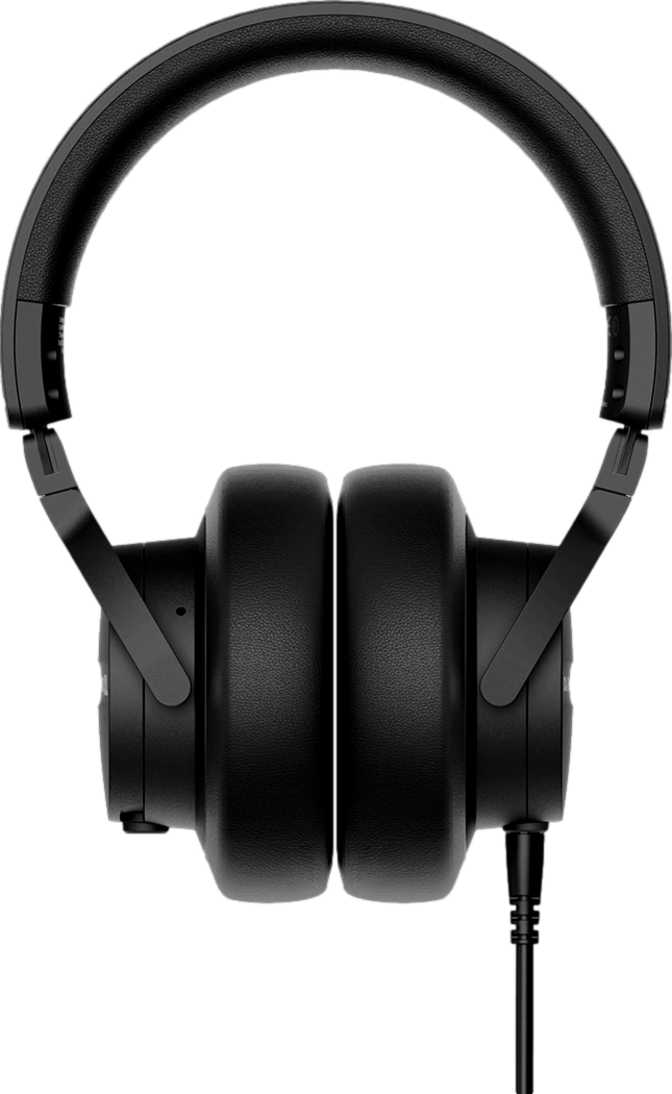
Beyerdynamic DJ 300 Pro X: Full Review for Working DJs
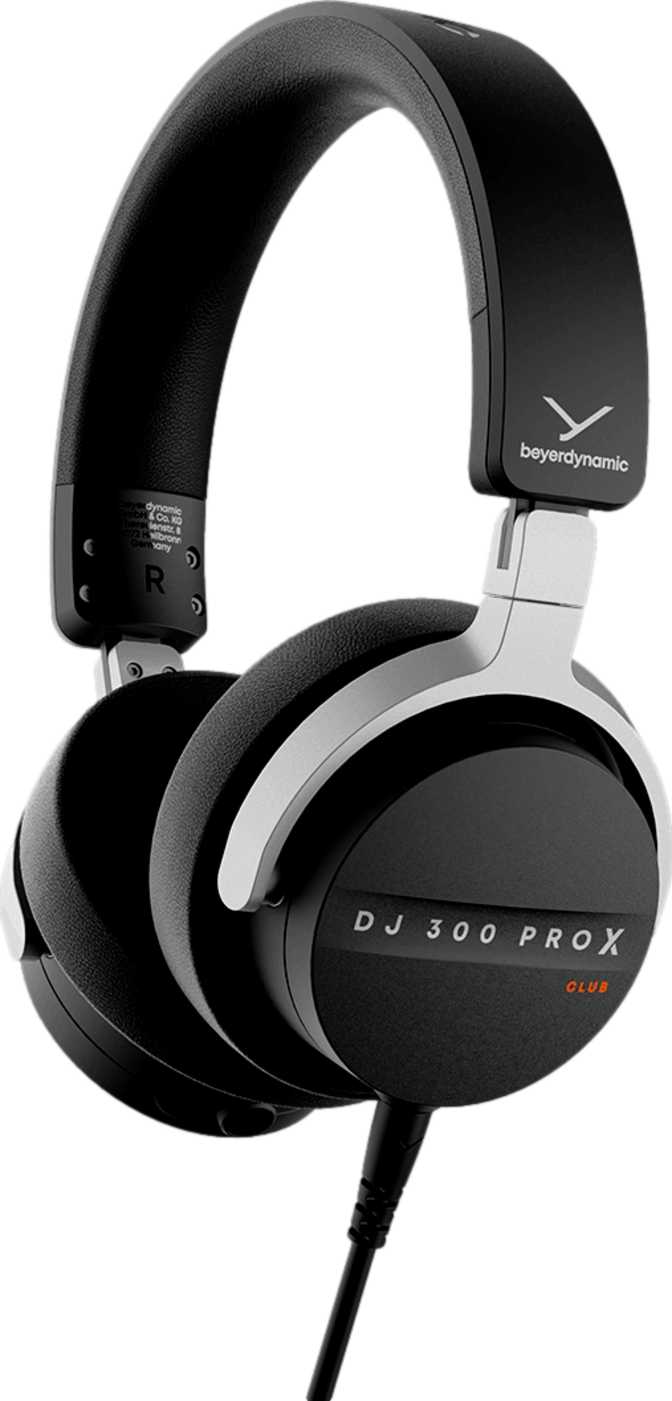
HeadphonesBeyerdynamic has built its reputation on professional audio tools that prioritize function over fashion, and the DJ 300 Pro X follows that tradition with conviction. This is a closed-back, wired monitoring headphone engineered for the specific demands of live DJ work — cueing tracks under pressure, isolating against stage noise, and surviving the repeated folding and unfolding that touring gear must endure. If you need Bluetooth convenience, a built-in mic, or smart commuter features, this headphone will disappoint you by design. If monitoring accuracy, physical durability, and signal integrity in a professional environment are your real requirements, it deserves serious attention.
Technical Performance Snapshot
The following represents qualitative performance scores derived from spec analysis — not manufacturer benchmarks.
Design and Build Quality
Beyerdynamic hasn't chased a sleek consumer aesthetic here. The build language is utilitarian — and for professional hardware, that is exactly the right call.
Physical Form Factor
The DJ 300 Pro X functions as both a full over-ear and on-ear design — a deliberate dual-positioning choice that gives DJs flexibility depending on how they prefer to wear one cup off-ear for live cueing. At 315 grams, the weight is noticeable but not unusual for this category. More physical material generally means more structural resilience, and the trade-off here is a headphone built to absorb the punishment of regular professional use rather than one optimised purely for casual wearing comfort.
Foldability and Portability
The foldable construction is not a cosmetic feature — it is a professional requirement. A working DJ who packs and unpacks gear regularly needs a headphone that collapses into a compact form to reduce the risk of frame damage and fit efficiently into a carry bag or flight case. Beyerdynamic has treated this as a core design specification, not an afterthought.
Cable Design
The 1.5-metre detachable cable is tangle-resistant — a genuine quality-of-life feature in a booth environment where cables compete with equipment, drinks, and hands for space. The detachable connection matters enormously for long-term value: cables are the most failure-prone component in any wired headphone, and being able to replace one without retiring the entire headphone significantly extends the product's practical lifespan.
Water and Sweat Resistance
The DJ 300 Pro X carries no water or sweat resistance rating whatsoever. In a standard club booth environment this is typically acceptable — these are not sport or outdoor headphones. However, DJs working in hot festival conditions or high-energy outdoor environments should factor this limitation into their decision. Protection against perspiration is simply not part of this headphone's design brief.
Sound Architecture: Inside the Driver
Every specification on a headphone either reinforces or limits its performance in the real world. Here is what the DJ 300 Pro X's architecture actually means for the person wearing it.
Frequency Response and Reproduction Range
The DJ 300 Pro X reproduces audio across a range that extends significantly beyond what human hearing typically resolves — from a subsonic low floor to frequencies well above the theoretical upper limit of standard human auditory capability. In practical terms, this means the drivers are not being pushed to their mechanical limits at the edges of the audible frequency range. That headroom tends to result in cleaner, more composed reproduction in the critical midrange and upper bass frequencies where DJ monitoring decisions actually happen.
The low-end extension is especially relevant for DJ work. Feeling bass texture and sub-bass presence — not just hearing it — is part of how a working DJ evaluates a mix in real time. The architecture here is built to reach those lower frequencies without distortion artifacts contaminating the listening experience.
Driver Size and Transient Response
The 45mm driver diameter is the professional standard for over-ear monitoring headphones. Larger drivers move more air and generally produce a more authoritative low-frequency response, while maintaining the cone control needed for accurate midrange and treble detail. A 45mm driver is large enough to provide physical presence in bass reproduction without the sluggishness that can accompany even larger drivers in consumer-focused designs.
Sensitivity and Volume Capability
A sensitivity rating of 109 dB per milliwatt tells a specific story: these headphones are efficient and loud. For a DJ running from a mixer headphone output — rarely a high-powered source — this efficiency means the DJ 300 Pro X reaches usable monitoring volumes without the source equipment straining. At typical mixer volumes, the headphone retains substantial dynamic headroom before distortion becomes a concern.
Impedance and Source Compatibility
At 48 Ohms, the DJ 300 Pro X sits between consumer headphones (typically 16–32 Ohms) and high-impedance studio reference headphones (250 Ohms and above). This impedance level is well-matched to standard DJ mixer headphone outputs, which are generally designed for loads in the 40–150 Ohm range. The result: the DJ 300 Pro X works correctly from professional equipment without amplification, while also being capable enough to benefit from a dedicated headphone amplifier if used in a studio context. Higher impedance headphones tend to exhibit lower distortion at high drive levels, which is one reason professional audio equipment gravitates toward them.
Driver Magnet Technology
The DJ 300 Pro X uses a non-neodymium magnet driver. Most modern consumer and prosumer headphones use neodymium magnets for their high magnetic flux density relative to size and weight. An alternative magnet formulation — often ferrite-based — can produce a distinct sonic character: sometimes perceived as warmer or more forgiving in the high-frequency region, with a different transient quality.
This is a technical choice that shapes the sound signature, and it is worth understanding rather than dismissing. Some professional audio engineers actively prefer this type of driver for monitoring tasks where a natural, unfatiguing high-frequency presentation is valued over analytical brightness.
Passive Isolation: Why No Active Noise Cancellation Is the Right Choice
The closed-back design provides passive noise isolation — the correct approach for a DJ headphone. Active noise cancellation introduces latency and processing artifacts, both unacceptable in a live performance context where real-time monitoring accuracy is non-negotiable. The physical seal of the earcups blocks ambient sound mechanically. In a loud club or festival environment, this passive isolation allows the DJ to hear the cue mix clearly without raising volume to damaging levels.
Power System: An Active Feature Worth Understanding
The DJ 300 Pro X includes a rechargeable internal battery and a battery level indicator — an unexpected specification for a purely wired headphone with no active noise cancellation and no wireless connectivity.
This suggests an onboard powered feature that is not ANC-related. In a professional wired headphone, a built-in power system typically indicates some form of powered driver enhancement, internal amplification, or active DSP processing that operates independently of the source signal. The presence of a battery level indicator means the user needs to be aware of charge state before a session — which is a meaningful workflow consideration.
The battery is not removable, so charging must happen via the onboard mechanism between uses. This is not necessarily a drawback, but it does mean that pre-session preparation for the DJ 300 Pro X includes a quick check of the power level, alongside the usual equipment checks.
- Check battery indicator before every set
- Charge between sessions — battery is non-removable
- Treat like any powered device in your setup
- A depleted battery may disable active features
Who Should Buy This — and Who Should Not
The DJ 300 Pro X is a single-purpose professional tool. Understanding exactly where it excels and where it stops being useful is critical before committing.
-
Working DJs who need a reliable, wired monitoring tool for booth use — this is the core use case this headphone was built around.
-
Producers and beatmakers who want a closed-back pair for tracking sessions and rough mixing, where isolation from the room is essential.
-
Audio students learning DJ performance who want professional-grade monitoring without consumer-grade limitations from day one.
-
Live sound engineers who need a monitoring headphone capable of handling high source levels cleanly without distortion.
-
Wireless or Bluetooth users — the DJ 300 Pro X is entirely wired with zero wireless capability of any kind.
-
Commuters and travellers who need active noise cancellation, in-line controls, or hands-free call capability — none of these features exist here.
-
Call and video users — with zero microphones and no headset functionality, this cannot be used for calls or video conferencing.
-
Casual smartphone listeners — while audio will play via the wired connection, the complete absence of any in-line controls makes smartphone use a frustrating passive-only experience.
How the DJ 300 Pro X Compares
The absence of Bluetooth and a microphone immediately separates this headphone from the mainstream consumer market. Here is how it positions against the two most logical categories of competition.
| Feature | Beyerdynamic DJ 300 Pro X | Typical Consumer Competitor | Typical DJ Monitor Competitor |
|---|---|---|---|
| Design | Closed-back, wired | Closed or open, often wireless | Closed-back, wired |
| Connectivity | Wired Only | Bluetooth + wired | Wired only |
| Driver Size | 45mm | 30–40mm | 40–50mm |
| Impedance | 48 Ohm | 16–32 Ohm | 32–70 Ohm |
| Foldable | Sometimes | Usually yes | |
| Detachable Cable | Rarely | Common | |
| Microphone | Usually | Rarely | |
| Battery Function | Active powered feature | ANC or wireless power | Typically none |
| Passive Isolation | Varies | ||
| Sensitivity | 109 dB/mW | 95–105 dB/mW | 100–110 dB/mW |
Competitor values represent typical category ranges, not specific model benchmarks.
Honest Assessment: Strengths and Limitations
A credible review does not ignore trade-offs. Here is a clear-eyed look at what the DJ 300 Pro X does well and where it genuinely falls short.
The frequency architecture is broad and well-considered for monitoring applications. The extended low floor and elevated high-frequency ceiling mean the drivers are performing well within their capable range for the frequencies that actually matter in DJ work — the sub-bass texture, the midrange clarity, and the upper-frequency precision needed to catch mix errors under loud conditions.
The detachable, tangle-resistant cable reflects genuine understanding of professional use. This is the kind of design decision that separates tools built for working musicians from headphones designed for retail shelf appeal.
The foldable design, moderate impedance matching professional mixer outputs, and high sensitivity rating all converge on a headphone that knows its audience and delivers accordingly.
The 1.5-metre cable requires planning in some setups. DJs with more physical distance from their mixer will need an extension cable as part of their standard kit — a minor but real operational consideration.
The internal battery introduces a variable that professional users will want clarity on before committing. A powered headphone that requires charging before a set adds an item to the pre-show checklist and creates a potential point of failure that a fully passive headphone would not have.
The non-neodymium driver gives the DJ 300 Pro X a tonal identity that diverges from most contemporary headphones. This is worth auditioning if possible — it may suit your monitoring preferences, or it may not. It is a meaningful sonic difference, not a trivial one.
Common Questions Before Buying
These are the questions buyers most frequently search for before purchasing a professional DJ headphone in this category.
Beyerdynamic DJ 300 Pro X
The Beyerdynamic DJ 300 Pro X is a disciplined professional tool that refuses to be anything other than what it is. Its wide frequency range, efficient sensitivity, professional impedance rating, and intelligently considered physical design all point toward a headphone that genuinely understands its audience — working DJs and studio professionals who want monitoring reliability over feature lists.
Its limitations are not weaknesses so much as choices: no wireless, no mic, no controls. If those features matter to you, this is not your headphone. If they do not — if a clean, wired monitoring signal in a durable, portable chassis is the brief — the DJ 300 Pro X deserves a serious look. The internal battery adds a workflow consideration worth acknowledging, and the non-neodymium driver gives it a tonal identity that stands apart from the mainstream. Both factors reward a careful listen before purchase if your context allows it.
- Working DJs — booth and live monitoring
- Studio tracking and rough mixing
- Live sound monitoring engineers
- Audio students pursuing DJ performance
- Wireless or Bluetooth users
- Users who need microphone or headset function
- Commuters requiring ANC
- Casual smartphone listeners