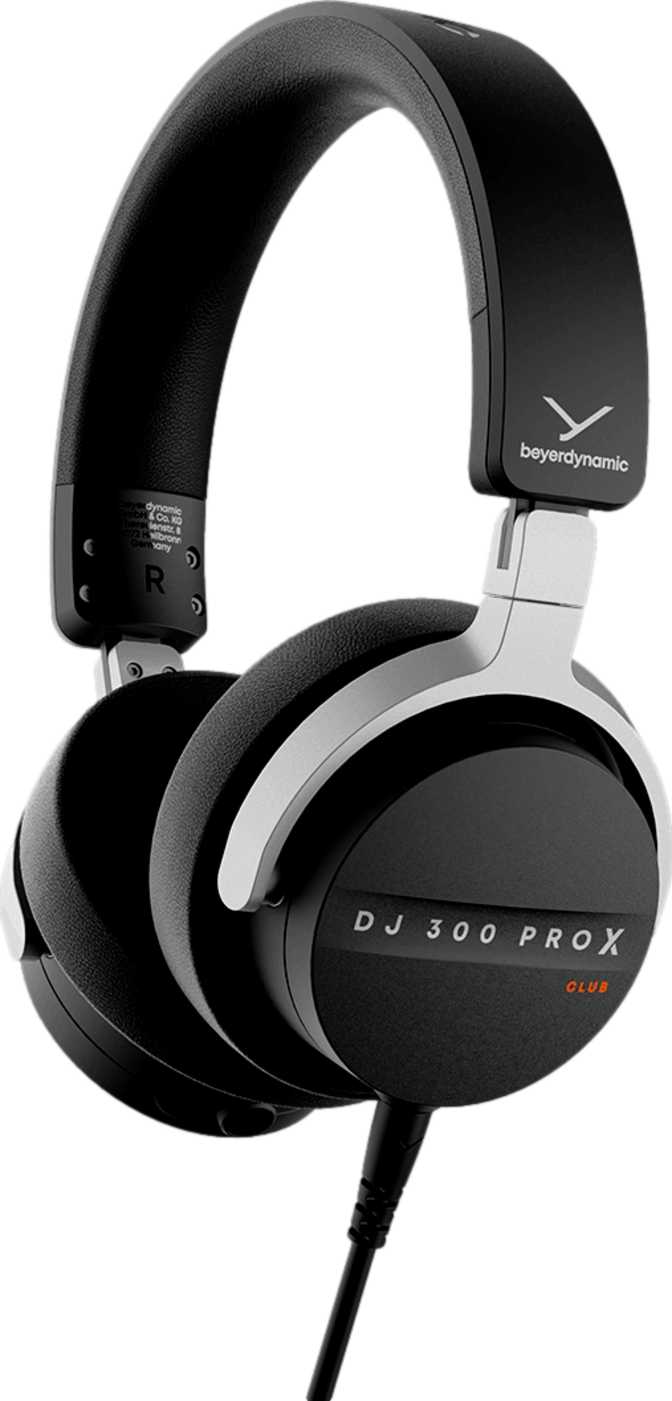
Beyerdynamic DJ 300 Pro X Club: Full Review for Working DJs
HeadphonesKey Specifications at a Glance
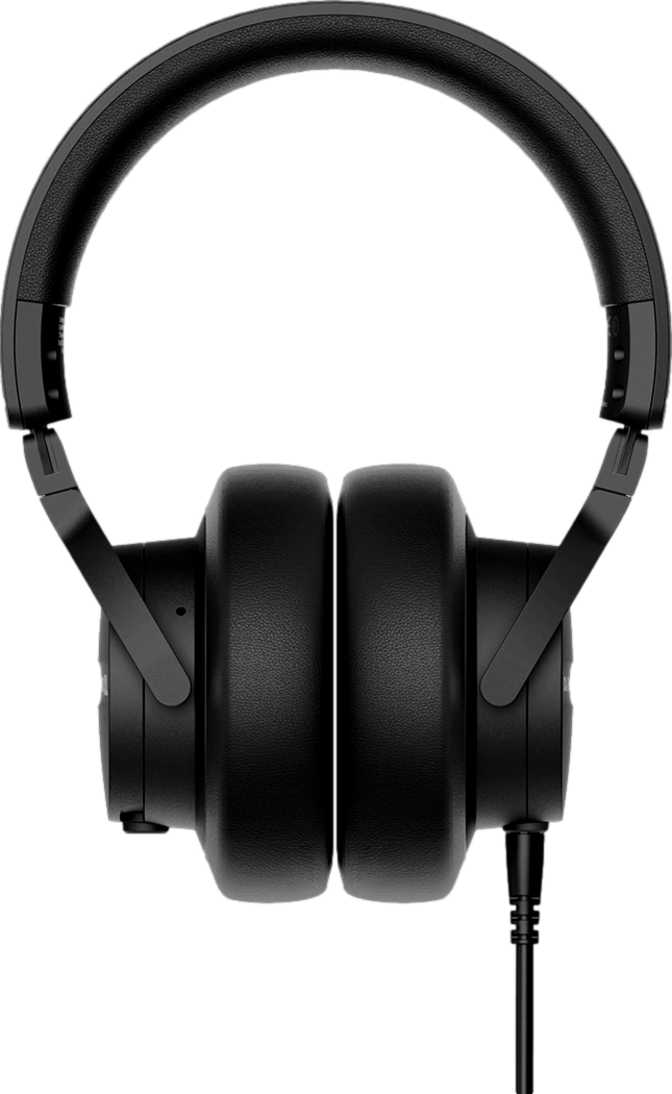
There is a specific kind of headphone that disappears at a DJ gig — not because it is cheap and disposable, but because it does its job so completely that you stop thinking about the tool and start thinking about the mix. The Beyerdynamic DJ 300 Pro X Club is engineered to be exactly that headphone. It is a wired, closed-back, professional monitoring headphone designed for DJs, studio monitoring, and critical listening — and it makes no apologies for what it is not. No Bluetooth, no microphone, no active noise cancellation. What you get instead is a precision audio instrument tuned for accuracy, endurance, and the physical demands of live performance.
If you are new to DJ headphones and wondering why a dedicated DJ headphone is even a separate category, the answer is everything that follows.
Design and Build: Function Shapes Every Decision
Fit Options That Actually Matter
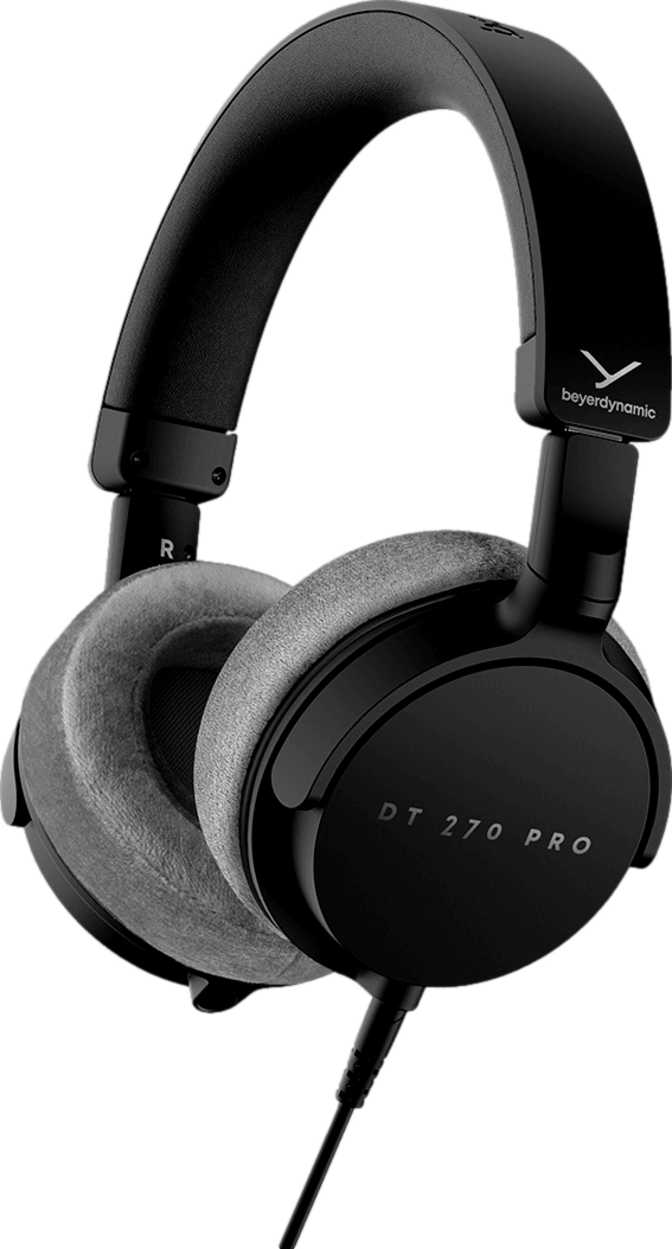
One of the DJ 300 Pro X Club's less-discussed but genuinely useful features is that it supports both on-ear and over-ear wearing styles. This is not marketing ambiguity — it reflects the physical reality of how DJs actually monitor. During a live set, you often have one cup pressed hard against one ear to cue a track while the other ear stays open to the room. On-ear positioning lets the cup sit against the ear more naturally in that single-ear cueing position. When you need full isolation for critical listening — headlining a club with a wall of bass threatening your reference — pushing them into over-ear position makes the outside world recede significantly.
For studio producers or mix engineers using these off the DJ circuit, the over-ear position will be the default choice for extended sessions.
315 Grams: Why That Number Matters Over a Four-Hour Set
At 315 grams, these headphones sit in the mid-range of professional DJ headphone weight. They are not ultralight, but for a closed-back design with 45mm drivers, the number is honest and appropriate. The more relevant question is how that weight is distributed and how the headband manages clamping pressure over time. A headphone that feels fine in a showroom can become a real problem by the third hour of a set. Beyerdynamic's reputation for headband engineering is long-standing, and the DJ 300 Pro X Club reflects that lineage — the weight does not pool at a single pressure point.
Foldable, Cabled, and Road-Ready
The headphone folds flat — not just for the sake of a spec bullet, but because DJ headphones travel hard. They go into gig bags, get stacked in record crates, and end up at the bottom of backpacks. A fold-flat design is a genuine necessity for this use case, not a bonus feature.
- Detachable cable: DJ cables fail. They get stepped on, pulled across mixer corners, and kinked repeatedly. On a fixed-cable headphone, a damaged cable means a damaged headphone. Here, you replace a cable, not a costly piece of equipment.
- 1.5-metre length: Deliberately short and intentionally so. DJ mixers sit on booths. Long cables become hazards. This length gives you range without excess slack catching on knobs or trailing onto the floor.
- Tangle-free construction: Cables that manage themselves matter more than they sound. Coiled cables conduct micro-vibration into the cup during a session, and untangling a cable mid-set is a moment of stress no performer needs.
What the Design Leaves Out
These are not outdoor festival headphones meant to survive rain or sweat submersion. They are booth and studio tools. If you need IP-rated headphones for outdoor or active use, this is not your headphone.
Given that this headphone folds and is transported regularly, the omission is a practical inconvenience worth factoring into your budget if you do not already own an appropriate case.
Sound Performance: Reading the Specifications Honestly
Frequency Range: The Full Bandwidth Story
The drivers operate across a range that starts lower than most bass notes a human can consciously perceive and extends well beyond the upper limit of human hearing. The low end digs into infrasonic territory — this is about physical weight and sub-bass presence in electronic and club music. When a kick drum carries sub-50Hz energy, a headphone that cannot reproduce it gives you an incomplete picture of the mix.
The high-frequency ceiling reaching into ultrasonic territory means the headphone is not artificially rolling off the top end. Transients — the sharp attack of a hi-hat, a snare crack, a synth stab — retain their edge and clarity in full.
Driver Size and Sensitivity: Power from Low Sources
The 45mm driver units are among the larger drivers used in on-ear and over-ear headphone applications. A larger driver moves more air per cycle, which supports physical bass impact and fuller midrange body. Smaller drivers can achieve accurate frequency response, but large drivers make that accuracy feel effortless rather than engineered.
The sensitivity of 109 dB per milliwatt is high. These headphones get loud from very modest power inputs. A DJ mixer's headphone output drives them to reference volume without strain, and a smartphone output reaches comfortable listening levels with ease.
Impedance: The 48 Ohm Sweet Spot
The 48 Ohm impedance sits between consumer-oriented low-impedance headphones (typically 16–32 Ohms) and professional studio monitors designed for dedicated amplifiers (250–600 Ohms). This makes the DJ 300 Pro X Club broadly compatible with DJ equipment, audio interfaces, and portable sources without being so low-impedance that hiss from weaker outputs becomes an issue.
If you have ever plugged a high-impedance studio headphone into a mixer only to find it embarrassingly quiet, 48 Ohms solves that problem while still offering the dynamic control that higher impedance brings.
Passive Noise Isolation: No Batteries Required
The DJ 300 Pro X Club achieves noise isolation through its closed-back physical design — no electronics, no processing, no latency, and no batteries involved. In a loud club environment, that physical seal between your ear and the driver is what lets you hear the cue channel clearly over 100+ dB of room sound.
Active noise cancellation introduces processing delay and creates artifacts in complex acoustic environments. For DJs, any processing in the signal chain is unacceptable. Passive isolation has zero latency and performs identically at every volume in every room.
Key Features Explained
Detachable Cable System
The ability to swap cables means longevity. It also means adaptability — a longer cable for studio use, the standard 1.5m for the booth, or a coiled cable if you prefer tactile feedback on cable tension. Verify connector compatibility if third-party customisation matters to you.
Fold-Flat Architecture
The folding mechanism allows the headphone to compress into a flat configuration rather than holding its full three-dimensional shape. The practical benefit is a smaller footprint in a bag and reduced torque stress on the headband when stored between gigs.
Dual Wearing Positions
On-ear and over-ear positioning serve different moments in a DJ's workflow. The mechanism for transitioning between the two should feel deliberate rather than accidental — a cup that shifts position mid-set is worse than no dual-position capability at all.
Stereo Drivers, Purely Wired
Both channels are driven independently. The signal path is entirely analogue and entirely passive — from the cable to the driver, there is no digital processing in the chain. For professionals who treat latency and signal purity as non-negotiable, this is not a limitation. It is the whole point.
Who This Headphone Is For
- A working DJ — needs reliable cue monitoring in loud environments, values fast cable replacement, and wants a headphone built for regular gigging without compromise.
- A studio producer or beatmaker — the extended frequency range and large drivers make a credible monitoring tool for production work in genres where sub-bass content is central.
- A vinyl and electronic music enthusiast — anyone who listens critically to electronic music, hip-hop, or techno and wants a headphone that does not smooth over sub-bass content.
- Wireless convenience — there is no Bluetooth option of any kind. Commuters and travellers who need cord-free listening will find this a dealbreaker.
- A built-in microphone — podcast hosts, streamers, and video callers will find no microphone and no in-line controls of any kind.
- Outdoor or active use — no water or sweat resistance makes these unsuitable for gym sessions, running, or outdoor environments with weather exposure.
- Neutral reference monitoring — a DJ headphone's tuning is optimised for electronic music genres. Classical or acoustic listeners prioritising absolute flatness should look elsewhere.
Competitive Positioning
The DJ 300 Pro X Club sits in a well-contested professional DJ headphone category. Here is how it positions against the logical alternatives a buyer would be comparing at this level.
| Feature | Beyerdynamic DJ 300 Pro X Club |
Pioneer DJ HDJ-X5 |
Sennheiser HD 25 |
Audio-Technica ATH-M50x |
|---|---|---|---|---|
| Wearing Style | On-ear / Over-ear | Over-ear | On-ear (split headband) | Over-ear |
| Impedance | 48 Ohm | 32 Ohm | 70 Ohm | 38 Ohm |
| Frequency Range | 5–35,000 Hz | 5–30,000 Hz | 16–22,000 Hz | 15–28,000 Hz |
| Foldable | Yes | Yes | No (separates) | Yes |
| Detachable Cable | Yes | Yes | No | Yes |
| Intended Use | DJ / Studio | DJ | DJ / Broadcast | Studio / DJ |
| Wireless Option | No | No | No | No |
Honest Assessment: Strengths and Weaknesses
- The driver size, sensitivity, and frequency range reflect an engineering brief that starts with what a DJ actually needs to hear, not a marketing spec sheet. The result is a headphone that genuinely earns its specifications.
- Passive isolation is the right approach for professional monitoring. Zero latency, no battery dependency, and consistent performance in every acoustic environment make electronics-free isolation simply more reliable for live use.
- The detachable, tangle-free cable is evidence that this headphone was designed by people who understand how cables actually fail in professional use — not an afterthought added to a feature list.
- Beyerdynamic's headband design lineage translates into comfort over extended sessions, and at 48 Ohms it pairs naturally with DJ mixers and audio interfaces without requiring additional amplification.
- The absence of a carry case at a professional price point is a genuine inconvenience. A headphone designed for transport should ship with protection for that transport. Budget separately for a case if you do not own one.
- No water or sweat resistance limits where these can be used with confidence. They are not suited to outdoor festival conditions with unpredictable weather, or to active use where perspiration is a regular factor.
- The wired-only design is a deliberate professional choice, but buyers who divide their time between studio work and casual daily listening will find the absence of wireless an ongoing friction in their workflow.
- No in-line controls of any kind — no volume, no track skip, no call answer. For pure DJ and studio use this is entirely irrelevant. For a listener who switches contexts throughout the day, it becomes friction.
Common Buyer Questions Answered
Final Verdict
The Beyerdynamic DJ 300 Pro X Club is a professional-grade DJ and monitoring headphone that prioritises the things that matter in real working conditions: a signal path free of processing, physical isolation that does not depend on battery charge, driver engineering capable of reproducing the full energy of electronic music, and a build designed to survive the rigours of regular use and transport. It is not a lifestyle headphone. It does not stream, it does not cancel noise electronically, it does not take calls. If what you need is a headphone that tells the truth about your audio — accurately, loudly, and reliably — in the most demanding acoustic environments a DJ encounters, the DJ 300 Pro X Club belongs near the top of your shortlist. Beyerdynamic has made a strong case here, and the specifications are the foundation, not the sales pitch.
Buy It If You Are
- A working DJ who demands accurate monitoring in loud environments
- A studio producer working primarily in bass-heavy genres
- A serious listener who values acoustic engineering over smart features
Skip It If You Need
- Wireless or Bluetooth connectivity for untethered listening
- A built-in microphone for calls, streaming, or gaming chat
- Water or sweat resistance for outdoor or active environments