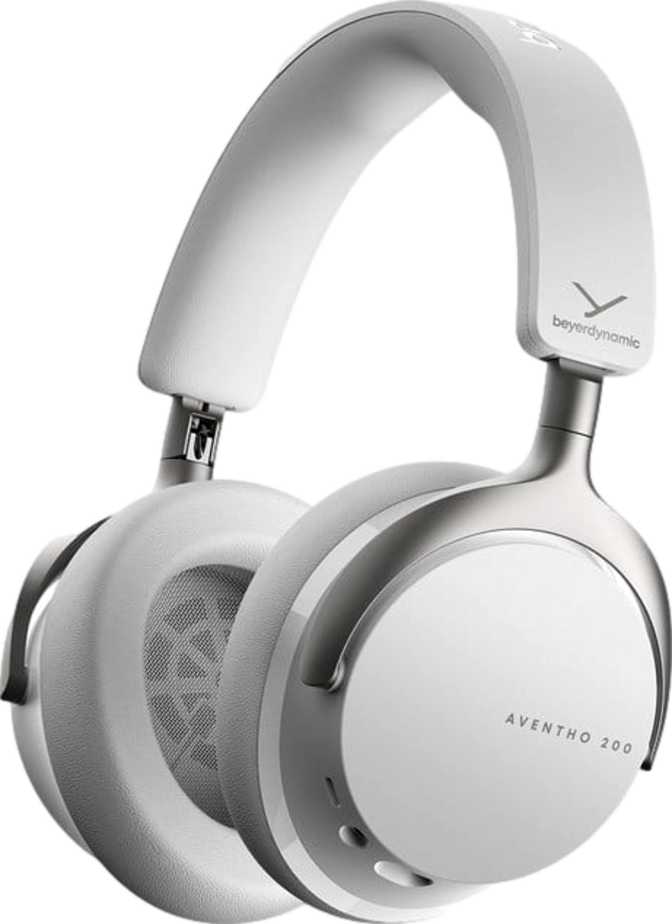
Beyerdynamic Aventho 200 Review: Built for Serious Listeners
HeadphonesKey Specifications at a Glance
Design and Build Quality
Physical construction, materials, and portability
Physical Construction
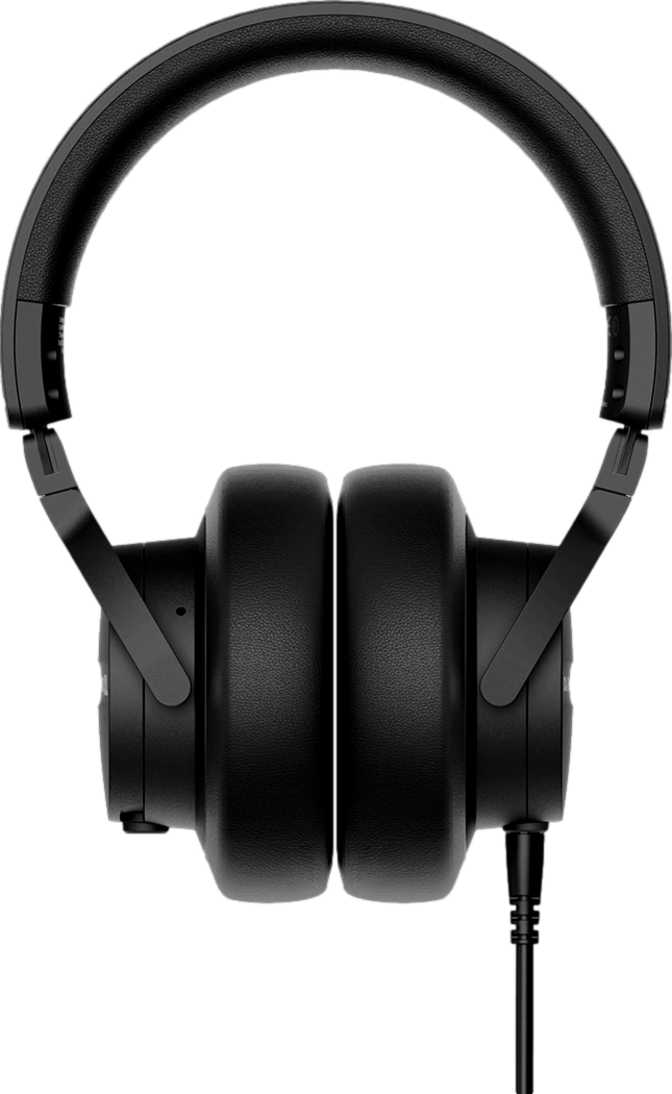
The Aventho 200 is a full-size over-ear headphone — earcups that envelop the ear completely rather than pressing against it. At 293 grams, it sits in a weight range that most listeners can wear through extended sessions without fatigue. It is lighter than several premium competitors that cross the 300-gram mark, yet solid enough to feel properly engineered rather than hollow.
The closed-back design is an intentional acoustic decision. Where open-back headphones trade physical isolation for a wider, airier soundstage, the Aventho 200's sealed cups contain sound internally and passively block external noise. That makes it immediately practical for commutes, open offices, and shared spaces where an open-back design would broadcast your music to everyone within earshot.
Portability and Practicality
The headphone folds flat for storage, and the included travel bag elevates it into a genuinely packable device rather than something that lives permanently on a desk. The detachable cable gives you a passive wired fallback — no adapters, no workarounds — when Bluetooth or battery life simply is not a factor you want to manage.
The cable is tangle-resistant, which is a small but meaningful quality-of-life detail over years of use. The one significant limitation: the Aventho 200 carries no water or sweat resistance rating of any kind. Using it during gym sessions or outdoor runs in wet conditions carries genuine risk of damage, and that absence should factor directly into your decision if active physical use is part of your plan.
Sound Performance
Driver configuration, frequency reach, and noise management
Driver Configuration and Frequency Reach
The Aventho 200 uses 45mm dynamic drivers — a size that occupies the sweet spot for over-ear headphones. The larger physical area compared to smaller drivers allows greater air movement, giving bass notes genuine weight and body rather than a thin impression of depth. Meanwhile, the controlled geometry preserves high-frequency precision, keeping strings, cymbals, and vocal harmonics distinct rather than blurred.
The frequency range extends from 10 Hz — effectively below the floor of human hearing — all the way to 22,000 Hz at the upper edge of audibility. In practical terms, this means sub-bass content in electronic music, film scores, and bass-heavy genres is fully reproduced without premature rolloff, while the top end retains the subtle air and sparkle that distinguish a well-recorded track from a compressed one.
Tuning philosophy: Beyerdynamic's professional audio heritage generally favors accuracy over artificial enhancement. Expect music to sound as it was recorded and mixed, not colored by elevated bass or boosted treble for immediate shelf appeal. Listeners moving from heavily consumer-tuned headphones may notice the difference and need a brief adjustment period.
Noise Management: Two Layers Working Together
The Aventho 200 deploys both active and passive noise control simultaneously. Passive isolation — the physical seal created by the closed-back earcups — handles mid and high-frequency environmental noise effectively without any electronics involved. Voices, keyboards, and traffic are noticeably dampened before the ANC system does anything at all.
Active Noise Cancellation adds an electronic processing layer on top of that physical barrier. Six microphones sample ambient sound continuously and generate an opposing signal to cancel it out — most effective against consistent low-frequency noise like aircraft engine rumble, air conditioning hum, and train carriages, where passive isolation alone is weakest.
The ambient sound mode works in the opposite direction: it deliberately routes external audio through the drivers so you can hear your surroundings without removing the headphones. This is useful for catching transit announcements, holding a brief conversation, or simply maintaining awareness of your environment while traveling.
Wireless Connectivity
Bluetooth 5.4, codec support, and multi-device pairing
Bluetooth 5.4 is among the most current versions of the standard available at this product tier. The practical benefits over earlier releases include more stable connections in crowded wireless environments — airports, open-plan offices, city transit — lower power consumption on both the headphone and source device, and better handling of signal interference.
Codec Comparison: What Each Option Means for You
The Bluetooth codec in use determines the wireless audio quality ceiling. Here is how the Aventho 200's codec support maps against the available options:
| Codec | What It Does | Best Suited For | Aventho 200 |
|---|---|---|---|
| aptX Adaptive | Dynamically adjusts bitrate between standard and high quality depending on connection conditions | Android phones with aptX Adaptive support | Supported |
| aptX Lossless | Transmits CD-quality audio without compression losses when connection quality allows | Android and Windows with aptX Lossless-capable source devices | Supported |
| AAC | Efficient compression optimized for Apple's ecosystem; good quality across most content types | iPhone and Mac users | Supported |
| LDAC | Sony's high-resolution wireless codec; widely supported across a broad range of Android devices from multiple manufacturers | Android users across many brands, not only Sony devices | Not Supported |
The LDAC gap — explained plainly: LDAC is Sony's codec, but it appears across Android phones from many manufacturers — not just Sony. If your phone supports LDAC but not aptX Lossless, the Aventho 200's high-resolution wireless ceiling is unreachable from your device. aptX Lossless offers a technically superior result when the connection and source device can support it, but fewer smartphones currently carry aptX Lossless than carry LDAC. Check your device's codec support before purchase if high-resolution wireless audio is a priority.
Connecting Multiple Devices
Multipoint connectivity maintains simultaneous Bluetooth links to two devices — a work laptop and a personal phone, for example — and switches audio between them without manual disconnection or re-pairing. In a typical workday, this means a video call on one device and music from another can coexist without connection juggling. The wireless range covers approximately 15 meters in open conditions, enough to move freely within a room or step briefly into an adjacent space without losing the signal.
Battery Life: The Standout Specification
Endurance, charge time, and power management
63 Hours
Standard playback, ANC off
40 Hours
Full ANC active playback
1.5 Hours
Full recharge via USB-C
How the Endurance Compares
Most premium wireless headphones at this tier deliver between 20 and 40 hours of playback. The Aventho 200's figure is not incrementally better — it operates in a categorically different range. At four hours of daily listening, that translates to over two weeks between charges. Travelers who forget their charger at home, and users who habitually ignore low-battery warnings, will find this headphone forgiving rather than punishing.
Charging uses USB-C — the universal standard now shared by most mobile devices — so no proprietary cable is needed. A built-in battery level indicator keeps you aware before a low-charge situation becomes an empty-battery situation. The one notable absence at this price point is wireless charging, which several competing headphones now include as standard.
Real-World Usage: Who Should Buy This
Understanding who benefits most — and who should look elsewhere
A battery that outlasts every flight, layover, and delay without anxiety, backed by ANC specifically effective against the consistent low-frequency rumble of aircraft engines.
Listeners who want wireless audio that takes codec quality seriously. Beyerdynamic's professional engineering heritage is genuine, not marketing language.
A six-microphone array and multipoint connectivity deliver clean call audio and seamless switching between a work laptop and a personal phone.
Those with aptX Adaptive or aptX Lossless-capable devices will fully unlock the headphone's wireless audio ceiling — and genuinely notice the difference.
Zero water or sweat resistance means intense gym sessions and outdoor runs in damp conditions carry genuine risk of damage to the headphone.
AAC works perfectly well on iOS, but the aptX Lossless advantage is inaccessible from an iPhone. The high-resolution wireless ceiling is unreachable from Apple's ecosystem.
No spatial or three-dimensional audio processing is supported. Gaming audio, Dolby Atmos headphone content, and immersive audio formats are reproduced in standard stereo only.
No auto-pause on removal, no dedicated mute button, and no wireless charging — small daily frictions that accumulate for users who treat these as standard expectations.
How the Aventho 200 Compares to the Competition
Feature-by-feature positioning against typical alternatives at this tier
| Feature | Beyerdynamic Aventho 200 | Typical Competitor at This Tier |
|---|---|---|
| Battery — ANC Off | 63 hours | 20–40 hours |
| Battery — ANC On | 40 hours | 20–30 hours |
| Bluetooth Version | 5.4 | 5.2–5.3 |
| Lossless Wireless Codec | aptX Lossless | Rarely available |
| LDAC Support | No | Yes (Sony models) |
| Spatial Audio | No | Yes (many competitors) |
| Microphone Array | 6 microphones | 2–4 microphones |
| Auto Ear Detection | No | Yes (most competitors) |
| Water Resistance | None | IPX4 common |
| Travel Bag Included | Yes | Often sold separately |
The pattern is consistent: the Aventho 200 leads on battery endurance, wireless audio ceiling, Bluetooth generation, and call microphone depth. It concedes ground on features that dominate competitor marketing — spatial audio, water resistance, and ear detection. These read as deliberate engineering trade-offs rather than oversights.
Honest Assessment: Strengths and Where It Falls Short
What the Aventho 200 genuinely gets right — and where it does not
- The battery life does not compete with category norms — it operates above them entirely. Removing power anxiety from the ownership equation is a genuine quality-of-life improvement that compounds over daily use.
- Beyerdynamic's professional audio engineering heritage gives the 45mm drivers and the overall acoustic tuning a credibility that younger consumer brands cannot replicate through marketing alone.
- aptX Lossless support raises the wireless audio ceiling above what most headphones at this tier can access — meaningful for listeners with compatible source devices and high-resolution music libraries.
- The six-microphone noise-canceling array treats call quality as a first-class engineering priority. This is a legitimate professional headset, not a consumer headphone with a microphone tacked on.
- Bluetooth 5.4, a 90-minute full recharge via USB-C, and a battery level indicator keep the technical infrastructure current and practically convenient for daily use.
- No water or sweat resistance at this price point is a recurring concern. A significant portion of premium wireless headphone users also need moisture protection — the Aventho 200 does not provide any.
- LDAC's absence narrows the Android device pool that can fully engage the Aventho 200's high-resolution wireless capability. Many Android phones carry LDAC without aptX Lossless support.
- No spatial audio support means immersive content — gaming audio, Dolby Atmos headphone tracks, and three-dimensional mixes — plays in standard stereo only.
- No auto-pause when the headphones are removed means music continues unattended. A small daily friction that becomes more noticeable the longer you own the headphone.
- Wireless charging is absent and there is no dedicated mute button — both features now common at competing price points that will frustrate users who rely on them in their current setup.
Common Questions Before You Buy
Answers to what real buyers search for before committing
Final Verdict
4 / 5
A Disciplined Headphone That Rewards the Right Buyer
The Beyerdynamic Aventho 200 does not attempt to lead every category simultaneously. It makes concentrated bets — exceptional battery endurance, genuine audio engineering heritage, a lossless wireless ceiling, and professional-grade call quality — and follows through on all of them. Where it concedes ground on spatial audio, water resistance, LDAC, and auto-pause, those read as deliberate trade-offs, not omissions.
For frequent travelers, serious music listeners, or professionals who treat call quality as non-negotiable, the Aventho 200 earns its place at the premium tier without apology. Go in clear-eyed about what it does not do, and you will find a headphone built to a specific and defensible standard.
Buy it if you...
- Prioritize battery endurance above all else
- Use an aptX-compatible Android or Windows device
- Spend significant time on calls from a laptop
- Travel frequently and need ANC that truly lasts
Skip it if you...
- Work out or use headphones in wet conditions
- Rely on spatial audio for gaming or content
- Want LDAC for your existing Android phone
- Expect auto-pause and wireless charging as standard