ATK RS7 Review: Hall Effect Performance in a Compact 65% Board
KeyboardsHall effect switches were once a niche curiosity for hardware enthusiasts willing to pay a significant premium. The ATK RS7 argues that this technology now belongs in the mainstream — packaged in a compact 65% layout with a gasket mount, aluminum construction, and a polling rate that puts many flagship boards to shame. Whether you are a competitive FPS player looking for every possible edge or a productivity-focused typist who wants a smaller footprint without compromising on feel, the RS7 makes a credible case. But it is not without trade-offs, and knowing them upfront will tell you immediately whether this is the right keyboard for you.
4.5 / 5
Editor's Score
Key Specifications at a Glance
Layout
65% Compact
Switch
Hall Effect Linear
Polling Rate
8000 Hz
Mount
Gasket
Actuation
0.1 – 3.4 mm
Weight
1300 g
Design and Build Quality
Physical experience, materials, and what you actually feel when you pick it up
First Impressions and Physical Presence
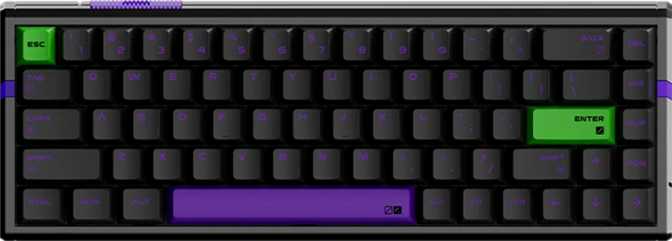
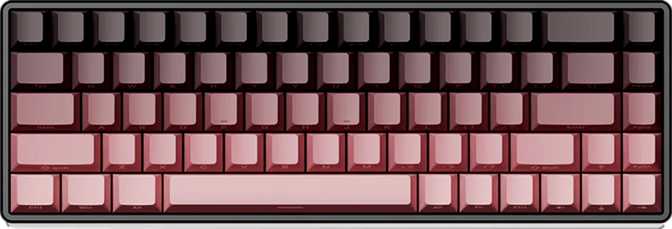
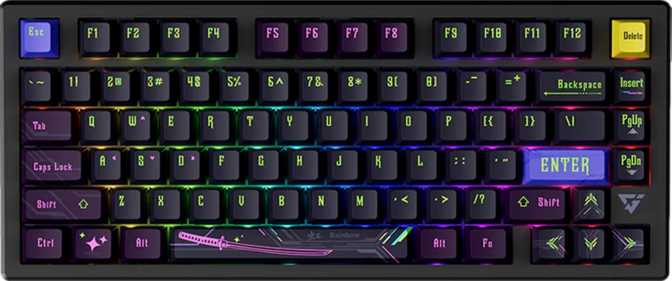
The ATK RS7 is available in black and white — two clean, neutral colorways that fit comfortably into most desk setups without demanding attention. The design language is conservative by gaming keyboard standards: no aggressive angles, no exaggerated styling, just a straightforward rectangular slab with proportions that feel purposeful rather than flashy.
What immediately communicates quality is the weight. At roughly 1.3 kilograms, this is a dense board for a 65% layout. Most compact keyboards in this category feel featherlight — sometimes to the point of sliding around during intense sessions. The RS7 plants itself on your desk and stays there. That heft comes from a combination of an aluminum plate internally and an aluminum-and-plastic hybrid case construction. The plastic body keeps manufacturing costs in check; the aluminum reinforcement is where it matters for rigidity and resonance control.
The footprint is compact without being cramped: 327mm wide and 138mm deep. You get the standard 65% key arrangement — full alphanumeric area, arrow cluster, and a narrow column of navigation keys on the right — all without a numpad. For most users, this is the sweet spot between minimalism and practicality.
Lighting and Cable
The south-facing LED orientation means the RGB lighting illuminates the bottom of each keycap rather than shining directly through the legend. On the RS7's PBT keycaps, the effect is a pleasant underglow-style halo around each key rather than a bright legend shine. It looks good in dim environments; it will not blow you away in a brightly lit room.
The cable is detachable, which is worth appreciating. A fixed cable is a durability liability over years of use; a detachable one means a frayed or damaged cable is a low-cost fix rather than a dead keyboard. The USB connection is standard and compatible with essentially any desktop or laptop setup.
- CasePlastic + Aluminum hybrid
- PlateAluminum
- MountGasket (shock-isolated)
- KeycapsPBT Dye-sublimated
- ColorsBlack, White
- Dimensions327 × 138 mm
- Weight1300 g
Worth Knowing
The RS7 has no adjustable tilt feet. The typing angle is fixed. If you prefer a flat or elevated typing position, you will need a keyboard stand or riser. There is also no wrist rest included.
The Switches: Hall Effect Technology Explained
Gateron Jade hall effect linears — what they are, how they work, and why it matters
Why Hall Effect Is Different
Most mechanical keyboards use physical contact switches — two metal pieces that touch when you press a key to register a keystroke. Hall effect switches work differently: they use a magnet and a sensor to detect key position with no physical contact at all. There is no click point in the electrical sense — the sensor reads the magnet's position continuously throughout the entire keystroke.
This has two major practical consequences. First, the switches never wear out in the traditional sense — no contact degradation, no inconsistency developing over millions of keystrokes. Second, and more significantly for gamers, the actuation point is no longer a fixed physical threshold. It becomes a software-defined value you can move anywhere along the key's travel.
Gateron Jade: Switch Specs
The Gateron Jade units fitted here are linear hall effect switches from a manufacturer with a long reputation in the mechanical keyboard space. Linear means no tactile bump and no audible click on the way down: just a smooth, consistent press from top to bottom. At a light 36 grams of actuation force, these sit among the easier-to-press linears on the market — fast typists and gamers who favor rapid, low-effort keypresses will appreciate this; users prone to accidental keystrokes may need a short adjustment period.
| Parameter | Value |
|---|---|
| Switch type | Hall effect magnetic |
| Feel | Linear (smooth, no bump) |
| Actuation force | 36 g (light) |
| Minimum actuation | 0.1 mm (near-instant) |
| Maximum actuation | 3.4 mm (full travel) |
| Total travel | 3.4 mm |
| Hot-swappable | Yes |
Advanced Features Explained
Adjustable Actuation
Set your trigger point anywhere from a barely-there 0.1mm to the full 3.4mm of travel. No other switch type offers this range — tune it to your exact preference rather than accepting a fixed compromise.
Rapid Trigger
The key re-arms the instant it begins moving upward — no fixed reset distance to wait for. In FPS games this enables faster direction changes and tap inputs that a standard switch would miss entirely.
Dual Actuation
A single key can trigger two separate inputs depending on press depth. Light press sends one command; full press sends another. Primarily useful in racing games or simulators with layered input systems.
Hot-Swap
All switches pull out and replace without soldering. Replacement switches must be hall effect compatible to retain advanced features — standard contact switches will not support rapid trigger or adjustable actuation.
Actuation Range: What It Feels Like in Practice
The adjustable actuation range is the RS7's headline specification for good reason. Setting the point at 0.1mm delivers a hair-trigger response that competitive players specifically seek — you barely graze the key and it fires. At the opposite end, a 3.4mm setting means the keystroke only registers at the very bottom of the press, giving a deliberate, definitive feel more suited to precise typing. Most users will find their optimal point somewhere between 1.0mm and 2.0mm.
Rapid Trigger: Who Benefits
Rapid trigger is the feature that earns the most discussion in competitive gaming circles. In a standard keyboard, a key must return past a fixed reset point before it can actuate again. Rapid trigger eliminates this: the switch re-arms the moment it begins moving upward regardless of position.
- FPS players: Faster strafe direction changes — measurable competitive advantage
- Tactical shooter players: Short tap inputs that standard keyboards miss entirely
- Platformer players: Precise jump timing with reduced input latency
- RPG / Strategy players: No noticeable benefit — non-factor in these genres
- Productivity / Office: Irrelevant — neither helps nor hinders typing workflows
Performance Analysis
Polling rate, input latency, N-key rollover, and what the numbers mean for you
8000 Hz Polling Rate
The RS7 reports its position to the computer eight thousand times per second. For context, most keyboards — including many marketed as gaming keyboards — report at one thousand times per second. This eightfold increase means the gap between a physical keypress and the computer registering it is compressed to fractions of a millisecond.
In everyday typing and most gaming, you will not consciously notice a difference from a standard 1000Hz keyboard. The benefit becomes relevant at the highest levels of competitive play, where inputs are happening in rapid succession and every millisecond of latency is a variable worth minimizing. For anyone running frame rates above 240fps, this polling rate keeps the keyboard from being a bottleneck.
For everyone else, it is a specification that ensures this keyboard is never the limiting factor in your input chain — and that is a reasonable peace of mind to have.
Typing Experience and Sound Profile
Gasket mount, aluminum plate, and PBT keycaps — how they combine
Gasket Mount: The Difference You Feel
In a traditional tray-mounted keyboard, the plate and PCB are screwed directly to the case — the result is a hard, unforgiving typing surface with significant resonance and a sharp, high-pitched sound. A gasket mount suspends the plate assembly on silicone or rubber buffers, isolating it from the case walls.
The difference is a softer, more cushioned keystroke with noticeably less rebound vibration. The sound profile shifts lower and more muted — sometimes described as "thocked" — a quality that is immediately obvious when you compare the two constructions side by side. For an extended typing session, gasket mounting reduces the fatigue that comes from constant hard mechanical impact.
PBT Dye-Sub Keycaps
PBT (polybutylene terephthalate) is denser and less resonant than the ABS plastic found on most budget keyboards. The result is a drier, more muted sound on impact and a surface that resists the shiny wear pattern that ABS develops after months of heavy use.
The dye-sublimation printing process bonds the legends into the keycap material rather than sitting on top of it, so the text will not fade or rub off regardless of how many hours you accumulate. The Cherry keycap profile — slightly sculpted, shorter than OEM height, with a flat top — is one of the most widely used profiles in the enthusiast space, meaning replacement keycap sets are abundant and affordable if you want to customize the look later.
Sound Profile: What to Expect
Volume Level
Moderate — not silent, not sharp. Gasket mount dampens the loudest peaks.
Pitch / Tone
Lower frequency than tray-mount boards. Dense, satisfying impact sound.
Key Feel
Slightly cushioned from gasket flex. Aluminum plate keeps strokes firm and consistent.
Office Suitability
Borderline. Acceptable in private offices; may attract attention in open-plan spaces.
Who Should Buy the ATK RS7 — and Who Should Not
Real-world usage scenarios mapped to specific buyer profiles
-
A competitive FPS or tactical shooter playerRapid trigger and 8000Hz polling rate cover every input performance feature currently available. Hall effect at this tier means there is no meaningful gap between the RS7 and boards costing significantly more.
-
A desk space-conscious user who needs arrow keysThe 65% layout retains the arrow cluster and a navigation column — a sticking point for many moving down from 75% or tenkeyless. You get the compact footprint without losing everyday navigation keys.
-
A typist who values feel alongside featuresGasket mounting, aluminum plate, PBT keycaps, and tunable actuation depth create a genuine daily-driver typing experience. The gaming features do not get in the way of focused work.
-
A Mac and Windows crossover userOfficial Mac compatibility with correct key legends means this works as a daily driver across both operating systems without constant remapping headaches.
-
A firmware customization enthusiast (QMK / VIA / ZMK)The RS7 does not support any open firmware frameworks. Remapping and configuration are limited to ATK's proprietary software. If you rely on QMK layers, complex macros, or VIA live remapping, this is a genuine dealbreaker — not a minor footnote.
-
Anyone who needs wireless connectivityThe RS7 is wired only. There is no Bluetooth, no 2.4GHz dongle, no wireless mode of any kind. Clean desk setups that require cable-free operation should look at a different board.
-
Frequent travelers or LAN event attendeesAt 1.3 kilograms, this is a dense board to carry repeatedly. The weight that makes it feel premium on a desk becomes a daily inconvenience in a backpack.
-
Users with strict ergonomic tilt requirementsNo adjustable feet means no built-in tilt control. If wrist angle is a health priority rather than a preference, factor in the additional cost of a separate riser or stand.
Competitive Positioning
How the ATK RS7 stacks up against logical alternatives in the 65% hall effect space
| Feature | ATK RS7 | Budget Contact Switch (65%) | Mid-Range Hall Effect Competitor |
|---|---|---|---|
| Switch technology | Hall Effect | Contact mechanical | Hall Effect |
| Polling rate | 8000 Hz | 1000 Hz | 1000 – 4000 Hz |
| Mount type | Gasket | Tray / Top | Varies |
| Rapid trigger | Yes | No | Yes |
| Adjustable actuation | 0.1 – 3.4 mm | Fixed only | Yes |
| VIA / QMK support | No | Often yes | Varies |
| Keycap material | PBT Dye-sub | ABS (typically) | PBT (varies) |
| Hot-swap | Yes | Sometimes | Yes |
| Wireless option | No | Rarely | Varies |
The RS7 most directly competes with other hall effect 65% boards. Against budget contact-switch keyboards it wins on almost every technical specification; the question is whether those specifications justify the price premium for a given buyer's actual use case. Against other hall effect competitors, the 8000Hz polling rate and gasket mount at this price tier are the key differentiators.
Honest Strengths and Weaknesses
A balanced assessment — the good, the not-so-good, and the context behind both
Where the RS7 Excels
The RS7's strengths are concentrated and impressive. It delivers hall effect technology, rapid trigger, and an 8000Hz polling rate in a gasket-mounted, aluminum-plated 65% board with quality PBT keycaps. Each of these represents either a genuine performance advantage or a meaningful quality-of-life improvement, and having them together at this form factor and price is not something every manufacturer manages.
The build quality punches above its visual modesty. The weight and aluminum reinforcement give the RS7 a desk presence that justifies the form factor for anyone who has struggled with lightweight boards sliding during fast gaming sessions. The gasket mount elevates the typing experience noticeably above the category norm.
The detachable cable and hot-swappable hall effect switches also speak to long-term durability. These are design decisions that extend the usable life of the keyboard rather than creating planned obsolescence.
Where It Falls Short
The weaknesses cluster around the power user customization end of the spectrum rather than the everyday experience. The lack of VIA or QMK support is the most significant limitation for anyone accustomed to open firmware flexibility. Reassigning keys, creating layers, or scripting complex macros will be bounded by what ATK's proprietary software allows — which may or may not cover specific needs.
The absence of adjustable feet is a minor but non-trivial omission for users with established ergonomic preferences. At this weight and price tier, including at least two tilt positions would have been a straightforward improvement.
The one-year warranty period is shorter than what several competitors offer at similar price points, and there is no wireless option for users who prefer a cable-free desk. The south-facing LED orientation, while visually appealing in low light, does reduce the crispness of per-key legend illumination compared to north-facing alternatives.
Frequently Asked Questions
Answers to the questions real buyers search for before purchasing
Final Verdict
The ATK RS7 is a technically accomplished 65% keyboard that earns its position in the hall effect category without asking you to pay a heavy premium for the privilege.
The combination of adjustable actuation, rapid trigger, dual actuation, and an 8000Hz polling rate places it squarely among the most capable input devices available for competitive gaming — and the gasket mount, aluminum plate, and PBT dye-sub keycaps ensure that the everyday typing experience matches the technical ambition.
The absence of VIA and QMK support will eliminate it from consideration for a specific subset of buyers — those who rely on open firmware for deep customization. That is a real limitation, not a minor footnote. The missing tilt feet and the single-year warranty are smaller concerns but worth knowing upfront.
For competitive gamers who want hall effect performance without the bloat of a full-size or tenkeyless board, and for compact keyboard users who want a quality typing experience alongside genuine gaming credentials, the ATK RS7 is a strong recommendation. It does the important things well, makes reasonable trade-offs, and does not ask you to pay for features you do not need.
Overall Score
4.5
out of 5
- Performance
- 5 / 5
- Build Quality
- 4.5 / 5
- Typing Experience
- 4.5 / 5
- Features
- 4.5 / 5
- Customization
- 2.5 / 5