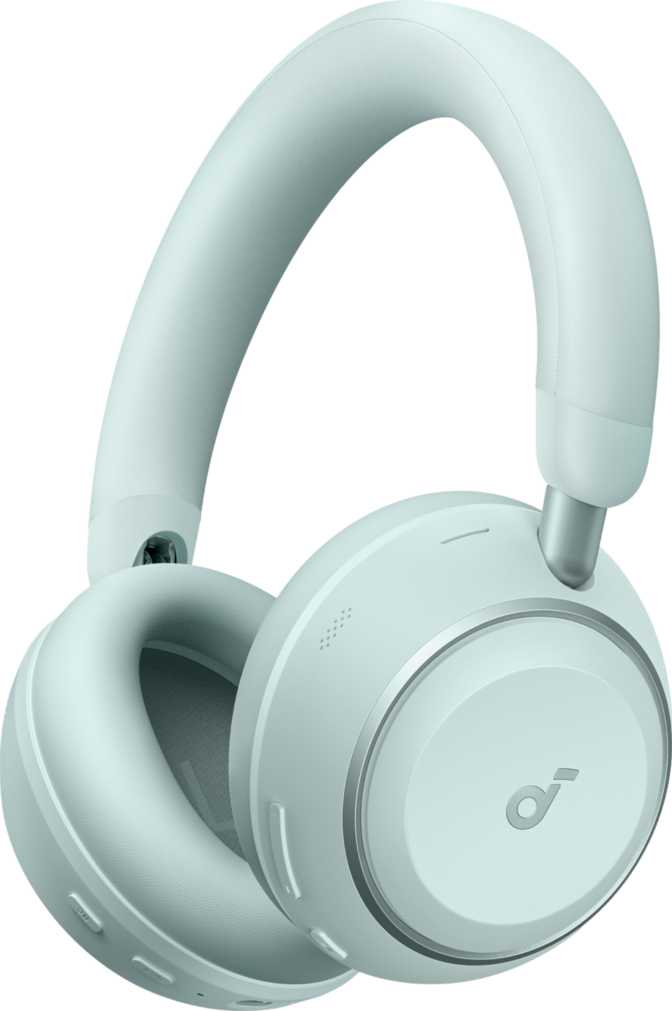
Anker Soundcore Space 2 Review: 70 Hours of Battery, LDAC Included
HeadphonesMost wireless headphones make you choose between runtime and audio quality. The Anker Soundcore Space 2 refuses that trade-off — pairing a category-defining battery with LDAC high-resolution audio and active noise cancellation at a price point where most rivals still ask you to pick two out of three. Here is everything you need to know before spending your money.
Design and Build: Practical Over Flashy
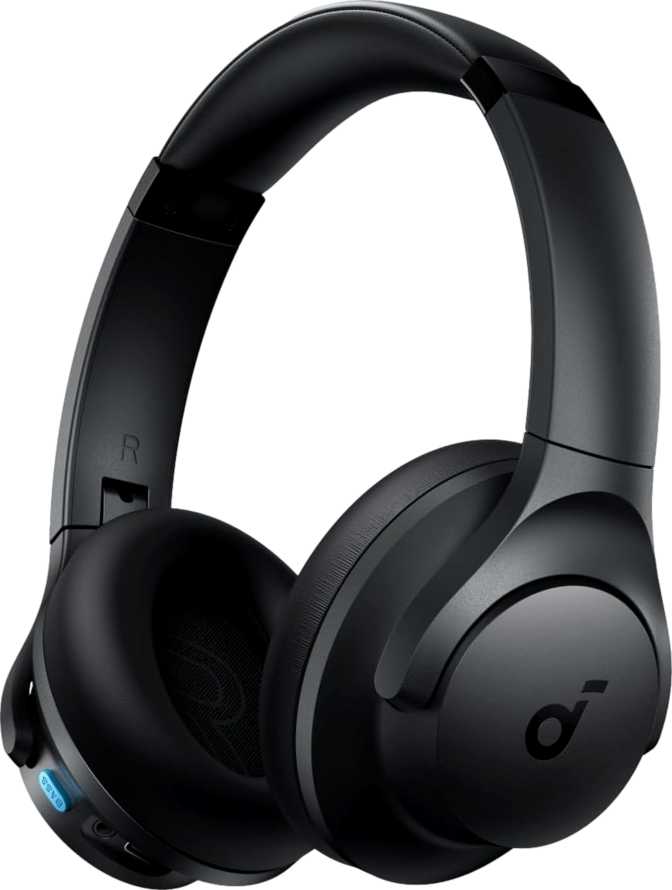
The Soundcore Space 2 is a closed-back over-ear headphone, meaning the ear cups fully enclose your ears rather than sitting on top of them. This closed design creates a better physical seal for passive noise isolation and keeps your audio private in public spaces — both practical wins for everyday use.
At 264 grams, the Space 2 sits in a comfortable middle ground for full-size headphones. Light enough to forget during a long commute or extended work session, but solid enough to feel substantial in hand. Ultralight headphones sometimes sacrifice cushion density or structural integrity — this does not have that problem.
The folding design is a genuine quality-of-life feature. The ear cups collapse inward, reducing the headphone to a compact form that fits in a bag without drama. Paired with a detachable, tangle-free cable, storage and travel become non-issues. The detachable cable deserves a specific mention: a damaged cable is a minor inconvenience here, not a headphone-ending event.
The one honest limitation worth flagging upfront: there is no water or sweat resistance rating on the Space 2. These are positioned as everyday commuting and productivity headphones, not workout companions. If gym sessions or outdoor use in unpredictable weather are your primary scenarios, this matters.
- Fit TypeOver-ear (Closed)
- Weight264 g
- FoldableYes
- Detachable CableYes
- Water ResistanceNone
- Designed ForAdults
Sound Quality: Where Specification Meets Reality
Driver Size and Frequency Coverage
The Space 2 uses 40mm drivers — the standard diameter for quality over-ear headphones at this price tier. Driver size alone does not determine sound quality, but 40mm is a sensible sweet spot: large enough to move air for satisfying bass reproduction, precise enough for clear midrange and treble detail.
The frequency response spans the full range of human hearing — from the lowest rumble a typical person can perceive all the way to the upper limit of audible sound. In practical terms, the headphone is built to reproduce everything in recorded music: deep bass lines and kick drums, the clarity of vocals and instruments, the shimmer of cymbals. The hardware foundation does not impose a ceiling on what you can hear.
LDAC Support: The Headline Feature for Audio Quality
The Soundcore Space 2 supports LDAC — Sony's high-resolution audio codec that transmits up to three times more data per second than standard Bluetooth. Standard Bluetooth audio compresses music significantly to fit through the wireless connection. LDAC lifts that ceiling dramatically, allowing hi-res streaming tiers and lossless local audio to reach your ears with far less degradation.
This codec typically appears on Sony's own premium headphones and select competitors at significantly higher prices. Its presence here is genuinely unusual. AAC support is also included, benefiting Apple device users specifically — AAC delivers meaningfully better wireless quality on iPhones and iPads compared to the baseline SBC codec.
What is absent: any version of aptX, Qualcomm's codec family used across many Android devices. Android users with LDAC-capable phones — most current flagships — are fully covered. Those whose devices support aptX but not LDAC will fall back to SBC or AAC, leaving the high codec ceiling unreachable on that hardware.
Noise Cancellation: Active and Passive Working Together
Passive Isolation
The physical seal created by the closed-back over-ear design blocks a meaningful portion of ambient sound — particularly mid-to-high frequency noise like voices and office chatter — before any electronics engage. This is the baseline layer; ANC adds on top of it.
Active Noise Cancellation
Three microphones — two sampling external sound, one dedicated to voice pickup — feed a processor that generates an opposing audio signal to cancel ambient noise before it reaches your ears. This is most effective against consistent low-frequency sounds: airplane cabin roar, train rumble, and HVAC hum.
Battery Life: The Number That Changes Everything
Seventy hours of wireless playback without ANC. Fifty hours with active noise cancellation running. These are not incremental improvements over the competition — they represent a categorical shift from what the wireless headphone market typically delivers at this price.
Battery Life vs. Category Averages
Category averages represent typical mid-range wireless headphones at a comparable price tier.
Connectivity: Modern Bluetooth With Honest Limitations
What the Space 2 Gets Right
Bluetooth 6.1 is notably current. While much of the market still ships Bluetooth 5.x hardware, version 6.1 brings improvements to connection stability and energy efficiency. In crowded wireless environments — busy offices and transit hubs — this translates to fewer dropouts and marginally better battery life from the radio itself.
Multipoint connection allows the Space 2 to stay paired to two devices simultaneously — your phone and laptop, for example. When a call comes in on your phone while audio plays from your laptop, the headphone switches automatically. This is a working-from-home essential that many cheaper headphones simply skip, and its inclusion here is a concrete daily benefit.
Dual wireless and wired connectivity means the Space 2 functions as a passive headphone via its 3.5mm cable when the battery runs out — or in locations like airplane entertainment systems that require a physical audio connection. You are never locked out of audio.
Full Connectivity Breakdown
- Bluetooth Version6.1
- LDAC Hi-Res AudioSupported
- AAC CodecSupported
- Multipoint Connection2 Devices
- Wireless Range10 m
- Wired ModeYes (3.5 mm)
- aptX / aptX HDNot Supported
- NFC / Fast PairNot Supported
- LE Audio / AuracastNot Supported
Everyday Features That Actually Matter
In-Ear Detection
Music pauses automatically when you remove the headphones and resumes when you put them back. Once you use headphones with this feature, ones without it feel noticeably incomplete.
On-Device Controls
Volume, playback, ANC toggle, and call management sit directly on the ear cup. No in-line cable controls, but the physical buttons are accessible without reaching for your phone.
3-Microphone Array
Three microphones enable beam-forming — focusing on your voice while suppressing ambient noise. Call quality in busy environments is noticeably stronger than a single-mic headphone.
Ambient Sound Mode
Hear the world around you without removing the headphones — useful for transit announcements, brief conversations, or staying aware of traffic. Toggled directly on the ear cup.
Two-Device Multipoint
Stay connected to a phone and a laptop at the same time. Audio switches automatically between sources — no manual re-pairing required when you move between tasks.
Wired Fallback Mode
A 3.5mm detachable tangle-free cable means zero downtime from a depleted battery. Practical enough to carry rather than leave at home.
Who Should — and Should Not — Buy the Space 2
A battery that outlasts a transatlantic flight with hours to spare eliminates outlet anxiety at airports and during multi-day trips. Three weeks of daily commuting between charges changes your relationship with charging entirely.
Multipoint handles phone calls and laptop audio simultaneously. The three-mic array manages noisy home environments. Auto-pause handles distractions without manual intervention. This is a cohesive daily productivity package.
LDAC access at this price is genuinely rare. If you subscribe to a hi-res streaming tier or maintain a lossless music library, these are among the most affordable headphones that will not limit your audio quality ceiling.
The battery endurance and passive isolation handle library or café ambient noise without requiring a charge mid-session — or even mid-week. Fewer interruptions, longer focus.
No sweat or water resistance rating means the Space 2 is not built for gym sessions, outdoor runs, or any setting where moisture is a regular factor. An IP-rated headphone is the appropriate tool for these scenarios.
Without aptX Low Latency, Bluetooth audio introduces a small delay that becomes visible when lips on-screen don't match the dialogue. Wired mode eliminates this — but removes the wireless convenience that makes these worthwhile.
Sony and Bose flagship headphones set the benchmark for active noise cancellation. The Space 2 is capable but not class-leading. If ANC performance is your primary purchase driver, the premium options are worth their higher prices.
Without an Apple H-chip, automatic cross-device switching across multiple Apple devices and audio sharing require manual management. The Space 2 works well with iPhones via AAC — it simply lacks the frictionless Apple-specific integration of H-chip headphones.
How the Space 2 Compares to the Competition
The Soundcore Space 2's battery advantage over the competition is not incremental — it is categorical. In the areas where it trails, those gaps tend to matter only to specific user profiles.
| Feature | Soundcore Space 2 | Typical Mid-Range | Premium Tier |
|---|---|---|---|
| Battery — ANC On | ~50 hours | 20–30 hours | 25–35 hours |
| Battery — No ANC | ~70 hours | 30–40 hours | 30–40 hours |
| Bluetooth Version | 6.1 | 5.2–5.3 | 5.2–5.3 |
| LDAC Support | Yes | Rarely | Often |
| Multipoint | 2 Devices | Sometimes | Usually |
| Water Resistance | None | Sometimes IPX4 | Sometimes IPX4 |
| Spatial Audio | No | Rarely | Often |
| USB-C Charging | Yes | Usually | Yes |
| Price Tier | Budget-Mid | Mid | High |
Honest Assessment: What It Gets Right and Wrong
Where It Delivers
The Space 2's strengths are concentrated and decisive. The battery life is the headline, and it earns the attention. Very few headphones at any price match 70 hours of playback, and 50 hours with ANC active is unprecedented at this cost level. The endurance advantage compounds over time: even after years of natural battery degradation, the starting capacity is high enough that a worn-in Space 2 likely still outlasts most competitors fresh out of the box.
Adding LDAC and Bluetooth 6.1 means the wireless audio foundation here outperforms what most buyers would expect to find. These are not cosmetic additions — LDAC is the codec that separates lossless listening from standard Bluetooth quality, and Bluetooth 6.1 is meaningfully ahead of what most of the market currently ships.
The multipoint connection, three-microphone call quality, auto-pause, ambient mode, and on-device controls all function as expected with no missing features that force workarounds. This is a headphone thoughtfully designed around daily productivity rather than just music playback.
Where It Falls Short
The weaknesses are real but specific. No water resistance is the most broadly limiting — it narrows the practical use-case envelope in ways that matter to active users. This is not an oversight but a deliberate design trade-off, and it signals clearly who the Space 2 is not built for.
The absence of aptX in any form is a genuine gap for some Android users. While LDAC covers most current flagship Android devices, phones that support aptX but not LDAC will fall back to SBC, leaving the high codec ceiling unreachable on that hardware combination.
The build materials are functional rather than premium — Anker directs engineering investment toward internal capability rather than exterior finish. This is a defensible trade-off at this price, but worth acknowledging for buyers who want their headphones to feel as special as they perform. ANC performance is capable but not class-leading; buyers coming from Sony or Bose flagships will notice the difference in heavy noise environments.
Common Questions Before You Buy
Final Verdict
The Anker Soundcore Space 2 makes a specific, credible argument: that a headphone's most important specification might be how long it runs between charges. Its battery endurance at both ANC-on and ANC-off figures genuinely redefines what is reasonable to expect at this price level — not by a small margin, but by a factor that changes your weekly routine.
Pair that with LDAC support, Bluetooth 6.1, two-device multipoint connectivity, and a thoughtful everyday feature set — auto-pause, ambient sound mode, noise-canceling microphones, and detachable wired fallback — and the value case is strong. This is a headphone built around the things most people actually use daily.
It is not the right headphone for everyone. Active users need water resistance it does not offer. Spatial audio listeners need a different product. Buyers who want best-in-class ANC should budget for a Sony or Bose flagship. Anyone deep in the Apple ecosystem may prefer an H-chip headphone for frictionless cross-device switching.
Our Recommendation
For commuters, remote workers, travelers, and audio enthusiasts who want LDAC access without spending flagship money — and who are tired of charging their headphones every few days — the Anker Soundcore Space 2 earns a clear, confident recommendation.