Anker Soundcore Liberty 5 Pro: Full Review and Real-World Verdict
Wireless EarbudsReview Summary
out of 5.0
Strong mid-range value with notable audio credentials
LDAC, large driver, Dolby Atmos
All-day earbuds, multi-day with case
Hybrid ANC, adequate not class-leading
8-mic array, standout real-world performance
Lightweight; no auto-pause on removal
Feature density exceeds price tier
Key Specifications at a Glance
The eight headline features that define this product's position in the market.
Audio Codec
LDAC & AAC
Earbud Battery
Up to 12 Hours
Total System Battery
Up to 50 Hours
Noise Cancellation
Hybrid ANC
Microphone Array
8-Mic Beamforming
Multi-Device
3-Device Multipoint
Weather Resistance
IP55 Rated
Bluetooth
Version 6.1
A Crowded Market, a Specific Promise
Most true wireless earbuds at this price tier compete on one or two headline features — usually noise cancellation or battery life — and quietly cut corners everywhere else. The Anker Soundcore Liberty 5 Pro takes a different approach: it stacks an unusually dense combination of credentials across audio quality, call performance, connectivity, and endurance simultaneously.
High-resolution LDAC audio, an eight-microphone array, the ability to stay connected to three devices at once, Dolby Atmos processing, wireless case charging, and one of the newer Bluetooth standards — all in a single package — makes this worth examining carefully rather than dismissing as another mid-market also-ran.
The more interesting question isn't what's on the spec sheet. It's whether those features work together as a coherent listening experience, and where the Liberty 5 Pro quietly gives ground to keep its price where it is.
Design, Build, and Everyday Wearability
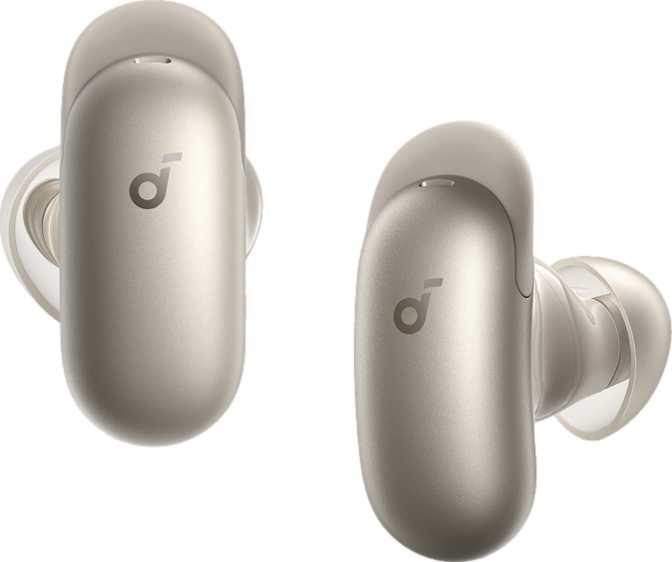
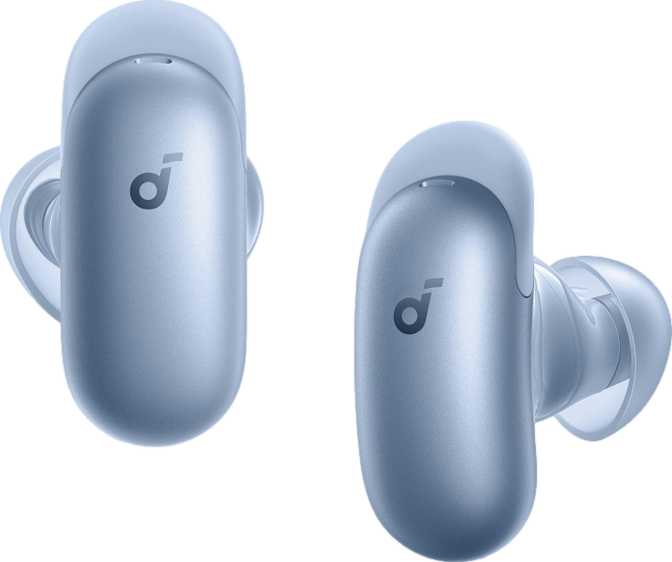
The Liberty 5 Pro uses a classic in-ear fit — the earbud sits inside the ear canal with a silicone tip that creates a physical seal. This approach does two things from the moment you put them in: it passively attenuates higher-pitched background sounds before any electronics activate, and it positions the driver close to the eardrum for more direct, efficient sound delivery.
No wing tips are included to lock the earbuds against the outer ear. For the majority of users, the tip seal provides sufficient retention through walking, commuting, and standard gym work. Where this matters is at the extreme end of physical activity: if you've historically found that earbuds work loose during intense interval training or contact sports, you'll want to test the fit carefully before assuming these will stay in. The Liberty 5 Pro's fit is reliable, not foolproof.
IP55 Weather Resistance — What It Actually Covers
The IP55 rating covers both dust ingress and water spray from any direction — rain, sweat, and light splashing are all within scope. What this does not cover is submersion; these are not shower or swimming earbuds. For gym sessions, outdoor running, and commuting in mixed weather, the protection level is genuinely adequate and not overclaimed.
Each earbud is light enough that during extended listening sessions — hours of focused work or travel — their presence becomes easy to forget. Heavier earbuds cause ear fatigue through sustained physical pressure on the canal; this isn't that kind of product.
The charging case carries a small built-in display — a detail that sounds minor until you live with earbuds that don't have one. Glancing at the case to see remaining charge without unlocking a phone is the kind of small convenience that gets underappreciated until it's gone. A travel bag is also included in the box, a thoughtful addition for anyone moving between locations regularly.
Sound Quality: What the Hardware Actually Delivers
Each earbud houses a dynamic driver sitting at the larger end of what you typically find in true wireless earbuds. The physics here are straightforward: a larger moving surface can displace more air, which translates to more physical impact and body in the lower frequencies. The Liberty 5 Pro is positioned for audio that has weight and warmth in bass-heavy material — not just technically present low end that disappears at volume.
The frequency response covers the complete range of human hearing — from the deepest sub-bass a person can perceive all the way through the highest treble overtones. In practical terms, the hardware isn't physically limiting any part of the frequency spectrum. Whether that range is used well depends on tuning, which varies based on the processing mode and any EQ adjustments made through the companion app.
Dolby Atmos: What It Does and Doesn't Do Here
Dolby Atmos support deserves careful explanation because the marketing around it is often imprecise. In earbuds without active head-tracking, Dolby Atmos functions as a processing layer that applies spatial cues to the audio signal — widening the perceived soundstage and creating a sense that sounds originate from positions beyond the earbuds themselves.
What it does not do here is anchor that soundstage in physical space and track your head movement. For music listening, Dolby Atmos processing adds perceptible width and openness. For film and TV content, it creates more of a theatrical sense than standard stereo earbuds provide. Manage expectations relative to a full dynamic spatial audio implementation and the feature delivers genuine value.
LDAC and Codec Support: A Real Differentiator
LDAC is the most audio-significant specification on this product's sheet. Standard Bluetooth audio has a ceiling on how much data it can transmit per second. Most earbuds — including many expensive ones — hit that ceiling and compress audio heavily to fit within it. LDAC, developed by Sony and now widely licensed, raises that ceiling dramatically, transmitting audio at bitrates multiple times higher than standard Bluetooth allows.
The result, when connected to a compatible Android device playing a high-resolution source, is that the Liberty 5 Pro can receive meaningfully more audio information than most competing earbuds. The detail in acoustic instruments, the natural decay of reverb, and the separation between elements in a dense mix all benefit.
LDAC Delivers Most When
- Using a compatible Android device with LDAC support enabled
- Streaming lossless tiers on platforms like Amazon Music HD or Tidal
- Playing locally stored high-resolution audio files
LDAC Makes Less Difference When
- Streaming at standard quality on Spotify or similar services
- Connecting from an iPhone or a device without LDAC support
- Your device supports aptX Adaptive but not LDAC specifically
For iPhone users and those on devices without LDAC support, the Liberty 5 Pro falls back to AAC — a quality codec well-suited to Apple's ecosystem and capable for modern streaming. The gap between AAC and LDAC is real but only matters when the source is high-resolution.
Note on aptX: The Liberty 5 Pro supports LDAC but not Qualcomm's aptX family — including aptX HD and aptX Adaptive. For most Android users LDAC is the more widely supported high-res option, but it's worth confirming your specific device's codec support before purchasing.
Active Noise Cancellation: How It Works Here
Effective noise cancellation on the Liberty 5 Pro operates in two layers. The physical in-ear seal handles higher-pitched sounds passively — the rustle of voices at a distance, keyboard clicks, high-frequency mechanical noise — before any electronics are involved. The active system then takes over for sounds physical isolation handles poorly: the low rumble of aircraft engines, train and bus vibration, the persistent drone of HVAC systems.
Using ANC shortens the time between charges noticeably. The mode is best understood as an on-demand feature — switched on for a long-haul flight or an open-plan office stretch, and switched off when the environment doesn't require it. Managing the toggle consciously stretches the battery significantly.
12 hrs
Music Only
6.5 hrs
With ANC Active
On / Off
Ambient Sound Mode
Ambient sound mode feeds external audio through the earbuds' microphones, letting you stay aware of your environment without removing the earbuds. This is the mode for crowded stations, ordering coffee, and crossing streets where situational awareness matters.
Battery Life and Charging: The Full System
Twelve hours of playback from the earbuds alone is above average for this category and covers a full workday with room to spare even without reaching for the case. The case then provides enough additional charge for several full top-ups, extending the total listening window to a combined figure that comfortably covers multi-day travel without a wall outlet.
12h
Earbuds, Music Only
6.5h
Earbuds, ANC Active
50h
Combined with Case
1.5h
Full Recharge Time
Fast charging is supported, and with a total charge time to full sitting well under two hours, even a short rest during a commute translates to meaningful listening time recovered. The USB-C connection is universal — no proprietary cables required.
For those already invested in wireless charging surfaces, the case's Qi compatibility means the Liberty 5 Pro fits naturally into an existing bedside or desk routine — no additional cable required.
Three-Device Multipoint: More Useful Than It Sounds
Most earbuds that offer multipoint connectivity — the ability to remain connected to more than one device simultaneously — cap that count at two. The Liberty 5 Pro supports three. Two-device covers a phone and a laptop — the standard professional setup. Three-device extends to a second phone, a tablet, a desktop, or any third source.
Phone 1
Laptop
Tablet / Phone 2
Automatic switching handles transitions as audio starts on a different connected device, removing the manual step from most transitions. For someone who maintains a work phone and a personal phone alongside a computer, this eliminates the constant manual reconnection that earbuds with standard multipoint require.
Platform pairing note: Google Fast Pair and Apple's seamless device switching are not supported. Initial pairing is standard Bluetooth rather than the one-tap experience those protocols provide. This is a real convenience gap for users deeply embedded in the Apple or Google ecosystems.
Call Quality and Microphone Performance
Eight microphones across two earbuds is not a cosmetic specification. The engineering purpose is beamforming — a signal processing technique that uses multiple microphone inputs from different physical positions to isolate the sound source directly in front of them (your voice) and suppress everything arriving from other angles: background noise, ambient conversation, traffic.
8
Total Microphones
4
Per Earbud
360°
Noise Direction Filtering
The density of the array positions the Liberty 5 Pro strongly for professional call use in real environments. A café call, a train platform conversation, a shared office — these are contexts where lesser microphone implementations produce calls that force the other party to work to hear you. More microphones, better-positioned, gives the processing more data to work with.
A mute function is available from the earbuds' controls — useful for anyone on managed calls who needs to cut their microphone without reaching for a keyboard. The earbuds also function as a standard headset, confirming compatibility with professional call-handling workflows across platforms.
Controls, Convenience Features, and What's Missing
Controls are touch-based on the earbud surface itself — standard for true wireless and functional in most conditions. Voice prompts announce connection status, battery warnings, and mode switches audibly, which is useful when the earbuds are in your ears and checking the phone isn't convenient.
The find-device function, operated through the companion app, triggers an audio signal from a misplaced earbud. Given how easy it is to leave one absent-mindedly on a surface, this is a practical inclusion rather than a novelty. A travel bag included in the box reflects care in the overall package that budget-focused brands often omit.
Missing Feature: Auto-Pause on Earbud Removal
The Liberty 5 Pro does not include in-ear detection — the automatic play/pause behavior that pauses music when an earbud is removed and resumes when it's replaced. Its absence means you must manually pause before removing an earbud, or accept that audio continues playing while the earbud sits on a desk. Competitors at similar and lower price points have included this as standard for several years.
Who This Product Is For — and Who It Isn't
The Liberty 5 Pro serves a specific kind of listener well. Here's how to know which side of that line you're on.
The Liberty 5 Pro suits you if...
- Your Android device supports LDAC and you actively use high-resolution audio sources or lossless streaming tiers
- You manage multiple devices daily and have outgrown standard two-device multipoint
- Call quality in noisy real-world environments is a regular professional requirement
- You want ANC, wireless case charging, and LDAC without paying flagship Sony or Bose prices
- Long total battery life matters more to you than peak ANC-on endurance specifically
Look elsewhere if...
- You use an iPhone and expect seamless Apple ecosystem integration with automatic device handoff
- Best-in-class ANC is your single non-negotiable — flagship Sony and Bose options are ahead here at higher prices
- You rely heavily on automatic play/pause when pulling an earbud out of your ear
- Your device supports aptX Adaptive but not LDAC, and high-resolution audio quality is important to you
- You need secure ear retention during high-impact training where a stabilizing wingtip is required
How It Compares to the Competition
The Liberty 5 Pro enters a tier competing directly with earbuds from Sony, Samsung, and Jabra, while sitting below the price of true flagship ANC earbuds. Here's where it leads and where it concedes.
| Feature Area | Liberty 5 Pro | Typical Mid-Range | Flagship ANC Tier |
|---|---|---|---|
| High-Res Audio Codec | LDAC | Variable | Often LDAC (Sony) |
| Simultaneous Connections | 3 devices | Usually 2 | 2 |
| Microphone Count | 8 mics | 4–6 | 6–8 |
| Wireless Case Charging | Yes | Inconsistent | Standard |
| LE Audio / Auracast | No | Varies | Varies |
| Auto Ear Detection | No | Typically Yes | Typically Yes |
| Platform Fast Pairing | No | Often Yes | Often Yes |
| Case Battery Display | Yes | Rarely | Occasionally |
Honest Strengths and Genuine Limitations
Where It Genuinely Delivers
LDAC at a competitive price
High-res Bluetooth audio without paying flagship prices
Eight-microphone call quality
Real engineering investment, not a marketing figure
Three-device multipoint
Genuinely useful daily for multi-device professionals
Strong total battery system
Among the stronger endurance propositions in the category
Case battery display
Quiet but consistent daily usability improvement
Bluetooth 6.1 and wireless charging
Modern foundations; case charges on any Qi surface
Where It Gives Ground
No auto-pause on earbud removal
A normalized convenience feature now missing here
No platform fast pairing
No Google Fast Pair or Apple seamless switching
ANC endurance noticeably shorter
Significant gap between ANC and music-only runtime
One-year warranty only
Standard coverage, not extended protection
No LE Audio or Auracast
Next-generation wireless audio features absent
No aptX codec family
Qualcomm codec users rely on AAC rather than a high-res alternative
Questions Real Buyers Ask Before Purchasing
The questions that show up most often when people are deciding whether to buy.
A Specific Case, Argued Well
The Anker Soundcore Liberty 5 Pro earns its place in the consideration set not because it does everything better than every competitor, but because it makes a specific set of trade-offs intelligently. LDAC support, an investment-grade eight-microphone system, three-device multipoint, wireless case charging with a battery display, and Bluetooth 6.1 — all in a comfortable, gym-capable, lightweight form factor — represent a package that outperforms its price tier in the areas that matter most to a specific type of listener.
That listener is an Android-first user who cares about audio quality, takes regular calls in real-world environments, and manages more than two devices daily. For that person, the Liberty 5 Pro addresses real problems rather than just stacking impressive numbers.
The product concedes real ground in platform ecosystem integration, automatic earbud detection on removal, and the very top tier of ANC performance. These are the places where the product's price is reflected, and buyers should weigh them explicitly against their own priorities before committing.
Best For
Android LDAC users, multi-device professionals, and frequent callers who need reliable mic performance in noisy environments
Not Ideal For
Deep Apple ecosystem users, those who need best-in-class ANC, or anyone relying on automatic play/pause functionality daily