Anker Soundcore Q11i Review: Extraordinary Battery, Real Trade-Offs
HeadphonesAt a glance, the Anker Soundcore Q11i makes its priorities unmistakably clear: this is a headphone built around a single proposition — endurance. While many budget over-ear headphones attempt to differentiate through gimmicky features or thin noise-cancellation layers, the Q11i focuses on delivering more wireless listening time than nearly anything in its price class. Whether that narrow focus is the right answer for your listening life depends entirely on which compromises you're willing to accept — and the Q11i makes several worth understanding before you buy.
Design and Build: Practical Over Polished
Construction, comfort, cable, and what the Q11i doesn't protect against
Construction and Physical Feel
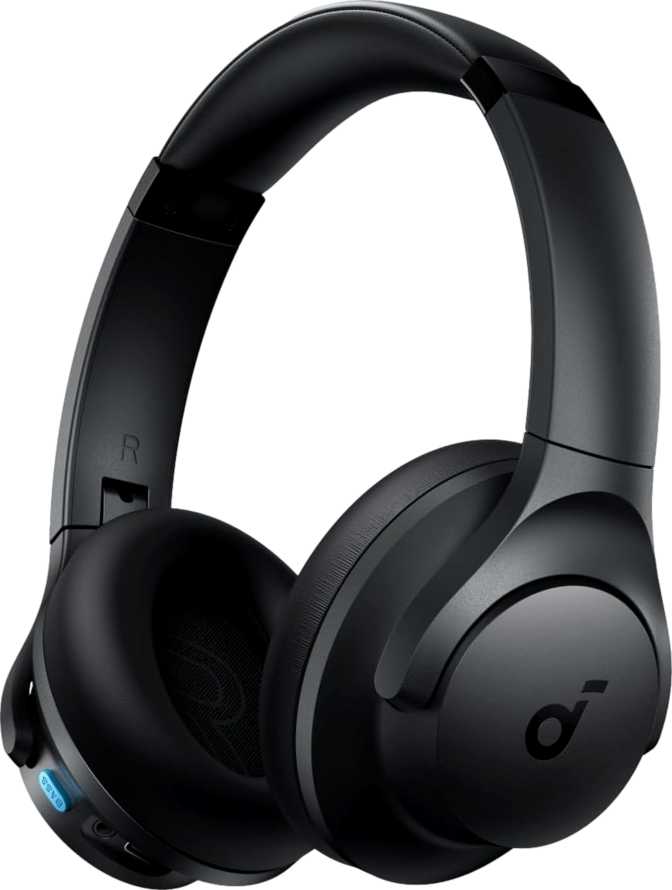
The Q11i is built from plastic — that's honest and expected at this price. What matters is that the finish feels considered rather than flimsy. At 240 grams, it sits on the lighter end of full-size over-ear headphones — roughly the weight of a large orange — which makes extended wearing sessions more comfortable than heavier alternatives in the class. The full over-ear design cups the ears completely rather than resting on them, contributing both to comfort over time and to passive noise isolation.
The headphone folds flat for storage and travel, a sensible feature that allows it to fit into a commuter bag without a rigid case. For students and daily commuters who carry headphones everywhere, this is a genuine usability advantage rather than a box-checking design note.
Controls are physically mounted on the earcup. You'll reach up to adjust volume or skip a track, which is standard in over-ear designs and becomes second nature quickly. There is no inline control panel on the cable.
The Detachable, Tangle-Free Cable
The cable is both detachable and engineered to resist tangling — a combination serving two distinct purposes. Detachability means you can go fully wireless when convenient and switch to wired when your device is charging or you're on a long flight. The tangle-resistant design eliminates the knot-in-a-drawer problem that plagues headphones with standard cables. Neither feature sounds remarkable individually, but together they reflect practical, daily-use thinking.
Design at a Glance
-
Over-Ear FitFull cup contact — comfort for long sessions
-
FoldableCollapses flat for bag-friendly portability
-
Detachable CableWireless or wired — your call, every time
-
Tangle-Free CableNo knot-in-a-drawer frustration
-
Closed-Back DesignSealed earcups for passive isolation
-
No Water ResistanceKeep it dry — no gym, no rain
-
No In-Ear DetectionPlayback won't pause on removal
No Moisture Protection
There is no moisture or sweat resistance rating on the Q11i. It is not intended for gym use, outdoor exercise, or wet commutes. If any of those scenarios describe your typical headphone use, this limitation rules the Q11i out of consideration entirely.
Sound Quality: Capable, With Real Ceilings
Drivers, Bluetooth codecs, and passive isolation — what the specs actually mean
The Drivers and How They Work
The Q11i uses 40-millimeter dynamic drivers — the standard diameter in this class and large enough to move meaningful air for bass reproduction while remaining physically compact. These drivers operate at very low impedance, which in practical terms means any modern device — phone, tablet, laptop, or older digital player — can power them to satisfying volume levels without amplification.
One design detail worth knowing: the Q11i's drivers do not use neodymium magnets, which are the near-universal standard in consumer headphone manufacturing at every price tier. Neodymium magnets generate strong magnetic fields from small, lightweight structures. Without them, the driver assembly must compensate differently, and the efficiency characteristics that neodymium provides are absent. How audibly significant this is in practice depends on what you're comparing against — casual listeners focused on podcasts and background music may genuinely not notice, while listeners coming from neodymium-equipped alternatives may perceive a difference in transient precision and detail retrieval.
Bluetooth Audio Quality and the Codec Gap
iPhone Users: Read This First
Apple devices use AAC for Bluetooth audio when the headphone supports it. Because the Q11i does not support AAC, all audio between an iPhone and these headphones travels over SBC. The connection works fine — but compared to AAC-capable alternatives, the audio quality gap is real and audible to attentive listeners.
The Q11i transmits audio wirelessly using SBC — the baseline Bluetooth audio codec that every Bluetooth device falls back to when no premium codec is mutually supported. It does not support aptX, aptX HD, LDAC, or AAC. For casual streaming of playlists, podcasts, and spoken-word content, SBC functions adequately. For anyone who listens critically to music or wants wireless quality that approaches wired fidelity, SBC imposes a ceiling that limits the experience regardless of what the drivers are physically capable of.
The wired connection via the detachable cable bypasses Bluetooth entirely, delivering a direct analog signal without codec limitations. For listeners who want the best sound the Q11i can actually produce, the cable is the path to take.
Codec Support
- SBC — included (baseline)
- AAC — not supported
- aptX — not supported
- aptX HD — not supported
- LDAC — not supported
Passive Noise Isolation
The closed-back, sealed earcup design blocks ambient noise physically — no battery draw required.
Effective against:
Voices, keyboard clatter, HVAC hum, general office noise
Limited against:
Aircraft engine rumble, subway motors, heavy low-frequency bass from adjacent sources
Battery Life: The Q11i's Defining Feature
Sixty hours of wireless playback — what that means in real daily use
Real-World Endurance Scenarios
Charging Facts
-
USB-C Charging PortUse the same cable as your phone or laptop
-
Two-Hour Full RechargeFavorable ratio for a battery this large
-
Battery Level IndicatorAdvance warning before you reach empty
-
No Fast ChargeTwo hours is the fixed cycle — plan ahead if fully drained
Bluetooth and Connectivity
Bluetooth 5.3, multipoint pairing, and connection range explained
Connection Reliability
Bluetooth 5.3 is the current-generation standard. Its significance in a headphone is primarily connection stability rather than audio quality — the version doesn't determine how your music sounds, but it does affect how reliably the headphone maintains its signal in congested wireless environments. In a dense apartment building, a packed office, or busy public transit, improved coexistence with competing wireless signals helps keep the connection clean.
The wireless range of approximately ten meters — roughly the length of a two-car garage — is the category norm. It's enough to reach an adjacent room or move around a modestly sized living space, but not enough to roam freely through a multi-room home.
Two-Device Multipoint
Multipoint pairing allows the Q11i to maintain active Bluetooth connections to two devices simultaneously. In daily use, this means you can have the headphone connected to both your laptop and your phone at once. A call arrives on your phone while you're listening to music from your laptop — the headphone switches automatically, without manual disconnecting or re-pairing.
This feature appears inconsistently even on headphones at significantly higher prices, which makes its inclusion here genuinely notable. For anyone who moves between a work laptop and a personal phone throughout the day, multipoint eliminates a repetitive friction point that becomes noticeable only after you stop having to deal with it.
Pairing Approach
The Q11i uses manual Bluetooth pairing — no NFC tap-to-pair, no Google Fast Pair, no Swift Pair for Windows devices. Initial setup requires entering pairing mode on the headphone and selecting it from your device's Bluetooth settings. This takes about thirty seconds the first time with each new device and is then automatic for every subsequent reconnection to known devices.
Call Quality and the Single Microphone
Headset performance, microphone limitations, and call workflow gaps
The Q11i functions as a headset for phone calls and voice assistant access, with a single built-in microphone. Single-microphone designs work acceptably in quiet environments — a home office, a library, an uncrowded indoor space — where ambient noise is low and voice capture is straightforward.
In louder conditions — busy streets, public transport, open cafes — a single microphone without secondary noise rejection will deliver less intelligible calls. The person on the other end will hear more of your surroundings than a multi-microphone headset design would filter out.
There is no dedicated mute button. Toggling mute during a call requires using the interface on your connected device rather than a physical shortcut on the headphone. Remote workers who frequently mute and unmute during video meetings will find this a meaningful workflow gap compared to headsets with a physical mute control.
Microphone Summary
-
Quiet EnvironmentsHome offices, libraries — performs adequately
-
Loud EnvironmentsStreets, cafes — background noise bleeds through
-
No Physical Mute ButtonMust mute from device — slow for frequent callers
Who This Headphone Is Built For
Ideal use cases — and the listeners who should keep shopping
The Q11i Is Right For You If...
-
Long-Trip TravelersNeed headphones that outlast flights and multi-day itineraries without hunting for a charger
-
StudentsWearing headphones through a full academic day — eliminate the daily charging ritual
-
Android UsersStreaming music and podcasts casually without high-fidelity wireless audio requirements
-
Dual-Device UsersWant seamless automatic switching between a work laptop and a personal phone
-
USB-C HouseholdsLooking to reduce the number of different charging cables in rotation
Keep Shopping If...
-
iPhone Users Who Care About SoundNo AAC support means Bluetooth audio from iPhone defaults to SBC — a noticeable quality gap
-
ANC SeekersNo active noise cancellation — passive isolation won't block low-frequency aircraft or subway rumble
-
Gym-Goers and Outdoor ExercisersZero sweat or water resistance — not safe for workouts or wet commutes
-
Call-Heavy ProfessionalsSingle mic, no noise rejection, no mute button — a poor fit for multi-hour daily call schedules
-
Audiophiles and Critical ListenersNo premium codec, no neodymium drivers, no EQ app — not built for hi-fi listening
Competitive Positioning
How the Q11i stacks up against typical budget over-ear alternatives
| Capability | Anker Soundcore Q11i | Typical Budget Competitor |
|---|---|---|
| Wireless Battery Life | ~60 hours | ~25–40 hours |
| Active Noise Cancellation | Sometimes available | |
| AAC Codec Support | Often included | |
| Two-Device Multipoint | Often absent | |
| USB-C Charging | Now widely available | |
| Water / Sweat Resistance | Often absent | |
| Foldable Design | Common | |
| Microphone Configuration | Single mic | Usually single mic |
The Q11i's battery advantage is not marginal — it's the defining category gap. Where it concedes ground is primarily on audio codec support and the absence of ANC.
Strengths and Honest Weaknesses
What the Q11i gets right — and where it genuinely falls short
The Q11i gets several things right in a segment where getting one thing right is commercially sufficient. The battery endurance is extraordinary and solves a genuine daily frustration that competing headphones don't address as effectively. Dual-device multipoint is a convenience that justifies itself within the first week of use. The USB-C standardization, the tangle-free detachable cable, the lightweight construction, and the foldable form factor all reflect practical, user-centered design decisions made consistently rather than haphazardly.
Where it falls short, the shortcomings are genuine. SBC-only Bluetooth audio is the most impactful limitation — not because SBC sounds terrible, but because AAC support at this price point is common enough among competitors that its absence represents a deliberate trade-off rather than a category norm. The single microphone with no noise rejection is serviceable in quiet spaces and unreliable in the field. The complete absence of moisture protection rules out workout and outdoor scenarios that many buyers take for granted.
The lack of ANC is not surprising at this price, but it's worth stating plainly: passive isolation reduces ambient fatigue but will not block the low-frequency rumble of aircraft engines or heavy subway noise with the effectiveness that active cancellation provides. Travelers who find airplane noise genuinely disruptive will need a different headphone.
Questions Real Buyers Ask Before Purchasing
Honest answers to the questions that matter most before spending your money
One Extraordinary Promise, Kept
The Anker Soundcore Q11i makes one standout promise and delivers it convincingly. If you've ever missed an important trip or long day because your headphones ran out mid-journey, this headphone solves that frustration with more stamina than nearly anything in its price range.
The trade-offs are real and consistent: no premium Bluetooth codecs, no active noise cancellation, a single microphone that serves quiet environments only, and no moisture protection. These are not oversights — they are the engineering cost of the battery specification the Q11i is built around.
Buy It If
- You're an Android user who prioritizes endurance over audio fidelity
- You move regularly between two paired devices and want automatic switching
- You want a low-maintenance headphone that charges less than once a week
Skip It If
- You use an iPhone and care about Bluetooth audio quality
- Active noise cancellation is on your must-have list
- You need headphones that handle exercise or wet commutes without concern
For the specific listener it's designed for, the Q11i isn't a compromise — it's the right tool, chosen correctly.