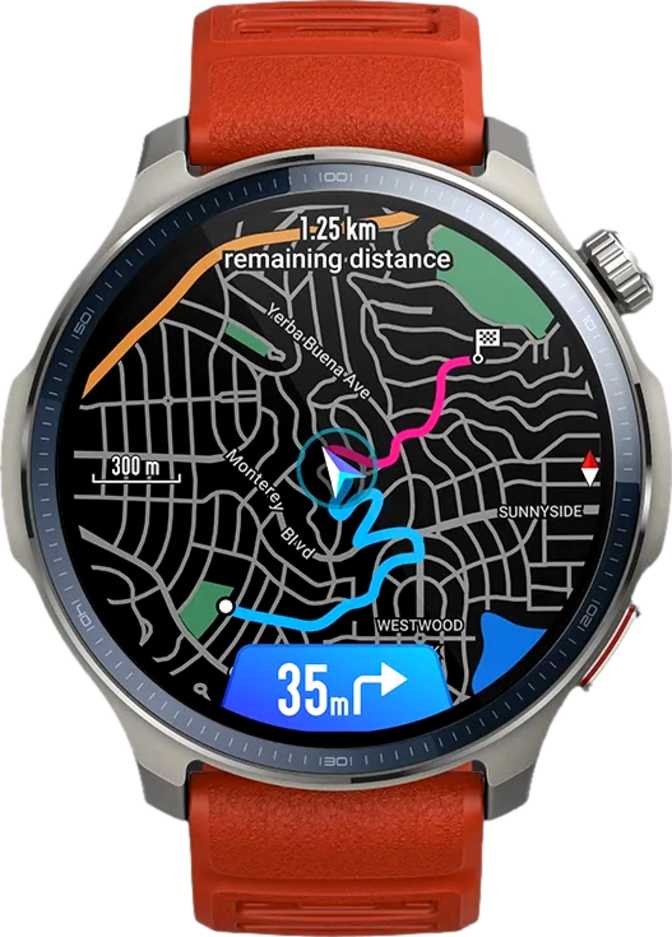
Amazfit Balance 2 Review: Exceptional Battery, Real Trade-Offs
SmartwatchesWhat the Amazfit Balance 2 Is Actually Trying to Be
Most smartwatches force a choice: a polished lifestyle device that looks good at dinner but runs out of steam after a weekend, or a serious sports tracker that feels like strapping a pager to your wrist. The Amazfit Balance 2 refuses that trade-off — positioning itself as a premium all-day companion with the health depth of a fitness-first device, the durability of outdoor gear, and enough onboard capability to make the companion app largely redundant for on-wrist data review. Whether it delivers on all three promises depends heavily on what you actually need from a watch. This review works through that question methodically.
At a Glance
How the Amazfit Balance 2 scores across the dimensions that matter most
Editors' Rating
Performance Breakdown
21 Days
Standard Battery
Sapphire Glass
Display Protection
45m Depth
Dive Capable
32 GB Storage
Offline Music
Design and Build Quality
Sapphire crystal protection, a 43g frame, and a display that sets expectations above its price tier
How It Wears on the Wrist
At 47.4 mm square with a 12.3 mm profile, the Balance 2 occupies the upper end of wearable real estate without crossing into oversized territory. It is a noticeable watch — this is not the kind of device that disappears under a dress shirt cuff — but at 43 grams it carries that footprint with surprising lightness. Wearers switching from metal-case watches in the 48–52 mm range often note that perceived size is more about case material and lug design than raw dimensions, and the Balance 2 benefits from this: its weight distribution stays comfortable across a full day without adjusting or rotating on the wrist.
The 22 mm band width hits a widely adopted standard that opens the door to a broad third-party aftermarket. If the included band does not suit your skin sensitivity, preferred material, or aesthetic, replacements are easy to source and straightforward to swap — a small but real quality-of-life advantage over proprietary band sizes.
The Case for Sapphire Glass
Sapphire crystal covers the display — the same material used in high-end mechanical watchmaking and premium smartwatches at significantly higher price points. In practice, sapphire resists scratching from everyday contact (keys, countertops, gym equipment) at a level that glass alternatives simply cannot match. It is not indestructible against sharp impacts, but for daily abrasion it is about as close as wearable protection gets.
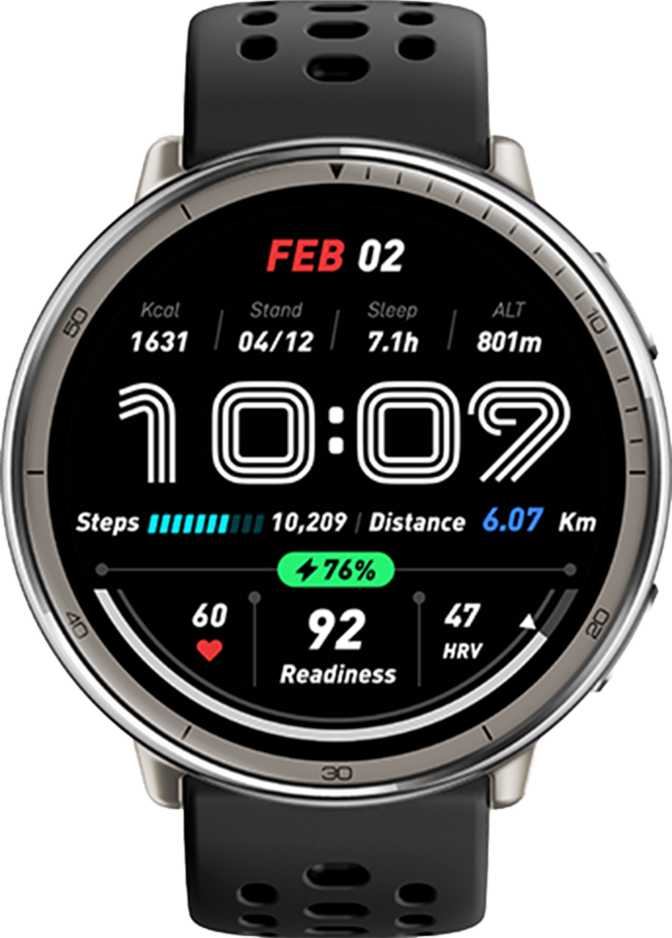
Underneath that sapphire sits a 1.5-inch AMOLED panel running at 480 × 480 pixels and 323 pixels per inch — a density where individual pixels become invisible at typical viewing distances. AMOLED's native contrast (true blacks from unlit pixels) makes the always-on display mode genuinely useful rather than a battery-draining afterthought. You get persistent time and key-metric visibility at a glance without meaningful endurance cost.
47.4mm
Case Diameter
43g
Total Weight
323ppi
Pixel Density
1.5"
AMOLED Display
Water Resistance and Dive Capability
Beyond splashproof — what 10 ATM and IP68 actually mean for swimmers, divers, and outdoor athletes
The Amazfit Balance 2 carries both 10 ATM and IP68 certification, with a rated depth tolerance of 45 meters. 10 ATM means the watch is tested to withstand pressure equivalent to 100 meters of static water column. In practical terms: swimming laps, snorkeling, showering, and getting caught in a storm are non-events. The 45-meter depth rating and dedicated dive mode extend this further — recreational divers operating within standard no-decompression limits will find the Balance 2 a legitimate dive companion, not just a device you have to remember to remove at the pool edge.
IP68 adds ingress protection against fine particulates as well, so dusty trail runs and beach workouts are equally covered. For swimmers specifically, the built-in stroke counter differentiates stroke types and counts laps automatically — the kind of sports-specific depth that separates a watch designed with aquatic athletes in mind from one that merely survived a dunk test. This is a meaningful distinction for anyone training with technique goals rather than simply logging distance.
Protection at a Glance
- 10 ATM rated — 100m static pressure tolerance
- IP68 rated — dust and water ingress protection
- 45m depth rating for recreational diving
- Dedicated dive tracking mode on-wrist
- Swim stroke detection and automatic lap counting
- Open-water swimming fully supported
Performance and Health Sensor Suite
Continuous monitoring from wrist to elevation — the full picture of what the Balance 2 measures
The Health Monitoring Core
Heart rate and cardiovascular tracking runs continuously. Beyond basic beats-per-minute, the watch measures heart rate variability (HRV) — the subtle beat-to-beat timing variation that serves as one of the more reliable proxies for nervous system recovery and training readiness. HRV data feeds into a daily readiness score that guides whether your body is primed for hard effort or needs recovery. This is the same category of insight that dedicated recovery wearables have built entire subscription businesses around.
Blood oxygen saturation (SpO2) monitoring tracks the percentage of oxygen your red blood cells are carrying — relevant for altitude acclimatization, sleep apnea screening, and general wellness awareness. The Balance 2 measures this continuously rather than requiring manual triggers for each reading.
VO2 max estimation — a measure of aerobic capacity that researchers consider one of the strongest long-term health predictors — is calculated from heart rate data during training sessions. The number is a wrist-sensor estimate rather than a lab result, but for tracking directional progress over weeks and months, it is a genuinely meaningful metric.
Barometric altitude tracking calculates elevation gain from real air pressure changes rather than GPS altitude estimation alone — producing significantly more accurate elevation data for hikers and trail runners than GPS-only solutions provide.
Sensor Inventory
Heart Rate
Continuous
HRV + Readiness
Daily Score
SpO2
Continuous
VO2 Max
Estimated
Skin Temp
Continuous
GPS
Fast Lock
Barometer
Altitude Track
Sleep Tracking
With Reports
GPS, Navigation, and Live Tracking
Fast GPS lock capability reduces the time between opening a workout and acquiring satellite signal. A watch that takes two or three minutes to lock outdoors quickly trains users to stand still and wait before every run, breaking momentum. Fast acquisition addresses that friction at the hardware level — you are recording from the moment you step outside.
On-board mapping support means routes can be navigated from the wrist without a phone. Live tracking during workouts allows others to follow your real-time position — a practical safety feature for solo trail runs, long bike rides, or any situation where sharing your location with someone back home provides reassurance.
Battery Life
The standout specification — and what it means for how you actually live with this watch21
Days
Standard daily use with AOD active, HR monitoring, sleep tracking, and notifications enabled
240h
Training Mode
Continuous GPS recording, heart rate tracking, and full sensor engagement
33h
GPS Active
Single-charge GPS recording — covers ultramarathons and multi-day adventures
In standard daily use — always-on display active, heart rate monitoring running, sleep tracking on, and notifications enabled — the battery lasts roughly three weeks between charges. The category standard among competing full-featured smartwatches typically runs two to four days, with premium devices occasionally stretching to a week. Three weeks sits in an entirely different tier.
In continuous training mode with GPS recording and full sensor engagement, runtime extends to ten days of uninterrupted tracking. For ultramarathon runners, multi-day thru-hikers, or anyone entering events measured in days rather than hours, this means finishing a full race without any mid-course charge.
Power-saving mode scales back sensor frequency and display behavior, pushing endurance toward nearly three days of continuous reduced-function operation. This mode is most useful when battery is critically low and the priority shifts to preserving basic timekeeping and step counting until you reach a charger.
The Charging Trade-Off
Connectivity and Smart Features
Bluetooth 5.2, Wi-Fi, NFC payments, 32 GB storage — and one notable absence
Bluetooth, Wi-Fi, and NFC
Bluetooth 5.2 maintains stable pairing at typical wrist-to-pocket distances while keeping the associated battery cost low — a meaningful efficiency improvement over older Bluetooth standards. Wi-Fi (802.11n) enables direct watch-to-network syncing for firmware updates and music library transfers when a phone is not nearby. It also supports syncing your music collection to local storage without the phone tethered throughout the transfer process.
NFC-based contactless payments work independently of the phone — once a card is configured in the wallet, you tap the watch to pay. This is the feature that genuinely frees the Balance 2 from the phone for short runs and errands. Combined with 32 GB of local music storage and Bluetooth audio output to wireless earbuds, the watch becomes a phone-independent companion for gym sessions and morning runs.
Call Handling, Voice, and Extras
A built-in microphone allows calls to be answered and managed directly from the wrist when the phone is nearby. Voice commands add hands-free control for alarms, workout initiation, and basic functions — particularly useful mid-workout when wet or gloved hands make touchscreen interaction awkward. The remote camera shutter function lets the watch trigger your phone's camera for hands-free photography.
Connectivity Specs
- Bluetooth5.2
- Wi-Fi802.11n
- NFC PaymentsYes
- Internal Storage32 GB
- Microphones1
- Cellular / LTENone
Sport and Activity Modes
From competitive triathlons to recreational diving — the Balance 2's sporting spectrum
Swimming
Stroke detection differentiates technique types automatically. Lap counting and open-water swim tracking both supported. Stroke counter works in pools and open water.
Diving
45-meter depth capability with a dedicated dive mode. Depth and duration tracking for recreational divers within standard no-decompression limits.
Multi-Sport Mode
Handles discipline transitions automatically — relevant for triathletes and duathletes who need seamless sport-switching without pausing mid-race to navigate menus.
Trail Running & Hiking
Barometric elevation tracking, 33-hour GPS recording, on-wrist navigation, and live location sharing. Serious capability for multi-day outdoor expeditions.
Golf
Dedicated golf mode included — uncommon at this price tier. Caters to users who want precision metrics and course awareness in a leisurely pace-sport context.
Auto-Detection
Automatic activity detection identifies when you start exercising. Forgetting to initiate a workout does not erase the effort from your training log.
App Ecosystem: Zepp
A free, ad-free platform that does not paywall core health features
The companion app is Zepp, Amazfit's proprietary health platform. It is free, ad-free, and covers an extensive feature set without placing core functions behind a subscription wall — a meaningful differentiator in a market where many competitors gate advanced health metrics.
The Zepp ecosystem is compatible with both Android and iOS. It does not extend to Windows or macOS desktop environments, so users who prefer managing health data on a computer rather than a phone will need to work within the mobile app.
Who the Amazfit Balance 2 Is For — and Who It Is Not
Right For You If...
- Health-conscious all-roundersWant gym, outdoor, open-water swimming, and daily wellness monitoring in one device without nightly charging.
- Outdoor and adventure athletesHikers, trail runners, and cyclists who spend extended time away from power sources and need GPS reliability measured in days.
- Frequent travelersWant contactless payments, offline music, and GPS navigation without carrying a phone everywhere.
- Data-driven wellness usersWant HRV, readiness scoring, VO2 max, skin temperature, and menstrual health tracking in one coherent platform.
- Recreational divers and snorkelersWant dive-capable protection without buying a dedicated dive computer.
Not Right For You If...
- You need cellular independenceAnyone who requires a watch that functions as a communication device without a phone nearby should look at LTE-enabled options.
- You require medical-grade cardiac monitoringThe absence of ECG means users advised by a physician to monitor for arrhythmia should choose a device with clinical-grade ECG capability.
- Fall detection is a safety requirementOlder adults or solo adventurers who rely on automatic fall detection as a safety net need to look elsewhere — this feature is absent.
- You rely on ANT+ cycling accessoriesNo ANT+ support means common cycling accessories like power meters using that protocol will not pair with the Balance 2.
Competitive Positioning
How the Amazfit Balance 2 stacks up against typical competitors in its class
| Feature | Amazfit Balance 2 | Premium Competitor A | Premium Competitor B |
|---|---|---|---|
| Standard Battery Life | ~21 days | 2–4 days | 7–14 days |
| GPS Battery Life | ~33 hours | 6–12 hours | 10–20 hours |
| Display Glass | Sapphire | Gorilla Glass | Sapphire (varies) |
| Dive Depth Rating | 45 m | 50 m (varies) | 10–30 m (varies) |
| Internal Storage | 32 GB | 4–8 GB (varies) | 16–32 GB |
| ECG | Varies | ||
| Cellular Option | |||
| NFC Payments | |||
| HRV + Readiness Score | |||
| App Cost | Free, ad-free | Free (tiers exist) | Free (tiers exist) |
The pattern is consistent: the Balance 2 trades medical-grade sensors (ECG, fall detection) and cellular connectivity for extraordinary battery life, higher internal storage than most competitors, and sapphire glass at a price point where competitors still ship standard glass. These are deliberate trade-offs reflecting a specific design philosophy — prioritize endurance, independence, and outdoor capability.
Honest Strengths and Weaknesses
Where It Excels
Battery performance is the Balance 2's standout achievement — three weeks of daily use belongs in a category typically occupied by GPS-specific sports computers rather than full-featured smartwatches. The cognitive load of managing battery simply disappears. For users who have spent years charging their watch every night, this is a real lifestyle change.
The sapphire glass is another legitimate strength at this price tier. Sapphire scratch resistance is a materials science fact, not a marketing claim — this watch will still look pristine after a year of daily wear in situations where glass alternatives would show visible marks. Finding sapphire protection at this price point is uncommon.
The sporting breadth is genuinely impressive: golf, diving, swimming stroke detection, barometric altitude tracking, multi-sport mode, and 33-hour GPS recording in a single device represents a compelling value proposition for active users with varied interests. The 32 GB internal storage and NFC payments add genuine phone-free capability that few competitors match at this price.
Where It Falls Short
The absence of ECG is the most substantive clinical limitation. The Balance 2 is a wellness monitor, not a cardiac monitoring device, and users should understand that distinction clearly before purchase. Irregular heart rate warnings are also absent — so the cardiovascular monitoring, while broad and continuous, is not designed for users with diagnosed cardiac conditions or physician-directed monitoring requirements.
Fall detection is another notable absence that narrows the relevant audience. This rules out the Balance 2 for older adults, solo hikers, and anyone for whom that specific safety function is a non-negotiable requirement rather than a nice-to-have.
The lack of wireless charging is unlikely to cause real friction given how infrequently charging is needed — but the proprietary cable solution does feel like a mismatch for the overall refinement of the hardware. ANT+ connectivity omission will also frustrate cyclists who rely on compatible power meters and dedicated sensors built on that protocol.
Common Questions Before You Buy
Answers to what buyers actually search for before committing
Final Verdict: Buy With Confidence — With One Condition
The Amazfit Balance 2 is one of the most coherent value propositions in the premium-but-not-flagship smartwatch segment. It makes a clear, defensible set of decisions: extraordinary battery life over cellular independence, sapphire glass and dive capability over ECG and fall detection, 32 GB of storage over a slimmer profile, and a free app ecosystem over a subscription-gated platform.
For the right user — an active person wanting genuine sport versatility, wellness depth, and a watch that visits a charger fewer than twice a month — the Balance 2 delivers convincingly on its core promise. The single condition is this: verify the absence of ECG and fall detection are not requirements for you before purchasing.
Bottom line: if battery anxiety and shallow fitness tracking are the two things you dislike most about your current smartwatch, the Amazfit Balance 2 solves both problems at a level that is hard to match without spending significantly more money.
Full Specifications
| Screen Size | 1.5 inches |
| Display Type | AMOLED |
| Resolution | 480 × 480 pixels |
| Pixel Density | 323 ppi |
| Display Glass | Sapphire Crystal |
| Always-On Display | Yes |
| Touchscreen | Yes |
| Case Size | 47.4 × 47.4 mm |
| Thickness | 12.3 mm |
| Weight | 43 g |
| Band Width | 22 mm (replaceable) |
| ATM Rating | 10 ATM |
| IP Rating | IP68 |
| Max Rated Depth | 45 metres |
| Dive Mode | Yes |
| Swim Stroke Counter | Yes |
| Battery Capacity | 658 mAh |
| Standard Use | 21 days |
| Training Mode | 240 hours |
| GPS Active | 33 hours |
| Power Save Mode | 67 hours |
| Wireless Charging | No |
| Solar Charging | No |
| Bluetooth | 5.2 |
| Wi-Fi | Wi-Fi 4 (802.11n) |
| NFC | Yes |
| Cellular | No |
| ANT+ | No |
| iOS Compatible | Yes |
| Android Compatible | Yes |
| Heart Rate Monitor | Yes (continuous) |
| HRV Tracking | Yes |
| SpO2 (Blood Oxygen) | Yes |
| VO2 Max | Yes (estimated) |
| Body Temperature | Yes |
| GPS | Yes (fast lock) |
| Barometer | Yes |
| Compass | Yes |
| Accelerometer | Yes |
| Gyroscope | Yes |
| ECG | No |
| Fall Detection | No |
| Internal Storage | 32 GB |
| Music Playback | Yes |
| Voice Commands | Yes |
| Call Control | Yes (via mic) |
| Notifications | Yes |
| Silent Alarm | Yes |
| Camera Remote | Yes |
| Multi-Sport Mode | Yes |
| Golf Mode | Yes |
| Readiness Score | Yes |
| Menstrual Tracking | Yes |
| Food Diary | Yes |
| Warranty | 1 year |