Xiaomi Clip-On Open-Ear Earbuds: An Honest Full Review
Wireless EarbudsOpen-Ear Clip-On Earbuds
Open-ear audio has quietly moved from niche to mainstream. Commuters, remote workers, and fitness enthusiasts are turning away from in-ear buds — not because the sound is worse, but because they want to stay connected to the world around them while still hearing their music, calls, and podcasts. The Xiaomi Clip-On enters this conversation as a compact, feature-loaded contender that clips directly onto the outer ear rather than sealing inside it.
At first glance it looks like a simple lifestyle product. Look closer, and there is considerably more going on — a high-resolution audio codec most competitors skip, a built-in language translator, and weather resistance that punches well above what the form factor typically promises. This review breaks down exactly what the Xiaomi Clip-On delivers, where it falls short, and whether it belongs in your ears.
Performance Ratings
Design and Build: Light Enough to Forget You Are Wearing It
Physical design, comfort, and durability
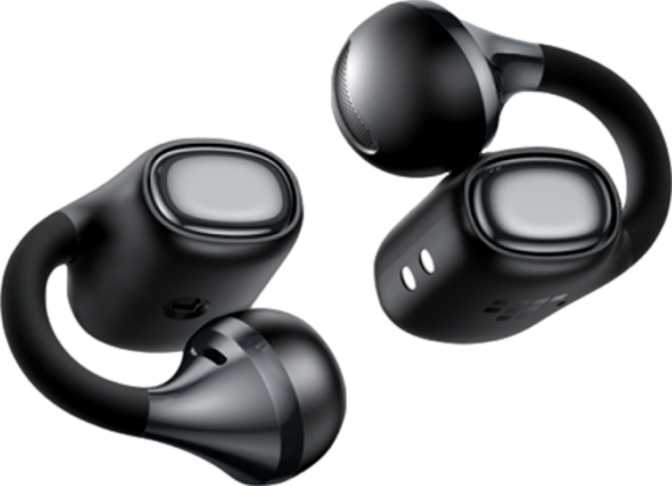
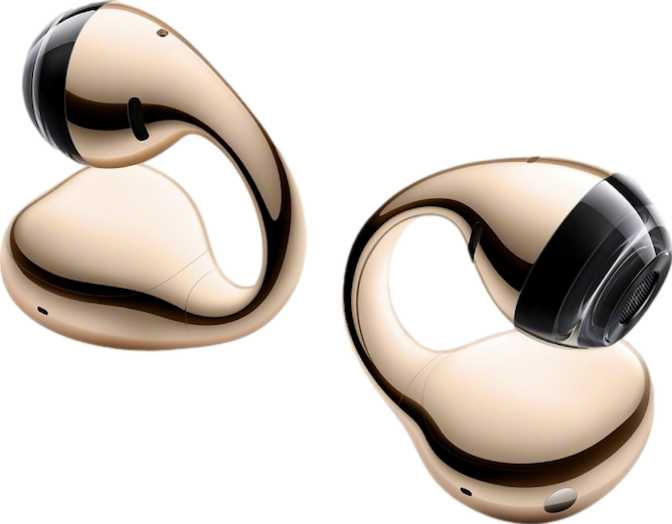
The defining physical characteristic here is weight — or rather, the absence of it. Each earbud weighs just 11 grams. That is roughly the weight of four US pennies per ear. The clip mechanism hooks over the outer ear without inserting anything into the ear canal, which eliminates the pressure and fatigue that conventional earbuds cause during long sessions.
There are no wing tips, no silicone ear tips, and no neckband. What you get is a streamlined clip form factor that sits flush against the ear. The housing carries no RGB lighting, which keeps the look professional enough for office environments. All status feedback comes through voice prompts and a battery indicator rather than any onboard display.
What Clip-On Open-Ear Means for Daily Use
Unlike in-ear buds that seal the ear canal, the Xiaomi Clip-On rests against the outer ear structure. Nothing enters the canal. This has trade-offs — bass response is physically constrained, and ambient sound flows in freely — but for all-day wear, the comfort advantage is real and immediate. Users who have experienced ear canal soreness after hours of conventional buds will notice the difference within the first session.
IP57 Certification: What It Actually Protects Against
IP57 is a dual-rating covering two distinct threat types most open-ear earbuds at this tier do not fully address.
- Dust-tight (5): Fully protected against dust particles that could damage internal components.
- Submersion-rated (7): Survives up to one meter of fresh water for 30 minutes.
- Heavy rain, workout sweat, and accidental splashes fully covered.
- Saltwater submersion degrades seals over time regardless of the rating.
Category context: Many competing open-ear earbuds stop at IPX4 — splash resistance only. IP57 is a meaningful step up for active and outdoor users.
Sound Quality: Open-Ear Physics and High-Resolution Ambitions
Driver performance, codec support, and frequency response explained
Open-ear design means no passive noise isolation — ambient sound flows in freely, and bass frequencies cannot build up pressure against the eardrum. This is not a product flaw; it is the physics of the open-ear form factor. Understanding this before evaluating sound quality is essential for setting the right expectations.
Drivers and Frequency Response
The Xiaomi Clip-On uses 11mm dynamic drivers — a solid size for an open-ear unit. Larger than the 6–8mm drivers found in ultra-compact designs, these move more air and produce a more spacious sound. The frequency response extends from the very bottom of human hearing all the way to 48,000 Hz — well beyond the 20,000 Hz ceiling of normal human perception.
That upper extension into 48kHz matters in one specific context: high-resolution audio playback. Hi-res files encoded at those sample rates contain richer information in the audible range, and playback hardware that processes the full signal reproduces that range with less artifacting from compression.
What These Earbuds Support and What They Do Not
Supported
- Natural soundstage
- All-day fatigue reduction
- Full ambient transparency
- LDHC hi-res codec
Not Available
- Passive noise isolation
- Active noise cancellation
- Dolby Atmos / spatial audio
- Deep bass pressure
LDHC: The Codec Advantage Most Buyers Won't Expect
LDHC is a Bluetooth audio codec capable of transmitting audio at up to 900 kbps. Standard AAC — also supported here — tops out around 250 kbps. LDHC support means the Xiaomi Clip-On can receive high-resolution audio streams from compatible devices without significant compression loss. Combined with the 48kHz frequency ceiling, this creates a coherent hi-res audio pipeline that is rare for open-ear earbuds at any price point.
| Codec | Max Bitrate | Supported |
|---|---|---|
| LDHC | Up to 900 kbps | |
| AAC | ~250 kbps | |
| LDAC | Up to 990 kbps | |
| aptX / aptX HD | Up to 576 kbps | |
| SBC (fallback) | Up to 328 kbps |
Apple devices use AAC. Android devices with LDHC support access the full hi-res stream automatically.
Call Performance and Headset Function
Microphone quality, noise reduction, and in-call controls
The Xiaomi Clip-On can be used as a full wireless headset for calls. The noise-canceling microphone filters background sound — traffic, coffee shop noise, and wind — before transmitting your voice to the other party. The filtering happens on the capture side, so your caller hears a cleaner version of your voice even in moderately noisy surroundings.
A mute function is accessible from the on-device control panel, useful for meeting participants who need to cut their audio feed instantly without reaching for their phone. Voice prompts confirm commands and report battery status, so you always know whether a button press registered.
One honest trade-off: while the microphone filters what it sends outbound, the open-ear design means you hear more ambient noise on your own end compared to sealed earbuds with ANC. For very loud environments like busy train platforms, this is worth factoring in before purchasing.
Headset Feature Summary
- Noise-canceling microphoneFilters background noise on the transmit side for cleaner call audio
- On-device control panelManage calls and audio without reaching for your phone
- One-touch mute functionInstant mic mute accessible directly from the earbud controls
- Voice promptsAudio confirmation for connections, battery level, and commands
Battery Life: More Than a Full Day's Listening
Endurance, fast charging, and power management
The earbuds carry enough internal charge for nine hours of continuous playback — enough for a full workday of background listening, or a long-haul flight without interruption. The charging case extends total endurance to 29 hours combined, covering three to four typical daily use cycles before the case itself needs power.
Charging uses a USB-C connection — the modern standard that means no proprietary cables to hunt down. Fast charging is supported, so a short top-up before heading out recovers meaningful listening time. A full charge from empty takes approximately 90 minutes.
The one gap worth knowing: there is no wireless (Qi) charging for the case. Users who drop a case on a charging pad each night will need to plug in here. It feels like a cost decision rather than a technical one, and it is a genuine convenience trade-off compared to some rivals who have started including wireless charging at this tier.
total hours available
- Earbud battery
- 9 hrs
- Case extension
- +20 hrs
- Full charge time
- ~90 min
- Charging port
- USB-C
- Fast charging
- Wireless charging
Connectivity: Bluetooth 5.4 and Wireless Range
Pairing, range, codec compatibility, and device support
Bluetooth 5.4 is among the most current versions available, offering improved connection stability, lower power draw, and reduced latency compared to 5.0 and 5.1 devices. The rated wireless range is 10 meters — standard for Bluetooth earbuds under ideal conditions. In practice, walls and interference from other devices reduce this. For most usage — phone in a pocket or bag nearby — 10 meters is entirely sufficient.
There is no NFC tap-to-pair support, and Google Fast Pair is not included. Initial pairing is standard Bluetooth manual pairing, which takes around ten seconds but lacks the one-tap convenience some Android users expect. For most people, this is a one-time setup that becomes irrelevant after day one.
Connectivity at a Glance
- Bluetooth Version5.4
- Wireless Range10 m (line-of-sight)
- Primary Hi-Res CodecLDHC
- Apple Device CodecAAC
- NFC Pairing
- Google Fast Pair
- Bluetooth LE Audio
The Built-In Translator: Genuinely Useful or Gimmick?
Real-time language translation and practical travel use
The Xiaomi Clip-On includes a built-in language translation function that enables real-time spoken language translation. Rather than holding a phone between two speakers or running a separate app with one earbud removed, the earbuds can serve as a hands-free translation interface — for international travel, cross-language business conversations, or everyday multilingual interactions.
The function requires a Bluetooth connection to a paired device, and an active internet connection through that device is generally needed for language processing. It is not a fully standalone offline translator — but that is the standard limitation of voice translation across all current consumer implementations at this level. For users who never encounter language barriers, it is a background feature that has no bearing on the core audio experience.
Who Benefits Most from This Feature
- Frequent international travelers navigating multilingual environments daily
- Business professionals working with international partners and clients
- Anyone wanting hands-free translation without carrying a separate device
- Requires a paired phone with internet access — not fully offline capable
Who Are the Xiaomi Clip-On Earbuds Built For?
Real-world buyer profiles and usage scenarios
Buy These If You Are...
- An office or remote workerWho needs to stay aware of colleagues and environment while on calls and audio throughout the day.
- A runner, cyclist, or outdoor fitness userWho needs situational awareness for traffic and surroundings without sacrificing their audio.
- A frequent international travelerWhere the built-in translator adds genuine practical value in multilingual environments.
- Someone with ear canal discomfortWho experiences soreness or fatigue from conventional in-ear buds during extended sessions.
- A hi-res audio listenerWith an LDHC-compatible source device who wants high-resolution audio without paying premium headphone prices.
Look Elsewhere If You Are...
- A loud-environment commuterWho wants noise blocked out on the subway or bus — open-ear design lets all ambient sound in by design.
- A bass-focused music listenerWho needs the physical seal of in-ear earbuds to feel kick drums and sub-bass frequencies.
- An Android fast-pair userNo NFC or Google Fast Pair — pairing uses the standard Bluetooth manual process only.
- A wireless-charging habit userThe charging case requires a USB-C cable — no Qi wireless pad support is included.
How the Xiaomi Clip-On Compares to the Competition
Side-by-side with representative open-ear alternatives at a similar price point
| Feature | Xiaomi Clip-On | Open-Ear Alt. A | Open-Ear Alt. B |
|---|---|---|---|
| Fit Type | Clip-on, open-ear | Hook-over-ear | Hook-over-ear |
| IP Rating | IP57 | IPX4 (splash only) | IPX5 |
| Earbud Battery | 9 hours | 7–8 hours | 6 hours |
| Total with Case | 29 hours | 24–28 hours | 20 hours |
| Hi-Res Codec | LDHC 900kbps | SBC / AAC only | SBC / AAC only |
| Bluetooth Version | 5.4 | 5.3 | 5.2 |
| Built-in Translator | |||
| Wireless Case Charging | Yes (some) | ||
| Google Fast Pair | Yes (some) | ||
| ANC | N/A — open-ear | N/A — open-ear | N/A — open-ear |
Competitor figures represent comparable open-ear earbuds at a similar price tier. ANC is structurally unavailable across all open-ear clip-on designs.
Honest Assessment: Strengths and Limitations
A balanced look at where this product earns its place — and where it asks for compromise
Where the Xiaomi Clip-On Earns Its Place
The comfort proposition here is genuine and immediate. At 11 grams per earbud with a clip-on form factor, the Xiaomi Clip-On makes a compelling case for all-day wearability that sealed in-ear designs fundamentally cannot match. Users who have abandoned earbuds due to ear canal fatigue have a legitimate alternative here.
The LDHC codec is a real engineering investment. Most products at this price tier ship AAC and call it done. Including LDHC and pairing it with a 48kHz frequency ceiling creates a coherent hi-res audio pipeline that is genuinely rare for open-ear earbuds at any price point — not just this one.
IP57 certification is the other standout. Competing products routinely stop at IPX4. Full dust-tight and submersion-rated protection removes weather entirely as a variable for active users, and for anyone who takes earbuds outdoors regularly, that is a meaningful real-world difference.
Where It Asks for Compromise
The open-ear physics are non-negotiable. Bass response, noise isolation, and ANC are not weaknesses of this specific product — they are structural incompatibilities with the open-ear form. Buyers who need those things are shopping in a different product category entirely, and no update or firmware change can alter that.
The absence of wireless case charging feels like a cost decision. In a market where several rivals now offer Qi charging at comparable price points, this is a genuine convenience gap for users who have built wireless charging into their daily routines. It does not affect the listening experience, but it does affect the ownership experience.
No fast-pair or NFC pairing is a minor friction point for Android-first households. Not a dealbreaker — manual Bluetooth pairing takes ten seconds — but it is an area where the product trails direct competitors on first-use convenience. After initial setup, it becomes irrelevant.
Questions Real Buyers Ask Before Purchasing
Straightforward answers to the most common pre-purchase questions about the Xiaomi Clip-On
Final Verdict
The Xiaomi Clip-On is a thoughtfully equipped open-ear earbud that earns its place in this category. It does not try to do everything — it accepts the physical trade-offs of open-ear design and builds the best possible product within those constraints.
LDHC codec support elevates the audio ceiling beyond what this form factor usually offers. IP57 certification removes weather entirely as a concern. Nine hours of earbud battery with 29 total hours available is competitive against the field. The built-in translator is a practical bonus for the right user, not a marketing footnote.
Buy with Confidence If You...
- Want all-day comfort and full environmental awareness
- Lead an active or outdoor lifestyle needing weather protection
- Want hi-res audio quality at an open-ear price point
- Travel internationally and want translation on hand
Look Elsewhere If You...
- Need noise isolation or ANC for commuting
- Require strong, physical bass response in music
- Prefer Qi wireless charging for the case
- Rely on Android Fast Pair for first-use convenience
Overall Score
out of 5
Recommended