XGIMI X50 Ultra Max Review: Big Screen, High Stakes, Real Verdict
ProjectorsKey Specifications at a Glance
What the XGIMI X50 Ultra Max Is Really Offering
There is a specific kind of buyer who looks at a flat-panel television and finds it underwhelming — not because the picture is bad, but because the experience feels small. The XGIMI X50 Ultra Max is built for that person. This is a full-commitment home theater projector: a heavy, feature-laden, laser-powered machine designed to fill a wall with a cinematic image and handle virtually every modern content format without compromise.
It does not pretend to be portable or budget-friendly. What it offers instead is a serious convergence of projection quality, audio sophistication, and connectivity that makes it one of the most complete all-in-one projector propositions currently available.
Design and Build Quality: Built to Stay Put
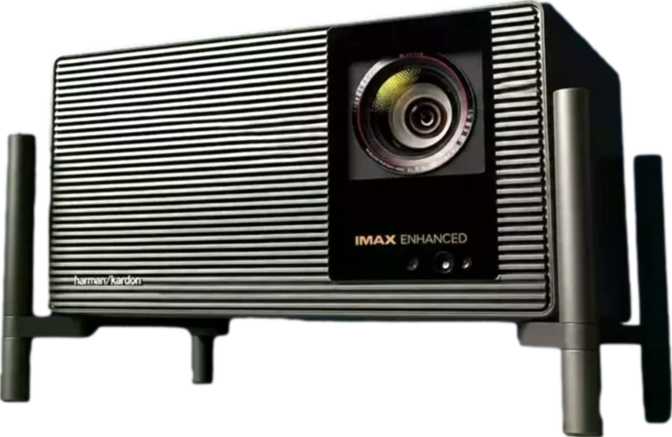
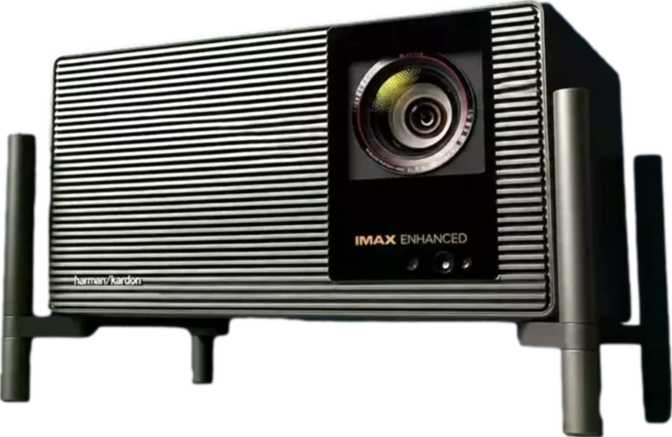
At just over eight kilograms, the XGIMI X50 Ultra Max sends a clear message before you even power it on: this unit is not going anywhere. That weight reflects a chassis engineered for stationary home theater use, likely housing a substantial laser optical assembly, large internal heat management systems, and speaker enclosures substantial enough to matter acoustically. You would not carry this between rooms casually, and you almost certainly would not take it camping.
The physical presence is that of a centerpiece appliance. Buyers planning a dedicated screening room, a permanently mounted ceiling installation, or a fixed living room setup will find the form factor entirely appropriate. Those hoping for flexible room-to-room portability should look elsewhere — the weight alone makes this impractical for that use case.
The inclusion of a dedicated smartphone app suggests XGIMI has invested in the peripheral ecosystem around the hardware, giving users a second control surface that complements the physical remote. That level of polish around the ownership experience aligns with what buyers at this tier reasonably expect.
The Laser Advantage: Why the Light Source Matters More Than You Think
Most people shopping for projectors have some experience with traditional lamp-based models: the brightness that gradually fades, the expensive bulb replacement every few thousand hours, the warm-up and cool-down cycles. The XGIMI X50 Ultra Max uses a laser light source instead, and this single decision changes the long-term economics and reliability of the product significantly.
Laser maintains steady output over its lifespan. What you calibrate on day one is essentially what you see years later — no gradual dimming that creeps in unnoticed.
Full-brightness startup with no warm-up period. No forced cooling delay at shutdown either — power off and the unit is immediately ready to cover or move.
No replacement bulb costs. Lamp-based projectors typically require a new bulb every few thousand hours — an ongoing expense the laser engine eliminates entirely.
The laser engine also underpins the X50 Ultra Max's ability to reproduce a wide color gamut, which directly supports the quality of its HDR performance.
Picture Quality: Four Technologies Working Together
4K Resolution at Scale
The X50 Ultra Max outputs a native 4K image, meaning the full detail of 4K source content — streaming, Blu-ray, gaming — is rendered without any scaling compromise. At the maximum supported screen size of one hundred and fifty inches diagonal, that resolution density still holds enough detail to avoid visible pixel structure at normal seating distances. For context, a one hundred and fifty inch image spans roughly three meters wide in a standard sixteen-by-nine format — genuinely cinematic scale in a domestic space.
HDR Format Support
HDR support on the X50 Ultra Max covers three of the four major formats in common use today. The table below maps each format to its practical relevance for your viewing habits.
| HDR Format | Supported | Primary Use Case |
|---|---|---|
| HDR10 | Yes | Universal standard — all HDR-capable content |
| Dolby Vision | Yes | Netflix, Apple TV+, Disney+ premium streaming tier |
| HLG | Yes | Broadcast television and live streaming content |
| HDR10+ | No | Amazon Prime Video, Samsung content ecosystem |
The absence of HDR10+ is worth noting if you watch a significant amount of Amazon Prime Video content or use Samsung source devices. For most users, the Dolby Vision and HDR10 combination covers the large majority of available HDR content.
Dolby Vision in particular is the premium HDR tier on Netflix and Apple TV+, and its inclusion on a projector at any price point is meaningful — Dolby Vision applies dynamic metadata frame-by-frame rather than relying on static tone-mapping, which results in noticeably better highlight and shadow handling in complex scenes.
240Hz Refresh Rate: A Statement Specification
The refresh rate on this projector is exceptional by category standards, where most 4K projectors operate at sixty frames per second. A projector capable of handling up to two hundred and forty frames per second at 4K is almost certainly targeting two distinct use cases: high-frame-rate gaming, where reduced motion blur and input lag matter enormously, and high-motion video content such as sports, where smooth motion and clarity during fast panning or tracking shots are visually significant.
For gaming audiences specifically, this is a differentiating specification. Console and PC gaming at high frame rates on a screen this size delivers an experience that no television can currently match in terms of sheer immersion. Buyers who came to the X50 Ultra Max from a gaming monitor background will find the transition to large-screen, high-refresh projection a meaningful step up rather than a performance compromise.
Audio Performance: Built-In Sound That Goes Beyond Checkbox
Stereo System and Power
The integrated audio system uses a stereo configuration delivering twelve watts per channel — twenty-four watts total. At the screen sizes this projector targets, that output level is appropriate for filling a medium-to-large room without significant strain. It is not audiophile-grade, and it will not replace a dedicated surround sound system in a purpose-built home theater. But it is meaningfully more capable than the token speakers found in many projectors that treat audio as an afterthought.
Dolby Atmos: The Format vs. The Experience
The X50 Ultra Max carries Dolby Atmos certification, which requires some honest context. Dolby Atmos in its full, height-channel form requires speakers positioned above the listening position. A stereo projector speaker system cannot reproduce that spatial audio experience physically. What the Atmos certification does mean here is that Atmos-encoded audio tracks can be decoded and downmixed to stereo intelligently — preserving the intent of the mix better than a system that simply strips the Atmos metadata.
Audio Outputs and Connectivity
Analog connection to powered speakers or amplifiers. A practical, universally compatible option for upgrading to an external sound system.
Buyers with a dedicated AV receiver or soundbar relying on digital optical connections will need to route audio through an HDMI-connected receiver instead.
Connectivity: Almost Everything, Thoughtfully Arranged
Wired Connections
The XGIMI X50 Ultra Max offers two HDMI ports — enough for a streaming player and a gaming console simultaneously without unplugging. The addition of an Ethernet port is significant and often overlooked: a wired network connection for streaming eliminates the variables of wireless interference, particularly relevant at the 4K bitrates this projector is designed to handle. Two USB ports round out the wired connections, supporting peripheral devices or powered accessories.
Wireless Ecosystem
| Wireless Protocol | Version / Status | What It Enables |
|---|---|---|
| Wi-Fi | Wi-Fi 6 (primary) | Fast, stable wireless streaming; better in crowded networks |
| Bluetooth | 5.2 | Wireless headphones, soundbars, gamepads |
| AirPlay | Yes | iPhone, iPad, Mac screen mirroring and audio |
| Chromecast | Built-in | Android and Google Cast streaming |
| Miracast | Yes | Windows device screen mirroring |
| DLNA | Certified | Local network media server access |
Wi-Fi 6 operates more efficiently in environments with many competing wireless devices. A modern home with smart devices, phones, and laptops sharing a router benefits from the X50 Ultra Max's ability to negotiate bandwidth more effectively than older Wi-Fi standards allow.
The combination of AirPlay and Chromecast in a single device is relatively rare and practically valuable: Apple device users and Android or Google TV users each have a native casting experience without compromise. Miracast fills in Windows device compatibility. Together, these cover the wireless casting needs of virtually every device a household might own.
Placement Flexibility: Lens Shift Changes Everything
Many projectors offer only a fixed optical axis, which forces you to position the unit in one precise location relative to your screen — typically dead center, both horizontally and vertically. The XGIMI X50 Ultra Max includes motorized lens shift in both directions, meaning the image can be physically repositioned without moving the projector itself.
Raises or lowers the image without tilting the projector body — essential for ceiling or shelf mounts that are not screen-height-matched.
Moves the image left or right to align with a screen when the projector cannot be positioned perfectly centered — rare at this price.
Optical lens shift preserves image quality. Digital keystone correction — the alternative — warps the image electronically and degrades sharpness.
For buyers designing a custom installation — particularly ceiling mounts in rooms with structural constraints — bidirectional lens shift reduces the risk of discovering post-installation that the projector cannot reach the screen position without quality-degrading correction.
Smart Platform and Day-to-Day Control
The built-in smart TV platform, accessible via remote and complemented by a dedicated smartphone app, means this projector functions as a standalone streaming device without requiring external hardware. Voice command support allows hands-free operation for navigation, search, and playback — a convenience that matters when you are settled into a sofa in a darkened room.
The smartphone app extends control beyond the bundled remote, which is particularly useful for text entry — typing search terms and passwords on a physical remote is a universally frustrating experience that a phone keyboard on screen solves immediately.
- Built-in smart TV OS — no separate media player required
- Voice commands for hands-free navigation and search
- Dedicated smartphone app as a second control surface
- Physical remote control included as standard
Who This Projector Is For — and Who Should Look Elsewhere
- Home cinema enthusiasts
Want a large, high-quality image with Dolby Vision support without managing a separate media player.
- High-frame-rate gamers
Want wall-sized gaming without sacrificing the smooth, responsive performance of a gaming monitor.
- Sports viewers
HLG HDR and high-refresh motion handling deliver stadium-scale visuals for live broadcasts.
- Apple households
AirPlay integration removes friction from wireless content sharing across all Apple devices.
- Permanent installation buyers
Lens shift and robust build quality reward users committing to a fixed setup.
- Buyers seeking portability
At over eight kilograms with no battery option, this requires a fixed installation. It is not a room-to-room projector.
- Small room or small screen buyers
The scale of this machine is calibrated for large rooms. It is neither cost-effective nor necessary for a small screen setup.
- Audiophiles with AV receivers
The lack of S/PDIF digital audio output limits clean audio extraction for external processors without HDMI routing.
- Amazon-heavy households
No HDR10+ means Amazon Prime Video content does not reach its full HDR fidelity potential on this projector.
How the X50 Ultra Max Positions Against Its Alternatives
The 240Hz refresh rate and bidirectional lens shift are the clearest technical differentiators when positioned against the competition. Most competitive 4K projectors — even at similar price points — cap their native refresh at sixty or one hundred and twenty frames per second, and rarely offer both axes of lens adjustment together.
| Feature | XGIMI X50 Ultra Max | Typical 4K Laser Projector | Entry 4K Lamp Projector |
|---|---|---|---|
| Light Source | Laser | Laser | Lamp (consumable) |
| Refresh Rate | 240Hz | 60–120Hz | 60Hz |
| Dolby Vision | Uncommon at this price | Rare | |
| Lens Shift | Both axes | Often vertical only | Usually none |
| AirPlay + Chromecast | Rarely both | Uncommon | |
| Wi-Fi Generation | Wi-Fi 6 | Often Wi-Fi 5 | Wi-Fi 4–5 |
| Audio Output | 24W stereo + Dolby Atmos | 20–30W typical | 10–20W typical |
| S/PDIF Output | Sometimes | Sometimes | |
| HDR10+ | Varies | No |
An Honest Assessment
The strengths of the XGIMI X50 Ultra Max converge around its ambition to be a single, complete home theater solution. The laser engine addresses the most common frustration with long-term projector ownership. The HDR suite — particularly Dolby Vision — elevates streaming content beyond what most projectors in this category offer. The 240Hz specification opens the product to gaming and sports audiences who would otherwise compromise on frame rate by moving to projection. The comprehensive wireless casting support ensures that whatever devices a household owns, they connect without friction. And the two-axis lens shift provides installation flexibility that genuinely reduces the stress of permanent setup.
The weaknesses are real but targeted. The weight rules out any meaningful flexibility of use — this is a fixed installation purchase, and buyers who are not ready to commit to that reality will feel constrained by it. The absence of S/PDIF digital audio output is an oversight that feels inconsistent with the product's ambitions at this tier; buyers building around a dedicated AV receiver or external audio processor will find their routing options more complicated than they should be. The HDR10+ gap is not a fatal flaw, but it is a deliberate omission that affects Amazon Prime Video content quality in a way that informed buyers deserve to know about before purchasing. And while the built-in audio system is capable, anyone who has experienced a proper surround sound setup will hear the ceiling that twenty-four watts of forward-facing stereo imposes.
Questions Real Buyers Ask Before Purchasing
Clear Recommendation — With Conditions
The XGIMI X50 Ultra Max earns a strong recommendation for buyers who are ready to commit to what it is: a high-performance, permanently installed home theater projector that does not apologize for its scale or its weight class.
The case for buying it is built on the combination of its laser longevity, its Dolby Vision HDR support, its exceptional high-refresh-rate specification, and its bidirectional lens shift — a set of features that, taken together, is not commonly available in a single product. Buyers who watch a lot of Dolby Vision content on Netflix or Apple TV+, or who want a wall-sized gaming display with genuinely competitive frame-rate performance, will find few alternatives that check all the same boxes at this level.
- Need a permanent large-format cinema setup
- Prioritize Dolby Vision streaming quality
- Want high-frame-rate gaming on a massive screen
- Have installation flexibility concerns to solve
- Rely on digital optical audio routing
- Watch primarily via Amazon Prime Video HDR10+
- Need a projector that moves between rooms
- Are setting up in a small or brightly lit space
For the buyer who sits outside those caveats — who wants a permanent, high-quality, large-format home cinema experience with excellent HDR coverage and the flexibility to satisfy both a cinephile and a gamer in the same household — the XGIMI X50 Ultra Max makes a compelling and well-considered purchase.