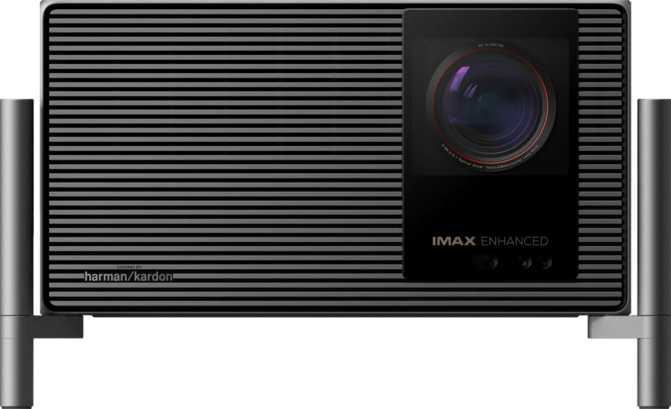
Most home projectors force buyers to choose between picture quality, gaming performance, or smart features. The XGIMI Titan Noir Pro refuses that trade-off. It arrives as a full-featured 4K home theater projector built for people who want a genuinely cinematic experience — not a glorified slideshow machine — without assembling a rack of separate components to get there.
At 8.1 kilograms and roughly the footprint of a mid-size carry-on bag, this is not a take-it-anywhere device. It is a statement piece: a projector you set up once, in the right room, and then live with for years. Everything about its specification set — from its display format support to its motion handling — points to a product designed for serious home cinema and performance gaming use. Whether it earns that positioning is what this review unpacks.
Design and Build Quality
Physical Presence
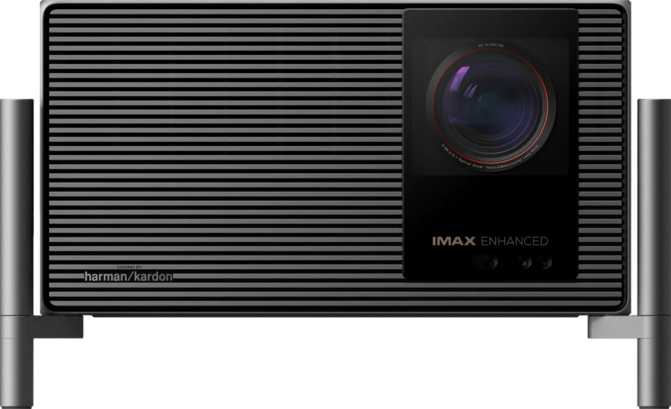
The Titan Noir Pro is a substantial piece of hardware. At 379mm wide, 288mm deep, and 231mm tall, it occupies real estate on a shelf or media cabinet. The 8.1kg weight means it stays put once placed — this is not a projector that shifts accidentally or vibrates with speaker output. That mass also signals something meaningful: internal components are not miniaturized into fragility.
The "Noir" in the name reflects a dark, understated aesthetic — a deliberate contrast to the white-and-chrome look that defines many projectors in this category. On a media shelf, it reads more like professional AV equipment than an accessory, which many home cinema buyers will appreciate.
Lens System: Genuine Installation Flexibility
One of the most underrated practical features on the Titan Noir Pro is its full lens shift system — both vertical and horizontal. Most projectors in this class offer digital keystone correction only, which degrades the image to compensate for off-axis placement. Optical lens shift moves the projected image physically, without any quality loss.
Why Optical Lens Shift Matters in Practice
You do not need to position the projector in a mathematically precise spot relative to your screen. Place it on an existing shelf, mount it on a standard ceiling bracket, or set it on a coffee table — then shift the lens to align the image perfectly. For retrofitting a projector into an existing room rather than building a dedicated theater, this is the difference between a clean installation and a frustrating one.
Picture Quality
Resolution and Sharpness
4K resolution — 3840 × 2160 pixels — is the current benchmark for premium home projection. At the Titan Noir Pro's maximum supported screen size of 300 inches diagonal, 4K becomes essential. At that scale, lower resolutions show pixel structure at normal viewing distances. The Titan Noir Pro's native 4K output ensures the image stays sharp whether you're projecting on a 100-inch screen or filling a 200-inch screen across a dedicated home theater wall.
For context, 300 inches diagonal is a screen roughly 6.6 meters wide — a number most rooms cannot accommodate. That tells you the projector's optical headroom is generous, meaning it will perform well at smaller, more practical sizes like 120–150 inches.
Contrast and Black Levels
The 8000:1 contrast ratio determines how distinct bright and dark areas of the image appear simultaneously. Higher contrast makes dark scenes look genuinely dark rather than grey, and gives bright highlights more apparent punch. At 8000:1, the Titan Noir Pro sits above entry-level home projectors — which often land in the 3000:1–5000:1 range. Dark room conditions maximize contrast performance, as ambient light compresses contrast ratios across every projector regardless of spec.
HDR Format Support: The Full Stack
The Titan Noir Pro supports every major HDR format currently in use. This is where its display credentials become genuinely impressive:
The most widely adopted premium HDR format, used across Netflix, Disney+, and Apple TV+. Applies per-frame metadata for the most precise tone mapping available on consumer hardware.
The dynamic metadata extension of HDR10, used by Amazon Prime Video and Samsung's content ecosystem. Optimizes brightness scene by scene rather than applying a single global tone map.
The baseline HDR standard, required by all 4K Blu-ray discs and most streaming platforms. Every piece of modern HDR content supports this format as its foundation.
The broadcast HDR standard used in live television and some streaming sports content. Ensures live events are displayed with proper dynamic range rather than flat standard video output.
Running all four formats means the Titan Noir Pro displays every piece of HDR content in your library correctly — without falling back to a standard dynamic range conversion that strips away the brightness and color data the content creator intended.
Refresh Rate and Gaming Performance
What These Numbers Mean for Actual Gaming
The Titan Noir Pro's 240Hz refresh rate and 1ms response time are specifications that exist almost exclusively for gaming. A standard cinema projector — even a very good one — runs at 24 or 60Hz. That is sufficient for film and television because that content was produced at those frame rates. Gaming is fundamentally different.
Modern gaming hardware, particularly current-generation consoles at 120fps and PC gaming at higher frame rates, benefits enormously from a display that can keep up. A 240Hz panel refreshes the image 240 times per second — meaning even at 120fps, the display is refreshing twice per frame, reducing motion blur and making fast movement visibly smoother. The 1ms response time means pixels transition between states almost instantaneously, eliminating the ghosting that slower panels produce on fast-moving objects.
The practical result: Competitive gaming on a projector-sized screen becomes viable rather than a novelty. Shooting games, racing titles, and any fast-paced action genre benefit from this display in ways they simply cannot on a standard 60Hz home projector. This combination — 4K cinema quality alongside hardware-grade motion performance — is rare in the projector market.
Smart Features and Connectivity
Built-In Smart TV Platform
The Titan Noir Pro includes a fully integrated smart TV platform, eliminating the need for a streaming stick, Apple TV, or any external media player for most use cases. Voice commands are built in — you can navigate the interface, search for content, and control playback without picking up the remote. A dedicated smartphone app adds a third control method, covering different preferences across households.
Wireless Casting: All Three Major Protocols
AirPlay
For iPhone, iPad, and Mac users — mirror or cast content directly from Apple devices without an Apple TV box.
Chromecast Built-In
Send content directly from Android phones, Chromebooks, and Cast-enabled apps without any extra hardware.
Miracast
Screen mirroring from Windows devices and Android devices that don't support Chromecast natively.
Wired Connectivity
| Port | Quantity | Primary Use |
|---|---|---|
| HDMI | 2 | Consoles, Blu-ray players, set-top boxes |
| USB | 2 | Storage devices, input peripherals |
| Ethernet (RJ45) | 1 | Wired network connection — bypasses Wi-Fi for 4K streaming stability |
Notable Absences
- No 3.5mm headphone output — limits private listening options without a Bluetooth workaround.
- No S/PDIF digital audio output — buyers with older AV receivers using optical inputs should verify compatibility before purchasing.
Audio: Built-In Sound System
Two integrated speakers rated at 12 watts each deliver a 24W total stereo configuration. For a projector of this class, that is a functional onboard audio system capable of comfortably filling a mid-size room at reasonable volume levels. Dolby Atmos processing is included — and while a two-speaker system cannot reproduce true multi-channel spatial audio, the Atmos processing improves the spatial width and character of the sound compared to standard stereo output.
For casual viewing, the built-in speakers are sufficient. For a serious home theater setup at this picture quality level, most buyers will route audio to a dedicated soundbar, stereo amplifier, or AV receiver via HDMI ARC — which is where the absence of S/PDIF becomes a relevant constraint for owners of older equipment.
Who the XGIMI Titan Noir Pro Is For
This Projector Is For You If...
- You want a primary 4K home theater with a dedicated, light-controlled room where contrast and HDR can perform at their best.
- You play games on modern consoles or a gaming PC and want to experience them at large-screen scale with no motion compromise.
- You stream heavily on Netflix, Disney+, or Apple TV+ and want Dolby Vision and HDR10+ applied correctly to that content.
- You prefer a clean, integrated setup — one device handling projection, smart TV, and sound without extra boxes.
- You have a room large enough for a 100–200-inch screen with adequate throw distance and ceiling height.
Think Carefully If...
- You need portability — at 8.1kg, this is a permanent installation, not a projector you move between rooms or travel with.
- You operate in a bright living room with windows. No projector performs well against direct ambient light.
- You rely on older AV equipment with only S/PDIF or analog audio inputs — the absent outputs create an integration challenge.
- You have a compact room or low ceiling — the physical dimensions require adequate shelf depth or a dedicated mount system.
How It Compares to the Alternatives
| Feature | XGIMI Titan Noir Pro | Typical 4K Cinema Projector | Typical 4K Gaming Projector |
|---|---|---|---|
| Native 4K | |||
| Dolby Vision | Rare | Rare | |
| HDR10+ | Uncommon | Uncommon | |
| 240Hz Refresh Rate | |||
| 1ms Response Time | Some | ||
| Optical Lens Shift (H + V) | Rarely | ||
| Built-in Smart TV | |||
| AirPlay + Chromecast + Miracast | Uncommon | Uncommon | |
| Dolby Atmos Audio | Uncommon | Rare |
Included Not available Varies by specific model
Honest Assessment
The Titan Noir Pro's greatest strength is breadth without obvious sacrifice. The combination of Dolby Vision, HDR10+, and the complete HDR stack on a native 4K image is matched by a gaming-grade 1ms / 240Hz motion system — then wrapped in a smart TV platform with comprehensive wireless casting and fully flexible optical lens shift. That is not a casual feature list. The installation flexibility from optical lens shift on both axes is a genuine differentiator: many projectors of equivalent image quality force precise placement, while the Titan Noir Pro adapts to your room.
Key Strengths
- Full HDR stack — Dolby Vision, HDR10+, HDR10, and HLG all present, covering every streaming platform correctly
- 240Hz + 1ms gaming performance on a projector-scale screen — a rare combination in this market
- Full optical lens shift on both axes — flexible installation without image degradation
- All three major wireless casting protocols: AirPlay, Chromecast built-in, and Miracast
- Integrated smart TV with voice commands and dedicated smartphone app — no streaming stick required
Genuine Weaknesses
- No 3.5mm headphone output — no wired private listening option without Bluetooth
- No S/PDIF output — older AV receivers without HDMI ARC cannot connect for audio
- Lamp-based light source — eventual bulb replacement adds long-term maintenance cost absent in laser projectors
- Size and weight (8.1kg) make this a permanent installation — not a device you relocate casually
- Requires controlled lighting — ambient light significantly compresses contrast and HDR performance
Common Buyer Questions Answered
Final Verdict
XGIMI Titan Noir Pro
4K Home Theater & Gaming Projector
The XGIMI Titan Noir Pro is the right projector for a specific, well-defined buyer: someone who wants a single, uncompromising 4K home theater device that handles cinematic content with the full HDR stack — including Dolby Vision — and gaming performance with hardware-grade motion handling, all from a flexible, self-contained smart platform.
Its specification set is not the result of cutting corners in one area to excel in another. The complete HDR format coverage, the gaming-grade 240Hz panel, the optical lens shift on both axes, the three wireless casting protocols, and the integrated voice-controlled smart TV all point to a product built to cover every use case without forcing trade-offs.
The weaknesses are real: no headphone output for private listening, no S/PDIF for legacy audio connections, a lamp-based light engine that will eventually need replacement, and a size and weight profile that makes this a permanent installation. None of these are disqualifying for the intended buyer — but they are worth knowing before committing.
Buy it if you are building a dedicated home theater or gaming room and want 4K, Dolby Vision, and serious motion handling in one device.
Skip it if you need portability, operate in a bright room, or require S/PDIF or headphone output for your existing audio setup.