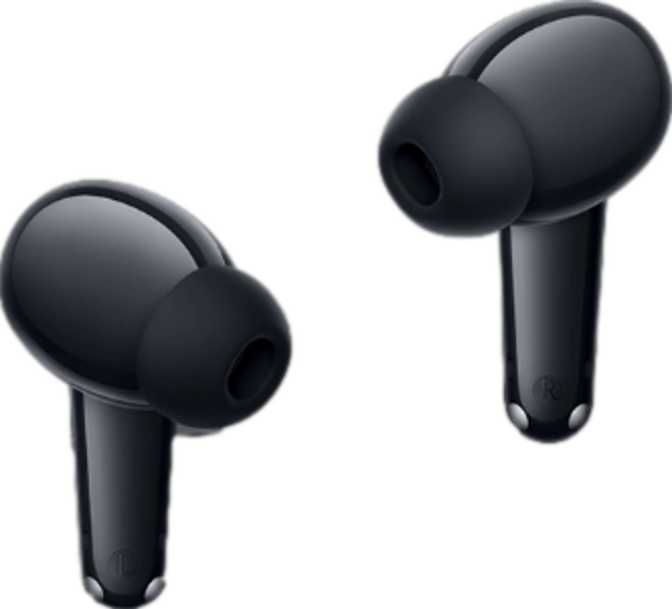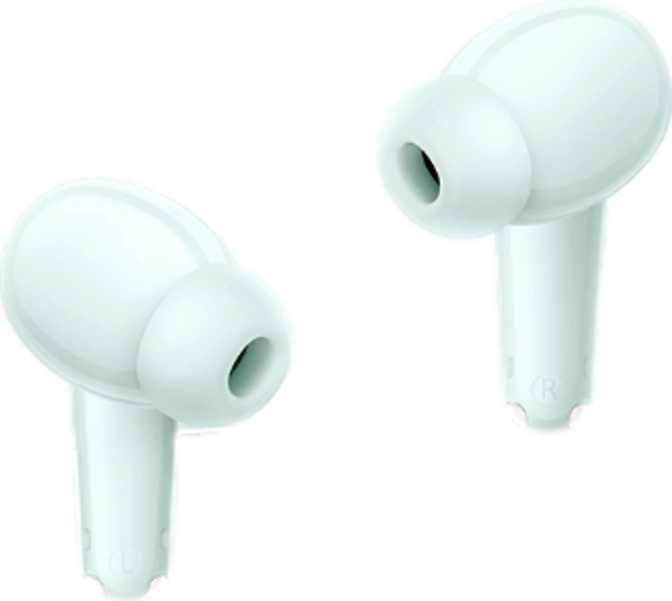
Vivo TWS 5i Full Review: Endurance-Focused Budget Earbuds Tested
Wireless EarbudsThe budget true wireless market is loud and crowded, and most earbuds at this price level force a painful choice: decent sound but terrible battery life, or solid call quality paired with a flimsy build. The Vivo TWS 5i takes a different approach. Rather than chasing flashy features that look impressive on a spec sheet but rarely affect real life, it focuses on what matters most to someone wearing earbuds for eight or more hours daily — stamina, stable connectivity, and reliable call performance. Whether that focus matches your priorities is exactly what this review breaks down.
Vivo TWS 5i at a Glance
Quick Feature Overview
Editor's Overall Rating
out of 5
Design and Build Quality
How They Feel in the Ear
At 8.4 grams per earbud, the Vivo TWS 5i are among the lighter options in their class. That weight matters more than most buyers initially realize — lighter earbuds create less downward pressure on the ear canal over long sessions, translating directly into comfort during extended wear. If you routinely use earbuds throughout a full workday, commute, or workout, the reduced fatigue is genuinely noticeable.
The fit is a standard in-ear design, meaning the eartips create a physical seal inside the ear canal. The earbuds do not include wing tips, which makes them slightly less suited to high-intensity exercise requiring a very locked-in fit. For walking, gym machines, commuting, and desk work, the fit is completely dependable.
Durability and Weather Resistance
The TWS 5i carries an IP54 rating. The first digit (5) indicates protection against dust infiltration, and the second digit (4) confirms the earbuds can handle water splashing from any direction. In practical terms, this covers sweaty gym sessions, light rain, and the occasional accidental splash — but not submersion or running under a tap.
IP54 Rating Explained
IP5x = dust protected against limited ingress. IPx4 = splashing water handled from any angle. These earbuds are gym-ready and light-rain proof — not designed for swimming or water immersion.
Sound Quality: What the Driver Delivers
The Vivo TWS 5i uses a 10mm dynamic driver in each earbud. Dynamic drivers are well-suited to consumer audio because they naturally produce fuller bass response and a warmer, more engaging sound signature. A 10mm size sits in the mainstream sweet spot — large enough for good low-end body, compact enough for a comfortable in-ear housing. The frequency response covers the full spectrum of human hearing, meaning the earbuds are not artificially rolled off at either extreme.
Passive Noise Isolation
There is no active noise cancellation (ANC) here. Instead, the eartips physically seal against the ear canal to block external sound. This handles consistent mid-to-high frequency sounds well — office chatter, air conditioning, café background noise. It does less against deep low-frequency rumble, such as airplane cabin drone or bus engines.
Spatial Audio
Spatial audio processing creates a three-dimensional soundstage — the perception that sounds are coming from around you rather than two fixed points inside your head. This enhances gaming, movies, and immersive music. Note that the TWS 5i uses Vivo's native processing engine rather than Dolby Atmos or Dirac Virtuo, so the experience varies by source content.
Full Frequency Range
Coverage spans the complete range of human hearing from the deepest bass sub-frequencies — more felt than heard in the lowest registers — up to the upper ceiling of audible sound. This means the earbuds do not artificially limit either extreme, though real-world output at the absolute limits depends on eartip seal quality and individual ear anatomy.
ANC vs Passive Isolation — Know the Difference
ANC uses electronics to generate inverse sound waves, cancelling ambient noise before it reaches your ears. Passive isolation physically blocks sound via the eartip seal. Passive isolation is effective in typical everyday environments. ANC is needed for genuinely loud commutes, airplane cabins, or high-noise workplaces. The TWS 5i relies entirely on passive isolation.
Battery Life: The Headline Advantage
This is the single most compelling reason to choose the Vivo TWS 5i over comparably priced alternatives. The numbers are not just good — they are genuinely unusual at this price point.
Earbud Playback
A full workday of continuous listening without interruption. Most budget earbuds manage 6–8 hours — the TWS 5i surpasses that standard by a clear margin.
Total System Endurance
The case provides approximately three full earbud recharges on top of the earbuds' own charge — enough for most users to go a full week without plugging in.
Emergency Top-Up
A short burst in the case gives meaningful playback before you leave the house. Full charge from empty takes around 2 hours via the included USB-C connection.
Comparative bars based on typical category ranges at equivalent price tiers. Not derived from individual tested devices.
Connectivity: Modern and Reliable
The TWS 5i punches above its category on the wireless connectivity front. Bluetooth 5.4 — among the most current versions in the consumer electronics space — brings more stable connections, lower power draw during transmission, and better performance in interference-heavy environments like busy offices or commuter transport. Here is what each connectivity feature means in practice:
- Bluetooth 5.4
- The latest Bluetooth standard delivers better stability, lower battery impact, and improved handling of congested wireless environments compared to older versions still found in competing budget earbuds.
- 2-Device Multipoint Pairing
- Stay connected to your phone and laptop simultaneously. Audio switches automatically when a call arrives — no manual disconnecting and reconnecting. A practical quality-of-life feature for anyone who moves between devices throughout a workday.
- AAC Codec
- AAC is the standard format used by Apple Music, YouTube, and many streaming platforms. iPhone users get a direct benefit, as iOS prioritizes AAC by default. Quality is meaningfully better than standard SBC transmission.
- 10-Meter Wireless Range
- Standard and reliable for typical use. Phone in pocket, bag, or on a nearby desk — no dropouts. Walls and interference will reduce this in real conditions, as with any Bluetooth device.
- 42ms Audio Latency
- For music and podcasts, completely undetectable. For video streaming, most viewers will notice no lip-sync offset. Competitive or rhythm gaming is the one edge case where this latency could occasionally be felt by sensitive users.
- USB-C Charging
- The universal standard — no proprietary cables. If you use an Android phone, laptop, or any modern device, you already have the cable you need.
- No Fast Pair or NFC
- Initial pairing requires the standard Bluetooth setup process. Not difficult — but not the one-tap experience Google Fast Pair provides. Subsequent automatic connections work normally.
- No LDAC or aptX Variants
- Hi-res lossless Bluetooth is not available. For most listeners on mainstream streaming platforms, the difference from AAC to LDAC is subtle and unlikely to be missed. Audiophiles specifically targeting hi-res sources will notice the ceiling.
Call Quality and Microphone Performance
The microphone system includes noise cancellation specifically for calls — a separate function from the earbuds' listening experience. The call mic suppresses background noise around you before transmitting your voice, so people you call hear your voice clearly rather than your environment. This is particularly effective in cafés, on public transit, or in open-plan offices — exactly the situations where budget earbuds most often disappoint.
A mute function is accessible directly from the earbud touch controls, which means you can go off-mic during a video call without reaching for your device. Voice prompts provide audio feedback for connection status, battery level, and call controls.
The earbuds support use as a full headset for voice calls, voice assistants, and video conferencing out of the box.
Microphone Features
- Noise-canceling call microphone — filters ambient background noise
- Mute function directly from earbud controls
- Full headset mode for calls and voice assistants
- Voice prompts for battery and connectivity status
Who Should Buy the Vivo TWS 5i
This Is Your Earbud If...
- You need earbuds that last all day without battery anxiety — a full workday of continuous listening is standard here
- You regularly switch between a laptop and a phone for calls and media — multipoint pairing makes this seamless
- You take frequent calls in noisy environments and need your voice to come through clearly on the other end
- You exercise at a moderate level — gym machines, walking, cycling — and want reliable sweat protection
- You use an iPhone or stream from AAC-native platforms like YouTube and Apple Music
- You want USB-C charging and no proprietary cables in your bag
Consider Alternatives If...
- You commute by plane or train frequently — active noise cancellation is the only real solution for deep low-frequency cabin rumble
- You run or train intensively and need earbuds that lock in tightly against vigorous movement — wing tip earbuds would be better matched
- You are an audiophile building a hi-res audio listening setup — the absence of LDAC or aptX codecs limits this as an endpoint
- You rely on Qi wireless charging for all your devices and prefer to avoid cables entirely
- You are deep in the Android ecosystem and specifically want Google Fast Pair for instant device switching
How It Compares to the Competition
The Vivo TWS 5i's clearest competitive identity emerges against two natural rivals: budget ANC earbuds that sacrifice battery for noise cancellation, and mid-range hi-res earbuds that prioritize codec depth. Here is how the key trade-offs map out:
| Feature | Vivo TWS 5i | Typical Budget ANC Buds | Typical Mid-Range Hi-Res |
|---|---|---|---|
| Earbud Battery Life | ~11.5 hours | ~5–7 hours | ~6–8 hours |
| Total System Battery | ~38.5 hours | ~20–28 hours | ~24–32 hours |
| Active Noise Cancellation | No | Yes | Often |
| Hi-Res Codec (LDAC/aptX) | No | Rarely | Often |
| Bluetooth Version | 5.4 | 5.2–5.3 | 5.2–5.3 |
| Multipoint Pairing | Yes (2 devices) | Sometimes | Often |
| IP Rating | IP54 | IP44–IP54 | IP44–IP55 |
| USB-C Charging | |||
| Wireless Charging | Sometimes | Often |
Comparative data reflects typical category ranges at equivalent price tiers. Individual product results will vary.
Common Buyer Questions Answered
Final Verdict
The Vivo TWS 5i is a well-considered budget true wireless earbud with a clear identity: long battery life, stable modern connectivity, and genuinely useful call quality packed into a light, sweat-resistant design. It does not try to do everything — and that restraint is actually its strength.
If your life involves long days of listening, frequent device-switching between a phone and a computer, and regular calls in noisy environments, the TWS 5i addresses those needs more directly than most competitors at its price point. The battery capacity alone is a meaningful differentiator.
If active noise cancellation is non-negotiable for your commute, or you are specifically building a hi-res audio listening setup, this earbud is not the right tool. But for the buyer who wants a reliable daily workhorse that simply keeps going — the Vivo TWS 5i makes a compelling, honest case for itself.
Overall Score
out of 5
Best For: Daily Endurance Use