Tamron 17-50mm f/4 Di III VXD: An Honest Review for Sony Shooters
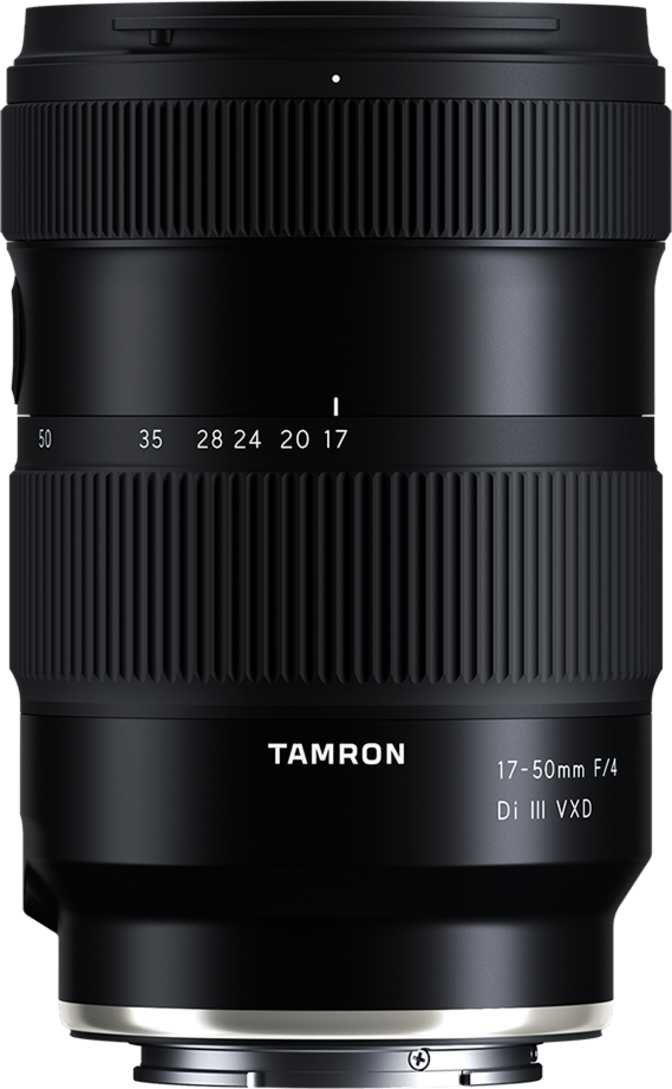
Camera LensesSony mirrorless shooters have long faced a frustrating gap in the lens market: the space between ultra-wide primes and standard zooms, covered meaningfully only by lenses that either cost a small fortune or compromise heavily on build and optics. The Tamron 17-50mm f/4 Di III VXD positions itself as a direct answer — a single lens meant to replace two or three in your bag, covering everything from dramatic architectural wide shots to natural-looking portrait compression, all at a fixed maximum aperture throughout the zoom range. Whether that promise holds up under scrutiny is exactly what this review addresses.
Editor's Verdict
4 / 5
Editor's Rating
Recommended
Ideal for Sony IBIS body users, travel shooters, hybrid creators, and architecture photographers
Key Specifications at a Glance
The numbers that define this lens — translated into what they mean in real-world shooting.
Focal Range
17–50mm
Wide to Standard
Max Aperture
f/4 Constant
Full Zoom Range
Autofocus
VXD Motor
Linear Drive
Close Focus
19cm
Near-Macro Range
Weight
460g
Walk-Around Ready
Filter Thread
67mm
Widely Available
Design and Build: Compact, Purposeful, and Honest About Its Limits
How the 17-50mm f/4 feels in the hand, what it is made of, and where it draws a hard line.
Physical Footprint
At 460 grams, the 17-50mm f/4 sits in a genuinely comfortable middle ground. It is heavier than a compact prime but noticeably lighter than full-frame standard zooms in the same range. On a Sony APS-C body like the ZV-E10 or a compact full-frame like the A7C, it balances well without pulling the camera forward. Shooters used to carrying heavyweight glass will find this almost refreshingly light; those coming from a kit lens may notice the added mass, but it rarely becomes a fatigue issue on long shooting days.
The 67mm filter thread is a practical choice — 67mm filters are widely available and affordably priced, unlike the more exotic 82mm or 95mm threads found on larger zoom lenses. The front element does not rotate during focusing or zooming, which matters practically: circular polarizers and graduated ND filters can be set and forgotten without babysitting them through every focal length change.
The mount is metal, which provides confidence at the critical connection point between lens and camera body — metal holds up to repeated lens swaps and the minor torque of everyday handling far better than plastic alternatives. A lens hood is included in the box, not sold separately as an afterthought.
Build Quality Highlights
-
Metal Mount
Withstands repeated lens changes without wear at the critical connection point
-
Non-Rotating Front Element
Polarizers and graduated ND filters stay aligned through the full zoom range
-
Lens Hood Included
Flare protection in the box — not an optional extra sold separately
-
67mm Filter Thread
Affordable, widely stocked size — practical for everyday filter use
-
No Weather Sealing
Not rated against rain, dust, or moisture — use with caution in harsh conditions
The Weather Sealing Conversation
This lens is not weather-sealed, and that is stated plainly because it matters. If you regularly shoot in rain, dusty environments, or punishing outdoor conditions, this limitation is real. It does not mean the lens is fragile — it means you should exercise the same caution you would with most non-professional-tier glass. Shooting under light drizzle with a cautious hand is different from working a monsoon wedding. Know where your line is.
Focal Range and Optics: Understanding What 17-50mm Actually Covers
Translating degrees of coverage and focal lengths into practical shooting situations.
The Range Explained for Real-World Use
The 17mm end delivers a field of view just over 103 degrees — wide enough to capture entire interiors without backing into walls, to shoot tight cityscapes from street level, and to give landscape images that expansive, immersive quality. Experienced wide-angle shooters will recognize this as genuinely useful territory, not just a marketing number.
At 50mm, the angle of view narrows to around 46.5 degrees. On a full-frame body, 50mm approximates natural human vision — what your eye sees without the exaggeration of a wide-angle or the compression of a telephoto. On an APS-C body, 50mm gives you something closer to a short telephoto feel, which works well for tighter environmental portraits.
The 2.9x zoom ratio means this is not a one-lens-does-everything solution for sports or wildlife. But for street photography, travel, architecture, events, video, and documentary work, the range covers the vast majority of shooting situations encountered in a typical day.
Field of View Coverage
Interiors, architecture, expansive landscapes
Portraits, street, environmental detail shots
Constant f/4 Aperture: Why It Matters
Many zoom lenses use a variable aperture — the maximum opening shrinks as you zoom in. At 17mm you might get f/3.5; by 50mm you are down to f/6.3 or worse. This forces constant exposure adjustments when zooming and complicates any consistent lighting setup.
The Tamron 17-50mm f/4 holds f/4 across the entire focal range. Whatever exposure settings you dial in at 17mm hold without adjustment at 50mm. For video work especially, this is not a convenience — it is essential.
Aperture Blades and Background Rendering
The nine-blade aperture diaphragm, with rounded blades, produces bokeh that is smooth rather than harsh. At 50mm and closer focus distances, background separation is achievable — not dramatically shallow like a fast prime, but enough to visually separate a subject from a cluttered background.
The rounded blades mean point light sources — street lamps, candles, fairy lights — render as soft circles rather than geometric polygons. This matters in portrait and event photography where background quality is visible in the final image.
Focus Performance: VXD Is the Right Technology Here
Why the autofocus system in this lens punches above its price category.
The VXD — Voice-coil eXtreme-torque Drive — focus motor is the same autofocus technology Tamron uses in its more expensive professional-oriented lenses. It is a linear motor system, meaning autofocus movement is driven directly rather than through gear trains. The result is fast response, quiet operation, and precise positioning that supports both still photography and video capture.
For video shooters, quiet autofocus is not optional — mechanical focus motor noise bleeds into audio recorded through the camera's built-in microphone. VXD addresses this without compromise. For hybrid shooters who move between stills and video throughout a single shoot, this matters more than any single spec on the sheet.
Minimum Focus Distance: A Genuine Strength
The lens focuses down to 19 centimeters at its closest point — roughly the distance from a typical smartphone screen to your hand when held to read it. At 17mm and this working distance, the effective magnification opens up creative possibilities — detailed shots of food, product tabletop work, environmental still life — that a typical wide-angle zoom simply cannot achieve. This is not a macro lens, but the close-focus capability meaningfully extends the range of subjects this lens handles well.
Infinity focus is also reliably supported — worth confirming for landscape and astrophotography users who occasionally encounter lenses with floating focus systems that drift at extreme distances.
VXD Linear Motor
The same autofocus platform Tamron uses in professional-tier glass — fast, direct, and completely silent during video recording
Silent
No audio bleed in video
Precise
Direct linear drive
19cm Close Focus
Category-leading minimum focus distance opens near-macro creative territory that most wide-angle zooms cannot reach
No Built-In Stabilization: What Sony Shooters Need to Know
This lens relies entirely on your camera body for shake compensation — and that context determines whether you will feel the absence.
With IBIS: Sony Full-Frame Bodies
Sony's in-body image stabilization — present in most Alpha full-frame mirrorless bodies including the A7 III, A7C, A7 IV, and newer — compensates for camera shake at the sensor level. When paired with a lens that communicates focal length data, which this lens does as a native Sony E mount design, IBIS works cooperatively and effectively.
For photographers on those bodies, the absence of optical stabilization in the lens is functionally irrelevant in most situations. Modern Sony IBIS systems are genuinely effective partners for this lens.
Without IBIS: Some APS-C Bodies
For users on Sony bodies without IBIS — the original A6000-series, older APS-C models, and the ZV-E10 — the lack of any stabilization becomes a real consideration. At 17mm you can typically handhold at slower shutter speeds without visible blur, but at 50mm the threshold for camera shake rises sharply.
Video shooters without IBIS should factor this in heavily. Electronic image stabilization crops the frame and introduces its own visual artifacts — it is a workable fallback but not an ideal one.
Who This Lens Is Built For
Matching the right lens to the right photographer avoids expensive mistakes — here is a clear breakdown of where this lens thrives and where it falls short.
Ideal For
-
Travel and Street Photographers
One lens to handle urban environments, interiors, and casual portraits without carrying multiple primes
-
Hybrid Photo/Video Creators
Quiet VXD autofocus, constant aperture, and non-rotating front element for filter work make this a video-ready choice
-
Architecture and Interior Shooters
Working in controlled environments where weather sealing is not a daily concern
-
Sony Full-Frame IBIS Users
A lightweight walk-around zoom that won't strain your bag or your shoulder on long days
-
Documentary and Event Photographers
Varied conditions but primarily indoors or under cover — the focal range covers most real-world assignments
Look Elsewhere If You Are...
-
An Outdoor or Adventure Photographer
Rain, snow, or dusty conditions are your regular environment — a weather-sealed alternative is the right call
-
A Low-Light Event Specialist
Working in truly dark venues without flash — f/2.8 or faster is necessary, and this lens cannot compensate with stabilization alone
-
A Wildlife or Sports Photographer
50mm does not give you the reach these genres demand — no focal range wisdom changes that physical reality
-
On an Unstabilized APS-C Body
Shooting primarily at slower shutter speeds in mixed light — the absence of OIS matters significantly in this specific pairing
Competitive Positioning
How the Tamron 17-50mm f/4 stacks up against its most logical Sony E mount competitors.
| Lens | Max Aperture | Focal Range | Stabilization | Weather Sealed | Weight |
|---|---|---|---|---|---|
| Tamron 17-50mm f/4 Di III VXD This Lens | f/4 constant | 17–50mm | None (IBIS reliant) | No | 460g |
| Sony 16-55mm f/2.8 G | f/2.8 constant | 16–55mm | None | No | ~494g |
| Tamron 17-28mm f/2.8 Di III RXD | f/2.8 constant | 17–28mm | None | No | ~420g |
The Sony 16-55mm f/2.8 G is the most direct comparison — it offers a full stop more light at a similar focal range and similar weight, but commands a significantly higher price. For buyers who genuinely need f/2.8 in low light regularly, that premium may be justified. For buyers who shoot predominantly in adequate light on IBIS-equipped bodies, paying that much more for a single stop of aperture is harder to justify.
The Tamron 17-28mm f/2.8 offers the faster aperture but sacrifices the 28-50mm range entirely — it is a different tool for a different user, not a strict competitor. The 17-50mm f/4 finds its clearest value between these options: more versatile range than the 17-28mm, substantially more affordable than the Sony equivalent, with only a one-stop aperture disadvantage that IBIS on modern Sony bodies significantly mitigates.
Honest Assessment: Strengths and Weaknesses
Every lens involves trade-offs. Here is what the Tamron 17-50mm f/4 gets demonstrably right — and what it asks you to accept.
What It Gets Right
-
Consistent exposure control — Constant f/4 across the zoom range means no mid-shoot exposure surprises, which is especially valuable for video and event photography
-
Close focus that surprises — At 19cm, this lens reaches subject distances that open creative possibilities most wide-angle zooms simply cannot access
-
Professional-grade autofocus — VXD linear motors are the same technology Tamron uses in much more expensive professional glass; their presence here is a genuine value
-
Practical filter compatibility — A non-rotating front element and widely available 67mm thread make it genuinely useful for polarizers and ND filter work
-
Smooth background rendering — Nine rounded aperture blades produce clean, organic bokeh and circular point-light highlights rather than geometric distractions
What It Asks You to Accept
-
No weather sealing — This is the ceiling on who can use it freely, and it limits the contexts where this lens can be trusted without concern in the field
-
IBIS dependency for stabilization — The lens is significantly better on IBIS bodies than without one; buyers should honestly assess their specific body pairing
-
f/4 has a ceiling in very low light — In dark venues, you will lean harder on ISO performance than you would with faster glass, and noise management becomes the constraint
-
Not a primary portrait specialist — Achievable background separation at f/4 and 50mm is functional, not dramatic; dedicated portrait shooters will want faster glass
Questions Buyers Commonly Ask
The real questions that come up before a purchase — answered directly without padding.
A Clear Recommendation — With the Right Context
The Tamron 17-50mm f/4 Di III VXD earns a clear recommendation for Sony E mount photographers who want a versatile, one-lens solution covering wide architecture to natural-feeling portraits — provided they are shooting on IBIS-equipped bodies and primarily in controlled or dry environments.
It is the right lens if you value consistent exposure behavior across the zoom range, fast and quiet autofocus, and a surprisingly capable close-focus ability that outperforms most lenses in this category. It is not the right lens if your shooting happens in weather, if you need f/2.8 for genuine low-light work, or if your body lacks stabilization and you shoot regularly in less-than-ideal light.
For the hybrid shooter, the travel photographer, or the documentary-minded creator who wants one lens to own their focal range rather than carry two primes, this is a well-executed, honest lens that competes on merit rather than on spec-sheet games.
4 / 5
Recommended
- Best For
- Sony IBIS users, travel, hybrid creators, architecture photography
- Skip If
- Weather shooting, low-light events, wildlife and sports