Sigma BF Review: A Full-Frame Mirrorless Camera Built on Conviction
CamerasThe Sigma BF is a deliberately minimal full-frame mirrorless camera. It strips away hot shoes, card slots, weather sealing, and HDMI — and replaces convention with 230GB of internal storage, a BSI full-frame sensor, and a design philosophy that trusts photographers to know exactly what they need.
At a Glance
- Sensor24.6MP Full-Frame BSI
- MountLeica L
- Internal Storage230GB
- Weight446g
- Battery (CIPA)260 shots
Design and Build: Compact Full-Frame With a Strong Point of View
Physical form, dimensions, and build decisions
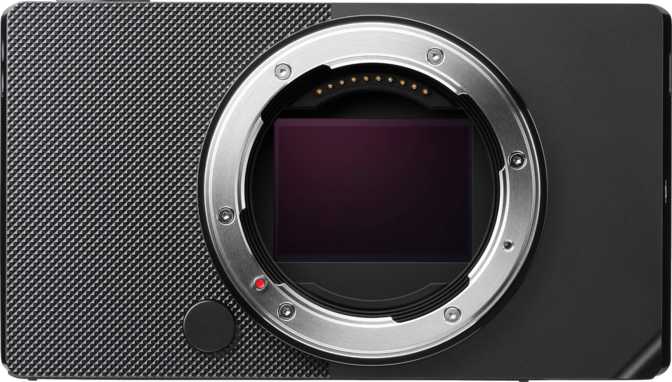
At 130.1 mm wide, 72.8 mm tall, and just 36.8 mm thick, the Sigma BF achieves something genuinely unusual: full-frame sensor territory in a body that hovers close to what many crop-sensor cameras occupy on a shelf. Weighing in at 446 grams without a lens, it is meaningfully lighter than most full-frame mirrorless competitors, which typically land well above 500 grams and sometimes approach 700.
The physical volume — roughly 348 cubic centimeters — places this body in a compact bracket that photographers moving from enthusiast APS-C cameras will find familiar in hand, even though the imaging system inside is a category above.
The 3.15-inch rear touchscreen renders at 2,100,000 dots, delivering enough resolution to evaluate fine focus, assess exposure gradients, and review images with confidence in daylight. It does not articulate or flip out. This is a fixed panel — a decision that keeps the body slim and mechanically simple, but one that vloggers and solo video creators should note carefully before purchasing.
| Width | 130.1 mm |
| Height | 72.8 mm |
| Thickness | 36.8 mm |
| Weight | 446 g |
| Screen Size | 3.15 inches |
| Screen Resolution | 2,100,000 dots |
| Flip-Out Screen | |
| Touch Screen | |
| Hot Shoe | |
| Weather Sealed |
No Hot Shoe
There is no hot shoe on the BF — none. This eliminates external flash, radio triggers, and most shoe-mounted optical accessories. For photographers with established flash workflows, this is a hard line in the sand.
No Weather Sealing
The body carries no rated protection against splashes, rain, or dust ingress. Shooting in inclement conditions requires a rain cover or the acceptance of risk.
The Sensor: Full-Frame Imaging Without Compromise Where It Counts
BSI sensor architecture, resolution, and light performance
Inside the compact frame lives a back-illuminated full-frame CMOS sensor — BSI architecture is the key detail here. In a BSI (back-side illuminated) design, the photodiode layer is repositioned so that light reaches it more directly, reducing the internal structure that would otherwise block or diffuse incoming photons. The practical result is better light-gathering efficiency, which translates to cleaner images in dim environments.
At 24.6 megapixels, the resolution is well-calibrated for the sensor size. This is not a pixel-count competition entry — it is a resolution tuned for tonal depth and dynamic range over raw megapixel count. Files at this resolution print comfortably to large format, crop with useful latitude, and demand less from storage and processing pipelines than sensors pushing north of 40 or 60 megapixels.
The maximum ISO ceiling extends to a very high sensitivity point equivalent to conditions of near-total darkness. At the practical end of the usable range, full-frame BSI sensors generally outperform smaller formats by a noticeable margin. The BF is not operating with a stacked CMOS sensor, which means it does not benefit from the read-speed advantages that stacked architecture provides, but for still photography the BSI foundation delivers strong real-world performance in mixed and low light.
The longest available shutter speed of 30 seconds covers astrophotography, long-exposure landscapes, and light-painting without requiring an external intervalometer for basic applications. The electronic shutter closes down to roughly 1/25,000 of a second — useful for controlling exposure in extremely bright conditions, particularly when shooting wide open with fast lenses.
| Sensor Format | Full Frame |
| Resolution | 24.6 MP |
| Sensor Type | BSI CMOS |
| Stacked CMOS | |
| Max ISO | 102,400 |
| Long Exposure | Up to 30s |
| Electronic Shutter | ~1/25,600s |
| RAW Capture | |
| IBIS |
No In-Body Stabilization
Without IBIS, handheld low-light work relies on optically stabilized lenses, higher ISO settings, or faster shutter speeds. This is a genuine limitation for handheld shooting in dim environments.
Autofocus: Phase-Detection With Tracking, Built for Stills
AF system architecture and real-world capability
The BF uses phase-detection autofocus for both still photography and video. Phase-detection reads subject distance by analyzing two slightly different images of the same scene, allowing the system to calculate focus adjustments proactively rather than reactively. The result is generally faster, more confident locking compared to older contrast-detect systems.
AF tracking is supported, meaning the camera can follow a subject in motion across the frame. Combined with touch autofocus — which lets you tap the screen to select and lock a focus point — the system covers the fundamentals expected from a camera at this tier.
Full manual focus control is also available, important for photographers using legacy L-mount lenses or adapted glass where autofocus may not communicate cleanly with the body.
- Phase-detection AF for stills
- Phase-detection AF for video
- Subject tracking across the frame
- Touch-to-focus on rear screen
- Continuous AF during video recording
- Full manual focus control
- Two-stage shutter button
- Burst / serial shooting mode
The Internal Storage Decision: 230GB and No Memory Card Slot
The most debated specification — fully explained
This is the specification that will generate the most debate, and it deserves a thorough explanation rather than a dismissal. The Sigma BF has no external memory card slot of any kind. It does not accept SD, CFexpress, XQD, or any other removable storage format. Instead, the camera ships with 230 gigabytes of internal storage built directly into the body.
230GB Built-In
No card to buy, lose, or forget. Storage ships with the camera and never needs upgrading for typical shooting volumes.
5,700–9,000 RAW Frames
At typical RAW file sizes for a 24.6MP sensor, 230GB holds multiple full shooting days before any offload is required.
USB 3.2 Transfer
Data exits at up to 10Gbps via USB-C — offloading a full internal storage to a laptop takes minutes, not hours.
- No card slot means one fewer mechanical failure point
- Eliminates card compatibility concerns entirely
- No accidental card ejection or corruption from removal
- Simpler mechanical footprint contributes to slim dimensions
- Wireless offload via Wi-Fi and Bluetooth to smartphone
- Cannot swap storage mid-shoot to continue while offloading
- When full, the session ends until a transfer is completed
- Sports or wildlife burst-shooters may hit limits faster
- No redundant card backup for critical assignments
- Wireless transfer speeds for RAW files are significantly slower than wired
Video Capabilities: Solid Core, Meaningful Limitations
What the BF can and cannot do for video work
The BF records video at a maximum resolution of approximately 3,000 pixels wide at 30 frames per second. Phase-detection autofocus remains active during video recording, with continuous AF tracking subjects through a scene — a meaningful capability for run-and-gun or documentary-style shooting.
A built-in stereo microphone using two capsules handles basic audio capture internally. For photographers who occasionally want clean video capability and are not dependent on a professional audio chain, the built-in recording is genuinely functional.
Critical Limitations for Video Professionals
- No 3.5mm microphone input — cannot connect an external lavalier or shotgun microphone
- No headphone jack — real-time audio monitoring during recording is not possible from the body
- No HDMI output — cannot drive an external monitor or recorder with an HDMI signal
| Max Resolution | ~3K / 30fps |
| AF During Video | |
| Continuous AF | |
| Built-in Stereo Mic | |
| Mic Capsules | 2 |
| 3.5mm Mic Input | |
| Headphone Jack | |
| HDMI Output | |
| Live Streaming |
For dedicated hybrid shooters or video-first creators, the missing ports represent a structural problem, not an inconvenience. The BF positions itself as a camera where video is a secondary capability rather than an equal priority alongside stills.
Battery Life: Manage Expectations and Plan Around It
Real-world endurance and field charging options
CIPA Rated Battery Life
260
shots per charge
Roughly 52% of the category average (300–400 shots)
Under standardized testing conditions, the BF delivers approximately 260 frames per charge. The category average for full-frame mirrorless cameras tends to hover somewhere between 300 and 400 shots, with some bodies extending considerably further. 260 shots is on the lower end of what experienced photographers expect from a primary system camera.
A single serious shooting day — several hours of varied photography — may require either a mid-day recharge or a second battery. Carrying a spare is not optional for all-day work — it is a standard part of the kit with the BF.
- Battery is removable — swapping a spare takes seconds
- Charges directly via USB-C — power banks and laptop ports work in the field
- Battery level indicator keeps you informed throughout the session
- Plan for a second battery on any full-day assignment
Connectivity and Features
Communication, control, and workflow integration
Wi-Fi
Wireless file transfer and remote control
Bluetooth
Persistent low-power device pairing
Remote Control
Smartphone remote via companion app
USB-C 3.2
High-speed transfer and field charging
- Wi-Fi for wireless transfer and remote
- Bluetooth for persistent pairing
- USB-C (USB 3.2) for wired data and charging
- Smartphone remote control support
- RAW file capture
- No HDMI output
- No NFC
- No GPS
- No external memory card slot
- No live streaming support
Lens Ecosystem: The Leica L Mount Advantage
Compatible glass and what the L-Alliance means for buyers
The BF uses the Leica L lens mount, a specification that connects it to one of the more interesting shared ecosystems in mirrorless photography. Lenses designed for the L-Alliance — covering glass from Sigma's own Art, Contemporary, and Cine lines, alongside Panasonic S-series optics and Leica SL glass — are all natively compatible.
This gives buyers access to a broad and mature selection of full-frame native lenses spanning from ultra-wide to super-telephoto, including exceptional prime and zoom options across multiple price tiers.
Sigma Art / Contemporary
Native L-mount optics from the BF's own manufacturer — full electronic integration guaranteed
Panasonic Lumix S Series
A wide range of S-line zoom and prime lenses covering everyday through professional tiers
Leica SL Glass
Premium Leica SL-series optics natively compatible for photographers who prioritize optical excellence above all
Adapting From Other Systems
For photographers coming from Canon RF or Sony E-mount ecosystems, adapting existing glass is possible but involves trade-offs. Native L-mount glass is where the full autofocus and exposure integration of the BF is realized — adapted lenses should be verified individually for compatibility.
Who the Sigma BF Is For — and Who It Is Not
Matching the camera to the right photographer
- Shoot primarily stills: landscapes, portraiture, street photography, documentary, or studio work
- Value a compact, light full-frame body that does not telegraph its capabilities through bulk
- Shoot over days or weeks between offloads, making 230GB sufficient between transfers
- Work with a stable, consistent lens kit rather than swapping accessories constantly
- Prefer a direct, minimal shooting experience without deep menus
- Already own or plan to invest in Leica L-mount glass
- Depend on external flash or radio triggers via a hot shoe
- Shoot in rain, near water, or dusty outdoor environments without the option to cover gear
- Shoot fast-paced, burst-heavy subjects and need to offload and continue immediately
- Require professional audio chain integration directly to the camera body
- Need HDMI output for an on-set external monitor or recorder
- Primarily shoot video or need a full hybrid video setup
- Rely on in-body stabilization for low-light handheld work
Competitive Positioning: How the BF Stacks Up
Comparing the Sigma BF to full-frame L-mount and broader mirrorless alternatives
The BF occupies a specific and unusual position. Other full-frame L-mount cameras offer competitive sensor performance alongside IBIS, weather sealing, hot shoes, and HDMI output — but they are physically larger and heavier. If the specification list matters more than the philosophy, those alternatives are more conventional and fully equipped.
| Feature | Sigma BF | Typical Full-Frame L-Mount Rival |
|---|---|---|
| Sensor Format | Full Frame | Full Frame |
| Resolution | 24.6 MP | 24–47 MP (varies) |
| Body Weight | 446 g | 580–750 g (typical) |
| IBIS | (most) | |
| Weather Sealing | (most) | |
| Hot Shoe | ||
| Memory Card | 230GB Internal | Dual card slots (most) |
| HDMI Output | (most) | |
| 3.5mm Audio | (most) | |
| USB Generation | USB-C 3.2 | USB-C (varies) |
| Internal Storage | 230 GB | None (most) |
Against Sony FE-mount and Canon RF full-frame cameras, the BF cannot draw on those ecosystems' lens depth or subject-recognition AI autofocus sophistication. The BF competes on compactness, Sigma's optical quality via native glass, and its own particular editorial personality. For photographers who primarily want a light, capable full-frame body and find the missing features genuinely irrelevant to their work, the BF is competitive.
Questions Real Buyers Ask Before Purchasing
Answers to the most common searches about the Sigma BF
Final Verdict: For the Photographer Who Knows Exactly What They Want
The Sigma BF is one of the most intentional cameras on the market. It will frustrate photographers who approach it with conventional expectations about what a full-frame system camera must include. It will reward photographers who understand what they actually use — and find that the BF delivers all of it.
Where It Excels
The BF's greatest strength is its coherence. Every decision in its design follows a consistent logic: reduce what is unnecessary, keep what matters, produce images. The full-frame BSI sensor is genuinely excellent. Phase-detection AF with tracking gives it real capability for varied shooting conditions. At 446 grams, it is a camera you will actually carry. And 230 gigabytes of internal storage, accessible at USB 3.2 speeds, is a more durable and failure-resistant solution than a conventional card slot — cards fail, slots wear, contacts corrode. The BF has none of those points of failure.
Where It Falls Short
The weaknesses are equally coherent — and real. The absence of weather sealing is a daily risk for photographers who do not control their environment. The missing hot shoe eliminates an entire category of creative and practical lighting control. The battery endurance requires management and planning. The video limitations — no mic input, no headphone monitoring, no HDMI — structurally exclude the camera from professional hybrid workflows. None of these are oversights. They are choices.
Purchase Verdict
If you are a stills-focused photographer who works in controlled or predictable environments, values a small and light full-frame body, shoots within the capacity of 230 gigabytes before offloading, and has no dependency on external flash via hot shoe — the Sigma BF is genuinely excellent.
If any of the absent features — IBIS, weather sealing, hot shoe, HDMI, 3.5mm audio, or a memory card slot — are part of your current or planned workflow, look elsewhere without regret. Those features are not hidden somewhere in a menu. They do not exist on this camera. The BF is not a compromise that got features removed. It is a stance. Buy it knowing exactly what that stance is.