Oppo Pad 5 Full Review: Flagship Performance Meets Real Compromises
TabletsThe large-screen Android tablet market has a crowding problem. Most devices cluster at either end: budget slabs that compromise on everything, or flagship-priced machines that most people cannot justify. The Oppo Pad 5 plants itself firmly in the premium-but-not-absurd middle ground, and it does so with a spec sheet that, on paper, would embarrass tablets costing significantly more. The question is whether Oppo has translated that hardware ambition into a product that earns your money — or whether the numbers are doing flattering work that the real-world experience cannot back up.
This review unpacks everything: the display you will stare at daily, the processor doing the heavy lifting behind the scenes, the battery that either liberates or chains you to a cable, and the meaningful gaps in the feature list that could be dealbreakers depending on how you work.
Design and Build: Thin, Light, and Serious About It
At just 6mm thick and 579 grams, the Oppo Pad 5 is genuinely impressive to hold. For context, most 12-inch tablets hover closer to 7–8mm in thickness and push past 600 grams — so this device sits at the lighter, slimmer end of the category without sacrificing the sense of solidity you expect at this price point.
The footprint — roughly 267mm wide and 193mm tall — falls into the productive sweet spot. It is large enough to lay out two apps side by side comfortably, yet not so unwieldy that carrying it in a bag becomes a negotiation. One-handed use while sitting is manageable for short sessions; extended one-handed browsing while standing will test most people's grip.
The panel is protected by Gorilla Glass 2, which provides scratch resistance for everyday use. It is not the latest generation of Corning's technology, and Oppo has not included advanced impact protection beyond this. There is no water or dust resistance rating — treat it with appropriate care if your environment is anything less than reliably dry.
Physical Dimensions
| Thickness | 6 mm |
|---|---|
| Weight | 579 g |
| Width | 266.9 mm |
| Height | 193.4 mm |
| Glass Protection | Gorilla Glass 2 |
| Water Resistance | None |
| Stylus Included | No |
| Keyboard Included | No |
Display: The Star of the Show
Screen Quality That Earns Its Size
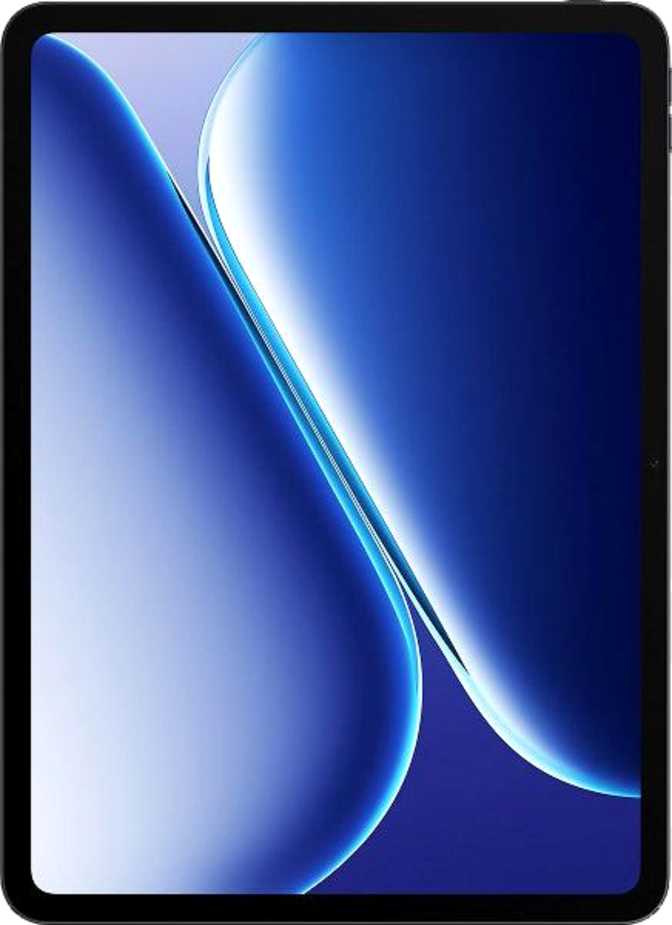
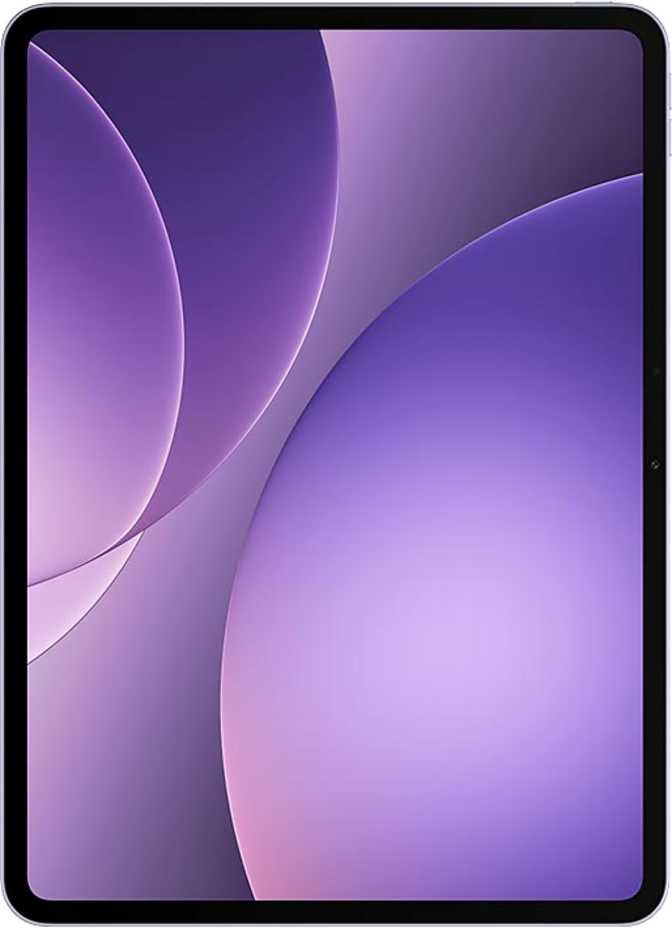
The Oppo Pad 5 carries a 12.1-inch IPS LCD panel running at a resolution of 2120 × 3000 pixels. That resolution on a 12-inch screen works out to approximately 304 pixels per inch — a figure that lands firmly in sharp territory. Text edges are clean, fine detail in photographs is well-rendered, and the display does not punish you with visible pixel structure.
IPS LCD technology is mature, proven, and excellent for sustained on-screen work — reading, editing documents, browsing. Blacks will not be as deep as an OLED panel, and contrast ratios will not match Samsung's AMOLED tablets, but color accuracy and consistency across the screen are traditional IPS strengths. Viewing angles are wide enough that sharing content with someone beside you is not an exercise in tilting.
Peak brightness sits at 600 nits. Indoors under typical lighting, that is more than comfortable. Outdoors in direct sunlight, it will struggle. The anti-reflection coating reduces glare meaningfully, improving usability in bright environments beyond what the brightness number alone suggests.
Display Specifications
| Panel Type | IPS LCD |
|---|---|
| Screen Size | 12.1 inches |
| Resolution | 2120 × 3000 px |
| Pixel Density | 304 ppi |
| Peak Brightness | 600 nits |
| Touch Sampling | 144Hz |
| Anti-Reflection | Yes |
| HDR Support | None |
What 144Hz Touch Sampling Actually Means
The 144Hz figure refers to touch sampling rate, not the display's visual refresh rate. The screen registers your finger's position 144 times per second, resulting in noticeably snappier, more precise touch input — particularly when drawing, handwriting, or playing games with fast directional input. Scrolling and dragging feel more immediate as a direct result.
No HDR: What You Actually Lose
The display does not support HDR10, HDR10+, or Dolby Vision. If you stream HDR-graded content on services like Netflix or Prime Video specifically for that expanded color volume and contrast, the Oppo Pad 5 will tone-map it to standard dynamic range. For productivity, reading, and standard video, this is not a daily frustration — but for dedicated media enthusiasts, it is a clear limit.
Performance: A Flagship Processor in a Tablet Package
The Dimensity 9400 Plus — What It Actually Delivers
The MediaTek Dimensity 9400 Plus is a top-tier processor built on 3-nanometer manufacturing technology. That process node is significant: smaller transistors mean more processing power packed in while generating less heat and consuming less power than older chip designs. This is the class of silicon that competes directly with Qualcomm's Snapdragon 8 Elite and Apple's A-series chips in terms of raw manufacturing sophistication.
The chip uses a prime core running at 3.73GHz — the highest-performance single execution unit — flanked by four cores at 3.3GHz for demanding tasks, and three efficiency cores at 2.4GHz for lighter workloads in the background. Demanding applications get immediate, sustained power; routine tasks use the efficient cores to preserve battery without sacrificing responsiveness.
Memory and Storage: No Compromise
16GB of DDR5 RAM running at over 10,600MHz is generous for a tablet. You can have a dozen browser tabs open, a video editing app in memory, music streaming in the background, and a productivity suite waiting — and the device does not need to reload any of it when you switch back. App switching is fluid in a way that lower-RAM devices genuinely are not.
512GB of internal storage is ample — comparable to what many flagship laptops ship with. The absence of a microSD card slot is noted, but at 512GB, storage anxiety is difficult to justify unless you are archiving raw video footage locally.
Graphics: Built for Demanding Workloads
The Immortalis G925 GPU running at 1,300MHz is MediaTek's premium graphics solution. It handles demanding 3D games, GPU-accelerated creative applications, and high-resolution video decoding comfortably. System memory bandwidth exceeds 85 GB/s, ensuring consistent frame rates rather than the periodic stutters that bandwidth-constrained chips can exhibit.
Geekbench 6 Scores
Chip Specifications
| Chipset | Dimensity 9400+ |
|---|---|
| Process Node | 3nm |
| GPU | Immortalis G925 |
| RAM | 16GB DDR5 |
| Storage | 512GB |
| Mem. Bandwidth | 85.3 GB/s |
| CPU Cores | 8 threads |
Software: Android 16 and Oppo's Feature Layer
The Oppo Pad 5 runs Android 16, the most current major release of the operating system. Oppo layers its own ColorOS over Android, delivering a comprehensive feature set built for productivity and personalization. The tablet-specific software experience is well-realized — split-screen multitasking and Picture-in-Picture work reliably, and the interface scales appropriately for the 12.1-inch canvas.
Notable Software Features
- Split-screen multitasking
- Picture-in-Picture mode
- Play games while downloading
- Dynamic and dark mode theming
- Multi-user support
- Extra dim mode for night use
- On-device machine learning
- Full-page scrolling screenshots
- Offline voice recognition
- Child lock and parental controls
- Customizable notifications
- App tracking blocking
Privacy Controls
- Camera and microphone access management
- Location privacy settings
- Clipboard access warnings
- Cross-site tracking blocking absent
Battery Life: Built for Full-Day and Then Some
Capacity That Changes How You Think About Charging
The battery in the Oppo Pad 5 holds enough charge that most users will not need to plug in every day. Moderate-to-heavy use — a mix of browsing, video playback, productivity work, and occasional gaming — typically translates to consistent all-day coverage with meaningful charge remaining by evening. Light users may find themselves plugging in every two or even three days.
The combination of that capacity with a power-efficient 3nm processor means the device does not work against itself. The chip draws less power precisely when performance demands are low, which is where most real-world usage time is spent. That efficiency dividend extends actual runtime meaningfully beyond what the raw capacity number implies.
Fast charging support means that when you do plug in, you are not waiting hours to get back to usable levels. The exact wattage of the fast-charging implementation should be verified against Oppo's official product documentation for precise charge-time expectations.
Cameras: Functional, Not the Reason You Buy This
Both rear and front cameras are 8-megapixel units. Tablets have never been primary camera devices, and the camera systems on most tablets reflect that reality. The Oppo Pad 5 delivers what a tablet camera needs to deliver — nothing more.
- Record 4K video at 30 frames per second
- Slow-motion video recording
- Continuous autofocus during video
- Built-in HDR photo mode
- Manual ISO, white balance, and exposure
- Touch autofocus
- Video light for low-light shooting
- No optical image stabilization
- No panorama mode
- No burst or serial shot mode
- No front-facing flash
- No HDR video recording
- No back-illuminated sensor (BSI)
- Not a device for photography enthusiasts
Audio: Better Than You Expect From a Tablet
Stereo speakers are standard on this device. Left-right separation during video playback and gaming is a genuine improvement over mono-speaker tablets. For content consumption and casual listening, the audio experience is solid for the category.
For wireless audio, the Oppo Pad 5 supports aptX HD, a higher-quality Bluetooth audio codec that transmits more audio data per second than standard Bluetooth. Paired with compatible headphones or earbuds, this results in noticeably better wireless audio quality than the base codec most lower-spec devices fall back to.
The absence of a 3.5mm headphone jack is an increasingly common omission on tablets. USB-C audio adapters work as a solution, but you will need one if you rely on wired headphones. LDAC support — Sony's high-resolution wireless codec — is not present, which limits audiophiles using LDAC-compatible headphones to aptX HD's ceiling rather than LDAC's higher bandwidth.
Audio Feature Summary
- Stereo speaker system
- aptX HD Bluetooth audio codec
- Bluetooth 5.4
- No 3.5mm headphone jack
- No LDAC codec support
- No FM radio
Connectivity: Wi-Fi 7 Is the Headline
Wireless Networking
Wi-Fi 7 support is a genuine premium differentiator at this price point. On a compatible Wi-Fi 7 router, this tablet delivers significantly faster wireless throughput and lower latency than Wi-Fi 6 or 6E devices. For older routers, the Oppo Pad 5 is backward compatible with Wi-Fi 6, Wi-Fi 5, and Wi-Fi 4 — no compatibility concerns on existing networks.
Bluetooth 5.4 handles peripheral connectivity — keyboards, mice, audio devices, and controllers — with current-generation reliability and range. USB Type-C provides wired connectivity for charging and data transfer.
What Is Not Here
The Oppo Pad 5 is a Wi-Fi-only device. There is no cellular modem, no 4G, and no 5G. If you need mobile data without relying on a smartphone hotspot, this is a hard stop.
GPS is absent — navigation and location-based apps rely on Wi-Fi positioning, which is less accurate and unavailable offline. NFC is not included, ruling out contactless payment via the tablet. There is no fingerprint scanner; authentication uses camera-based face unlock or a PIN.
Connectivity At a Glance
- Wi-Fi 7 (802.11be) — forward-ready
- Bluetooth 5.4
- USB Type-C
- No cellular (Wi-Fi only, no 4G/5G)
- No GPS
- No NFC
- No HDMI output
- No fingerprint scanner
Real-World Scenarios: Who Should and Should Not Buy This
- Home productivity and remote workersA large, sharp screen for documents, spreadsheets, and video calls. Split-screen multitasking makes two-app workflows genuinely productive without performance bottlenecks.
- Content consumersStreaming video, reading long-form content, and heavy browsing. The display size, anti-reflection coating, and battery endurance make sustained sessions comfortable.
- StudentsResearch, note-taking apps, and media on home or campus Wi-Fi. The storage capacity and performance handle demanding applications without compromise.
- Mobile gamersThe Dimensity 9400 Plus and Immortalis G925 GPU handle graphically demanding titles at high settings. The high touch sampling rate supports precise input.
- Drawing and creative app usersThe high touch sampling rate makes stylus-type input feel highly responsive. Stylus compatibility should be confirmed separately — none is included.
- Mobile professionals needing cellularThe Wi-Fi-only configuration is a firm limitation. No 4G or 5G means dependency on a smartphone hotspot when away from a known network.
- Navigation-focused usersNo hardware GPS makes this unsuitable for offline navigation or accurate location tracking. Wi-Fi positioning is a limited, inaccurate substitute.
- HDR video enthusiastsThe display does not decode HDR formats. Subscribers to HDR streaming tiers will see content tone-mapped to standard dynamic range.
- Users who require a bundled stylusNo stylus ships in the box. If stylus input is central to your workflow, additional accessory costs must be budgeted and compatibility verified before purchase.
How the Oppo Pad 5 Stacks Up Against Rivals
Compared against logical alternatives at a similar price point and use case category.
| Feature | Oppo Pad 5 | Samsung Tab S9 FE | Xiaomi Pad 7 Pro | iPad (10th Gen) |
|---|---|---|---|---|
| Display | 12.1″ IPS LCD | 10.9″ TFT LCD | 12.1″ IPS LCD | 10.9″ IPS LCD |
| Resolution / PPI | 2120×3000 / 304 ppi | 2304×1440 / 243 ppi | 3048×1880 / ~295 ppi | 2360×1640 / 264 ppi |
| Chipset Class | Dimensity 9400+ (3nm) | Exynos 1380 (5nm) | Dimensity 8400 Ultra (4nm) | A14 Bionic (5nm) |
| RAM | 16GB DDR5 | 6–8GB | 8–12GB | 4–8GB |
| Internal Storage | 512GB | 128–256GB | 256GB | 64–256GB |
| Battery | ~10,420 mAh | ~8,000 mAh | ~10,000 mAh | ~7,600 mAh |
| Wi-Fi Standard | Wi-Fi 7 | Wi-Fi 6 | Wi-Fi 6E | Wi-Fi 6 |
| HDR Display | No | No | Yes | No |
| Cellular Option | No | Yes | Yes | Yes |
| Stylus Included | Sold Separately | Sold Separately | Sold Separately | Sold Separately |
Honest Assessment: Strengths and Weaknesses in Plain Terms
Where It Excels
The Oppo Pad 5's most compelling quality is the mismatch between its processing capability and what tablets at this size typically cost. A 3nm flagship-class processor, 16GB of DDR5 memory, 512GB of storage, and Wi-Fi 7 — the combination is simply not common at the price points this device targets. For users who want a device that will not feel slow for several years of ownership, the hardware foundation is genuinely future-resistant.
The display, while not OLED and not HDR-capable, is sharp, well-sized, and finished with anti-reflection coating that makes its brightness more useful than the number alone implies. For reading and productivity, it is very comfortable. The battery capacity, paired with a power-efficient chip, creates a device that fundamentally changes how often you think about plugging in.
Where It Compromises
The absence of cellular connectivity removes flexibility for users who travel or work outside reliable Wi-Fi. No GPS compounds this — the tablet is fundamentally a home, office, and campus device. The camera system fulfills its basic brief without ambition, and the screen protection (Gorilla Glass 2) is adequate rather than reassuring for the price point.
The operating system situation is standard for Android tablets from third-party manufacturers: ColorOS is feature-rich, but users who care about prompt security updates and long software support windows should verify Oppo's specific update commitments before purchasing. Direct OS updates from Google are not part of this configuration.
Questions Real Buyers Ask
Final Verdict
A complete review of specifications, real-world performance, and competitive positioning.
The Oppo Pad 5 makes a clear and confident argument: flagship-tier processing and generous memory at a size and price that the established names in tablets have not historically offered in this combination. For users who primarily use their tablet at home, in the office, or in environments with reliable Wi-Fi, it delivers a hardware experience that punches well above expectations.
The compromises are real but bounded: no cellular, no GPS, no HDR, and a camera system that does only what tablets need to do. None of these are hidden — they are structural decisions, not manufacturing shortcuts.
If you want a large-screen Android tablet that handles everything thrown at it without hesitation, looks sharp doing it, and lasts through your day without anxiety — the Oppo Pad 5 earns your attention and your money. If mobile data connectivity or HDR video are non-negotiable for your use case, look elsewhere. This device will disappoint on those specific points regardless of how capable it is in every other respect.