Oppo Find X9s Pro: Full Review of the Compact Android Flagship
SmartphonesMost flagship smartphones at this price point ask you to make a trade-off: either raw power or endurance, either a compact body or a serious camera system. The Oppo Find X9s Pro enters this conversation with an unusually long list of answers — pairing a chipset from the top tier of mobile computing with a battery large enough to embarrass devices twice its thickness, all inside a frame that genuinely fits in your pocket. Every phone this ambitious has corners it quietly cuts. This review unpacks exactly where the Find X9s Pro earns its place — and where you should pause before committing.
Review Score Overview
Overall Score
Oppo Find X9s Pro
Key Specifications at a Glance
Design and Build Quality
Physical presence, IP69 durability, and what the 8.4mm thickness really means
Physical Presence
At 150.5mm tall and 71.7mm wide, the Find X9s Pro sits squarely in the mainstream flagship footprint — wide enough to feel premium, narrow enough to manage one-handed for most tasks. The 8.4mm profile is the number that earns attention. For a phone packing a battery in the 7,000 mAh class, that thinness is a genuine engineering achievement, not a paper claim. The 198-gram weight lands on the right side of the balance between substantial and fatiguing — you feel it in your hand in a way that signals quality rather than heaviness.
IP69: Beyond Standard Waterproofing
Most flagship phones carry an IP68 rating, which protects against submersion in up to 1.5 metres of still water. The Find X9s Pro carries IP69 — a certification class that adds protection against high-pressure, high-temperature water jets at close range. In practice, this means the phone handles rain, splashes, poolside accidents, and a thorough rinse under a running tap without concern.
This is not a rugged phone in the reinforced-corners, military-spec sense — the build prioritises elegance over brute durability. But the IP69 rating provides a level of environmental confidence that most competitors simply do not offer.
IP69 Explained
- Submersion protected to 1.5 metres depth
- Withstands high-pressure, high-temperature water jets
- Suitable for rain, splashes, and poolside use
- Exceeds the IP68 standard found on most competing flagships
- Not reinforced or military-grade — avoid heavy impact
Display: Sharp, Smooth, and Compact
6.32-inch OLED · 460ppi · 144Hz · Always-On · No HDR certification
Size, Resolution, and Motion
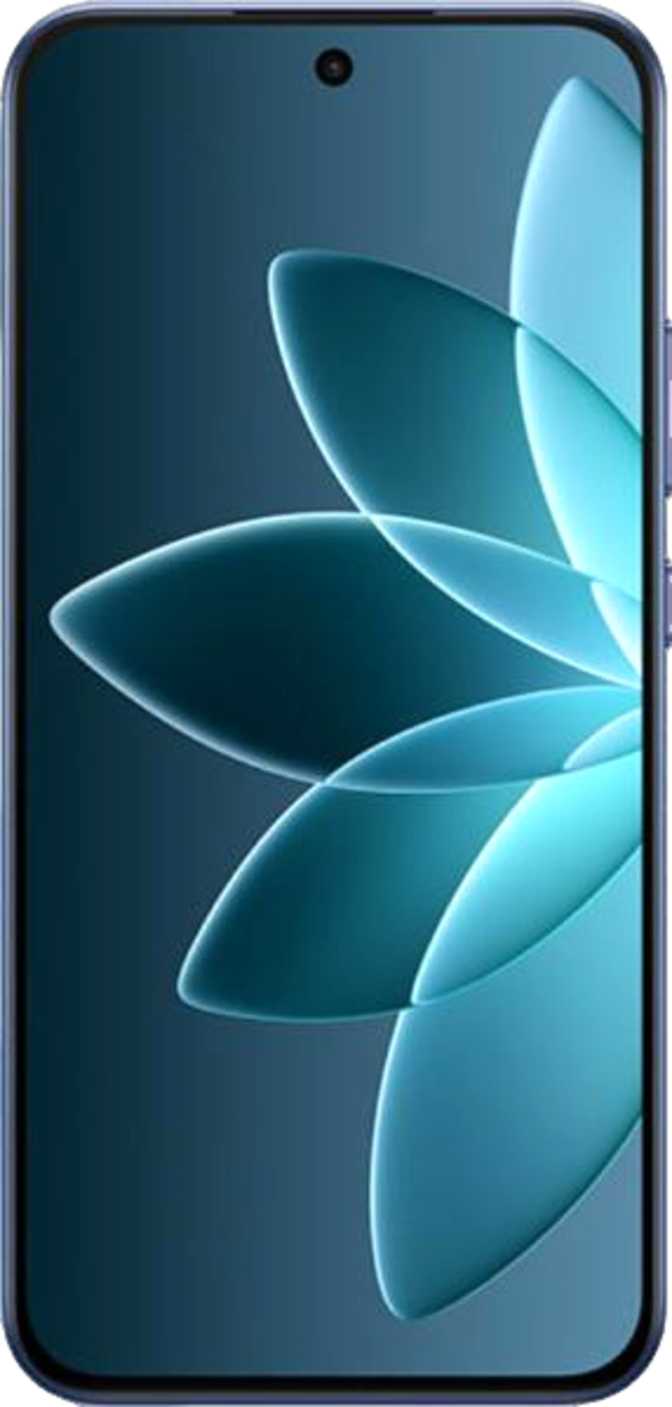
The 6.32-inch OLED panel is smaller than the 6.7–6.9 inch screens dominating the flagship segment right now. For those who prefer a phone that fits in a jacket pocket without folding, that is an active selling point rather than a compromise. The resolution of 1216 × 2640 pixels across that smaller surface area yields 460 pixels per inch — among the sharpest in any current smartphone category. Text renders with the crispness of print; fine UI details, icons, and photography all benefit visibly.
At 144Hz, this display runs above the 120Hz ceiling that most flagship competitors stop at. The difference is perceptible in fast-scrolling lists, swipe animations, and gaming. The panel dynamically adjusts its refresh rate to preserve battery life when high-speed rendering is not needed — so the advantage comes at no disproportionate power cost.
The HDR Gap
The panel carries no HDR10, HDR10+, or Dolby Vision certification. Streaming services delivering HDR-graded content will not unlock their highest visual tiers on this device. For everyday video, social media, and gaming, most users will never encounter this ceiling — but for dedicated streamers who care about colour grading fidelity, it is a genuine omission at this price. There is also no named damage-resistant glass specification, making a screen protector a sensible precaution from day one.
Display Specifications
- Panel Type
- OLED / AMOLED
- Screen Size
- 6.32 inches
- Resolution
- 1216 × 2640 px
- Pixel Density
- 460 ppi
- Refresh Rate
- 144 Hz (adaptive)
- Typical Brightness
- 800 nits
- Always-On Display
- Yes
- HDR Certification
- None
- Dolby Vision
- No
Performance: Dimensity 9500 at Full Stretch
3nm process · 16GB DDR5 RAM · 1TB storage · GB6 Single: 3,781 · Multi: 12,189
The Chipset in Context
The MediaTek Dimensity 9500 is one of the most capable mobile processors currently available in any Android device. Built on a 3-nanometre fabrication process — the same manufacturing node used by the best chips in mobile and desktop computing — it represents a meaningful step in power efficiency over previous generations. Smaller transistors allow more computational work per unit of energy, which matters both for outright speed and for how long that speed is sustainable before thermal throttling becomes a factor.
The CPU configuration follows a sensible performance hierarchy: one high-performance core for peak single-threaded workloads, three secondary cores for sustained demanding tasks, and four efficiency cores that handle background processes with minimal power draw. On Geekbench 6 — the standardised cross-platform benchmark — the results place this phone among the fastest Android devices currently available.
Memory and Storage
Sixteen gigabytes of DDR5 RAM running at 5,333 MHz — with a theoretical bandwidth exceeding 85 GB/s and a 16 MB L3 cache — ensures no task you hand this phone will be constrained by memory throughput. Apps stay loaded, multitasking remains fluid, and the system supports the kind of on-device AI processing modern Android applications increasingly rely on. One terabyte of internal storage is the full-capacity configuration with no microSD expansion; for most users that amount is never a concern, though RAW-shooting photographers should monitor consumption.
Geekbench 6 Benchmark Results
Bars scaled relative to current top-tier mobile benchmark ceilings. Higher is better.
Chipset Highlights
- 3nm fabrication — same tier as leading desktop chips
- 8-thread CPU with big.LITTLE efficiency architecture
- Mali G1 Ultra MP12 GPU clocked at 1,750 MHz
- OpenCL 3 for GPU-accelerated compute workloads
- On-device machine learning inference supported
Camera System: Three Lenses, Two Standout Performers
Dual 200MP · 2.8× optical zoom · OIS · 8K/30fps video · RAW output · 32MP front camera
Main Camera
Wide Angle · Primary Lens
- Resolution — 200 megapixels
- Aperture — f/1.6 (very wide)
- OIS — Yes
- Focal Length — 15mm equiv.
- Sensor — CMOS · Phase-detect AF
Ultrawide Camera
Secondary Lens · Unique Spec
- Resolution — 200 megapixels
- Aperture — f/2.6
- OIS — Yes
- Standout — Matched resolution vs main
- Benefit — No quality gap when switching
Telephoto Camera
Third Lens · Optical Zoom
- Resolution — 50 megapixels
- Aperture — f/2.0
- Optical Zoom — 2.8× true optical
- OIS — Yes
- Focal Length — 65mm equiv.
What the Cameras Mean in Real Use
The f/1.6 aperture on the primary lens allows substantially more light onto the sensor than the f/1.8 or f/2.0 apertures common among flagship competitors. In low-light photography — evening scenes, indoor venues, candid night shots — this advantage translates to brighter captures with less noise and less reliance on computational brightening. The 200-megapixel resolution is the headline figure, though day-to-day captures use pixel-binning to produce manageable file sizes while retaining exceptional detail.
Having matched resolution across the main and ultrawide sensors closes the quality gap that has frustrated photographers when switching between lenses for years. The 2.8× telephoto achieves its magnification through physical lens optics — images at this zoom level are optically sharp in a way that digital zoom cannot approach.
Video and Manual Controls
The primary camera supports 8K video recording at 30 frames per second — resolution that provides substantial headroom for cropping, stabilisation, and future-proofing. Continuous autofocus operates during recording. Slow-motion capture and time-lapse are both supported. HDR10 recording is available, though Dolby Vision recording is absent — a gap for professional video workflows.
Manual controls include ISO, white balance, exposure, and focus, along with RAW file output — the uncompressed format that gives photographers full control in post-processing. The front camera delivers 32 megapixels at f/2.4 in a conventional punch-hole position, with no front flash for low-light selfies.
Battery and Charging: The Headline Specification
7,025 mAh · 80W wired · 50W wireless · Charger included in box
What 7,025 mAh Actually Means
The large-battery flagship average currently sits around 4,800–5,200 mAh. The Find X9s Pro's capacity exceeds that range by roughly 35–45%. For a typical user — moderate screen time, social media, streaming, navigation — two full days of use between charges is a realistic expectation. Heavier users who keep the screen active for extended periods or game intensively can expect a comfortable full day with reserve to spare.
This matters particularly for travellers, people who work long shifts away from power, and anyone who has experienced the anxiety of a phone dying before the day ends. The engineering achievement here is fitting this capacity into an 8.4mm frame — that trade-off simply did not exist before in this segment.
Charging Speed in Perspective
At 80W wired, the battery refills at a pace that compresses the time this phone spends attached to a cable — from critically low to a substantial charge in roughly the time it takes to have breakfast. The charger is included in the box, a detail that sounds obvious but is no longer guaranteed across the industry.
Wireless charging at 50W is meaningfully faster than the 15W or 30W wireless maximum offered by most competitors. For those who prefer the convenience of a wireless pad over cable management, the Find X9s Pro does not ask them to accept a significant speed penalty for that preference. Reverse wireless charging — charging accessories from the phone — is not supported.
Charging Comparison
| Method | Find X9s Pro | Typical Flagship |
|---|---|---|
| Wired charging | 80W | 45–65W |
| Wireless charging | 50W | 15–30W |
| Reverse wireless | None | Varies |
| Charger in box | Yes | Often no |
Software: Android 16 and What Oppo Adds
Android 16 · ColorOS · On-device AI · Privacy controls
Running Android 16, the Find X9s Pro arrives with the most current version of the operating system, which includes Google's latest privacy controls: per-app clipboard monitoring, granular camera and microphone access permissions, location privacy options, and app tracking restrictions. These represent genuine control over what applications can access without your awareness — not cosmetic features.
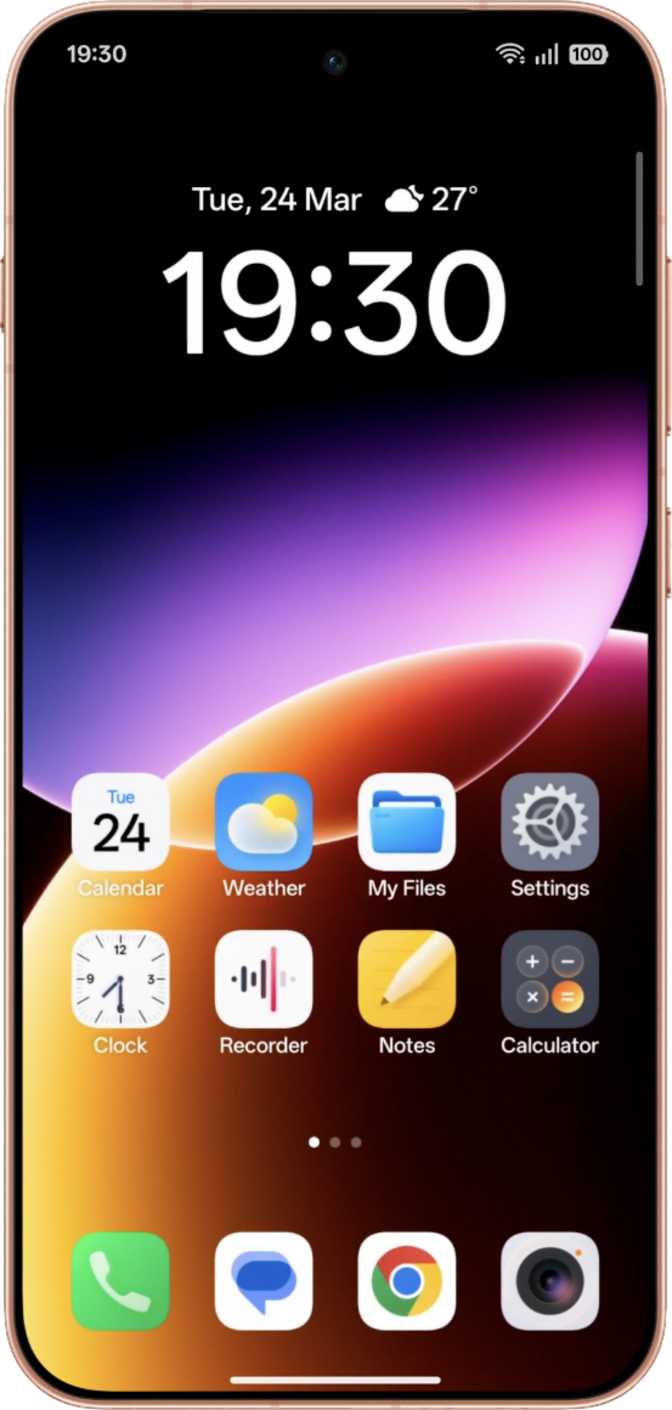
Oppo's ColorOS overlay brings theme customisation, dynamic theming, split-screen multitasking, Picture-in-Picture, full-page screenshots, and widget support. The ability to play games while they download removes one of the more frustrating waiting patterns in mobile gaming. On-device machine learning means AI-driven features process locally without sending data to a remote server — both a privacy and a latency benefit.
Notable Software Features
Split-screen and multitasking
Run two apps simultaneously
On-device machine learning
AI features processed locally for privacy
Live Text recognition
Select and interact with text in images
Always-On Display and Extra Dim mode
Glanceable info, night-friendly screen
Play while downloading
Start games before full download completes
Direct OS updates from Google
Updates routed via Oppo's own schedule
Connectivity: Everything Current, One Absence
Wi-Fi 6E · Bluetooth 6.1 · 5G · NFC · Dual SIM · Infrared · No 3.5mm jack
Wi-Fi 6E
6 GHz band support for congestion-free connectivity in dense environments
Bluetooth 6.1
Latest standard with aptX HD audio codec for high-resolution wireless listening
5G + Dual SIM
Two active lines simultaneously — ideal for separating personal and work numbers
Infrared Blaster
Control TVs, air conditioners and other IR devices — absent on most Western flagships
What's Here
Wi-Fi 6E places the Find X9s Pro on the newest generation of router technology, using the less congested 6 GHz spectrum band. In dense network environments — apartments, offices, events — this makes a practical difference beyond theoretical speeds. NFC enables contactless payments and data transfer. GPS with Galileo satellite support provides accurate navigation globally. An on-screen fingerprint scanner handles biometric authentication, while an infrared blaster — absent from most Western-market devices — allows the phone to function as a universal remote control.
The Missing Jack
There is no 3.5mm audio jack. Wired listening requires USB-C adapters or USB-C native headphones. The stereo speakers compensate for casual listening, and aptX HD over Bluetooth 6.1 provides high-quality wireless audio to compatible headphones. LDAC — Sony's high-resolution codec — is not supported, so Sony headphones in LDAC mode will fall back to a standard codec. For those with a significant existing investment in traditional wired headphones, this friction does not go away with time.
Who Should Buy the Oppo Find X9s Pro
- You want top-tier processing in a body that fits more naturally in a pocket than current 6.7+ inch flagships
- Two-day battery life is a genuine priority, not just a marketing claim you want to believe
- You shoot photography seriously, including RAW files, and want consistent quality across all focal lengths
- Environmental durability matters — outdoor work, travel, watersports, or unpredictable conditions
- You want fast wireless charging without accepting a significant speed penalty compared to wired
- HDR streaming fidelity matters — this display carries no HDR10, HDR10+, or Dolby Vision certification
- You rely on 3.5mm wired headphones daily and do not want to carry adapters
- You specifically want the largest screen possible — 6.32 inches is compact for this tier
- Long-term direct OS update speed from Google is a higher priority than Oppo's feature layer
- Emergency satellite SOS communication is a safety feature you require — it is absent here
Competitive Positioning
How the Find X9s Pro stacks up against typical Android flagship alternatives
| Feature | Oppo Find X9s Pro | Typical 6.7″ Flagship | Typical 6.3″ Compact Flagship |
|---|---|---|---|
| Battery capacity | 7,025 mAh | 5,000–5,500 mAh | 4,500–5,000 mAh |
| Wired charging speed | 80W | 65–80W | 45–65W |
| Wireless charging | 50W | 15–30W | 15–25W |
| Main camera resolution | 200 MP | 50–108 MP | 50 MP |
| Ultrawide resolution | 200 MP | 12–64 MP | 12–50 MP |
| Display size | 6.32″ | 6.7–6.9″ | 6.1–6.3″ |
| IP rating | IP69 | IP68 | IP68 |
| HDR display | None | HDR10+ / Dolby Vision | HDR10+ |
| Chipset process | 3nm | 3–4nm | 3–4nm |
| Headphone jack | No | Mostly no | Mostly no |
Frequently Asked Questions
Final Verdict
The Oppo Find X9s Pro is a considered, well-executed flagship that makes a genuinely different set of choices from what dominates this price tier. Combining a compact body with IP69 certification, matched 200-megapixel resolution across two camera lenses, and a battery that redefines endurance in a slim phone is not assembled by accident. These decisions reflect a coherent philosophy about what a premium smartphone should prioritise.
The display's missing HDR certifications are a legitimate mark against it — uncomfortable for a camera-centric phone that captures in HDR10. The absence of a named scratch-resistant glass specification and the indirect OS update pipeline are real considerations, not rounding errors. These are not deal-breakers for every buyer, but they should be stated clearly.
An unqualified recommendation for photographers who want consistent camera quality across all focal lengths, anyone for whom two-day endurance changes their daily experience, compact-phone advocates who refuse to accept hardware compromises for a smaller footprint, and users whose environment genuinely demands serious protection. For dedicated HDR streamers or 3.5mm headphone users, evaluate alternatives first.
Outstanding with notable caveats
Recommended