Oppo Find X9 Ultra Full Review: The Flagship Built for Power Users
SmartphonesThere is a particular kind of smartphone that refuses to make compromises—not in the marketing sense, where every phone claims that title, but in the engineering sense, where the specifications quietly confirm it. The Oppo Find X9 Ultra arrives with a camera system of unusual ambition, a processor that redefines what “fast” means in a pocket device, and a battery so large it changes the way you think about charging anxiety. The question is not whether this phone is capable. The question is whether its specific set of capabilities matches your life—and that answer is more nuanced than the spec sheet suggests.
Quick Verdict & Scores
Design and Build Quality
Physical presence, dimensions, protection rating, and materials
Physical Presence and Handling
At 163.2 mm tall and 77 mm wide, the Find X9 Ultra is an unambiguously large phone. One-handed use is a genuine stretch for most people, and the width gives it a broad, almost tablet-like feel in landscape—which pays off directly for gaming and media. The 235 g weight sits at the heavier end of the premium category. Desk workers and commuters who hold their phone frequently will read that weight as solidity; anyone who pockets it constantly will notice it over a long day.
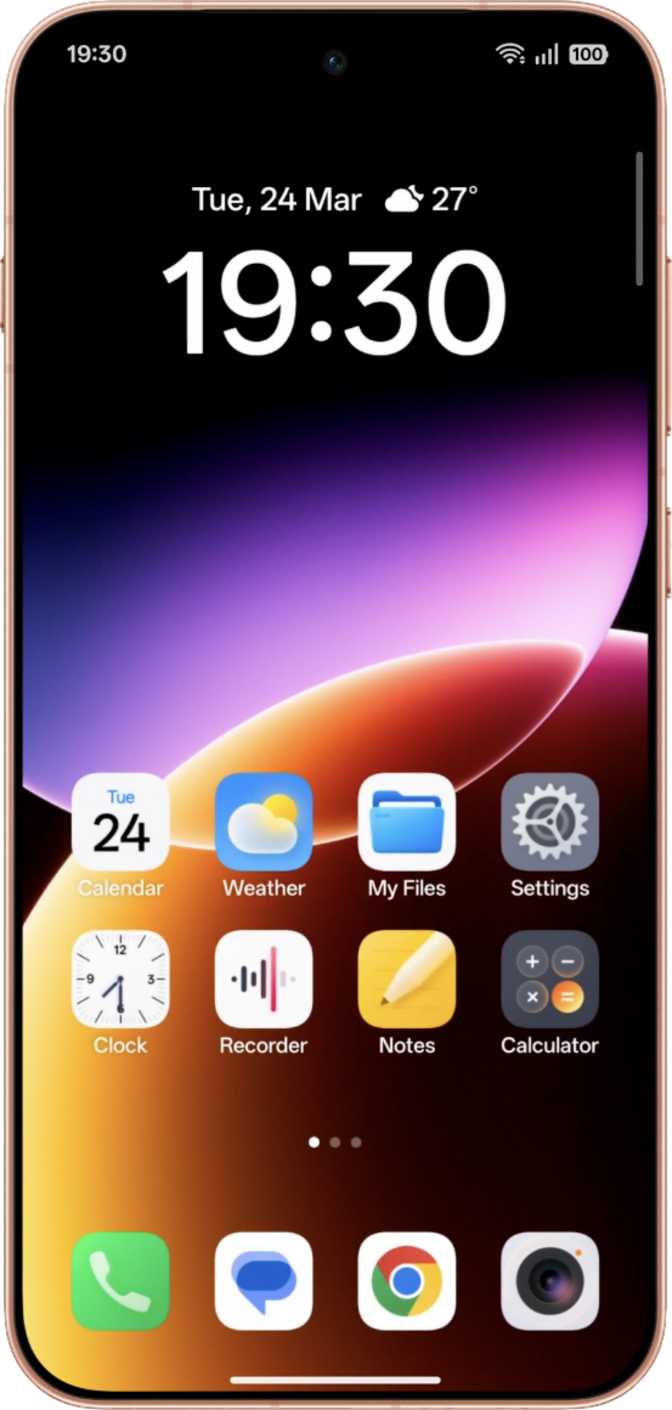
At 8.7 mm thick, the engineering is impressive. Given the camera hardware and battery capacity inside, arriving under 9 mm is a meaningful achievement. The display is deliberately flat rather than curved—a choice that improves touch accuracy, makes screen protectors practical, and eliminates the accidental-touch problem that plagued previous generations of curved-display flagships.
IP69: The Highest Water Protection Rating
IP69 is the highest dust and water protection classification in the mainstream smartphone market. Most premium phones carry IP68—covering submersion to 1.5 m for 30 minutes. IP69 adds resistance to high-pressure, high-temperature water jets. This phone handles being rinsed under a tap, caught in heavy rain, or subjected to cleaning conditions that would damage most competitors. Gorilla Glass Victus 2 protects the screen surface—the same generation found on other top-tier flagships.
| Height | 163.2 mm |
|---|---|
| Width | 77 mm |
| Thickness | 8.7 mm |
| Weight | 235 g |
| IP Rating | IP69 |
| Submersion Depth | 1.5 m |
| Screen Glass | Gorilla Glass Victus 2 |
| Display Shape | Flat panel |
| Form Factor | Standard (non-folding) |
Display: When a Screen Becomes the Point
6.82-inch OLED • 510 ppi • 144Hz • 1,800 nits • Dolby Vision
Panel Quality and Visibility
The resolution produces a pixel density where individual pixels become invisible at any normal viewing distance. Text looks typeset; fine photographic detail renders with the clarity that the camera system deserves. The 144Hz refresh rate means scrolling and transitions carry a fluidity that, once experienced, makes 60Hz screens feel like the previous decade. The panel adjusts its rate dynamically—conserving battery on static pages, ramping up for gaming or fast-scrolling feeds.
At 1,800 nits typical brightness, this display sits in exceptional outdoor-legibility territory. In direct sunlight it punches through glare in a way lower-brightness panels simply cannot—no tilting, squinting, or finding shade just to read a message.
HDR, Touch, and Always-On
Full support for Dolby Vision, HDR10, and HDR10+ means streaming content displays at the highest quality available. When a film is mastered in Dolby Vision, this screen renders it as the director intended—with per-scene contrast information and expanded color range that flat SDR panels cannot reproduce.
The 300Hz touch sampling rate matters primarily in fast-paced gaming, where input registration delay gives a competitive edge. Always-On Display lets the screen show time and notifications without requiring a tap or lift, reducing unnecessary screen wake cycles.
Performance: A New Ceiling
Snapdragon 8 Elite Gen 5 • 3nm • 16GB LPDDR5X • 1TB internal storage
The Processor
The Snapdragon 8 Elite Gen 5 is built on a 3-nanometre process. A smaller chip node means more transistors in less space: more computing power per watt consumed, better thermals under sustained load, and longer endurance during intensive tasks. Two high-performance cores run at 4.6 GHz alongside six efficiency cores at 3.62 GHz. Demanding tasks draw full core power; background work routes to efficiency cores invisibly.
The AnTuTu score above 2.85 million represents a genuine generational step. Previous top-tier processors typically landed in the 1.8–2.0 million range. This is the kind of improvement that makes processor-limited tasks measurably faster in daily use, not just in synthetic tests. The Adreno 830 GPU handles the most visually complex mobile games at maximum settings without compromise.
Memory and Storage
One terabyte of internal storage is genuinely rare on a smartphone. Shooting in RAW, capturing extended video, or maintaining a large local media library no longer requires constant storage management. The 16 GB of RAM running at 5,300 MHz ensures a large set of applications stays in memory simultaneously—app switching is instantaneous because nothing is closed and reloaded mid-session.
| Chipset | Snapdragon 8 Elite Gen 5 |
|---|---|
| Process Node | 3 nm |
| CPU Config | 2×4.6 GHz + 6×3.62 GHz |
| GPU | Adreno 830 (1,200 MHz) |
| RAM | 16 GB LPDDR5X @ 5,300 MHz |
| Storage | 1 TB (non-expandable) |
| Memory Bandwidth | 85.1 GB/s |
Camera System: Four Lenses, Serious Intent
14mm to 230mm coverage • 10x optical zoom • 8K video • Dolby Vision recording • RAW capture
| Camera | Resolution | Aperture | Real-World Role |
|---|---|---|---|
| Main Wide | 200 MP | f/1.5 | Primary shooter; widest light gathering; best low-light performance |
| Secondary Wide | 200 MP | f/2.2 | Computational depth sensing and high-resolution secondary coverage |
| Telephoto 1 | 50 MP | f/3.5 | Long optical reach; 10x true optical zoom without digital degradation |
| Telephoto 2 | 50 MP | f/2.0 | Medium telephoto; wider aperture for better light at intermediate distances |
Focal Range and Coverage
The system covers 14 mm to 230 mm. At 14 mm you capture wide architecture, landscapes, and group shots in tight spaces. At 230 mm you reach across a room or compress a distant subject with meaningful magnification. Most flagship phones cover roughly 13 mm to 120 mm. This system covers considerably more ground without switching devices.
The 10x optical zoom achieves that magnification without digital interpolation—quality at 10x is true optical quality. The f/1.5 aperture on the main camera is the widest (most light-gathering) lens in the system, which translates directly to better low-light results and shallower depth of field for portrait work.
At 200 megapixels on the main sensor, crop flexibility is exceptional. Photographing a wide scene and cropping tightly around a subject afterward still leaves a high-resolution result. For large-format printing or aggressive reframing in post, the resolution advantage is practical and immediate.
Video, Manual Controls, and RAW
8K video at 30 frames per second is the current ceiling of mobile capture. For most users, 4K at 60 fps remains the practical sweet spot for smooth motion, but 8K provides extraordinary detail for large-screen playback and reframing in post. Dolby Vision recording means footage carries the same dynamic range metadata as professional cinema content.
Full manual control over exposure, ISO, shutter speed, white balance, and focus is available. RAW capture preserves all original sensor data for processing in Lightroom or Capture One. Combined with 200-megapixel files, this system produces images that hold up to serious professional scrutiny. A 50-megapixel front camera at f/2.4 brings the same high-resolution standard to video calls and selfie portraits.
- Optical Image Stabilization (OIS)
- Phase-detection autofocus (PDAF)
- Continuous autofocus during video
- RAW file capture support
- Slow-motion & timelapse recording
- Dolby Vision & HDR10 recording
- Full manual exposure controls
- 50MP front camera (f/2.4)
Battery Life and Charging
7,050 mAh • 100W wired • 50W wireless • 10W reverse wireless • Charger included
Flat to full in tens of minutes. A 15-minute charge is enough to carry through most of an afternoon. A compatible charger is included in the box.
Fast enough to make wireless the daily default rather than a slow fallback. Simply set the phone down—no cable management required.
Use the phone as a charging pad for wireless earbuds, a smartwatch, or a companion device when outlets are unavailable.
Capacity and Real-World Endurance
The battery capacity sits comfortably in the range where a single charge covers a full day for virtually any usage pattern, and two days is realistic for moderate users. The average premium smartphone in this size class ships with a battery roughly 20–25% smaller. Arriving at this capacity without an unreasonable thickness—the sub-9 mm profile confirms it—reflects careful internal architecture.
The 100W wired charging speed changes the psychology of battery management. Rather than treating overnight charging as the only practical option, a short charge before heading out becomes genuinely useful. The phone monitors battery health across charge cycles, giving long-term owners a clear picture of when capacity has meaningfully degraded.
Battery at a Glance
- 7,050 mAh capacity
- Charger included in box
- Battery health monitoring
- Battery level indicator
- Non-removable battery
- No satellite emergency SOS
Audio: Capable, with One Trade-Off
Stereo speakers • aptX Adaptive • aptX HD • No LDAC • No 3.5mm jack
The stereo speaker configuration produces genuine spatial width—music and film audio fill a room rather than projecting from a single point. For media consumption without headphones this matters far more than any specification number conveys.
Bluetooth audio quality is strong. aptX Adaptive support enables near-lossless streaming to compatible wireless headphones with dynamic bitrate adjustments that maintain audio quality even during wireless interference. aptX HD provides a second high-resolution codec path for compatible headphones. The phone does not support LDAC—Sony’s competing high-resolution Bluetooth codec—which is a meaningful gap for users invested in the Sony wireless audio ecosystem.
There is no 3.5mm headphone jack. A USB-C adapter is required for wired headphones. This is a deliberate trade-off to preserve internal space for other hardware—but it deserves direct acknowledgment for anyone with wired audio accessories they rely on daily.
- Stereo speakers
- aptX Adaptive (near-lossless wireless)
- aptX HD high-resolution codec
- Dual microphones with noise isolation
- No LDAC (Sony ecosystem)
- No 3.5mm headphone jack
- No FM radio
Connectivity: Current-Generation Across the Board
Wi-Fi 7 • Bluetooth 6 • 5G • Dual SIM + eSIM • NFC • USB 3.2 • Infrared
Wireless Connectivity
Wi-Fi 7 support makes the Find X9 Ultra compatible with the latest generation of home and office routers, delivering faster throughput, lower latency, and better performance in congested environments. Full backward compatibility means no complications with existing equipment.
Bluetooth 6 provides improved audio streaming stability and lower energy consumption for connected accessories. 5G support future-proofs the device for network infrastructure improvements without requiring hardware replacement.
Dual physical SIM plus eSIM means up to three numbers active simultaneously—practical for travelers managing local and home-country SIMs, or professionals separating work and personal lines. NFC handles contactless payments and rapid accessory pairing. USB 3.2 Type-C provides fast wired data transfer and video output to external monitors.
Software: Android 16 with Privacy Depth
Android 16 • Dynamic theming • Split-screen • On-device AI • Offline voice recognition
The Find X9 Ultra ships with Android 16. Dynamic theming, dark mode, Always-On Display configuration, widget support, and full notification customization are all present. Split-screen multitasking and Picture-in-Picture mode allow two apps simultaneously—useful for referencing a document while composing an email, or watching a video while managing messages.
Offline voice recognition means basic voice commands and transcription work without sending audio to a server—practical for privacy-conscious users or anyone using the feature in low-connectivity environments. On-device machine learning powers AI features without requiring a cloud round-trip for every task.
One structural limitation: OS updates arrive through Oppo’s own update process rather than directly from Google. This historically introduces some delay compared to Pixel or Samsung flagships. Users who prioritize receiving security patches immediately upon release should weigh this gap against the phone’s other strengths.
Privacy Controls
- Per-app camera & microphone access controls
- Granular location privacy options
- Clipboard access warnings
- App tracking restrictions
- Offline voice recognition
Productivity & Usability
- Split-screen multitasking
- Picture-in-Picture (PiP) mode
- Full-page scrolling screenshots
- Dynamic theming & dark mode
- Multi-user system support
- No direct OS updates from Google
Competitive Positioning
How the Find X9 Ultra stacks up against the flagship field
| Feature | Oppo Find X9 Ultra | Typical Flagship Competitor |
|---|---|---|
| Water Protection | IP69 (highest standard) | IP68 (standard flagship) |
| Main Camera | 200 MP (dual 200MP sensors) | 50–200 MP main |
| Optical Zoom | 10x optical | 5x–10x (varies widely) |
| Focal Range | 14mm–230mm | ~13mm–120mm (typical) |
| Battery Capacity | 7,050 mAh | 4,500–5,000 mAh |
| Wired Charging | 100W | 25W–80W (varies) |
| Wireless Charging | 50W wireless | 15W–45W |
| Display | 6.82″ OLED, 510 ppi, 144Hz | 6.1″–6.9″, 120–144Hz |
| Storage | 1TB | 128GB–512GB typical |
| Wi-Fi | Wi-Fi 7 | Wi-Fi 6E–7 |
| Satellite SOS | Not available | Some competitors: Yes |
| LDAC Audio | Not supported | Some competitors: Yes |
| 3.5mm Jack | Not included | Mostly absent at flagship tier |
Who Should Buy the Oppo Find X9 Ultra?
Matching the right buyer to this phone’s specific strengths
- You are a mobile photographer or videographer who wants wide-angle to serious telephoto coverage without carrying multiple devices
- You are a heavy media consumer who wants Dolby Vision HDR streaming on the best possible screen
- You are a power user who taxes the processor with demanding apps, games, or multitasking workflows
- You want a phone that confidently covers a full day and realistically reaches into a second day on moderate use
- You are a business traveler who carries multiple SIMs and needs fast, flexible connectivity
- You work in environments where water resistance genuinely matters: fieldwork, kitchens, outdoor sports, or construction
- You prioritize one-handed usability—at 77mm wide and 235g, comfortable single-handed use requires deliberate accommodation
- You are deeply invested in Sony’s wireless audio ecosystem and rely on LDAC for high-resolution Bluetooth streaming
- You spend significant time in remote areas without cellular coverage where satellite emergency SOS is a genuine safety requirement
- You require immediate security patches without waiting for manufacturer update processing
- You use wired headphones daily and would prefer not to manage a USB-C adapter as part of your routine
Honest Strengths and Real Limitations
A balanced, unvarnished assessment of where this phone excels and where it concedes ground
The IP69 rating is the most immediately practical strength. It places the Find X9 Ultra ahead of virtually every flagship competitor in real-world protection terms—not by a small margin, but by a meaningful engineering step. The camera system’s focal range, resolution ceiling, and RAW capability combine to make it a credible primary camera replacement for travel and events photography, not merely an acceptable smartphone substitute.
The battery and charging combination stands out. The capacity is large enough to eliminate daily range anxiety for the vast majority of users, and the 100W wired and 50W wireless charging speeds mean restoring that capacity is measured in tens of minutes, not hours. These two characteristics together produce a phone you trust to be charged and ready when you need it.
The display is simply excellent—by any metric. The resolution is beyond the threshold of visible pixel structure, the brightness handles outdoor conditions that defeat lesser panels, and the HDR support covers every major content standard. The performance delivers a level of headroom that should keep the phone feeling fast well into its ownership life.
The size and weight are not a flaw—they are a deliberate design decision that enables everything else inside this phone. But they require conscious acceptance. At 77mm wide and 235g, this is a phone that demands you accommodate its physical scale rather than disappearing into your daily routine. For users who want a phone that pocket-carries effortlessly, this is a real constraint.
The absence of LDAC support is a genuine gap in the wireless audio feature set. Users with Sony WH-1000XM or WF-series earphones, or other LDAC-compatible headphones, will not be able to use the high-resolution codec mode they paid for. aptX Adaptive covers the high-quality wireless audio space for non-Sony users, but the gap is a real one for the Sony ecosystem.
The lack of satellite SOS and the manufacturer-gated update cadence are the remaining substantive limitations. Neither undermines the core value of the phone. They are simply the specific places where this device chose not to go—and for the right buyer, neither will matter. For a specific subset of buyers, they are deal-breakers worth taking seriously.
Frequently Asked Questions
Real questions buyers search before purchasing—answered directly
Final Verdict
The Oppo Find X9 Ultra is a flagship that commits fully to its identity: maximum camera capability, maximum protection, maximum endurance, maximum performance.
If the camera system is your priority—particularly the telephoto reach, the RAW capability, and the Dolby Vision video quality—this phone belongs at the top of your shortlist. The same applies if IP69 protection matters to your daily environment, or if you are genuinely tired of managing battery anxiety on a device you rely on heavily.
If you want a phone that disappears into your pocket and your daily routine without demanding physical accommodation, the Find X9 Ultra is not that phone. Its size is not a flaw—it is the design decision that enables everything else—but it is a choice you need to make consciously.
For the buyer living at the intersection of photographer, power user, and heavy media consumer, the Find X9 Ultra is among the most fully realized smartphones available at this level. It earns its position at the top of the premium tier without pretending to be all things to all people—and that specificity is precisely what makes it worth recommending to the right buyer.