OnePlus Watch 3 43mm Full Review: What Android Users Need to Know
SmartwatchesThe mid-range smartwatch market is crowded, but most of the noise comes from brands that either compromise on smarts or sacrifice health credentials to hit a price point. The OnePlus Watch 3 43mm takes a different approach: pack in the kind of internal hardware usually reserved for premium devices, wrap it in a genuinely wearable size, and deliver enough health tracking to satisfy most fitness routines. But a closer look reveals real trade-offs that matter before you commit — especially if you care about battery endurance, platform compatibility, or advanced cardiac monitoring.
Design and Build: Small, Refined, and Thoughtfully Wearable
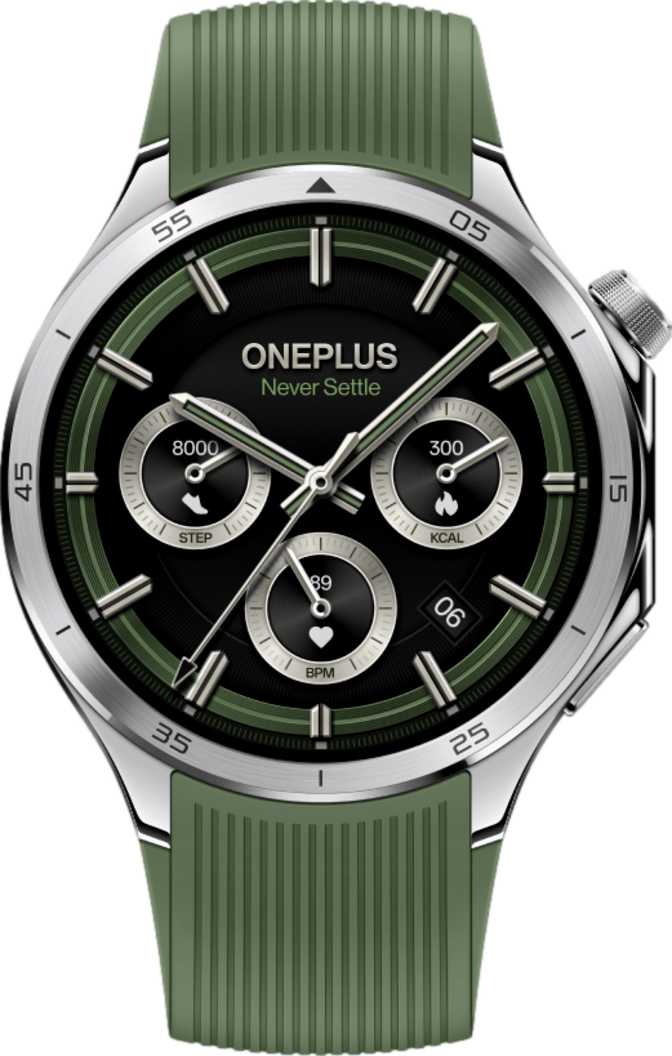
At 43mm, this is the compact variant of the OnePlus Watch 3 lineup. The near-square footprint wears closer to a fashion watch than a fitness tracker. At just under 38 grams, it barely registers on the wrist — even over long days or overnight sleep sessions. This is genuinely light territory; many smartwatches in this category feel noticeably heavier after a few hours, particularly during sleep tracking.
The profile is firmly in the slim range for a full-featured smartwatch — thin enough to disappear under a shirt cuff but present enough to feel substantial on the wrist. This balance works whether you’re at a desk, in the gym, or at dinner.
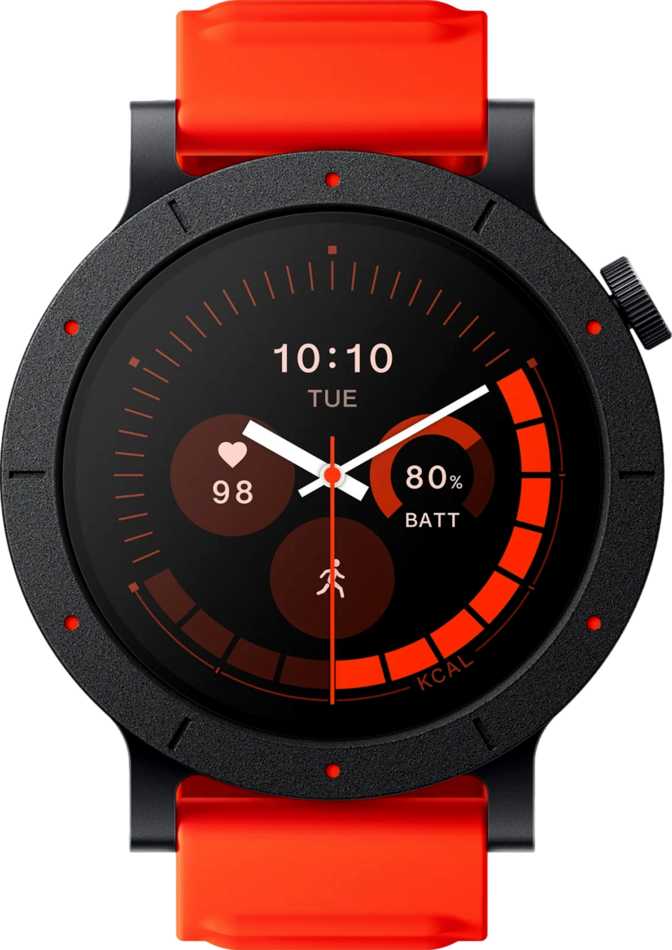
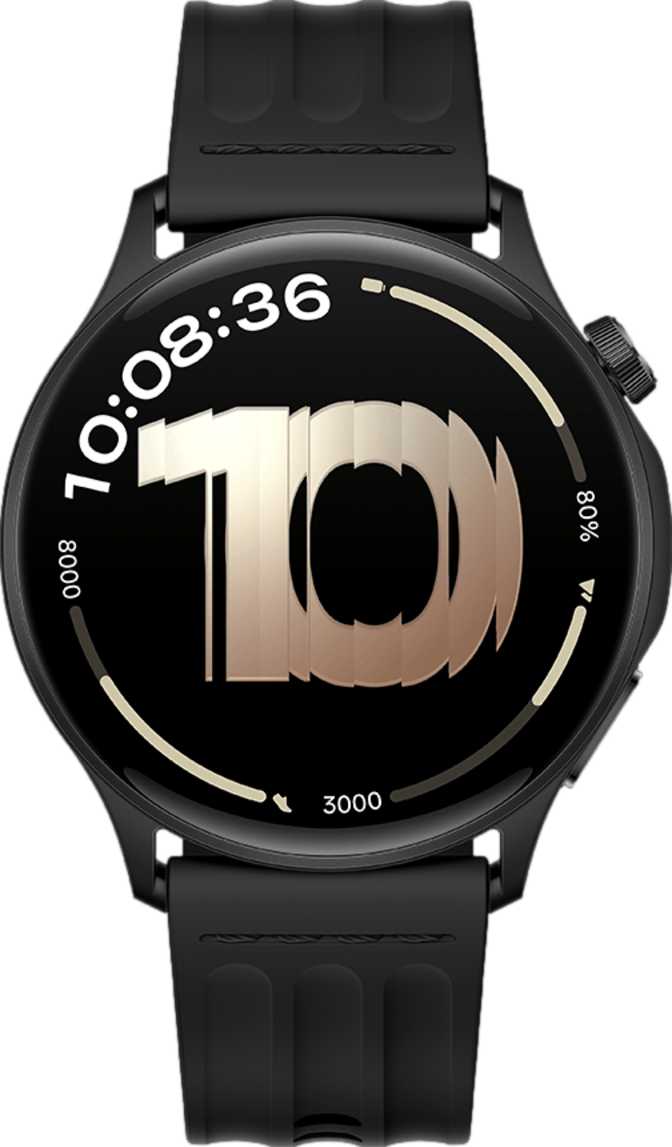
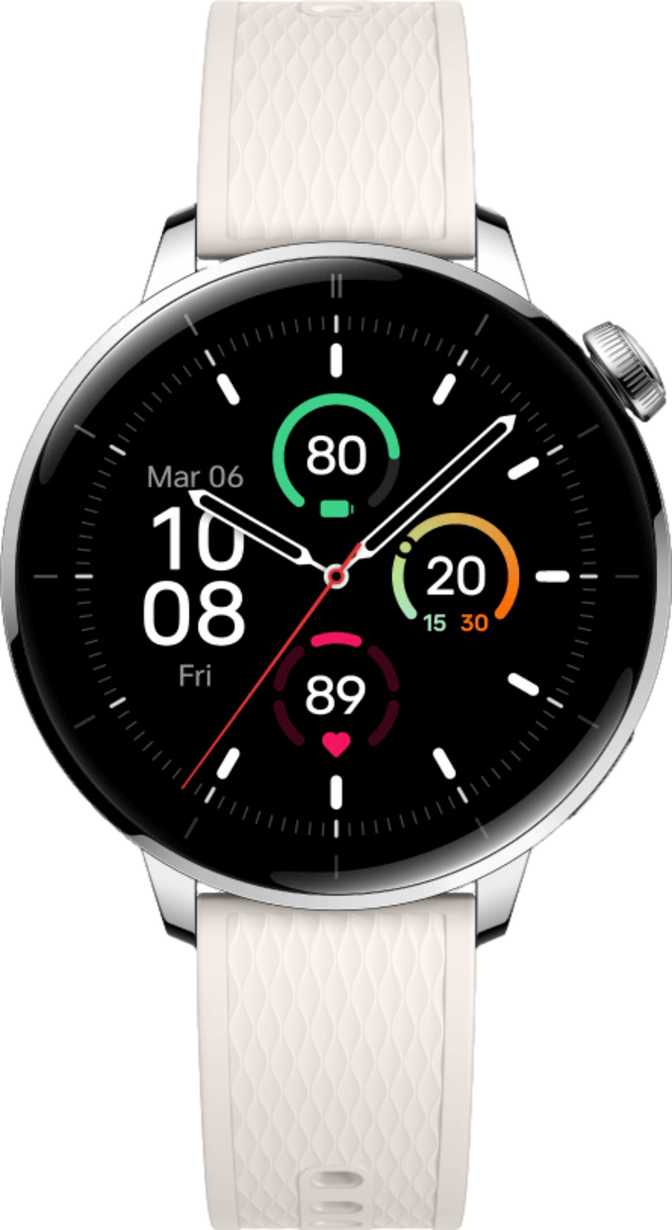
The watch band is user-swappable without tools, which matters more for long-term value than most buyers initially realize. A replaceable band means the watch itself doesn’t become disposable when the strap wears out, and it opens the door to personalizing the look or switching to a more rugged band for outdoor use.
- Case Dimensions43.2 × 43.2 mm compact footprint
- WeightJust under 38 g — wears exceptionally light
- Thickness11 mm slim profile
- Water Resistance5 ATM + IP67 (swim and dust-proof)
- BandUser-replaceable, no tools required
Display Quality: OLED That Earns Its Place
The 1.32-inch OLED panel is the visual centerpiece, and the display technology choice matters. OLED delivers per-pixel illumination, which means true blacks — the kind where the display edge visually disappears against a dark watch face — and vivid colors that LCD-based alternatives at this price tier simply cannot match.
The resolution is high enough that text, health data, and icons render crisp and readable at a glance, without the pixelated edges that characterized earlier smartwatch displays. Sharpness at this density is a comfort feature, not a showpiece number.
Always-On Display (AOD) is included, allowing the watch to show time, complications, or a simplified face without requiring a wrist raise or screen tap. Users who value persistent time-checking find this irreplaceable once they’ve experienced it. The caveat is real: AOD draws additional power continuously, and standard battery life is already the watch’s most important constraint. Disabling it and relying on wrist-raise activation is the most effective way to stretch the battery toward its full potential.
Internals That Punch Above the Category Average
Most smartwatches across the mid-range tier — including options priced similarly or higher — ship with 1GB of RAM and a fraction of the storage. Doubling both figures has real practical consequences.
The RAM headroom means the watch can handle multitasking, complex animated watch faces, and a growing app load without the hesitation or sluggishness that plagues spec-light alternatives. The 32GB of storage is large enough to hold a substantial local music library, which means you can work out without tethering a phone nearby for audio — a meaningful gain for runners, cyclists, and gym users who want to leave the phone at home.
Whether OnePlus fully leverages this hardware through software optimization over the product’s lifespan is something the spec sheet cannot confirm, but the foundation is there in a way that suggests this watch is built to remain capable as software complexity grows.
Health Tracking: Strong Core, Defined Gaps
The OnePlus Watch 3 43mm arrives with a genuinely useful health monitoring suite. Understanding exactly where it draws the line is as important as knowing what it measures.
- Continuous Heart Rate + HRVHeart Rate Variability feeds a daily readiness and recovery score
- VO2 Max EstimationCardiovascular efficiency — a recognized long-term health marker
- Blood Oxygen (SpO2)Monitors oxygen saturation for altitude, illness, and sleep quality signals
- Sleep Stage Tracking + ReportsDetailed stage breakdowns feed back into the readiness score
- Fast / Slow Heart Rate AlertsProactive notifications for unusual heart rate patterns
- GPS + Galileo Multi-ConstellationBetter positional accuracy in urban environments and challenging terrain
- Route, Elevation & PaceFull outdoor workout mapping with elevation change tracking
- ECG / Heart Rhythm MonitoringCannot screen for atrial fibrillation or generate a rhythm strip
- Body Temperature SensorNo wrist temperature tracking for fertility or illness signals
- Barometric Pressure SensorNo ambient pressure data; elevation relies on GPS altitude only
- Cadence SensorNo step or pedal frequency tracking during workouts
- Irregular Heart Rate WarningsNo automatic rhythm anomaly detection beyond fast/slow alerts
- Fall DetectionNo automatic emergency alert for detected falls
- Perspiration / Stress MonitoringNo electrodermal activity or sweat-based stress tracking
Fitness and Activity Features: Capable, With One Notable Gap
Activity auto-detection recognizes when you’ve started a workout and begins logging it without requiring you to manually initiate a session. Exercise tagging lets you label or correct activities after the fact, keeping your history organized.
Route tracking and elevation recording extend the GPS data into something genuinely useful for outdoor athletes — hikers, trail runners, and cyclists who want to map, replay, and analyze their sessions later. Food logging, calorie tracking, and water intake recording are handled through the companion app, making the watch useful as a whole-day wellness device, not just a workout tool.
Fitness Feature Checklist
- Activity auto-detection
- Route & GPS mapping
- Elevation tracking
- Pace & distance measurement
- Step & calorie tracking
- Food & water intake logging
- Exercise tagging & history
- Inactivity alerts
- Multi-sport mode Missing
- ANT+ equipment pairing Missing
- Cadence sensor Missing
Battery Life: Honest Numbers, Realistic Expectations
In standard daily use — always-on display enabled, continuous heart rate monitoring active, GPS used occasionally, and notifications flowing through — the watch lasts roughly two and a half days. That means a charge-every-other-night rhythm for most users. This is toward the shorter end of the smartwatch spectrum, and anyone coming from a fitness band or tracker that lasts a week will feel the contrast immediately.
During extended workout sessions with GPS running continuously, the battery handles up to 36 hours before depleting. This is strong performance for sustained active GPS use and means a full day of hiking or an ultra-endurance event stays covered without worry.
A power-saving mode stretches battery life to a full seven days by limiting active sensor use and display output. Useful for travel or situations where charging isn’t convenient, but real-time health monitoring depth is reduced while it is active. The honest summary: this is a two-day watch with impressive training endurance and a useful power-save fallback.
Battery Life by Mode
Smart Features: More Than Most Fitness Watches Offer
Beyond health and fitness, the OnePlus Watch 3 43mm handles a solid range of wrist-based smart features that move it well beyond the fitness tracker category.
The Android-Only Caveat — This Is Not a Small Detail
iPhone Users: This Watch Will Not Work
The OnePlus Watch 3 43mm is strictly an Android device. It will not pair with an iPhone. The companion app and ecosystem are built entirely around Android workflows, and Mac or Windows computer compatibility is also absent. For a significant portion of the smartphone market, this watch simply doesn’t apply — and that needs to be the first question settled before any other aspect of this review matters.
Who Should Buy the OnePlus Watch 3 43mm
- Use an Android phone and want a compact, capable smartwatch with serious health tracking
- Value a vibrant OLED display with always-on capability in a compact case
- Want 32GB of storage to hold a local music library for phone-free workouts
- Need to answer calls directly from the wrist without reaching for your phone
- Train outdoors and want accurate multi-satellite GPS with Galileo support
- Want NFC contactless payments without reaching for your phone or wallet
- Can commit to a charge-every-other-night routine without disruption
- Use an iPhone — this watch is incompatible with iOS in any configuration
- Prioritize week-long or longer battery life above all other features
- Need ECG readings for cardiac rhythm monitoring or atrial fibrillation screening
- Train across many sports and need a structured multi-sport selection system
- Use ANT+ gym equipment, power meters, or external chest strap heart rate monitors
- Prefer wireless charging for the convenience of a cable-free nightstand setup
How It Fits in the Competitive Landscape
The OnePlus Watch 3 43mm occupies a genuinely interesting position. Its internal hardware outpaces most of what the mid-range tier offers. Where it falls short is in health sensing depth, platform breadth, and battery endurance.
| Feature | OnePlus Watch 3 43mm | ECG-Focused Mid-Range | Endurance-First Watch |
|---|---|---|---|
| OLED Display | Varies | Often LCD / MIP | |
| Internal Storage | 32 GB | 4–8 GB typical | 4–16 GB typical |
| RAM | 2 GB | 1 GB typical | 1 GB typical |
| ECG / Heart Rhythm | |||
| Body Temperature | Varies | Varies | |
| Battery (Daily Use) | ~2.5 days | 2–3 days | 7–21+ days |
| Multi-Sport Mode | |||
| ANT+ Support | Varies | ||
| iOS Compatible | Varies | Varies | |
| NFC Payments | Varies | ||
| Wireless Charging | Varies | Varies |
Strengths and Weaknesses, Honestly Assessed
The OLED display is a genuine daily pleasure at this price tier. The clarity, color depth, and always-on option are not standard mid-range entries, and the difference is perceptible every time you glance at the wrist. The internal hardware is overbuilt relative to category norms in a way that benefits both current performance and product longevity.
Multi-satellite GPS with Galileo support is meaningfully better than single-system alternatives for outdoor users. Call answering and NFC payments round out a genuinely capable daily companion that earns its keep beyond just health data.
The health suite — HRV, VO2 Max, SpO2, sleep staging, and a recovery readiness score — covers the realistic needs of most health-conscious users not managing specific medical conditions. One hour to a full charge is competitive and reduces the friction of the charging habit required.
Battery life in standard mode demands a consistent charging ritual. Two and a half days is manageable for disciplined users but insufficient for anyone who wants to forget about charging for days at a time. This is the watch’s most polarizing practical constraint.
The absence of ECG and body temperature sensors draws a meaningful line below the most health-capable competing devices. No wireless charging is a daily inconvenience in a product category where convenience often drives the purchase.
The display glass lacks premium impact protection. No multi-sport mode, no ANT+ support, and strictly Android-only compatibility combine to limit this watch’s appeal to a specific — but clearly defined — user profile. If you fall outside it, the gaps feel significant rather than incidental.
Questions Real Buyers Are Asking
Final Verdict
OnePlus Watch 3 43mm
The OnePlus Watch 3 43mm is a well-executed compact smartwatch that delivers genuine value to Android users who prioritize display quality, capable hardware, GPS accuracy, and wrist-based smart features. It covers the core health tracking needs of most daily users — and does so in a device that is comfortable enough to wear continuously, attractive enough to wear to dinner, and capable enough to take on a trail run.
Where it falls short is specific and consistent: the battery demands a predictable charging habit, the health suite stops short of ECG and temperature sensing, and the device exists entirely within the Android world. These are deliberate trade-offs, not oversights, and they are clear enough that the right buyer will recognize themselves quickly.
The bottom line: If you’re an Android user looking for a compact, capable, visually sharp smartwatch with meaningful health data and enough daily smart functionality to reduce how often you reach for your phone — the OnePlus Watch 3 43mm delivers exactly that. Go in with clear expectations about charging frequency and the health monitoring ceiling, and it will reward you. For anyone needing advanced cardiac features, longer battery endurance, or iOS support, a different device deserves your attention first.