Overall Score
out of 5.0
Overall Score
out of 5.0
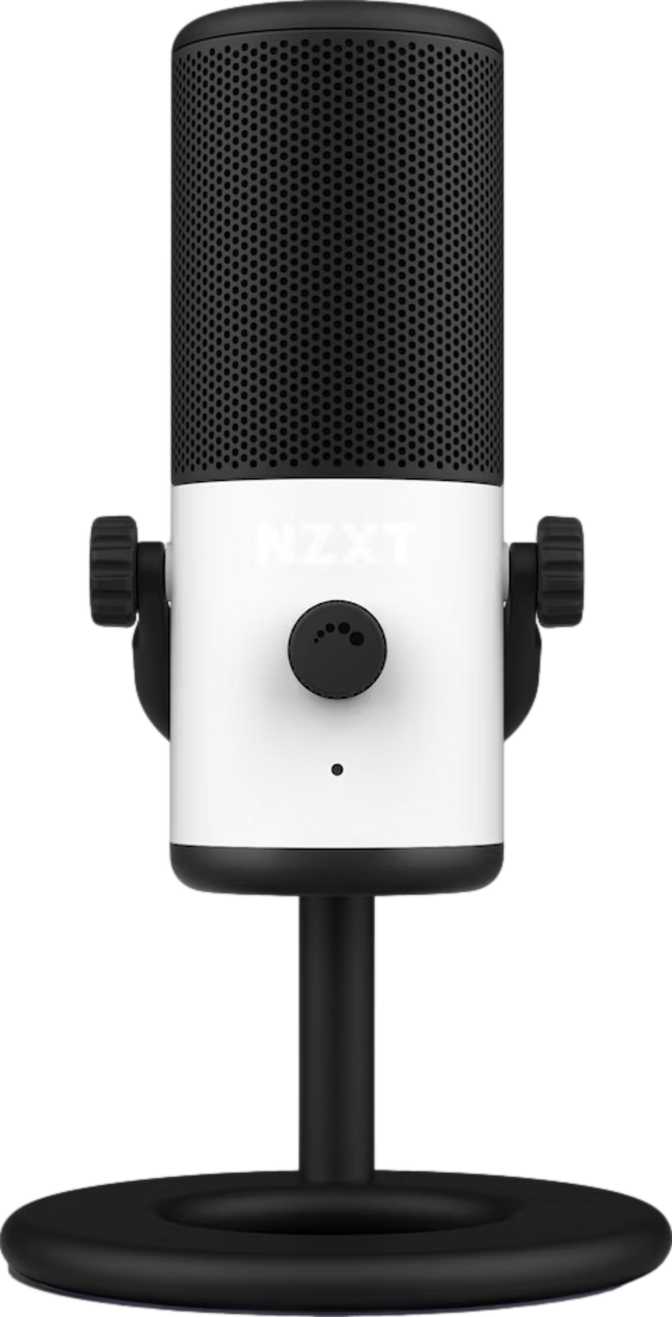
A compact USB-C condenser built for solo streamers and gamers on Windows and Mac. Clean design, quality headphone monitoring, and a notable gap where the mute button should be.
USB-C, Plug and Play
Windows and Mac — no driver installation
Cardioid Pattern
Focused pickup for solo voices
Real-Time Headphone Monitor
3.5mm jack with a clean 100dB signal path
Pop Filter Included
Ready to record out of the box
2-Year Warranty
Beats the one-year category standard
No Hardware Mute
Meaningful omission for live streamers
Compact, understated, and deliberately minimal. The Capsule Mini earns its name.
Standing just under 7.5 inches tall with a nearly square footprint of about 4 inches per side, the Capsule Mini is genuinely compact. At approximately 545 grams — just over a pound — it stays planted on your desk without a heavy dedicated base while still feeling like real hardware, not a lightweight toy.
No RGB lighting, no glow. The Capsule Mini commits to a clean, understated look designed to blend into a workspace rather than light it up. Physical controls sit directly on the device body, meaning fundamental audio adjustments require no software — you adjust with a hand on the hardware and move on.
A USB-C port handles both power and audio in a single reversible cable — no wall adapter required. This is a dedicated desktop microphone for Windows and Mac only. Android and iOS devices are not supported, and any expectation of mobile use needs to be set aside before purchasing.
Pop Filter
Factory-installed plosive protection for hard "p" and "b" consonants. Removes an immediate accessory purchase and makes the mic genuinely ready to use on day one.
On-Device Physical Controls
Controls on the microphone body itself handle basic audio adjustments without requiring you to open a software panel mid-session.
USB-C Cable
Powers and connects the microphone through a single cable. No separate power supply, no additional clutter on your desk.
Shock Mount
No vibration isolation from desk impacts. Keyboard clatter, table bumps, and hardware vibration can bleed into recordings — a real concern for active gaming desks.
Hardware Mute Function
No physical mute button exists anywhere on the device. Audio control during live sessions falls entirely to software shortcuts and streaming application settings.
Mobile Compatibility
Not compatible with iOS or Android. Connection to smartphones or tablets is not supported regardless of adapter or cable used.
Professional recording format, a focused pickup pattern, and one frequency response characteristic worth understanding before you buy.
The Capsule Mini records at 48 kilohertz with a 24-bit signal depth — the same format used in professional broadcast, video production, and podcast distribution. This is not a baseline specification; it is what streaming platforms and distribution services are built around. The format ceiling is high enough that it will never be the weakest link in your signal chain.
The microphone capsule handles peaks of up to 110 decibels of sound pressure before the signal begins to clip or distort. At normal speaking distances, this is more headroom than any realistic desktop use scenario demands. Enthusiastic gaming reactions, raised voices, and surprise moments mid-session will not push the capsule into distortion territory.
What this means for gaming
Win celebrations, loud co-op sessions, and competitive commentary are well within the operating range without distortion at normal mic-to-mouth distances.
The range of sound the microphone capsule faithfully captures runs from approximately 100 Hz at the low end to 10,000 Hz at the upper limit. This single characteristic shapes what voices actually sound like through this microphone more than any other specification, and it warrants careful attention before you commit.
Voice Frequency Capture Map
100Hz Floor — An Asset
Everything below this threshold — HVAC hum, computer hardware vibration, and low-frequency room noise — is naturally attenuated. This built-in rolloff acts like a permanent gentle high-pass filter on the background clutter common in desktop environments.
Core Voice Range — Fully Covered
The fundamentals of human speech — the pitch, warmth, and mid-range character of a voice — sit between roughly 100Hz and 4kHz. Everything needed for intelligibility and presence is captured comfortably and without compromise.
10kHz Ceiling — Know Before You Buy
The "air" and crispness that give voices a sense of openness — sibilant consonants, upper presence, detail above 8kHz — are truncated. Side by side with a mic extending to 16–20kHz, voices through the Capsule Mini will sound noticeably darker and less crisp.
Practical implication: For gaming chat and Discord calls, compressed voice codecs discard high-frequency detail before it reaches listeners anyway — the limitation is largely academic. For recorded podcast audio or streaming where raw voice quality is part of your audience experience, the narrower tonal character is worth evaluating against full-range alternatives before deciding.
The Capsule Mini uses an exclusively cardioid pickup pattern — a heart-shaped arc that focuses capture on whatever faces the front of the microphone while rejecting sound arriving from behind and to the sides.
For a single speaker at a desk, cardioid is the correct and only pattern needed. Your voice is captured; the room behind you is pushed into the rejection zone. There is no pattern switching available, which also means this microphone is not suited to shared recording. Two people seated across from each other cannot share it effectively. Each person in a multi-speaker format needs their own microphone.
Pattern: Cardioid Only
A 3.5mm monitoring jack built into the microphone — and one of the better-implemented features in this category.
The digital-to-analog conversion driving the headphone output achieves a signal-to-noise ratio that makes the monitoring circuit itself essentially inaudible. The noise floor of this path is low enough that it will not be what you hear when the room goes quiet.
The monitoring frequency response covers virtually the entire range of human hearing — so what you hear through your headphones is an accurate, full-fidelity representation of what the microphone is capturing, not a narrowed or processed version of it.
The practical value is immediate. You can hear yourself in real time without software, without delay, and without guesswork. This lets you catch yourself drifting off-axis from the optimal position in front of the capsule, detect background noise bleeding into the pickup zone, and adjust positioning mid-session rather than discovering problems in post-production.
Gaming headsets
All consumer-level headsets work at comfortable volume
Everyday earbuds
Standard low-impedance in-ear monitors work without issue
High-impedance studio headphones
150+ Ohm audiophile headphones play too quietly — the output is not built for that load
Quarter-inch (6.35mm) connectors
No large-format jack — professional headphones with quarter-inch plugs need an inexpensive passive adapter cable
The NZXT Capsule Mini does not have a hardware mute button. No single press to cut your audio signal. No physical LED to confirm you are silent. This needs its own section because it will affect some users significantly and others not at all.
Software-managed audio: no problem
Users who route audio entirely through OBS Studio, streaming software with keyboard shortcuts, or Discord's push-to-talk system may never notice the absence. Software muting works reliably, and the Capsule Mini gives those users nothing they fundamentally lack.
Live streamers: real daily friction
Users who reach instinctively for a mute button during a cough, a conversation in the room, or a sudden background noise event will feel this absence every session. The certainty of pressing a physical button is qualitatively different from trusting a keyboard shortcut registered in time.
There is no design philosophy where removing a mute button improves a streaming microphone. For the gaming and streaming audience this microphone targets, hardware mute is a standard category expectation. Its absence is the single most consequential gap in the feature set.
A clear-eyed look at who the Capsule Mini was built for — and who should keep shopping.
Solo streamers and gamers on PC or Mac who want to step up from a headset microphone to a dedicated condenser without major desk disruption
Content creators in controlled acoustic environments — a quiet bedroom or home office — where the cardioid pattern handles background noise management adequately
Minimalist desk setups where RGB glow and visual clutter are actively unwanted, and clean hardware design is a deliberate priority
Software-first audio managers who route muting, mixing, and routing through streaming or communication software and do not depend on physical hardware controls
Anyone prioritising a zero-fuss setup — plug in, be recognized by the operating system, and start recording without driver installation or proprietary software
You need iOS or Android compatibility — the Capsule Mini does not connect to smartphones or tablets, full stop
You co-host podcasts or record two voices — the cardioid-only pattern means each speaker in a multi-person format requires their own dedicated microphone
A hardware mute button is part of your live workflow — if you reach instinctively for physical mute during sessions, the absence of this feature creates persistent daily friction
Audio quality is a core production value — music vocalists, voice-over artists, and high-production podcasters who need full-range voice capture should evaluate alternatives with a wider frequency response
Your desk generates significant vibration — without a shock mount in the box, heavy keyboard users will need to source one separately to prevent desk rumble in recordings
Where the Capsule Mini leads, where it matches the field, and where alternatives pull ahead.