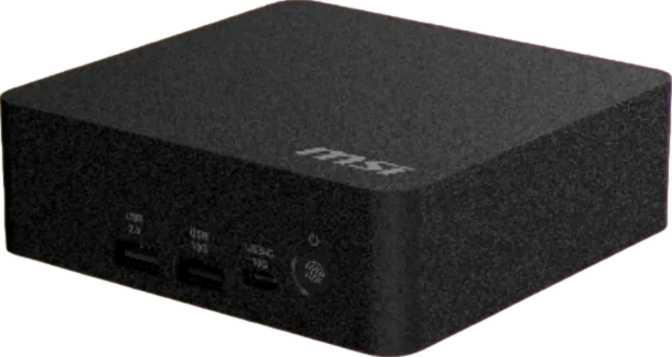
MSI Cubi NUC AI Plus 3MG Review: Mini PC with Maximum Connectivity
Mini PCsAt a Glance — Key Specifications
A Desktop PC That Fits in Your Palm — and Punches Well Above Its Size
Mini PCs have come a long way from being glorified streaming boxes. The MSI Cubi NUC AI Plus 3MG represents a genuinely different proposition: a full-featured desktop computing platform that occupies less desk space than most people's lunch. At roughly the footprint of a thick paperback book, it offers connectivity, performance, and expandability that would have required a full tower just a few years ago. Whether you're building a compact home office workstation, a capable media hub, or a corporate deployment solution, this machine demands serious consideration — but it's not right for everyone, and this review will tell you exactly where it succeeds and where it falls short.
Design and Build: Small Enough to Disappear, Solid Enough to Trust
Physical form factor, thermal design, and chassis quality
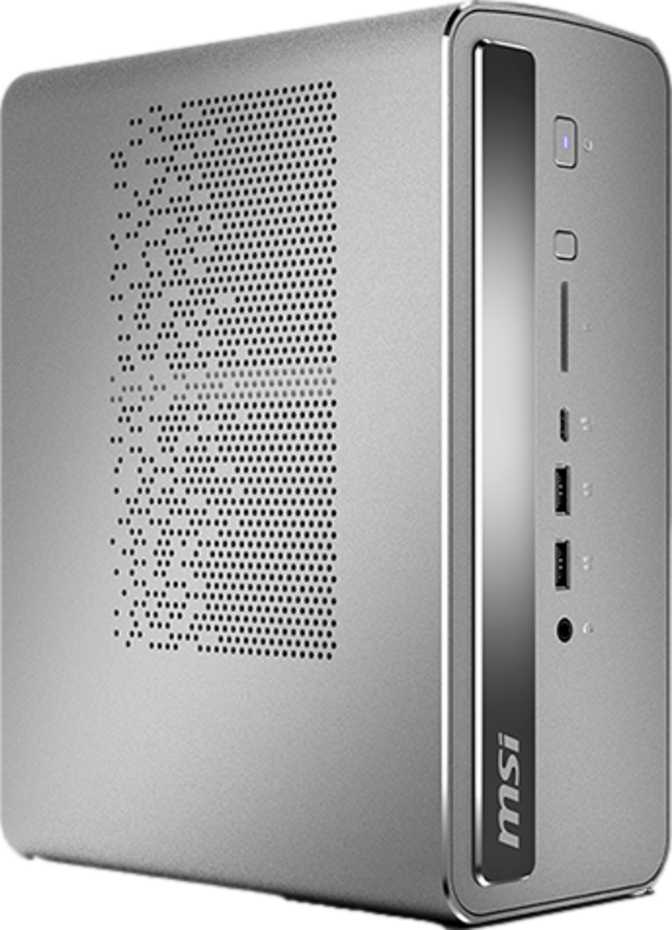
The Cubi NUC AI Plus 3MG occupies a remarkably modest physical footprint. Its dimensions place it in true mini PC territory — narrow enough to tuck behind a monitor with a VESA mount, or slide into a drawer when not in use. The chassis measures roughly 120mm on each side and stands barely 37.5mm tall, making it roughly the size of a thick DVD case laid flat. The entire system fits within approximately half a liter of space.
Despite its compact size, MSI hasn't skimped on chassis integrity. The NUC form factor encourages tightly engineered enclosures, and this machine follows that tradition. The exterior design is clean and understated — appropriate for both consumer living rooms and professional office environments.
One trade-off worth acknowledging upfront: this machine uses a laptop-class processor. That's not a weakness so much as a deliberate design choice. Mobile processors run cooler and draw less power than their desktop counterparts, which is exactly what allows a chassis this small to stay quiet and thermally stable under sustained workloads. The 25W thermal envelope means the cooling solution can remain compact, keeping fan noise manageable even during demanding tasks.
- Width 119.6 mm
- Depth 115.2 mm
- Height 37.5 mm
- Total Volume ~517 cm³
- Processor TDP 25 W
- Warranty 1 Year
The Processor: Hybrid Architecture Explained
How the CPU's three-tier core layout translates to real-world performance
How the CPU Is Structured
The processor inside the Cubi NUC AI Plus 3MG uses a heterogeneous, big.LITTLE-style core layout — the same approach pioneered by modern smartphones and Apple Silicon, now fully adopted in mainstream PC processors. In practical terms, the chip contains three distinct tiers of cores operating simultaneously, each handling a different class of workload:
Performance Cores
Base Clock: 2.1 GHz
Handle the heavy lifting — complex applications, video encoding, compilation tasks, and demanding single-threaded work.
Efficiency Cores
Base Clock: 1.6 GHz
Manage background processes and lighter parallel tasks without spinning up the more power-hungry performance cores.
Low-Power Cores
Base Clock: 1.6 GHz
Always-on background managers keeping the system responsive while consuming minimal energy.
Peak Performance and Burst Speed
Together, these cores expose 16 processing threads to the operating system. When workloads demand it, the processor's turbo capability pushes peak single-core clock speeds to 4.9 GHz — the burst ceiling for short-duration spikes such as launching applications, compiling code, or handling sudden compute bursts. For sustained workloads, the 25W power budget keeps clocks moderate but steady, preventing the thermal throttling that plagues thin-and-light laptops running the same chip in tighter, less-ventilated chassis.
Cache and Instruction Set Support
The 18 MB of L3 cache means more data stays immediately accessible on-chip rather than forcing the processor to reach into slower system RAM. This directly benefits database queries, software compilation, and simulation workloads. Hardware instruction extensions further accelerate specific professional tasks:
AES acceleration makes encryption tasks (VPNs, secure storage, communications) happen at near-zero performance cost. AVX2 and FMA3 benefit machine learning inference and scientific computing libraries.
Memory: Fast, Generous, and Scalable
DDR5 dual-channel configuration with an unusually high upgrade ceiling
The system ships with 32 GB of DDR5 RAM in a dual-channel configuration. For most buyers, that single number is all that matters: 32 GB is genuinely comfortable for heavy multitasking, large spreadsheet work, video editing timelines, and running virtual machines alongside a normal workflow — simultaneously.
DDR5 brings higher raw bandwidth than the previous DDR4 standard, and this implementation supports speeds up to approximately 8,533 MHz. In practical terms, this benefits the integrated graphics significantly — the GPU shares the system's RAM rather than having its own dedicated pool, so faster memory translates directly to smoother frame rendering and quicker texture loading.
The dual-channel configuration (two memory channels running in parallel) roughly doubles theoretical memory bandwidth compared to single-channel setups. For integrated graphics especially, this is not a minor detail — it's the difference between smooth 4K video playback and stuttering.
- Installed Capacity 32 GB
- Standard DDR5
- Max Speed 8,533 MHz
- Channel Config Dual-Channel
- Maximum Capacity 128 GB
The 128 GB ceiling is typically reserved for workstation-class hardware. It gives this machine long-term scaling capability that budget mini PCs cannot match.
Storage: NVMe Speed in a Compact Package
1 TB solid-state drive operating over the latest PCIe interface
The 1 TB NVMe SSD is a meaningful starting point. NVMe (Non-Volatile Memory Express) is the fast-lane storage protocol — operating over the PCIe bus rather than older SATA pathways. In everyday experience, this means the system boots in seconds rather than the half-minute waits associated with traditional hard drives, and large file transfers or application launches happen almost instantaneously.
One terabyte accommodates a full operating system installation, a substantial application library, and several hundred gigabytes of working files — enough for most home users and many professionals. Content creators working with uncompressed video, audio professionals with large sample libraries, or archivists will eventually need supplemental storage, but the built-in capacity serves as a competent baseline.
No external memory card slot. Storage expansion relies on external drives via the high-speed USB4/Thunderbolt 4 ports or network-attached storage.
Integrated Graphics: More Capable Than You Might Expect
DirectX 12 Ultimate, four simultaneous displays, and DDR5-backed GPU performance
The Cubi NUC AI Plus 3MG relies on integrated graphics — the GPU is built into the processor die rather than being a discrete add-in card. For many buyers, this immediately raises a red flag. But the reality in this performance tier is more nuanced.
The integrated GPU supports DirectX 12 Ultimate — the current ceiling of Microsoft's graphics API stack — making it technically capable of hardware ray tracing and mesh shading. OpenGL 4.6 and OpenCL 3.0 support cover professional applications in CAD suites, creative software, and scientific computing tools. The GPU turbo clock of 2,500 MHz, combined with fast DDR5 dual-channel memory, delivers competitive integrated graphics for a machine of this size.
What the integrated GPU handles comfortably:
- 4K video playback and high-resolution streaming
- Light photo and video editing workflows
- Basic 3D modeling and CAD viewport navigation
- Casual and older gaming titles at 1080p with modest settings
Where integrated graphics reach their ceiling:
- Modern AAA gaming at medium-to-high settings
- Real-time 3D rendering at production resolutions
- GPU-accelerated machine learning training workloads
API & Standards Support
- DirectX 12 Ultimate
- OpenGL 4.6
- OpenCL 3.0
- PCIe Version Gen 5
- GPU Turbo Clock 2,500 MHz
- Simultaneous Displays 4
Standout capability: Driving four independent displays from a sub-liter chassis is genuinely rare. It makes this machine a strong candidate for trading desks, broadcast monitoring setups, and multi-screen workstations — with no external GPU or dock required.
Connectivity: Where This Machine Genuinely Excels
Thunderbolt 4, USB4 40 Gbps, HDMI 2.1, and dual Ethernet — a port selection that rivals full desktop systems
Display Outputs
| Port | Count | Standard |
|---|---|---|
| HDMI | 2 | HDMI 2.1 |
| DisplayPort | 2 | DisplayPort |
HDMI 2.1 supports 4K at 144 Hz or 8K at 60 Hz — far ahead of what most users need today, but future-proofed for next-generation displays. Connecting all four monitors requires no adapters or docking stations.
USB Port Breakdown
| Port Type | Count | Speed / Notes |
|---|---|---|
| Thunderbolt 4 | 2 | 40 Gbps · eGPU · Power Delivery |
| USB4 40 Gbps (USB-C) | 2 | Thunderbolt 4-equivalent bandwidth |
| USB 3.2 Gen 2 (USB-A) | 1 | 10 Gbps |
| USB 3.2 Gen 2 (USB-C) | 1 | 10 Gbps |
| USB 2.0 (USB-A) | 1 | Legacy device support |
Dual Wired Ethernet
Two separate RJ45 ports are an unusual inclusion at this form factor. Single users plug into one and never think about the other — but for NAS setups, isolated virtual machine network interfaces, small business routing configurations, or dual-link environments, both ports have real utility.
Audio
A 3.5mm combo audio jack handles headphones, headsets, and external speakers for standard audio needs.
Thunderbolt 4 and eGPU: The two Thunderbolt 4 ports support external GPU enclosures, subject to OS and driver compatibility. Performance is constrained by Thunderbolt bandwidth versus native PCIe, but this opens a discrete graphics path for users who need it occasionally without committing to a larger system.
Wireless: Wi-Fi 7 as a Forward-Looking Investment
Latest-generation wireless technology with full backward compatibility
Wi-Fi 7 (802.11be) is the standard that most home networks haven't yet fully adopted, but its inclusion here matters beyond raw speed figures. Wi-Fi 7 introduces Multi-Link Operation — the ability to transmit simultaneously across multiple frequency bands — which dramatically reduces latency and improves reliability in environments crowded with connected devices.
For videoconferencing, real-time data feeds, or cloud-based workflows in busy offices or apartment buildings, this translates to more consistent, lower-latency wireless performance than any previous Wi-Fi generation. Backward compatibility covers every standard from Wi-Fi 4 onward, so any existing router will work on day one. Bluetooth 5.4 handles modern wireless peripherals, headsets, and accessories.
- Wi-Fi 7 (802.11be) Latest Gen
- Wi-Fi 6E (802.11ax) 6 GHz Band
- Wi-Fi 6 / 5 / 4 Backward Compat.
- Bluetooth 5.4 Latest BT
- Dual Gigabit Ethernet Wired Backup
Real-World Usage Scenarios
Who this machine is built for — and who should look elsewhere
This Machine Is Built For
-
Home Office ProfessionalsOffice productivity, video conferencing, and heavy multitasking without a bottleneck. It disappears into the workspace without cable clutter or fan noise.
-
Creative Professionals (Light-to-Moderate)Photo editors, podcast producers, and video editors working with proxy files will find 32 GB of fast RAM gives Adobe applications room to operate without memory pressure.
-
Multi-Display Power UsersTrading desks, data analysis, and monitoring roles benefit from four-display support and dual Thunderbolt 4 for peripheral expansion.
-
Small Business and Server-Adjacent RolesLocal database hosts, file servers, and remote desktop servers for small teams benefit from dual Ethernet and the 128 GB RAM ceiling.
-
Developers and EngineersVirtual machines, containers, and local development environments benefit from the processor architecture, 18 MB cache, and full instruction set support.
Who Should Look Elsewhere
-
GamersRunning modern titles at medium-to-high settings requires a discrete GPU. There is no path to competitive gaming performance here beyond casual or older titles.
-
High-End Video Production ProfessionalsWorking with high-bitrate 4K or 8K footage in real-time, or running GPU-accelerated effects pipelines, will hit the integrated graphics ceiling quickly.
-
Users Needing Multi-Drive Internal StorageThe compact chassis has no second internal drive bay. Users who regularly outgrow single-drive systems will depend entirely on external storage.
-
Organizations Prioritizing Long WarrantiesThe one-year warranty period is short for business-class deployments. Teams running fleets of these should evaluate extended support contracts carefully before committing.
How It Stacks Up Against the Competition
MSI Cubi NUC AI Plus 3MG versus typical competing mini PCs at the same tier
| Feature | MSI Cubi NUC AI Plus 3MG | Typical Competing Mini PC |
|---|---|---|
| RAM (as configured) | 32 GB DDR5 | Often 16 GB DDR4/DDR5 |
| Maximum RAM | 128 GB | Typically 64 GB |
| Thunderbolt 4 Ports | 2 | 0–1 (often absent) |
| USB4 40 Gbps Ports | 2 Additional | Rare |
| Simultaneous Displays | 4 | Usually 2–3 |
| Wi-Fi Generation | Wi-Fi 7 | Often Wi-Fi 6E |
| Dual Ethernet | ||
| HDMI Version | HDMI 2.1 | Often HDMI 2.0 |
The connectivity stack is where MSI has made the clearest competitive statement. Systems matching this machine's port density at a comparable form factor are rare. The integrated graphics trade-off is the same one most competing systems at this size make — but the Thunderbolt 4 ports leave the door open for external GPU enclosures for users with specific needs.
Honest Assessment: Strengths and Weaknesses
A balanced look at what this machine delivers and where it falls short
Where It Excels
The strengths are concentrated and compelling. The dual Thunderbolt 4 ports alone justify serious attention from professionals who rely on high-bandwidth peripherals or docking ecosystems. Driving four displays from a box this size is genuinely impressive and commercially rare.
- Exceptional connectivity with dual Thunderbolt 4 and two additional USB4 40 Gbps ports — rivaling full desktop systems at a fraction of the footprint
- Four-display support from a sub-liter chassis is genuinely rare at any price point in the mini PC category
- Wi-Fi 7 and dual Ethernet combined gives full coverage for wireless-first and wired-first environments without compromise
- 128 GB RAM ceiling — a specification typically reserved for workstation hardware — gives long-term upgrade headroom budget mini PCs cannot match
- 32 GB DDR5 is a well-chosen baseline — enough for demanding multitasking today with a clear path to scale later
Where It Falls Short
The weaknesses are honest and worth stating plainly. None are deal-breakers for the intended buyer — but they matter depending on your specific expectations.
- Integrated-only graphics impose a real performance ceiling — GPU-accelerated workloads, gaming at high settings, and heavy rendering are not this machine's territory
- One-year warranty is short for a business-class device — competitors often offer two or three years, which matters significantly for organizational deployments
- No built-in memory card slot occasionally inconveniences photographers and video shooters accustomed to direct card ingestion
- No second internal storage bay — outgrowing the 1 TB SSD means relying on external drives or network-attached storage solutions
Answers to Common Pre-Purchase Questions
Questions real buyers search for before purchasing
Final Verdict
MSI Cubi NUC AI Plus 3MG — Our Recommendation
The MSI Cubi NUC AI Plus 3MG earns its place as a standout option in the compact desktop category — specifically for buyers whose priorities align with what it actually delivers.
If you need a quiet, space-efficient machine with exceptional connectivity, genuine multi-display support, fast DDR5 memory, and a clear long-term RAM upgrade path, this machine competes with almost nothing else at its physical size. The Thunderbolt 4 pairing, dual USB4 40 Gbps, dual HDMI 2.1, and dual Ethernet make it uniquely capable as the hub for a serious desk setup.
If graphics performance is your primary bottleneck — whether for gaming or GPU compute — this machine is the wrong tool. No amount of connectivity compensates for the fundamental limits of integrated graphics when discrete GPU performance is what you actually need. For everyone else: the Cubi NUC AI Plus 3MG respects your desk space, your peripherals, and your long-term computing needs — and that combination is rarer than it should be.
Best For:
- Home office professionals
- Multi-monitor power users
- Developers and engineers
- Small business deployments
- Space-constrained workstations