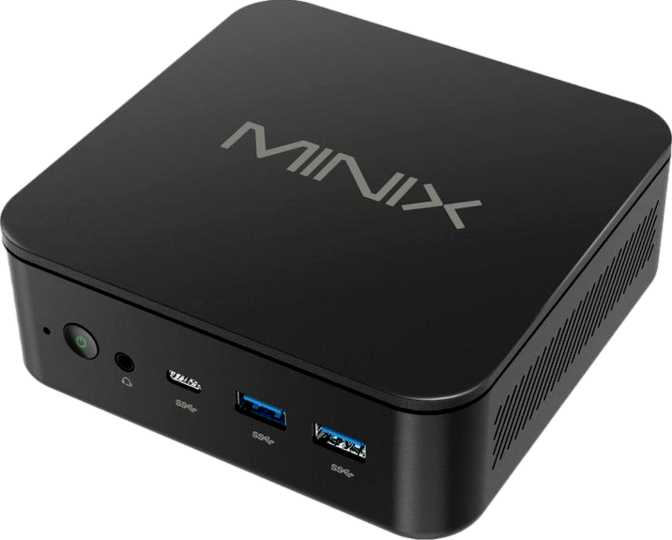
Minix NR660 LP Review: Compact Mini PC With Dual LAN and DDR5
Mini PCsThe mini PC category has quietly become one of the most competitive spaces in consumer computing. Buyers no longer accept the trade-off of a tiny footprint for gutless performance — they want both. The Minix NR660 LP lands squarely in this expectation, packing a meaningful set of modern specifications into what is unmistakably a small-form-factor machine. Whether it earns its place on your desk beside a monitor or tucked behind a TV depends heavily on what you plan to ask of it — and this review tells you exactly where it excels and where it falls short.
Recommended for home office, media center, and homelab users. Not a gaming machine.
Memory
16GB DDR5
Storage
1TB NVMe PCIe 4
GPU
RDNA 2 Integrated
Wireless
Wi-Fi 6E + BT 5.0
Networking
Dual Gigabit LAN
USB Ports
6 High-Speed USB
Design and Build Quality
Small enough to disappear, solid enough to trust
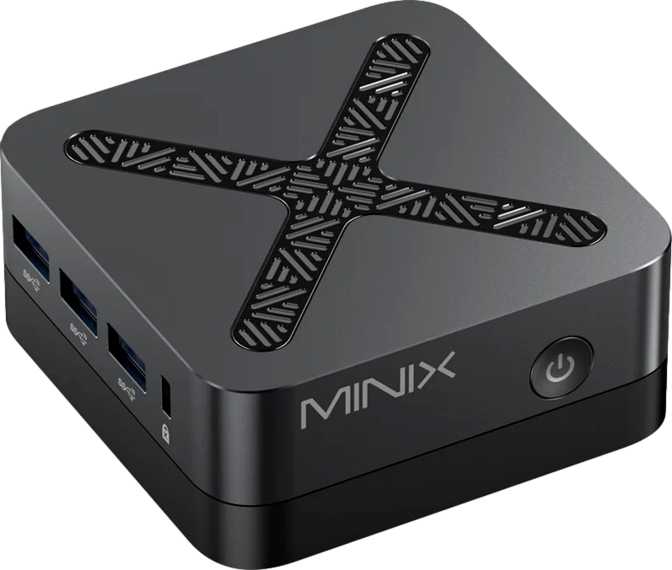
The NR660 LP is built around the Micro-ATX philosophy of compactness without compromising structural integrity. The "LP" designation signals a low-profile chassis — a machine designed to tuck behind a display, sit flat on a media console, or occupy a corner of a desk without demanding attention. Minix has a reputation for quality plastics and tight tolerances in their mini PC line, and the NR660 LP continues that tradition. The chassis does not flex, vents are thoughtfully positioned, and the overall impression is of a device that was designed rather than simply manufactured.
The form factor choice also reflects a deliberate audience: buyers who want a capable computer that integrates invisibly into a living room, office, or server rack position rather than announcing itself on a desk. At this physical footprint, every port placement and ventilation decision matters — and Minix has thought those decisions through.
Thermal Design: Active Air Cooling
The NR660 LP relies on fan-based air cooling rather than a passive or liquid solution. At a 40-watt processor thermal ceiling, this is the correct engineering choice — a passive chassis at this power level would throttle under sustained load. Under heavy workloads, the fan will become audible. If near-silent operation at all times is a hard requirement, factor this into your decision before purchasing.
Form Factor Highlights
- Micro-ATX low-profile chassis fits behind monitors and on media consoles
- Rigid build with no chassis flex — premium feel for the size class
- Thoughtfully positioned ventilation keeps internals at safe operating temperatures
- Active fan cooling produces audible noise under sustained heavy workloads
- 1-year warranty — shorter than the 2-year coverage some competitors offer
Processor Performance: What 40 Watts Actually Delivers
Efficiency-first computing that handles everyday workloads with headroom to spare
The processor inside the NR660 LP operates within a 40-watt thermal design boundary. Most traditional desktop processors draw between 65W and 125W — two to three times more. This is an efficiency-first engineering decision, not a compromise made for the sake of size.
At 40W, the machine handles everything the average and above-average user needs without hesitation: web browsing across dozens of open tabs, 4K media playback, office productivity, video calls, light photo editing, and fluid multitasking between applications. The thermal ceiling only becomes a meaningful constraint during sustained, heavy compute work — large 3D rendering jobs, extensive video export queues, or compiling enormous codebases. In those scenarios, the processor reaches its limit and reduces its clock speed to protect itself from overheating.
For the majority of buyers, 40W is genuinely sufficient. The energy savings over a full-power desktop also translate to measurable long-term cost reductions, particularly for machines used as always-on servers or media centers.
DDR5 Memory: A Real Differentiator
The NR660 LP ships with 16GB of DDR5 — the current generation memory standard. Finding DDR5 in a mini PC at this size class is a material benefit, not marketing language.
Because the integrated GPU shares the system's memory pool, DDR5's higher bandwidth directly translates into better graphics throughput compared to DDR4-equipped competitors. For integrated graphics specifically, memory speed is one of the most impactful variables — and DDR5 gives this machine a genuine edge over comparably priced alternatives running older memory.
16GB sits comfortably in the zone for Windows 11 productivity computing. Users running simultaneous virtual machines or heavy professional creative tools may eventually feel the limit, but for the vast majority of tasks it provides real headroom.
ECC Memory Support
The NR660 LP supports Error-Correcting Code (ECC) memory — a feature normally reserved for workstations and server hardware. ECC automatically detects and corrects single-bit memory errors in real time. For home server deployments, always-on applications, or sensitive data handling, this is a genuine value-add at a price tier where it almost never appears.
Graphics Performance: An Honest RDNA 2 Assessment
Modern architecture with real capabilities — and real limits that buyers must understand
The NR660 LP's graphics subsystem is built on AMD's RDNA 2 architecture — the same generational platform that powered AMD's mid-tier discrete GPU lineup. Integrated into the main processor and operating between 1,500 MHz and a peak boost frequency of 1,900 MHz, it delivers approximately 1.46 trillion floating-point operations per second.
Performance Context for Prospective Buyers
A mainstream mid-range discrete GPU typically delivers between 10 and 20 TFLOPS — roughly 7 to 14 times the output of the NR660 LP's integrated graphics. This machine is not a gaming PC. Buyers expecting to run modern titles at medium-to-high settings will be disappointed. Buyers who understand they are getting current-gen architecture within integrated graphics constraints will find it capable for its intended use cases.
Where RDNA 2 architecture carries real weight is in its software and API compatibility. DirectX 12 Ultimate compliance means the NR660 LP remains compatible with current and upcoming software rendering pipelines — relevant not only for games but for professional applications that leverage GPU-accelerated compute paths. Hardware ray tracing is functionally supported, though at this performance level enabling it in games produces unworkable frame rates; its practical value here is software compatibility, not visual enhancement.
For casual gaming, older esports titles, 2D indie games, and less demanding releases at 1080p with reduced settings will run at playable frame rates. AMD's FSR upscaling technology is also supported on RDNA 2 hardware, which can recover frame rates in compatible titles at a modest cost to image quality. DLSS, being Nvidia-exclusive, is not available here.
Supported Graphics Features
- DirectX 12 Ultimate — full current-generation API compliance
- Hardware ray tracing — supported at the architecture level
- OpenGL 4.6 — broad professional application compatibility
- OpenCL 2.0 — GPU-accelerated compute workloads supported
- Double Precision Floating Point — relevant for scientific computing and simulation
- Multi-display output — drive two monitors simultaneously
- AMD FSR upscaling — improved frame rates in compatible titles
- 4K hardware video decode — HDMI 2.1 output at 4K 120Hz
- DLSS — Nvidia-exclusive, not available on AMD architecture
GPU Specification Summary
- Architecture
- RDNA 2
- Compute Power
- 1.46 TFLOPS
- Base / Boost Clock
- 1500 / 1900 MHz
- Shading Units
- 384
- Process Node
- 6nm
- API Support
- DX12 Ultimate
Storage: A Full Terabyte of Genuine Speed
Fast-boot, fast-load storage that makes the entire system feel more responsive
The NR660 LP ships with a 1TB NVMe solid-state drive running over the PCIe 4 interface — the current standard for high-throughput storage in consumer computing. NVMe (Non-Volatile Memory Express) is a storage protocol built specifically for solid-state drives, communicating directly over the processor's PCIe bus rather than the older, slower SATA pathway.
The practical result is dramatic. Where a traditional mechanical hard drive transfers data at roughly 100–150 megabytes per second, a PCIe 4 NVMe drive can exceed 5,000 megabytes per second — more than thirty times faster. The operating system loads in seconds. Applications launch almost immediately. Large file operations complete in moments rather than minutes. This kind of speed makes the whole system feel more capable, not just the storage subsystem in isolation.
One terabyte provides solid day-to-day capacity — enough for a complete Windows 11 installation, a full suite of productivity software, an extensive media library, and substantial project files before space becomes a constraint for most users.
Storage Specifications
- Capacity
- 1TB
- Interface
- NVMe / PCIe Gen 4
- Protocol
- NVMe over PCIe
- Drive Type
- Solid-State (SSD)
Speed Perspective
A typical spinning hard drive: ~130 MB/s. The PCIe 4 NVMe in this machine: 5,000+ MB/s. Over 38× faster for sequential reads — the kind of difference you notice every time you open an application.
Connectivity: Where the NR660 LP Overdelivers
More ports, faster speeds, and dual LAN — the machine's strongest competitive argument
The port layout of the NR660 LP is where its most compelling competitive advantage becomes concrete. Six high-speed USB ports, two independent Gigabit Ethernet ports, HDMI 2.1, DisplayPort, and Wi-Fi 6E in a chassis this size is a specification profile that challenges machines at significantly higher price points.
USB Port Breakdown
| Port Type | Count | Max Speed |
|---|---|---|
| USB 3.2 Gen 2 Type-A | 3 | 10 Gbps per port |
| USB 3.2 Gen 2 Type-C | 2 | 10 Gbps per port |
| USB 2.0 Type-A | 1 | 480 Mbps (legacy) |
| Total 10 Gbps Ports | 5 high-speed | |
Five ports at 10 Gbps is fast enough for external NVMe enclosures, high-speed flash drives, and professional peripherals running simultaneously without a hub.
Display Outputs
- HDMI 2.1 — supports 4K at 120Hz or 8K at 60Hz to compatible displays
- DisplayPort — enables a true dual-monitor setup without adapters when combined with HDMI
Networking: The Standout Feature
Dual RJ45 Gigabit Ethernet — two independent wired network ports is an exceptional inclusion at this price tier. Most mini PC competitors ship with one. Having two enables home server deployments, network bridging, pfSense and OPNsense appliance roles, or simply dedicated wired connections to a NAS and a switch simultaneously. For homelab users, this single feature is a compelling differentiator.
Wireless and Audio
Wi-Fi 6E (802.11ax)
Covers the 6GHz band in addition to 5GHz and 2.4GHz — the newest consumer Wi-Fi standard, delivering lower congestion and higher throughput in compatible environments. Fully backward compatible with older standards.
Bluetooth 5.0
Supports all current wireless peripherals — headphones, keyboards, mice, controllers — with reliable range and stable low-latency connectivity.
3.5mm Audio Jack
Standard headphone and speaker connection included. Note: no S/PDIF digital audio output, no VGA connector.
Who Should Buy the Minix NR660 LP
Matching the machine to the right buyer — and being transparent about where it is not the right fit
This PC Is a Strong Match For
Home Office Workers
Capable, quiet, and energy-efficient — a modern desktop that earns its place without dominating the desk
Living Room Media Center Builders
HDMI 2.1, compact chassis, and near-silent idle operation make it an ideal 4K media PC for the living room
Home Server and Homelab Enthusiasts
Dual LAN, ECC memory support, and PCIe 4 NVMe storage make this unusually capable for file servers, network appliances, and lightweight virtualization
Students and General Users
A modern platform with current-gen specs, without the complexity or size of a traditional desktop tower
Business Multi-Unit Deployments
Low power consumption, small footprint, and ECC memory reliability make it a considered choice at scale
Look Elsewhere If You Need
Modern PC Gaming
Integrated RDNA 2 graphics cannot run demanding contemporary titles at medium-to-high settings — a machine with a discrete GPU is the right tool here
Heavy Video Production or 3D Rendering
Sustained creative workloads will push this machine beyond its thermal limits — a full-power desktop or dedicated workstation is the right choice
Fanless or Completely Silent Operation
Active fan cooling means audible noise under load — not appropriate for recording studios or highly noise-sensitive environments
Thunderbolt 4 or USB4 40Gbps Peripherals
No Thunderbolt 4 or 40Gbps USB4 ports — external GPUs, high-speed Thunderbolt docks, and 40Gbps storage enclosures are not natively supported
How It Compares to the Competition
The NR660 LP wins most technical columns — here is where it matters and where competitors close the gap
| Feature | Minix NR660 LP | Typical Competitor |
|---|---|---|
| Memory Standard | DDR5 | DDR4 (common at this tier) |
| GPU Architecture | RDNA 2 (current-gen) | Varies; older iGPU common |
| Wired LAN Ports | 2 × Gigabit | 1 × (standard) |
| Wi-Fi Generation | Wi-Fi 6E (tri-band) | Wi-Fi 6 or Wi-Fi 5 |
| ECC Memory Support | Rarely offered | |
| SSD Interface | NVMe PCIe Gen 4 | PCIe Gen 3 common |
| Hardware Ray Tracing | Software-only or absent | |
| High-Speed USB Ports | 5 × 10 Gbps | 2–3 ports typical |
| HDMI Version | HDMI 2.1 | HDMI 2.0 common |
| Warranty Period | 1 Year | 2 years (some brands) |
Where competitors may close the gap is in raw processor benchmark output. The 40W TDP defines the thermal envelope, but the specific CPU model inside determines real-world execution — a specification worth researching before finalizing a purchase.
Strengths and Weaknesses: An Honest Assessment
Where this machine earns its place — and where its limitations are structural, not fixable
Where It Earns Its Place
DDR5 in a machine at this size class directly benefits graphics throughput in a way that DDR4-equipped competitors cannot match. The memory standard is a design decision that pays dividends in the integrated GPU's ability to sustain higher frame rates and handle GPU-accelerated workloads more smoothly — a genuine daily-use advantage over otherwise comparable hardware.
The dual LAN ports are the single feature most likely to convert a buyer on the fence. No comparable mini PC at this price tier routinely ships with two independent wired Ethernet ports. For home server operators, Proxmox and homelab deployers, and network appliance builders, this alone justifies serious consideration above alternatives.
The connectivity layout reflects deliberate thinking. Six high-speed USB ports cover every realistic peripheral scenario without requiring a hub. Buyers who have owned a machine with three USB ports will understand immediately why six changes the daily experience.
RDNA 2 with full DirectX 12 Ultimate support keeps this machine compatible with the current generation of software APIs. Whether for professional GPU-accelerated tools, machine learning inference workloads, or staying relevant as software continues to evolve, the NR660 LP has architectural longevity that older integrated graphics solutions lack.
Structural Limitations to Know
The 1.46 TFLOPS graphics output is not a design failure — it is the honest physical reality of integrated graphics at a 40-watt thermal budget inside a compact chassis. Buyers who understand this going in will not be disappointed. Those who misread integrated GPU specifications as gaming-class performance will be.
The one-year warranty is shorter than what several direct competitors offer at comparable prices. For a machine buyers typically intend to keep for three to five years, a single year of manufacturer coverage is a tangible consideration. Purchasing through a retailer with an extended protection plan is advisable.
The absence of Thunderbolt 4 or USB4 40Gbps ports closes off a growing class of premium peripherals increasingly targeted at compact desktop users. External GPU enclosures, high-throughput Thunderbolt docks, and 40Gbps NVMe storage enclosures are all outside this machine's native connection capabilities.
Active cooling means noise. The fan will be heard during sustained workloads — video compression, large file operations, extended compilation runs. For environments where acoustic quiet matters throughout the working day, this is a genuine consideration rather than a minor footnote.
Frequently Asked Questions
Direct answers to the questions buyers search for most before purchasing
The Right Machine for the Right Buyer
The Minix NR660 LP is a well-specified, thoughtfully connected compact PC that delivers genuine value where it counts most: DDR5 memory, PCIe 4 NVMe storage, current-generation GPU architecture, and a connectivity profile that the vast majority of competing mini PCs at this size cannot match.
Dual LAN and ECC memory support are standout inclusions that serve home server operators, homelab builders, and professional deployments far better than any alternative at this price and footprint. These are not checkbox features — they open up meaningful use cases that comparable machines simply cannot enable.
The integrated graphics are exactly what they are: capable for media, sufficient for casual workloads, and honest in their limits for gaming and heavy creative work. Buyers who understand what they are purchasing will not be disappointed.
Overall Score
Quick Summary