Kodak Flik X1 Review: A Pocket Projector With Real Limitations
ProjectorsQuick Verdict
A genuinely pocketable projector with exceptional lamp longevity — but only viable in total darkness and with wired sources. Brightness and resolution are real constraints, not minor caveats.
What the Kodak Flik X1 Actually Is
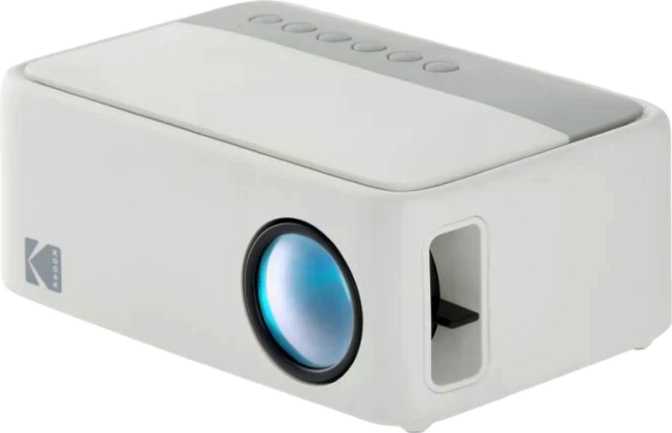
The mini projector category is cluttered with products that promise cinematic experiences and deliver disappointment. The Kodak Flik X1 takes a different approach: it is a deliberately simple, physically small projector that strips away wireless features, smart TV platforms, and high-brightness specs in favor of portability and affordability. Whether that trade-off works for you depends entirely on what you need a projector to do.
At roughly the size of a thick paperback novel and light enough to toss in a bag without a second thought, the Flik X1 occupies a specific niche. It is not competing with home theater projectors. It is not meant to replace your television. It is a tool for casual, occasional projection in controlled environments — and understanding that framing is the key to evaluating it fairly.
- Brightness40 ANSI Lumens
- ResolutionWVGA (854×480)
- Max Image Size100 inches
- Weight300 g
- ConnectivityHDMI + USB
- Lamp Life20,000 hrs (eco)
- WirelessNone
Design and Build: Compact by Intent
Physical Footprint
The Flik X1 measures 100mm wide, 60mm tall, and 140mm deep — roughly the profile of a coffee mug laid on its side. At 300 grams, it weighs less than most smartphones with cases. This is a projector you can genuinely carry in a jacket pocket or a small bag compartment without reorganizing your gear.
The compact dimensions come with a trade-off in thermal management. At 36 watts of operating power, the lamp generates heat that has to go somewhere in a body this size. Expect audible fan noise during operation — this is standard and expected in a chassis this small. It is not silent-room quiet, but it should not distract from movie audio in a typical use setting.
Build Quality Expectations
At this size and price point, the Flik X1 is constructed from lightweight plastics. It feels purpose-built for portability rather than for permanent installation. The overall volume of 840 cubic centimeters means there is simply not the internal space for premium materials or heavy-duty construction.
Think of it as a functional travel companion, not a shelf display piece. The physical dimensions are a genuine feat of miniaturization for a lamp-based projector, and the trade-offs in material weight are a reasonable cost to achieve them.
Projection Performance: The Numbers in Real Terms
Brightness
40
ANSI Lumens
Requires near-total darkness. Not suitable for rooms with ambient light.
Resolution
WVGA
854 × 480 pixels
Above standard definition. Noticeably softer than HD at larger image sizes.
Contrast
960:1
Contrast Ratio
Acceptable image depth in dark rooms. Diminishes quickly as light increases.
Brightness and Lighting Conditions
40 ANSI lumens is genuinely low, and honesty matters here. Most living room TVs output the equivalent of several hundred to over a thousand lumens. A typical entry-level home theater projector starts around 1,500 to 2,000 lumens.
This projector will only produce a watchable image in a darkened room. Even modest ambient light — a lamp on across the room, light coming under a door — will visibly wash out the image. In full daylight or a well-lit office environment, the picture will be nearly invisible.
Resolution and Image Size Reality
WVGA resolution is slightly above standard definition. For modern audiences accustomed to HD televisions, this will look noticeably softer, particularly on larger projected images. Text-heavy content like spreadsheets or detailed websites will look soft and may cause eye strain.
The Flik X1 can physically throw an image up to 100 inches diagonally. In practice, achieving 100 inches while maintaining acceptable brightness is not realistic at 40 lumens. A practical sweet spot sits in the 50–70 inch range, where brightness and resolution losses are more manageable.
Lamp Life: One Genuine Strength
The projector's lamp is rated for 20,000 hours in eco mode. At three hours of use per day, that lamp life translates to roughly 18 years of operation. For a casual-use device, this means you should never need to replace the lamp under normal ownership — a meaningful long-term cost advantage over projectors with traditional 2,000–5,000 hour lamp ratings.
Eco mode operation also tends to reduce brightness slightly in exchange for lower heat output and quieter fan operation. Given the projector's already modest brightness, eco mode is best reserved for very small image sizes or extremely dark conditions.
Lamp Life Comparison
Connectivity: Wired Only, No Exceptions
What You Get
The Flik X1 offers one HDMI port and one USB port. The HDMI connection handles video input from any compatible source: a laptop, a streaming stick, a gaming console, a Blu-ray player, or a smartphone with an appropriate adapter.
The USB port can power a streaming stick (such as a Roku or Fire TV Stick) directly from the projector — a practical workflow that turns the Flik X1 into a quasi-smart device without native smart features. A 3.5mm audio output jack routes audio to external headphones or a speaker when the built-in sound is insufficient.
- 1 × HDMI input
- 1 × USB port (power + data)
- 3.5mm headphone/audio out jack
- Remote control included
What's Missing
The absence of any wireless connectivity is the most significant feature gap. You cannot mirror your phone screen over Wi-Fi. You cannot cast YouTube or Netflix directly. There is no pairing with a Bluetooth speaker or wireless headphones. Every source device must be physically connected via cable.
- No Wi-Fi
- No Bluetooth
- No AirPlay
- No Chromecast
- No Miracast
- No built-in smart TV
- No memory card slot
Audio: Serviceable for the Size
The Flik X1 includes built-in stereo speakers rated at 2 watts per channel — 4 watts total. For a projector this small, stereo audio is a welcome detail. That said, four watts total is low power, appropriate for a quiet room with viewers seated close to the projector, not for filling a large space with sound.
For any serious listening — movies with dynamic soundtracks, music, or a room larger than a small bedroom — an external audio solution via the 3.5mm jack will significantly improve the experience. Pairing a small portable speaker connected via the audio jack is a reasonable upgrade path that doesn't add much to the portability burden.
- ConfigurationStereo
- Output Power2 × 2W (4W total)
- Audio Output Jack3.5mm
- Bluetooth AudioNone
- Dolby AtmosNone
Real-World Usage: Who This Projector Is For
- Campers and outdoor enthusiasts who want movie nights after dark without hauling heavy gear
- Students in dorms projecting content from a laptop or streaming stick in a darkened room
- Casual users wanting an occasional living room movie night with curtains drawn
- Travelers who want a portable screen solution for hotel room use
- Retro gaming on older consoles where standard-definition output is already the norm
- Dark-room presentations where content is largely visual rather than text-heavy
- Anyone expecting HD clarity — WVGA resolution will disappoint
- Buyers who want to mirror a phone screen wirelessly
- Living rooms or offices with ambient light during the day
- Users who need an always-on TV replacement
- People who want loud, room-filling audio without an external speaker
- Home theater setups where image quality is a priority
How the Flik X1 Compares to Logical Alternatives
| Feature | Kodak Flik X1 | HD Mini Projector (720p) | Entry Smart Projector |
|---|---|---|---|
| Resolution | WVGA (480p) | HD (720p) | HD or FHD |
| Brightness | 40 ANSI lumens | 100–300 lumens | 200–500 lumens |
| Wireless | None | Often Wi-Fi / BT | Wi-Fi + BT standard |
| Smart TV | No | Sometimes | Yes |
| Lamp Life | 20,000 hrs | 5,000–10,000 hrs | Varies |
| Portability | Pocket-sized | Compact | Larger / heavier |
| Audio | Stereo 4W | Mono or Stereo | Stereo |
The Flik X1's standout advantage over HD alternatives is its exceptional lamp life combined with its genuinely pocketable form factor. Its key disadvantages are brightness and resolution. Moving up to an HD mini projector typically means gaining meaningful resolution and brightness at the cost of size, weight, and price.
Honest Assessment: Strengths and Weaknesses
The Flik X1 gets several things right that are easy to overlook. The lamp longevity is genuinely impressive for the category — 20,000 hours means this device should last the better part of its owner's life under casual use, with no replacement parts needed. The physical size is real portability, not "portable for a projector" portability. The stereo speaker configuration, while modest in power, is a thoughtful inclusion at this size.
- Truly pocketable form factor
- Industry-leading lamp longevity for this class
- Stereo audio in a sub-300g chassis
- USB port enables wired streaming stick setup
- Remote control included
Where the product struggles is in brightness and resolution. These are not minor caveats — they are fundamental limitations that define where and when this projector can work. A projector that requires near-total darkness is not a versatile everyday device; it is a situational tool.
The absence of wireless connectivity will frustrate the majority of buyers who have grown accustomed to streaming directly from a phone. This is a wired projector in a wireless world, and that requires a deliberate adjustment to how you set it up and use it.
- Requires total darkness to produce a watchable image
- WVGA is noticeably soft by modern standards
- Zero wireless connectivity
- Built-in audio insufficient for larger spaces
- 100-inch max size is impractical at this brightness
Frequently Asked Questions
Final Verdict
The Kodak Flik X1 is a projector that earns its place only in very specific circumstances. If you want the absolute smallest form factor, the longest lamp life in its class, and you are committed to setting it up in a properly dark environment with a wired source device, it does what it promises.
For most buyers browsing entry-level projectors, spending more for HD resolution and higher-lumen output — even at the cost of some portability — will result in a device they use more often and enjoy more consistently.
Buy it if:
Portability is your top priority, you fully accept the low-brightness and near-standard-definition limitations, and you have a consistently dark viewing environment.
Skip it if:
You expect wireless streaming, daylight viewing capability, or HD image quality.
Conditional Recommendation
Best for specific dark-room, high-portability use cases only