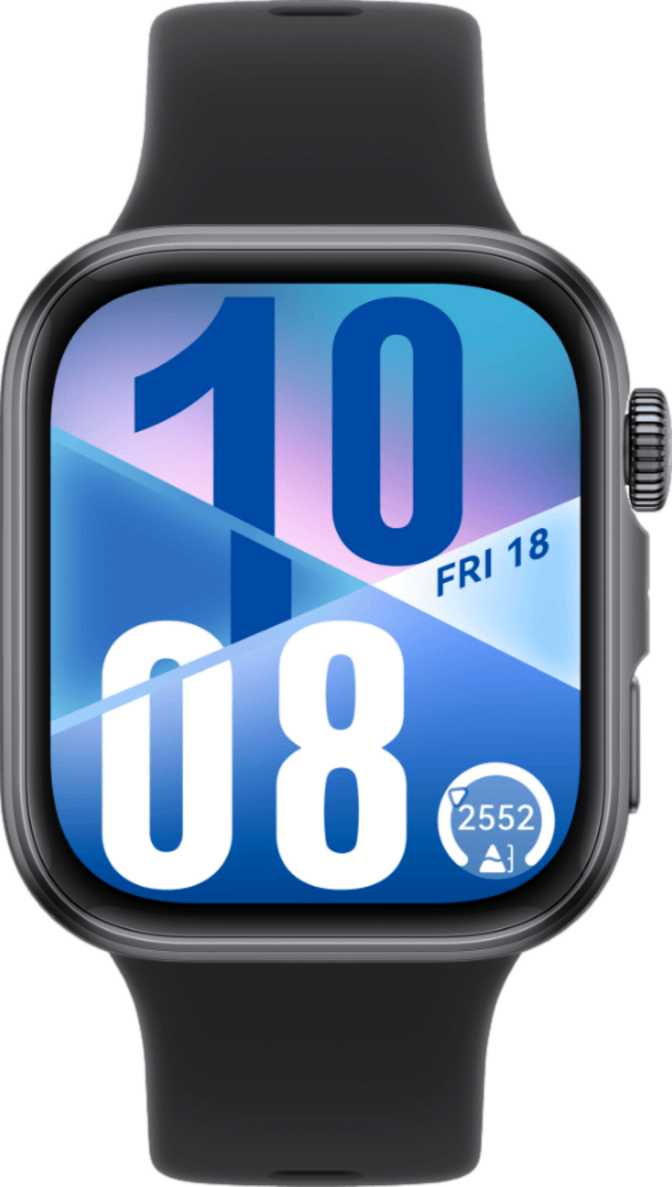
Huawei Watch Fit 4 Review: Featherlight Fitness Tracker with Serious Stamina
SmartwatchesThe fitness tracker market is crowded with watches that promise everything and deliver a muddled compromise. The Huawei Watch Fit 4 takes a different stance: it picks a lane — serious health tracking in a featherlight, stylish package — and commits to it hard. At roughly the price point where most buyers are deciding between a basic band and a full smartwatch, the Watch Fit 4 makes a compelling case that you do not have to choose.
This is a watch built for people who train consistently, care about recovery as much as performance, and want their wrist device to last the week without hunting for a charger. Whether that describes you, and whether the trade-offs involved are ones you can live with, is exactly what this review will help you figure out.
Design and Build: Thin, Light, and Unapologetically Athletic
Physical experience & build quality
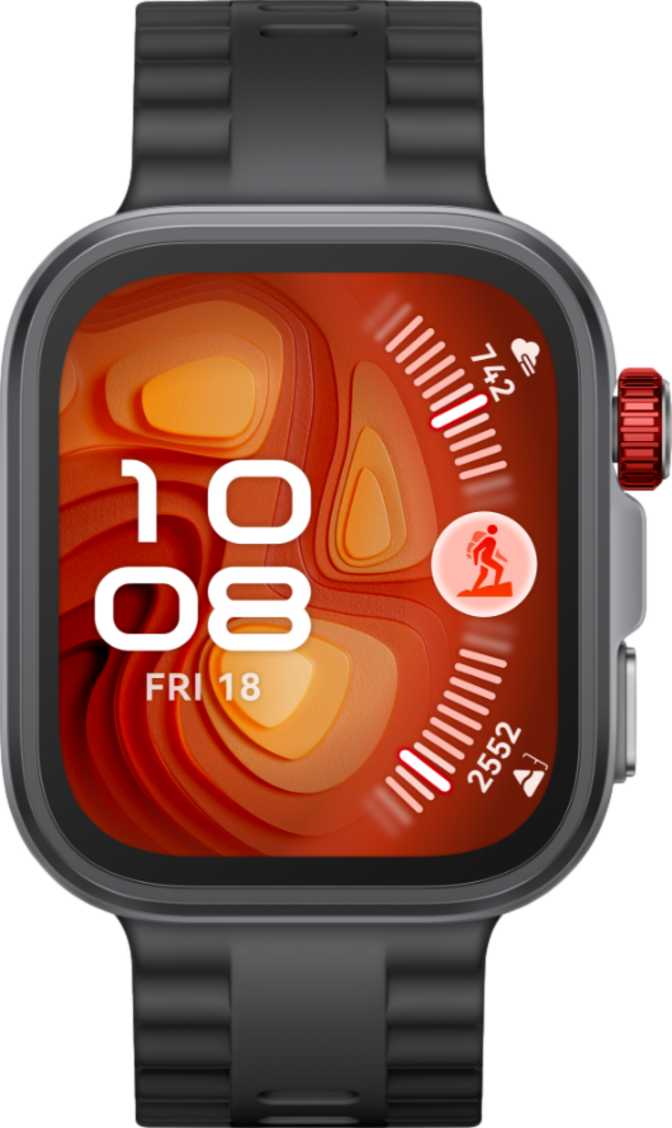
The first thing you notice when you pick up the Huawei Watch Fit 4 is how little of it there is. At 27 grams with the band, this watch weighs less than a standard AA battery. The case measures 43mm tall by 38mm wide and sits just 9.5mm off the wrist — thinner than most ballpoint pens. For comparison, many smartwatches in this category hover around 12–13mm thick and weigh 35–50 grams. The difference is immediately perceptible during workouts, during sleep, and frankly, all day.
The rectangular case follows the design language Huawei established with the Fit series — leaning closer to a small smartwatch silhouette than a traditional round sports tracker. It wears surprisingly well on a range of wrist sizes, thanks to the 20mm swappable band system. Bands are user-replaceable without tools, which matters over time as straps wear from sweat and daily use.
The watch operates reliably between -10°C and 45°C (14°F to 113°F), covering everything from a winter run to a hot yoga session without complaint.
Physical Dimensions
- Height
- 43 mm
- Width
- 38 mm
- Thickness
- 9.5 mm
- Weight
- 27 g
- Band Width
- 20 mm
- Replaceable Band
- Yes, tool-free
Durability at a Glance
- 5 ATM & IP68 waterproofing — rated to 50 metres
- Operates from -10°C to 45°C
- Swim-ready with stroke counting
- Standard mineral glass — no sapphire or branded scratch resistance
- Not rated for scuba or pressurized water sports
Display Performance: AMOLED at This Size Is a Genuine Advantage
1.82-inch panel analysis
At 1.82 inches, the Fit 4's screen is large for its form factor. The AMOLED technology matters for two practical reasons beyond aesthetics. First, battery efficiency: AMOLED panels only illuminate the pixels they need, meaning dark watch faces cost significantly less power than an LCD lighting the whole screen. This directly contributes to the watch's impressive endurance figures. Second, legibility: the combination of true blacks, high peak brightness, and a sharp 347 pixels-per-inch density means data is readable in nearly any environment — gym fluorescents, overcast outdoor light, and direct summer sun included.
The always-on display mode keeps basic information visible at all times without a wrist raise — a feature many competitors reserve for higher price tiers. When battery life is a priority, disabling it squeezes additional days from a charge.
Sensor Suite: Health Monitoring That Means Business
What each sensor does for you in real life
- Continuous Heart Rate
24/7 monitoring with high/low alerts and resting rate tracking - Blood Oxygen (SpO2)
Tracks overnight saturation — useful for detecting breathing disruption during sleep - Built-in GPS + Galileo
Route tracking without your phone; Galileo improves accuracy in dense urban or forested environments - Barometer
Real-time elevation tracking — more responsive than GPS altitude alone - Compass, Gyroscope & Accelerometer
Orientation, motion, and cadence measurement for precise activity data
- ECG
No electrocardiogram hardware — cannot detect atrial fibrillation or rhythm irregularities - Body Temperature
Skin temperature sensor absent — limits thermal regulation tracking - Perspiration Monitor
No sweat analysis — hydration inference not available - Fall Detection
No automatic fall alert — relevant limitation for solo outdoor athletes and older users
Sport and Activity Tracking: Depth Across the Fitness Spectrum
Multi-sport modes, VO2 Max, and what they mean for your training
Multi-sport mode covers a wide range of activities, with automatic activity detection handling recognition when you forget to manually start a session. The watch tracks distance, pace, steps, elevation, route, and cadence — the full toolkit for running, cycling, and most gym disciplines.
The VO2 Max measurement estimates your cardiovascular fitness ceiling — the maximum rate at which your body can use oxygen during intense exercise. It is a key indicator tracked by serious runners and cyclists as a long-term benchmark. Paired with recovery readiness scores that tell you whether your body is primed to train hard or needs rest, the Fit 4 sits above typical entry-level trackers.
Swimming Deep-Dive
The Fit 4 goes beyond water resistance — it actively tracks swim strokes, distinguishes stroke styles, and counts laps. For triathletes and regular pool swimmers, this means full session data without keeping a phone poolside. The 50-metre waterproof rating covers everything from lap swimming to open-water events.
Elevation & Route Tracking
Barometric elevation tracking responds faster and more accurately than GPS altitude alone — a meaningful difference on hilly routes where GPS can lag or drift. Route tracking and in-app maps log your paths for review, useful for trail runners and cyclists mapping rides over time.
Battery Life: One of Its Strongest Arguments
Endurance, charging speed, and what they mean week to week
A single charge on the Huawei Watch Fit 4 is rated to last ten days under typical use. For a watch with always-on GPS capability, continuous heart rate monitoring, SpO2 tracking, and an always-on AMOLED display available, ten days is exceptional. Most competing smartwatches with comparable sensor arrays last two to four days between charges.
The practical implication: the Fit 4 can be worn for an entire week of workouts, sleep tracking, and daily notifications, then charged once over the weekend before the next week begins. This fundamentally changes the habit loop around charging — it stops being a daily chore.
Battery Life vs. Category Norms
Illustrative comparison based on published category averages. GPS-active sessions reduce all figures proportionally.
Smart Features: A Watch That Pulls Its Weight All Day
Calls, payments, music, notifications, and women's health
Calls and Connectivity
The Fit 4 includes NFC for contactless payments — tap to pay directly from the wrist without your phone or wallet. The watch also handles call control: a built-in microphone lets you manage and talk through incoming calls when your phone is out of reach. This stops short of a standalone calling device (there is no cellular module), but it handles the real-world scenario cleanly.
- NFC contactless payments
- Call accept, reject, and talk-through via built-in mic
- Wrist notifications with vibration alerts
- Find My Phone function
- Remote camera shutter control
- Bluetooth 5.2 connection
Music and Storage
The 4GB of internal storage means the Fit 4 can hold music files directly on the watch — enabling phone-free listening during runs or gym sessions when paired with Bluetooth earbuds. This is a meaningful convenience advantage over trackers that require tethering to a phone for audio.
Women's Health Features
- Period tracking and cycle prediction
- Fertile window and ovulation notifications
- Estimated period start date forecasting
- Predictions refined over time from your data
The Huawei Health App
The companion app is free and entirely ad-free — no paywalled tiers for core health data. It provides detailed activity reports, sleep analysis, goal setting, coaching, and an exercise diary. It supports live tracking, route planning, food and water logging, and integration with compatible smart scales for weight, BMI, and body composition trends.
Who This Watch Is For — and Who Should Look Elsewhere
Real-world usage scenarios matched to buyer types
- Train consistently across running, cycling, or swimming and want one tracker for all of it
- Want a week-plus battery life so charging is a weekend habit, not a nightly one
- Value a slim, light watch you'll actually wear overnight for sleep tracking
- Want NFC payments and call handling without stepping into full smartwatch territory
- Use iOS or Android and don't need desktop data access
- Rely on women's health cycle tracking as a functional daily feature
- Need ECG-grade cardiac monitoring for a medical reason — this watch cannot provide it
- Use ANT+ training equipment such as power meters or compatible gym machines
- Require fall detection for solo outdoor safety or as a senior user
- Want standalone cellular calling or streaming without a phone nearby
- Are deep in the Google or Apple ecosystem and expect seamless native integration
- Need scratch-resistant certified glass for a high-impact lifestyle
Competitive Positioning
How the Watch Fit 4 stacks up against typical mid-range alternatives
| Feature | Huawei Watch Fit 4 | Typical Mid-Range Competitor |
|---|---|---|
| Display Size | 1.82" AMOLED | 1.4–1.7" AMOLED or LCD |
| Pixel Density | 347 ppi | 260–320 ppi |
| Weight | 27 g | 32–50 g |
| Thickness | 9.5 mm | 10–13 mm |
| Battery Life | ~10 days | 2–7 days |
| Charge Time | ~45 minutes | 1–2 hours |
| Wireless Charging | Sometimes | |
| NFC Payments | Sometimes | |
| Built-in GPS | ||
| VO2 Max | Some | |
| ECG | Some (higher price) | |
| Internal Music Storage | 4 GB | Rare at this tier |
| Wi-Fi | Some | |
| ANT+ | Some | |
| Fall Detection | Some |
Where the Fit 4 concedes ground is ecosystem depth. Garmin's Connect platform offers broader third-party integration and ANT+ support. Samsung's and Apple's wearables integrate more tightly within their respective phone ecosystems. Huawei Health works well but operates independently — users committed to Google Fit or Apple Health should expect friction, not a seamless bridge.
Honest Assessment: Strengths and Trade-Offs
What the Watch Fit 4 genuinely does well, and where it falls short
Where It Excels
The Fit 4's genuine strengths are its physical form — it is one of the lightest, slimmest watches in its class, and it shows. Slipping it on for a morning run and leaving it on through the night for sleep tracking feels completely natural rather than obligatory.
Battery endurance is arguably its headline advantage. When every competing watch needs charging midweek, a device that confidently covers a full seven days of training plus two days of margin changes how you relate to your wearable entirely.
The display quality at this price tier is rare. The combination of AMOLED technology, sharp pixel density, and genuine size gives the Fit 4 a screen that sits several notches above what budget and mid-range buyers typically receive. The VO2 Max tracking and recovery readiness scores add performance-training depth that would have been premium-tier features just a few years ago.
Real Limitations
The lack of ECG is not a problem for the core target audience, but for anyone with a cardiac health monitoring reason, it closes the door entirely. There is no workaround — the hardware simply is not present.
The absence of Wi-Fi means data sync is always phone-dependent. In daily practice this is largely invisible, but it surfaces occasionally — when your phone battery is flat or when syncing from a different room.
The Huawei ecosystem consideration is real and worth naming plainly. The Health app is polished and feature-rich, but it is Huawei's island. If you have invested time building health history in a different platform, understand that migrating or bridging data will involve friction. This is not a technical failing of the watch — it is a strategic ecosystem decision with practical consequences.
Frequently Asked Questions
Answers to the questions buyers search for most
A Focused Tracker That Earns Its Recommendation
The Huawei Watch Fit 4 makes deliberate trade-offs — and most buyers in its target audience will never notice the gaps.
The Fit 4 is a well-considered sports health tracker that makes a small number of deliberate trade-offs in exchange for an exceptional combination of weight, battery life, display quality, and price. It is not a medical device, not a standalone smartwatch, and not a gateway into a broad third-party ecosystem.
What it is, though, is one of the most wearable, enduring, and genuinely useful fitness trackers available at its price point. For someone who trains regularly, wants meaningful health insights beyond step counts, and is tired of babysitting a charger every other evening, the Fit 4 delivers where it counts.
The missing ECG and fall detection are real gaps for specific users, but they are not relevant for the majority of buyers this watch is built for.