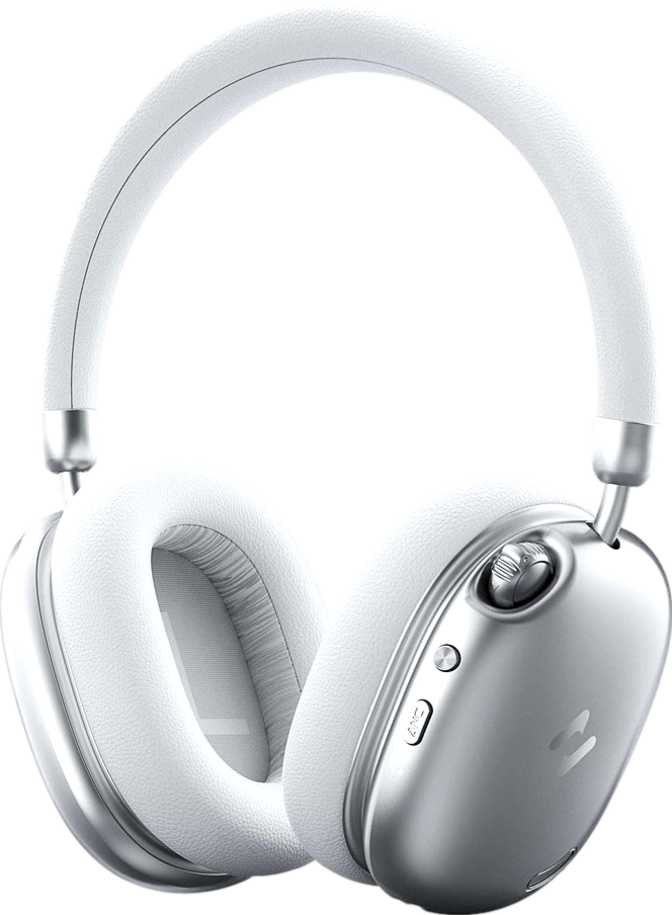
Havit Space S1 Full Review: Extraordinary Battery, Real Trade-offs
HeadphonesOver-ear wireless headphones have become a fiercely competitive category. The majority of options from established brands cluster around similar battery claims, similar feature sets, and similar trade-offs. The Havit Space S1 enters this market with two numbers that immediately demand a second look: a claimed 100-hour wireless battery life and a microphone array comprising ten individual mics. This is a closed-back, over-ear headphone with active noise cancellation, spatial audio, Bluetooth 6 connectivity, and hi-res audio frequency coverage — a specification profile that punches well above what most mid-range headphones offer.
Hours Battery
ANC disabled
Microphones
Noise-canceling array
Bluetooth
Latest standard
Hi-Res Ceiling
Full-range drivers
Build Quality and Physical Design
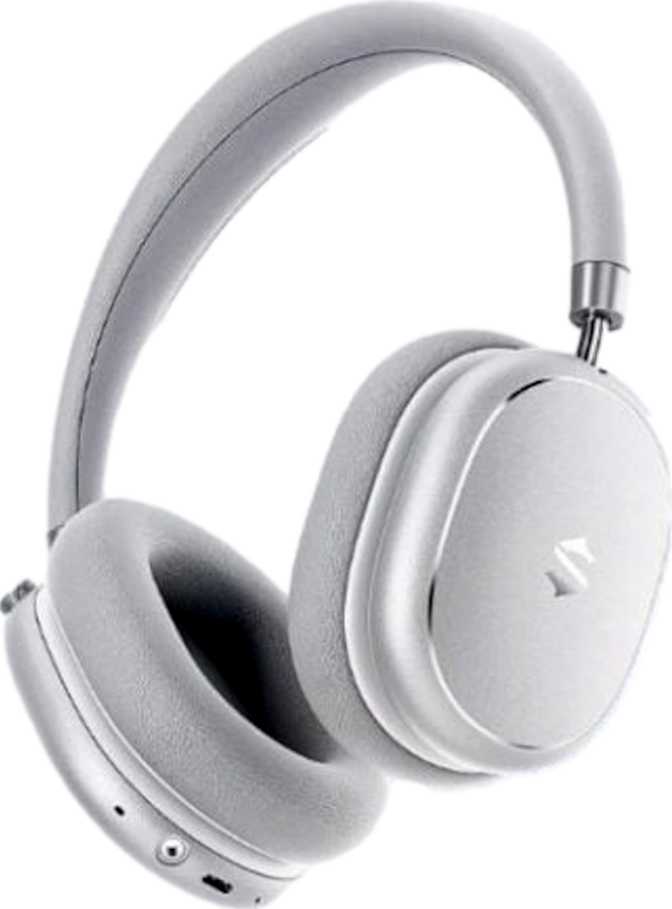
At 258 grams, the Space S1 sits in a comfortable weight class for extended-wear over-ear headphones. This is lighter than many business-class ANC headphones that exceed 300 grams, and that difference adds up over a long flight or full workday. Even 40–50 grams less on your head becomes a meaningful comfort advantage over extended sessions.
The headphone uses a closed-back construction, meaning the ear cups form a physical seal around your ears rather than sitting open to the room. Audio stays contained — reducing sound leakage to people nearby — and the physical enclosure contributes passive noise isolation before the active electronics engage.
Controls are mounted directly on the ear cups with no inline remote on the cable. This aligns with wireless being the clear primary use case. These are not designed as children's headphones; the sizing and feature set are aimed at adult professional and enthusiast use.
Detachable, Tangle-Free Cable
Cables are the most common failure point on any wired-capable headphone. A detachable design means a damaged connector becomes a cable replacement rather than a headphone replacement — a longevity advantage that compounds over years of use. The tangle-free design reduces daily storage friction.
Wired Connection Available
Beyond Bluetooth, the Space S1 supports wired connection through its detachable cable — useful for in-flight entertainment systems, environments where Bluetooth is restricted, or when conserving battery is the priority over wireless convenience.
Sound Performance: What the Drivers Actually Deliver
Driver Capability and Frequency Range
The Space S1 uses 40mm dynamic drivers — a proven diameter for over-ear headphones that balances bass extension with midrange presence and treble detail. Driver size is one variable among many; enclosure design, tuning, and diaphragm construction all contribute equally. That said, 40mm sits in a well-established sweet spot across quality tiers.
What genuinely distinguishes the audio specification is the frequency ceiling. These drivers reproduce audio up to 40,000 Hz — twice the upper boundary of typical human hearing at 20,000 Hz. This places the Space S1 in Hi-Res Audio territory, a standard requiring playback capability beyond conventional CD quality. The low end extends to 20 Hz, covering the full bass range — important for sub-bass texture in music and the low-frequency impact of cinematic audio.
Spatial Audio
The Space S1 supports spatial audio processing, transforming standard stereo into a three-dimensional soundstage with perceived height and depth. For compatible media — films, spatially mixed music, and supported gaming platforms — this creates an immersive experience beyond conventional left/right stereo separation. Its presence meaningfully expands the headphone's value for entertainment-driven listeners.
A Note on Driver Magnets
The Space S1's drivers do not use neodymium magnets — the standard in most quality headphone drivers because they deliver very high magnetic force relative to mass. Their absence here is an unusual design choice at this specification level. This doesn't inherently compromise the driver, as magnet type is one factor among many, but listeners who prioritize maximum dynamic headroom and transient sharpness may notice the difference against neodymium-based competitors in direct comparisons.
Active Noise Cancellation and Passive Isolation
The Space S1 deploys two complementary noise-reduction systems. Passive isolation comes from the physical seal of the closed-back ear cups — no electronics required — and handles higher-frequency ambient sounds effectively: office chatter, keyboard clicks, air conditioning fans, and surface-level transport noise. Active Noise Cancellation adds an electronic layer targeting low-frequency continuous noise like aircraft cabin rumble, train vibration, and HVAC drone — exactly what passive isolation handles least well.
Passive Isolation
The closed-back ear cups physically block higher-frequency ambient sounds — office conversations, keyboard activity, and ventilation noise — before any electronics engage. An effective standalone layer even with ANC switched off.
Active Noise Cancellation
The ANC system targets low-frequency continuous noise — aircraft engines, train vibration, HVAC systems — using the ten-microphone array for accurate environmental sampling and cancellation modeling across complex acoustic environments.
Ambient Sound Mode
Rather than simply disabling ANC, ambient mode actively pipes external audio through the microphone array — making conversations, public announcements, and environmental sounds audible without removing the headphones.
Battery Life: The Number That Changes the Conversation
100 hours of wireless playback without ANC is the headline figure, and it earns that status. At four hours of daily use, the Space S1 lasts over three weeks on a single charge. The typical over-ear wireless headphone in this category delivers somewhere between 30 and 60 hours — the Space S1 effectively doubles most of the field.
hours
Wireless — ANC off
hours
Wireless — ANC on
Battery Comparison
With ANC running, runtime drops to 72 hours — still more than two weeks at four hours daily. Many ANC headphones lose 30–50% of their battery life when noise cancellation is enabled; the Space S1 retains 72% of its maximum, suggesting efficient ANC implementation.
Charging uses USB-C — the universal standard across most current devices — with a built-in battery indicator keeping you informed of remaining charge at all times. Wireless charging is not supported, but given the extreme battery longevity, you simply won't charge these frequently enough for that omission to matter much in daily use.
Connectivity: Bluetooth 6 and What It Means
The Space S1 ships with Bluetooth 6 — among the most current iterations of the wireless standard. Bluetooth 6 brings improvements in connection consistency, interference handling in congested wireless environments, and efficiency gains in the radio layer itself. In practice, this means more reliable signal in dense wireless environments like airports, conference centers, and open-plan offices compared with Bluetooth 5.x implementations found in most current competitors.
Wireless range tops out at approximately 10 meters — functional for typical indoor use and sufficient for a standard desk setup. It is notably shorter than the 30-meter claims seen on some competitors, so users who regularly operate at significant distance from their source device should factor this in. Two-device multipoint is supported, allowing simultaneous connections to a laptop and smartphone with audio switching dynamically between them — a genuine workflow feature, not a spec checkbox.
Codec Support: The Full Picture
Codec support is where connectivity becomes nuanced and where the Space S1's choices require honest examination. The headphone supports AAC and LDHC — a strong pairing for Apple and Huawei users, but a meaningful limitation for the broader Android market.
Supported Codecs
AAC
Apple's primary Bluetooth codec. High-quality wireless audio on iPhone, iPad, and Mac — zero configuration required.
LDHC
High-resolution wireless audio codec for Huawei and Honor devices. Enables above-standard Bluetooth quality within this ecosystem specifically.
SBC
Universal fallback codec. Works with every Bluetooth device as the baseline connection standard when no other codec is available.
Not Supported
LDAC (Sony / Android hi-res)
aptX (standard quality Android)
aptX HD & aptX Adaptive
aptX Low Latency (gaming / video sync)
LE Audio & Auracast
Microphone Performance and Call Quality
Ten microphones is a genuinely unusual count for consumer headphones. Most headphones in this category deploy two to four. The Space S1's ten-mic configuration enables sophisticated beamforming and noise filtering — the system can more precisely identify voice direction and more aggressively suppress surrounding background noise to isolate the speaker's voice.
The microphones are actively noise-canceling for voice pickup, not just environmental monitoring. This means your voice is processed and cleaned at the source, so call recipients hear your voice rather than the ambient noise around you — meaningful for coffee shops, open offices, outdoor calls, or any environment with consistent background noise.
Microphones
The ten-mic array enables more sophisticated beamforming than the two-to-four mic configurations found in most consumer headphones. Accurate voice-direction identification and aggressive background suppression are practical advantages for anyone whose day centers on video meetings, voice calls, or recorded audio.
Missing: Hardware Mute Button
For headphones clearly designed with professional communication in mind — evidenced by the microphone investment — the absence of a physical mute button is a genuine convenience gap. Muting a live call requires a software action on your device or in the conferencing app, which is slower and less reliable than a dedicated button press during active conversation.
No In-Ear Detection
The headphone does not automatically pause playback when lifted off the ears. Every time you remove them to speak with someone nearby, a manual pause is required — a recurring small friction that adds up across a workday.
Features at a Glance
Ambient Sound Mode
Goes beyond disabling ANC. Actively pipes external audio through the microphone array so environmental sounds are audible alongside your content — useful for commuting, errands, and any situation requiring situational awareness.
Two-Device Multipoint
Simultaneous connection to two Bluetooth sources — a work laptop and a personal phone. Audio priority shifts to whichever source becomes active, with no re-pairing required when moving between devices.
On-Device Controls
Playback, volume, ANC, and mode management are all mounted on the ear cup controls. Standard for this category and intuitive once familiarized — no reaching for a phone to skip a track.
Wired Fallback
The detachable cable enables wired connection for in-flight entertainment systems, restricted-Bluetooth environments, or any situation where preserving battery is preferable to wireless operation.
Full Headset Functionality
Operates as a complete headset — audio output and microphone input together — compatible with Zoom, Teams, Google Meet, and all major conferencing applications without additional hardware.
Battery Level Indicator
A built-in battery indicator keeps you informed of remaining charge at all times — preventing unexpected mid-session shutdowns that longer-interval charging might otherwise make easy to overlook.
Who Should Buy the Havit Space S1?
Built For You If…
You are a heavy battery user or infrequent charger
At four hours daily, three weeks on one charge is the mathematical reality. This headphone could become the only device you own that you don't actively manage for battery.
You are a remote worker or call-heavy professional
The ten-microphone array and noise-canceling voice pickup are appropriate for anyone whose day revolves around video meetings, voice calls, or recorded communication.
You use iPhone, iPad, or Mac
AAC compatibility ensures high-quality wireless audio on Apple devices without any configuration or compromise in the wireless chain.
You own a Huawei or Honor device
LDHC support delivers high-resolution wireless audio specifically within this ecosystem — a pairing that gets the most from both headphone and device.
You work in an open-plan office
ANC, passive isolation, ambient mode, and long battery life combine into a genuine productivity toolkit tailored for shared workspace environments.
Consider Alternatives If…
You want hi-res wireless audio on Android (non-Huawei)
Without LDAC or aptX, Android users outside the Huawei ecosystem connect via AAC or SBC only. Competitors with LDAC would better serve this use case.
You game or watch video where sync matters
Without a low-latency codec, a perceptible audio delay is possible — noticeable in fast-paced games or lip-synced dialogue content.
You need generous Bluetooth range
The 10-meter ceiling is adequate for a desk setup but constrains users who move freely around larger homes or workspaces with a stationary source device.
You travel frequently on non-Apple, non-Huawei devices
For travelers seeking both top-tier ANC and high-fidelity wireless codec on non-Apple/Huawei devices, alternatives with LDAC or aptX Adaptive serve better.
How the Havit Space S1 Compares to the Market
| Feature | Havit Space S1 | Typical Mid-Range ANC | Premium ANC Headphones |
|---|---|---|---|
| Battery (ANC off) | 100 hours | 30–60 hours | 30–40 hours |
| Battery (ANC on) | 72 hours | 20–40 hours | 20–30 hours |
| Bluetooth Version | 6 | 5.0–5.3 | 5.0–5.3 |
| Microphone Count | 10 | 2–4 | 4–8 |
| Frequency Range | 20Hz – 40kHz | 20Hz – 20–22kHz | Up to 40kHz (select models) |
| LDAC Support | No | Varies by brand | Common (Sony lineup) |
| aptX Family Support | No | Common on Android-focused | Varies |
| AAC Support | Yes | Common | Yes |
| LDHC Support | Yes | Rare | Rare |
| Spatial Audio | Yes | Uncommon at this tier | Standard at premium |
| Multipoint Pairing | 2 devices | Increasingly common | Standard |
Honest Assessment: Strengths and Weaknesses
Where It Excels
Industry-Leading Battery Endurance
100 hours without ANC and 72 with it active separates the Space S1 from the entire mainstream ANC category. It is not incrementally better but fundamentally different in endurance class.
Professional-Grade Microphone Array
Ten noise-canceling microphones significantly exceeds what most consumer headphones deploy. For call quality and voice communication, this hardware investment delivers real and meaningful advantages.
Bluetooth 6 Connectivity
Among the first consumer headphones to implement Bluetooth 6, delivering better connection stability in congested wireless environments and improved power efficiency over Bluetooth 5.x competitors.
Hi-Res Audio Driver Specification
A 40kHz frequency ceiling and full bass extension to 20Hz place the drivers in Hi-Res Audio territory — an engineering standard that benefits audible frequencies through reduced distortion throughout the range.
Dual-Layer Noise Isolation
ANC and passive isolation work as complementary systems. Closed-back design handles high-frequency noise; ANC targets low-frequency drone. Ambient mode then completes the picture with full situational awareness on demand.
Where It Falls Short
Limited Codec Support for Android
No LDAC or aptX means non-Huawei Android users connect via SBC or AAC only. This bottlenecks the hi-res driver specification at the wireless transmission stage for a large share of Android users.
No Hardware Mute Button
A significant oversight for a headphone built around call quality. Muting requires a software action — slower and less reliable than a dedicated button, particularly during fast-moving meetings.
No In-Ear Detection
Automatic pause when removing the headphones has become a category expectation. Its absence requires a conscious manual pause every time you take them off for a side conversation.
Short Bluetooth Range
The 10-meter limit is functional for desk setups but constrains users who move around larger spaces. Several competitors at this tier offer two to three times this range.
Potential Audio Delay for Gaming and Video
Without a low-latency codec, perceptible audio-to-video lag is possible — minor for casual video but noticeable in fast-paced gaming or lip-synced dialogue content.
Questions Real Buyers Ask Before Purchasing
Recommended — For the Right Buyer
The Havit Space S1 makes a deliberate engineering bet: that battery endurance and microphone quality matter more to its target buyer than codec breadth and minor convenience features. That bet is well-reasoned for a specific type of user, and less compelling for everyone outside that profile.
For remote workers, call-heavy professionals, Apple users, and anyone with a firm distaste for charging anxiety, the Space S1 fits the daily workflow unusually well. The battery figure alone separates it from the entire mainstream ANC category, and the ten-microphone array ensures the communication use case it is clearly designed for is served with genuine hardware commitment. For serious audio enthusiasts on Android who want LDAC for lossless wireless, or gamers requiring low-latency audio, the Space S1 is not the right match — not because it falls short in absolute terms, but because its engineering investments are concentrated elsewhere.
Buy It If
- Extreme battery life — three or more weeks on one charge — is a top priority
- Your workday is dominated by calls, meetings, or voice communication
- Your primary device is iPhone, iPad, Mac, or a Huawei/Honor product
- You need effective ANC for open offices, travel, or shared workspaces
Pass On It If
- You are an Android audio enthusiast who relies on LDAC for lossless wireless
- Low-latency audio is critical for gaming or frame-accurate video content
- A hardware mute button is non-negotiable for your call workflow
- Long-range Bluetooth freedom matters for your typical daily setup