Govo GoSurround 220 Full Review: Focused Bluetooth Stereo Speaker
SoundbarsThe Govo GoSurround 220 is a deliberate product. At a time when most speakers in its class pile on features — Wi-Fi streaming, voice assistants, dedicated apps, multi-room audio — this one strips everything back to a single proposition: clean, wireless stereo sound over Bluetooth. Whether that restraint is a strength or a dealbreaker depends entirely on what you actually need from a speaker. This review will help you figure out which side of that line you stand on.
Design, Build Quality, and Physical Experience
Physical form factor, control interface, and daily handling
A Slim, Bar-Like Silhouette
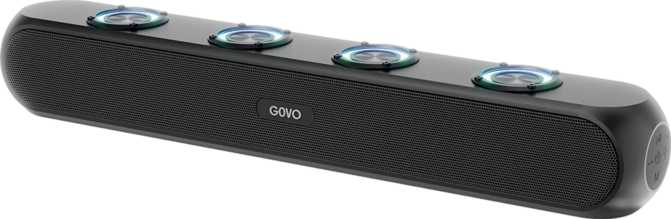
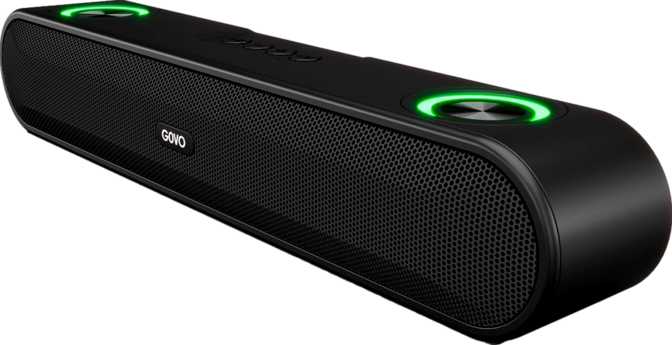
At 375mm wide and just 65mm in both height and depth, the GoSurround 220 has a flat, bar-like silhouette that tucks neatly under a monitor, along a bookshelf edge, or flat on a desk without demanding attention. It does not tower, does not protrude, and does not compete visually with whatever surrounds it.
Weighing just over 600 grams, it is light enough to relocate without a second thought — move it between rooms, bring it to a friend's place, or shift it across a desk — without any of the effort heavier speakers demand.
Controls and Interface
There is no remote control, no touch panel on the unit, and no companion smartphone app. All interaction happens through whatever device you are streaming from. Most users with a phone or laptop already in hand will find this perfectly workable — but those accustomed to reaching for a physical button will need to adjust their expectations.
Bluetooth Performance: Where This Speaker Earns Its Credibility
Bluetooth is the sole connection method — and the technical investment shows
The most current Bluetooth standard delivers more stable connections, faster pairing handshakes, and better coexistence with other wireless devices in crowded environments. If older speakers in your experience stuttered when someone walked between you and the unit, the underlying radio improvements in version 5.3 meaningfully reduce that frustration.
This codec adjusts its compression rate dynamically — streaming at higher bit rates when conditions allow, adapting gracefully when they do not. For compatible Android and Windows devices, this meaningfully closes the gap between wired and wireless audio quality. It is the GoSurround 220's most significant technical credential.
iPhone and iPad users are fully covered. AAC is Apple's preferred Bluetooth audio codec and delivers substantially better quality than the basic SBC fallback every Bluetooth device defaults to. Apple users will not benefit from aptX Adaptive, but they will not be left with degraded audio either — the experience is genuinely solid.
No Wired Connections — Bluetooth Is the Only Input
The GoSurround 220 has no Wi-Fi, no AUX input, no HDMI, no optical input, and no S/PDIF port. Every audio source must reach the speaker wirelessly from a device within range. If your setup ever requires a physical cable — from a TV, a turntable, or a desktop PC without Bluetooth — this speaker cannot accommodate it.
Two-Channel Stereo: What It Actually Delivers
Understanding what stereo means — and what this speaker does not claim
The GoSurround 220 is a two-channel stereo speaker, producing a left and right audio signal. At 375mm wide, there is enough physical separation between the two channels to create a genuine stereo image rather than the diffuse mono sound you get from a single compact round speaker.
What the GoSurround 220 does not claim to do is simulate surround sound, Dolby Atmos height channels, or DTS:X spatial processing. There is no virtual surround, no upmixing, and no cinematic audio processing. The name "GoSurround" is branding, not a technical specification — the hardware is fundamentally a stereo speaker, and it is honest about that.
Where Stereo Shines
- Music listening & album playback
- Podcasts & spoken word content
- Casual video streaming on a laptop
- Desktop audio replacement
Real-World Usage: Who This Speaker Is Built For
Matching the GoSurround 220 to the right buyer — and the wrong one
- Desktop and monitor audio. The slim bar profile sits perfectly under a screen and the Bluetooth 5.3 connection holds steady through a full workday without fuss.
- Bedroom or small-room listening. Compact enough for a nightstand or small shelf, light enough to reposition easily, uncomplicated enough to use without learning a new app or ecosystem.
- Bluetooth-first users. If your listening life is organized around streaming from a phone or laptop, the GoSurround 220 fits that workflow without any friction.
- Single-source setups. One person, one device, one room — this is precisely the scenario the speaker was engineered for, and it handles it well.
- TV audio upgrade. Without HDMI ARC, optical, or AUX, this speaker cannot physically connect to a television through any wired means whatsoever.
- Multi-room audio enthusiasts. No Wi-Fi means no room grouping, no synchronization, and no integration into Sonos, Google Home, or Amazon Echo platforms.
- Vinyl and legacy source listeners. No physical inputs means turntables, CD players, and any non-Bluetooth device simply cannot connect.
- App and EQ control seekers. There is no dedicated app, no EQ presets, and no fine-grained audio tuning available. What you hear is what you get.
Competitive Positioning
How the GoSurround 220 stacks up against logical alternatives in the same range
| Feature | Govo GoSurround 220 | Typical Wi-Fi Speaker | Typical Budget BT Bar |
|---|---|---|---|
| Bluetooth Version | 5.3 | 4.2 – 5.0 | 5.0 – 5.1 |
| aptX Adaptive | Rarely | ||
| AAC Support | Varies | Sometimes | |
| Wi-Fi / Streaming | |||
| AUX Input | Sometimes | ||
| Voice Assistant | |||
| Physical Controls | |||
| Weight | ~615g | 800g – 2kg+ | 500g – 900g |
The GoSurround 220 trades ecosystem breadth for codec depth. Competing speakers at similar price points frequently include an AUX input and basic controls, but often ship with older Bluetooth and only SBC or AAC support — no aptX at any tier. The GoSurround 220 inverts that priority: no physical inputs, no smart features, but a notably higher wireless audio ceiling via aptX Adaptive. Against Wi-Fi speakers it loses on features, but wins on portability and freedom from any dependency on a home network or app ecosystem.
Honest Assessment: Strengths and Limitations
An unvarnished look at what this speaker does well and where it genuinely falls short
Where It Earns Its Place
The GoSurround 220's genuine strength is its audio transmission quality relative to its size and positioning. aptX Adaptive support at this form factor is uncommon, and for buyers streaming from a compatible Android device or modern Windows machine, the wireless audio experience will outperform most competitors at a similar or even slightly higher price.
The Bluetooth 5.3 foundation adds real-world connection reliability that older-generation budget speakers simply cannot match. The physical design is honest too — it does not pretend to be larger or more powerful than it is, and its dimensions suggest a product built around a specific, real use case rather than spec-sheet inflation.
Where It Falls Short
The total absence of wired connectivity is the sharpest criticism. Removing the AUX input is a deliberate choice that narrows the audience significantly. A single 3.5mm jack would have made this speaker viable for a much wider range of buyers — those with desktop PCs lacking Bluetooth, or anyone needing a secondary source. Its absence is a real constraint, not a minor footnote.
The lack of physical controls on the device is a secondary friction point. In practice most users adapt quickly, but it leaves the speaker entirely dependent on your streaming device staying within arm's reach any time you need to adjust volume or skip a track.
Questions Buyers Ask Before Purchasing
Answers to the most common concerns about the Govo GoSurround 220
Final Verdict
Our honest recommendation after a full analysis
The Govo GoSurround 220 is a focused, capable Bluetooth stereo speaker that earns its place in a specific type of setup. If your listening happens from a Bluetooth-connected phone or laptop, in a single room, without the need for physical cable inputs or smart-home integration, this speaker delivers a wireless audio experience — particularly through aptX Adaptive — that outclasses most competitors at similar size and price.
It is not a do-everything speaker. It is not for TV audio, legacy sources, multi-room setups, or buyers who want hands-on physical control. Those limitations are structural and will not change with firmware updates or accessories.
Buy It If
You want clean, high-quality Bluetooth stereo audio for a desk or bedroom, stream primarily from an Android device or modern Windows laptop, and want a compact, straightforward speaker that handles wireless audio at a level most similarly-priced alternatives do not reach.
Skip It If
You need a physical input of any kind, want to connect to a TV, plan to integrate it into a smart-home or multi-room ecosystem, or need the flexibility to plug in non-Bluetooth sources now or in the future.