Google Pixel 10a Full Review: The Mid-Range Android to Beat
SmartphonesQuick Summary
The Pixel 10a is the most complete mid-range Android Google has produced — a phone that pairs flagship-grade camera processing with the cleanest software experience in Android, all wrapped in a genuinely durable, waterproof chassis.
Best for photographers, privacy-conscious users, and buyers who value long-term software support over raw benchmark scores.
- Exceptional camera processing
- IP68 waterproofing
- Brilliant 120Hz OLED display
- Clean Android 16 OS
- Multi-year update guarantee
- Satellite SOS safety
- 30W charging is modest
- No headphone jack
- No expandable storage
- No charger in box
- GPU lags top Snapdragons
Design and Build Quality
Physical experience, durability, and everyday comfort
How It Feels in the Hand
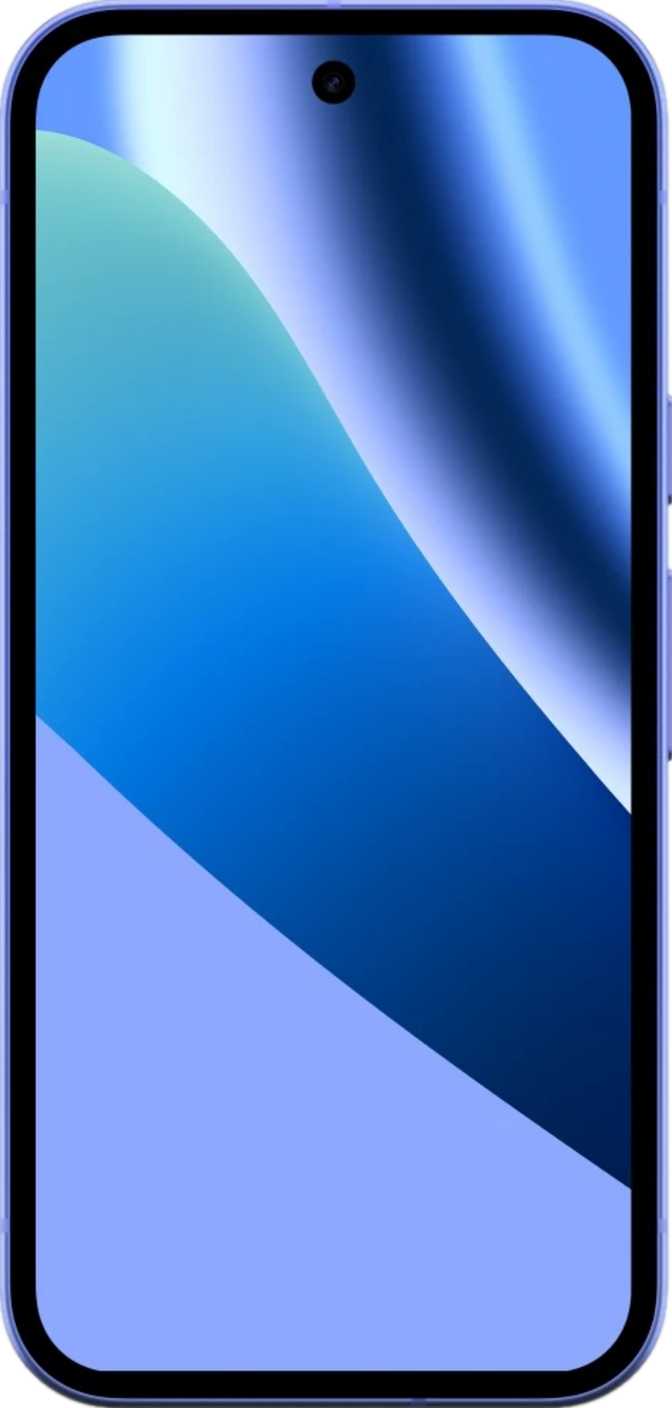
At 186 grams, the Pixel 10a sits in a comfortable middle ground — heavier than the featherweights of a few years ago, but noticeably lighter than most flagship-class phones pushing past 200g. It does not feel insubstantial, which is reassuring, but it also does not tire your wrist during an extended reading session.
The 9mm profile is respectable rather than remarkable. It pockets cleanly and does not create an uncomfortable bulge in tighter jeans. The 73mm width means most adults can use it one-handed with manageable effort, though reaching the top of the screen will occasionally require a shuffle.
The flat display — no curved edges — is a deliberate, practical choice. Curved screens look elegant on paper but create accidental touches and make screen protectors a frustrating proposition. The Pixel 10a avoids that entire problem category.
Physical Dimensions
- Height
- 183 mm
- Width
- 73 mm
- Thickness
- 9 mm
- Weight
- 186 g
- Volume
- 120.2 cm³
IP68 — Protection That Actually Means Something
The IP68 waterproofing rating is the real story here from a build perspective. This is not the splash resistance you get on cheaper phones with vague "water-resistant" language — IP68 means the Pixel 10a is rated to survive submersion in fresh water at meaningful depth for an extended period.
Caught in a downpour, knocked off a counter into a sink, or dropped into a puddle — none of these are phone-ending events. For the price class, this level of protection used to be exceptional; Google has made it standard on the 'a' series, and that matters.
Gorilla Glass 7i — Practical Screen Protection
The display is protected by Gorilla Glass 7i, which represents a meaningful step up from the unbranded hardened glass on many competitors at this price. It is not the absolute pinnacle of scratch resistance, but it is demonstrably tougher than what you will find on similarly priced Android phones.
Combined with the flat panel geometry, fitting a compatible screen protector is straightforward — no edge-case cutouts, no lifting corners, no compatibility issues.
Display: A Screen That Punches Above Its Weight
6.3-inch OLED — quality analysis and real-world implications
The OLED Advantage
OLED technology delivers true blacks — each pixel produces its own light and simply turns off to create darkness — resulting in a contrast ratio so deep that the difference between a dark pixel and the phone bezel becomes imperceptible in a dim room. The measured contrast ratio here is one million to one, which translates to visuals that are simply richer than LCD alternatives.
The pixel density translates to text and fine detail that appear sharp to even the most scrutinizing eyes. You will not see individual pixels under normal use — this is genuinely crisp in a way that matters for reading, detailed photos, and small UI text.
The Always-On Display feature lets you glance at the time, notifications, or lock screen information without waking the phone fully — a small quality-of-life feature that becomes a habit quickly.
Brightness and Motion Fluidity
The peak brightness capability is substantial enough to remain usable in direct outdoor sunlight — something that cannot be said of every mid-range phone. In practice, checking navigation on a bright afternoon without cupping your hand around the screen is a realistic expectation.
The 120Hz adaptive refresh rate means scrolling through social media, lists, or web pages feels fluid and immediate. The display adjusts dynamically — running slower when reading static content to conserve battery, and faster during motion-heavy interactions. Phones locked to 60Hz feel comparatively sluggish once you have spent time with this.
HDR10 support means streaming content from major platforms is displayed with expanded color and luminance data where available, making compatible films and shows look noticeably more cinematic.
Display summary: 1080 x 2424 pixel resolution, HDR10 support, Gorilla Glass 7i protection, and a flat panel geometry that simplifies screen protector installation. No Dolby Vision support, but HDR10 covers all major streaming platforms.
Performance: Tensor G4 in the Real World
Chipset analysis, AI capabilities, and what the benchmarks actually mean
What the Tensor G4 Prioritizes
Google's Tensor G4 chip is a genuinely interesting processor that requires context to evaluate fairly. Tensor chips are architected with Google's AI and machine learning workloads as a primary design priority — this is not marketing language. It has direct, tangible effects on real-time transcription, on-device translation, photo processing, and call screening that works without a network connection.
The processor uses a tiered core architecture: a high-performance core handles demanding single-threaded tasks, three mid-range cores manage sustained multi-threaded work, and four efficiency cores handle background activity. This structure is specifically designed to balance responsiveness with power efficiency, scaling the workload to the minimum energy expenditure needed.
The 4-nanometer fabrication process keeps thermal output lean at 6 watts of thermal design power — users who found earlier Tensor devices ran warm will find the G4 generation a meaningful improvement in sustained use.
Geekbench 6 Performance
Upper mid-range tier — strong for AI-heavy workloads
Solid for everyday tasks, not best-in-class
Context: benchmark scores reflect compute throughput; Tensor's real-world value is in AI task acceleration, not raw number-crunching.
Fast DDR5 memory running at 4200 MHz keeps multitasking smooth — email, maps, browser tabs, and streaming coexist without reloading in normal use.
Generous base storage covers most users' app libraries, photo collections, and offline media. No memory card slot — this is the ceiling, not a starting point.
Dedicated machine learning hardware accelerates transcription, translation, and photo tools without a server connection — faster and more private than cloud-dependent AI features.
Camera System: Google's Real Competitive Advantage
Dual-camera analysis, video capability, and photography controls
Primary Camera — 48MP, f/1.7
The main camera uses a back-side illuminated 48-megapixel sensor with a wide f/1.7 aperture, paired with optical image stabilization. The megapixel count is not the main event — Google's camera processing pipeline, running on the dedicated AI hardware in the Tensor G4, is what produces images that consistently outperform phones with higher sensor counts on paper.
The BSI sensor design captures light more efficiently in low-light conditions, directly responsible for the Pixel series' reputation for night photography. In dim indoor environments where other phones produce muddy, noise-heavy images, the Pixel 10a gathers available light with notable effectiveness.
- Phase-detection autofocus — fast, accurate, no hunting
- Optical image stabilization — sharper low-light shots
- 4K / 60fps video with continuous autofocus
- HDR10 video recording
- RAW file capture for post-processing workflows
Ultrawide Camera — 13MP, f/2.2
The 13-megapixel secondary lens provides a wider field of view for environmental shots, architecture, and group photos where you cannot physically step back further. The aperture difference between the main and ultrawide cameras means image quality is measurably better in the primary lens under challenging light — this is consistent across the industry at this pairing.
The front-facing 13MP camera at f/2.2 handles daytime portraits and video calls competently. There is no front flash, so low-light selfies depend on display or ambient light — a practical limitation for frequent indoor evening photography.
- Dual-tone LED flash (rear)
- Slow-motion video recording
- Panorama and timelapse modes
- Full manual controls: ISO, shutter, WB, focus
- No front flash — dim selfies in low light
For Casual Photographers
Point-and-shoot users benefit most from the automatic processing pipeline — Google's computational photography produces well-exposed, detailed images with natural colour across nearly every shooting condition without any manual input. For travel, family moments, events, and social content, this camera is a convincing standalone solution.
The camera does not replicate the telephoto reach of dedicated multi-lens flagship arrays. Optical zoom is not present — digital cropping from the 48MP sensor provides moderate additional detail, but long-distance subjects will show quality limitations.
For Enthusiast Photographers
RAW capture preserves the full sensor data for editing in Lightroom or equivalent applications. A complete manual control suite — exposure, ISO, shutter speed, white balance, and focus — extends creative control beyond the automatic pipeline for photographers who want it.
HDR mode, burst shooting, and touch autofocus round out a feature set that is genuinely more complete than most mid-range camera apps. The underlying Google processing makes RAW files a productive starting point rather than a flat, challenging base to work from.
Software: Android 16 and the Google Difference
OS experience, AI features, privacy controls, and update longevity
The Cleanest Android Experience Available
Running Android 16 directly from Google means the Pixel 10a has zero manufacturer UI overlay — no duplicate apps, no modified settings menus, no custom skin obscuring the operating system. What you get is Android as Google designed it, which means the fastest access to new Android features and the most predictable, uncluttered user experience in the Android ecosystem.
Direct OS updates from Google eliminate the delay that afflicts other Android manufacturers, where software releases must pass through a manufacturer's customization layer before reaching users. On a Pixel, a major Android update or security patch arrives when Google ships it.
Multi-year software update guarantees are a significant ownership consideration. A phone that receives guaranteed major OS updates retains security patches, new features, and app compatibility for a substantially longer useful life than competitors in the same price bracket with shorter or unclear update commitments.
Privacy Controls
- Granular location access controls
- Camera and microphone permission controls
- Clipboard access warnings
- App tracking restriction
- On-device AI — data stays local
- Offline voice recognition
Software Features Worth Knowing
Transcription, translation, and photo tools operate without a server connection — faster and private by architecture, not by policy.
The OS generates a cohesive colour palette across apps from your wallpaper — a visual customization system that extends across the interface.
Run two apps simultaneously in split-screen, or keep a video floating while working in another app with picture-in-picture support.
Select, copy, and interact with text inside photos — a practically useful feature for copying addresses, phone numbers, or receipts.
Reduces screen brightness beyond the standard minimum — useful for night-time use without disturbing others or straining your own eyes.
Monitor the health of the battery over time directly within the OS — useful for managing the phone's long-term ownership experience.
Battery Life: Confident All-Day Endurance
5100mAh capacity, 30W wired, and 10W wireless charging
What the Capacity Means Day-to-Day
The 5,100mAh battery is one of the largest capacities Google has placed in this form factor — a noticeable step up from earlier Pixel mid-range phones. Combined with the efficiency improvements of the 4-nanometer chip, moderate daily users can expect to end a full day with comfortable headroom rather than hunting for a charger by mid-evening.
Heavy users — people running GPS continuously, gaming regularly, or keeping the screen bright at length — will still want access to a charger in the evening. The phone is unlikely to leave anyone stranded mid-afternoon under any realistic usage pattern.
Charging Options at a Glance
| Method | Speed | Verdict |
|---|---|---|
| Wired | 30W | Adequate |
| Wireless | 10W | Convenience |
| Reverse Wireless | — | Not Available |
| Charger Included | — | Not Included |
Charging Speed in Context
30W wired charging is fast enough to add significant capacity during a short break — a 20-30 minute session provides a meaningful boost before heading back out. This is not the fastest available on the market; flagship devices from some manufacturers reach two to three times this speed. For most users it is practical and adequate, but buyers who have become accustomed to very rapid wired charging on competing phones will notice the difference.
Wireless Charging Reality
Wireless charging at 10W is genuinely convenient for keeping the phone topped up on a desk pad throughout the day — it is not a substitute for wired charging when you need speed. An ultra power-saving mode is available for critically low battery situations, reducing the phone to basic functions to extend remaining usage time.
Connectivity and Safety Features
5G, Wi-Fi 6E, Bluetooth 6, satellite SOS, and more
Connects to the uncongested 6GHz band on compatible routers — lower latency and higher throughput in environments with many connected devices. Backward compatible with Wi-Fi 5 and Wi-Fi 4.
The most current Bluetooth standard. LDAC codec support enables high-resolution wireless audio to compatible headphones. Standard aptX also supported for broad headphone compatibility.
5G connectivity across sub-6GHz bands for wide-area network coverage. LTE integrated on-chip for universal cellular compatibility.
Substantially faster wired data transfer than the USB 2.0 connections still found on many competitors — relevant for regularly transferring large video files or using the phone as a wired connection to a computer.
Enables contactless payments and NFC-based interactions. A single physical SIM alongside an eSIM provides flexibility without requiring a physical card for a second line or travel SIM.
GPS with Galileo satellite support, compass, gyroscope, accelerometer, and barometer provide a complete sensor suite for navigation, fitness tracking, and location-based applications.
Safety Features
In areas without cellular coverage, the Pixel 10a can reach emergency services via satellite. Not a feature most people will use — but its presence provides a meaningful safety net in remote areas that has real-world value.
Uses accelerometer data to identify patterns consistent with a vehicle collision and can automatically contact emergency services if the user is unresponsive. These safety features represent genuine utility that is difficult to quantify but easy to appreciate.
No 3.5mm headphone jack. USB-C to 3.5mm adapters are inexpensive and widely available, but the jack itself is absent. LDAC and aptX support make this a capable wireless audio companion, but committed wired headphone users should note this limitation.
Who Should Buy the Pixel 10a — and Who Should Not
Real-world usage scenarios and honest audience matching
This Phone Is Ideal For
-
Android users who want the most software support for their money.
Android 16 at launch, direct Google updates, and multi-year update commitments give this phone a longer supported lifespan than most alternatives in its class.
-
Photography enthusiasts who do not want to pay flagship prices.
Google's camera processing gives an image quality ceiling most mid-range phones cannot match regardless of sensor specifications.
-
Privacy-conscious users.
On-device AI processing, granular permission controls, and a clean OS without manufacturer data collection layers make this one of the most privacy-respecting Android options available.
-
People upgrading from a phone more than three years old.
The leap in camera quality, display smoothness, and connectivity standards will be immediately and significantly apparent.
-
Users who want a daily driver without storage anxiety.
256GB covers most people's genuine needs — app libraries, a photo collection spanning years, and offline media without careful management.
This Phone Is Not Ideal For
-
Mobile gamers who demand top-tier performance.
The Tensor G4 handles gaming competently, but users who prioritize frame rates in graphically demanding titles will find Snapdragon-powered alternatives more capable at similar or higher price points.
-
Users who depend on extremely fast charging.
If you regularly need a phone charged from near-empty to full in under an hour, competing flagship and near-flagship devices offer substantially faster wired charging speeds.
-
People who use wired headphones regularly.
The absence of a headphone jack requires committing to wireless audio or carrying a USB-C adapter — an inconvenience that ranges from trivial to deal-breaking depending on individual habit.
-
Users who need expandable storage.
There is no memory card slot. 256GB is the total available, and cloud storage is the only practical supplement for users who need more.
How It Compares to Logical Alternatives
Competitive positioning across key decision-making criteria
| Feature | Google Pixel 10a | Snapdragon Mid-Range | Premium Step-Up |
|---|---|---|---|
| Camera Processing | Google Advantage | Hardware-Based | Flagship-Level |
| Software Updates | Direct / Multi-Year | Manufacturer Delayed | Varies |
| Display Quality | 120Hz OLED, 2000 nits | Often 90Hz or LCD | 120Hz OLED, higher peak |
| Charging Speed | 30W Wired | 45–67W Common | 65–120W+ |
| Raw CPU Performance | Upper Mid-Range | Upper Mid–High-End | Flagship |
| Water Resistance | IP68 | Often IP67 | IP68 |
| Satellite SOS | Included | Rarely Available | Increasingly Common |
| AI Features | On-Device, Extensive | Cloud-Dependent | Extensive |
The Pixel 10a's primary advantages over most Snapdragon-based competitors at a similar price are camera processing quality, software update cadence, and the depth of on-device AI features. The step to a premium-tier phone primarily buys faster charging, higher peak brightness, more powerful CPU performance, and a more advanced telephoto camera system — at a meaningfully higher cost.
Questions Real Buyers Ask Before Purchasing
Straightforward answers to the most common pre-purchase concerns
Highly Recommended
The Google Pixel 10a makes a compelling case for being the most well-rounded mid-range Android phone available when measured by total ownership value rather than any individual specification. Its camera quality, software clarity, update longevity, IP68 durability, and the practical safety net of satellite SOS combine into a package that genuinely serves users well across the full arc of ownership — not just on the day of purchase.
The display is excellent. The battery is more capable than its predecessors. The software is the best Android experience available without modification. The trade-offs are real — slow-ish charging, no headphone jack, no expandable storage, and a GPU that serves gamers better as a capable second choice than a primary recommendation — but none of these are hidden or minor. Buyers who care about any of them should weigh them against the strengths honestly.
For the user who wants a phone that excels at photography, earns software trust through transparency and longevity, and handles every daily task without complaint or compromise — the Pixel 10a is the answer most of them have been looking for.