Gizmore Gizbar 1200 Rock: An Honest Review of Sound & Design
SoundbarsNot every speaker needs to talk back to you, sync with your smart bulbs, or stream music from a hundred different apps. The Gizmore Gizbar 1200 Rock is built on that exact premise — a compact, no-nonsense audio bar that focuses entirely on getting sound out of a small box and into your room, without the layers of smart-home theater that drive up the price of most modern soundbars. If you have been overwhelmed by spec sheets full of features you will never touch, this review breaks down exactly what the Gizbar 1200 Rock does well, where it cuts corners, and whether that trade-off makes sense for your setup.
Light & Slim
540g build
Premium Codecs
AAC, aptX, aptX Adaptive
Personal Spaces
Desk, bedroom, small room
No Smart Hub
No Wi-Fi, no voice control
Design and Build: A Slim Bar That Disappears Into Your Setup
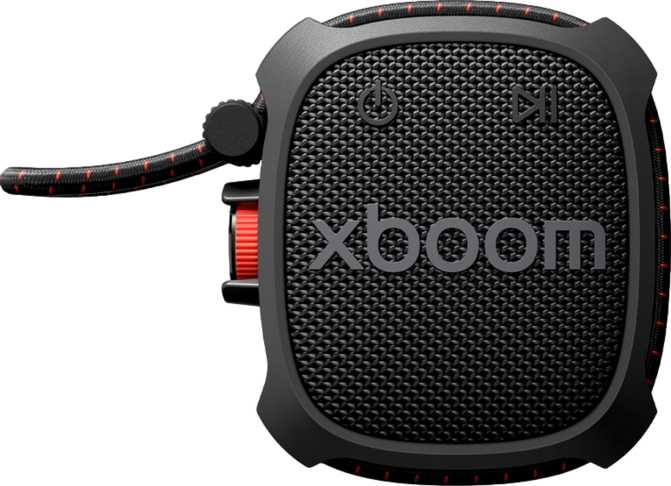
The Gizbar 1200 Rock is designed around a long, low-profile chassis — just under 37 centimeters wide and roughly 7 centimeters in both height and depth. That shape matters more than it sounds: at that height, it sits comfortably below most monitors and in front of compact TVs without blocking the screen or stealing desk space. Think of it less as a furniture-sized home theater bar and more as a desk or tabletop companion that slides into tight gaps.
Weighing in at 540 grams, it is light enough to pick up with one hand and reposition without ceremony — useful if you move between a desk setup, a bedroom shelf, or a weekend outdoor table. That lightness comes with a trade-off worth naming honestly: a unit this light will not have the dense, heavy-cabinet feel that often signals thicker internal bracing and deeper bass extension. The compact internal volume confirms this is a bar built for clarity and convenience in small-to-medium rooms, not for shaking furniture in a large living room.
All physical controls live directly on the unit itself rather than on a separate remote. That is a deliberate design choice, not an oversight, and it shapes how you will actually live with this product day to day.
- Width370 mm
- Height / Thickness70 mm
- Weight540 g
- Enclosure Volume~1.8 L
- ControlsOn-device panel
Sound Engine: What Two Channels and 14 Watts Really Deliver
At the heart of the Gizbar 1200 Rock is a straightforward stereo setup — two independent audio channels, each driven by its own amplifier, for a combined output of fourteen watts. There is no separate subwoofer channel and no surround decoding here, so this is a dedicated stereo performer rather than a multi-driver home theater system.
What does that power output actually translate to in real use? For a desk setup, a bedroom, a dorm room, or a small-to-mid-sized living area, that is enough headroom to comfortably fill the space at conversational-to-loud listening levels without distortion creeping in early. Push it to fill a large open-plan living room or compete with a noisy gathering, and you will feel the ceiling — this is not a party speaker built to dominate a crowd, and treating it as one will disappoint you. Judge it instead as a personal-space audio upgrade, and the power output lines up well with its size and intended use.
| Audio Engine | What It Means |
|---|---|
| 2 Channels | True stereo separation, no surround processing |
| 7W per channel | Enough clarity and volume for nearby listening |
| 14W combined | Comfortably fills a desk, bedroom, or small room |
Codec Support: The Genuinely Premium Part of This Spec Sheet
This is where the Gizbar 1200 Rock quietly outperforms its price-conscious positioning. It supports three Bluetooth audio codecs that matter a great deal to actual sound quality.
| Codec | What It Actually Does for You |
|---|---|
| AAC | Ensures iPhone and iPad users get a clean, efficient wireless signal rather than a compressed fallback codec |
| aptX | Delivers noticeably richer, more detailed wireless audio to Android phones and laptops that support it — closer to wired quality than standard Bluetooth |
| aptX Adaptive | Dynamically adjusts bitrate and latency in real time, keeping audio in sync with video and detail intact even as connection conditions shift |
Finding all three codecs on a compact, accessibly priced audio bar is genuinely uncommon — many speakers in this size class settle for basic SBC Bluetooth, which compresses audio more aggressively and noticeably dulls detail. Whether you are an Apple user, an Android user, or pairing a laptop for video calls, the Gizbar 1200 Rock is engineered to give you a meaningfully better wireless signal than its footprint would suggest.
Connectivity: Built for Simplicity, Not for a Smart Ecosystem
Bluetooth runs on version 5.3, which in practical terms means a more stable connection, lower power draw during streaming, and quicker reconnection to your last-used device compared to older Bluetooth generations. Alongside Bluetooth, there is a physical AUX input, giving you a reliable wired fallback for older laptops, MP3 players, or any device without Bluetooth at all.
That is the full extent of the connectivity story. Here is a clear breakdown of what is deliberately absent.
| Connectivity Feature | Present | What This Means for You |
|---|---|---|
| HDMI input/output | Cannot connect to a TV's HDMI-ARC port for one-cable, remote-synced setups | |
| Wi-Fi | No network streaming, multi-room grouping, or over-the-air updates | |
| NFC tap-to-pair | Pairing happens through your device's Bluetooth menu, quick but not one-tap | |
| Spotify Connect / Chromecast / AirPlay | Everything routes through Bluetooth or the AUX cable, not Wi-Fi streaming | |
| Microphone input | No hands-free calling and no built-in voice pickup | |
| AUX Input | Reliable wired fallback whenever Bluetooth is not an option | |
| Bluetooth 5.3 | Stable, efficient wireless connection with fast reconnects |
If your goal was a soundbar that connects straight to your TV's HDMI-ARC port and gets controlled by your TV remote, this is not that product. TV use here works through a wired AUX connection to an audio-out jack, or through Bluetooth if your television supports outgoing Bluetooth audio. Many budget and mid-range TVs do, but it is worth checking your specific television before assuming a seamless link.
Smart Features: Deliberately Left Out
There is no voice assistant compatibility here at all — no Google Assistant, no Alexa, no Siri or Apple HomeKit integration, and no built-in microphones to support any of them even informally. There is also no dedicated smartphone app for EQ tweaking or firmware control, and no rechargeable remote — control happens entirely through the physical panel mounted on the unit itself.
No Voice Assistant
No Companion App
No Remote Control
No Wi-Fi Streaming
For some buyers, this reads as a missing feature list. For others, it is precisely the appeal: a speaker that turns on, connects, and plays — no app downloads, no account sign-ins, no voice assistant accidentally triggering across the room. The Gizbar 1200 Rock is built for people who want audio, not an ecosystem.
It is also worth flagging plainly that surround and spatial audio formats — Dolby Atmos, DTS:X, Dolby Digital, and Dolby Digital Plus — are all absent. That is consistent with its two-channel, fourteen-watt design: this is a stereo audio bar, not a home theater decoder, and it was never built to process or output cinematic surround formats.
Who the Gizbar 1200 Rock Is Actually For
Great Fit If You Are
- A desk or bedroom user wanting clearer Bluetooth audio than a phone speaker
- An Android or iPhone user who benefits from aptX, aptX Adaptive, or AAC
- Someone who values a compact, lightweight footprint over a bulky bar
- A buyer who prefers physical buttons over smart-home complexity
- Someone connecting mainly through Bluetooth or AUX, not HDMI-ARC
Poor Fit If You Are
- Looking for a true HDMI-ARC TV soundbar with remote-synced volume
- Wanting Dolby Atmos, DTS:X, or any surround sound processing
- Hoping for voice assistant integration or hands-free calling
- Needing Wi-Fi streaming, multi-room audio, or app-based EQ
- Planning to fill a large living room or outdoor gathering
How It Compares to Other Options in This Category
Positioned against typical budget-to-midrange Bluetooth soundbars and compact audio bars, the Gizbar 1200 Rock's strongest differentiator is its codec trio. Many competing products at a similar size and price point ship with standard SBC Bluetooth only, leaving Android users with compressed, less detailed sound and giving iPhone users no AAC advantage at all. The Gizbar 1200 Rock closes that gap convincingly.
If your priority order is sound quality per dollar and Bluetooth audio fidelity over smart conveniences, the Gizbar 1200 Rock holds its ground well against pricier, feature-heavier competitors.
Where it falls behind more feature-loaded alternatives is on the smart and home-theater side. Soundbars that include HDMI-ARC let you skip Bluetooth pairing entirely and control volume from your existing TV remote — a real convenience advantage for living-room setups. Products with Wi-Fi and Spotify Connect or Chromecast support let you stream music directly from an app without your phone needing to stay nearby. If those conveniences matter more to you than wireless audio fidelity, a Wi-Fi-enabled or HDMI-equipped alternative will serve you better, typically at a higher price.
Strengths and Weaknesses: The Honest Take
What Stands Out
The clearest strength of the Gizbar 1200 Rock is how disproportionately good its wireless audio fidelity is relative to its size and apparent simplicity. Supporting AAC, aptX, and aptX Adaptive together is a meaningful technical commitment that most compact audio bars at this scale skip entirely, and it pays off directly in how music and video sound over a Bluetooth connection. Its slim, light physical design is also a genuine asset for anyone working with limited desk or shelf space, and the inclusion of a wired AUX input means you are never stuck if Bluetooth pairing acts up.
Where It Falls Short
The honest weaknesses sit almost entirely in the absence of modern connectivity and smart features. No HDMI port means TV integration takes more effort and loses the one-remote convenience many buyers now expect by default. No Wi-Fi, app, or voice assistant support rules this out for anyone building a connected smart-home audio setup, and the lack of any surround sound decoding keeps it firmly in stereo-only territory. None of these are flaws in execution — they are the direct result of a design built around simplicity and audio fidelity rather than feature breadth.
Questions Buyers Ask Before Purchasing
Final Verdict
The Gizmore Gizbar 1200 Rock earns its place by doing one thing convincingly well: delivering genuinely strong Bluetooth audio fidelity in a small, light, easy-to-place bar, thanks to a codec lineup that punches well above its size class. It is not trying to be a smart home theater hub, and buyers should not approach it expecting HDMI convenience, voice control, or surround sound, because none of that is here.
Buy It If
You want a compact, lightweight stereo speaker with noticeably better-than-average wireless sound quality for your desk, bedroom, or small living space, and you are comfortable connecting through Bluetooth or AUX without an app or remote.
Skip It If
You need HDMI-ARC TV integration, surround sound, voice assistant support, or enough output to fill a large room. In that case, your money is better spent on a feature-richer, pricier soundbar built for that purpose.
For its intended audience — value-conscious listeners who care more about how their music actually sounds than about how many ecosystems it connects to — the Gizbar 1200 Rock is a confident, well-targeted recommendation.