FiiO JT3 Review: An Open-Back Headphone for Serious Home Listeners
HeadphonesWhat the FiiO JT3 Actually Is — And Why That Matters
FiiO has spent years earning credibility in the personal audio space by building gear that punches well above its price point. The JT3 is their entry into wired, open-back over-ear headphones — a category that asks something specific of its buyer: a willingness to sit still, plug in, and actually listen. If that sounds like you, keep reading. If you were hoping for Bluetooth and noise cancellation, this review will save you from a frustrating purchase.
The JT3 is a dedicated listening headphone designed for home and desk use. It is wired-only, open-backed, and tuned for audiophile-adjacent performance without demanding an audiophile-grade budget. Understanding what those terms mean in practice is the whole story of this headphone.
- TypeOpen-Back Over-Ear
- ConnectionWired
- Driver Size50mm
- Impedance80 Ohm
- Sensitivity97 dB/mW
- Cable Length1.5m Detachable
- MicrophoneYes (Basic)
- Water ResistantNo
Design and Build: Purposeful, Not Flashy
Physical Construction
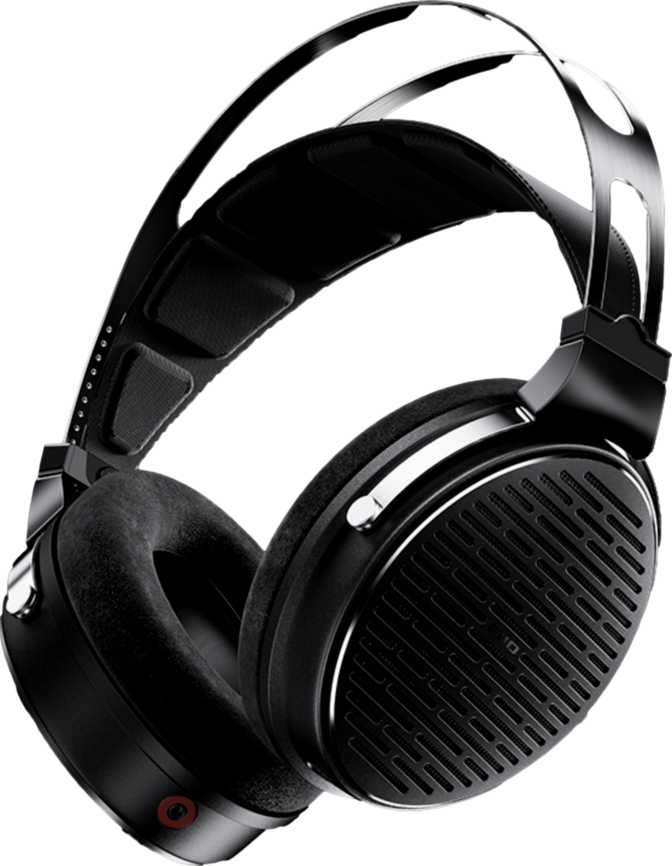
The JT3 sits in the classic over-ear form factor — the earcups fully enclose your ears rather than resting on top of them. At 330 grams, it occupies a middle ground in the weight category. It is not the featherweight you would take on a run, but for seated, extended listening at a desk, 330g distributes comfortably across the headband without causing the kind of fatigue you would feel after a few hours with a heavier studio monitor headphone.
The open-back design is the single most defining physical characteristic here. The rear of each earcup is vented rather than sealed — a deliberate acoustic engineering choice, not a cost-cutting measure, whose implications touch every aspect of the listening experience.
Cable Design
The JT3 ships with a 1.5-meter cable — a practical length that reaches from a desk-mounted audio interface to your seated position without coiling around your feet. Critically, the cable is detachable. This matters more than it might seem: cables are the most failure-prone part of any wired headphone, and a detachable connection means a broken cable is an inexpensive fix rather than a reason to buy new headphones.
The cable is also tangle-resistant. The outer material resists the memory-coiling and knotting that makes lesser cables infuriating to unpack. For a headphone that lives on a desk, that is a genuine quality-of-life detail.
Sound Quality: The Technical Case for the JT3
Driver Size and What It Delivers
Inside each earcup sits a 50-millimeter driver — on the larger end for consumer headphones. Bigger drivers, all else being equal, are capable of moving more air, which translates to greater low-frequency authority and a more expansive soundstage.
The drivers are built around neodymium magnets — the modern standard for high-efficiency transducers. Neodymium allows for a powerful magnetic field in a compact and lightweight structure, contributing to both driver precision and overall headphone weight reduction.
Frequency Response: The Practical Meaning
The JT3 reproduces sound from the very lowest reaches of human hearing all the way up to frequencies beyond what most adults can consciously perceive. In plain terms: this headphone will not artificially roll off bass or cut high-frequency information early. What you hear is what the recording contains.
For listeners used to consumer-tuned headphones — where bass is boosted and high-mids are softened — the JT3 may initially sound more neutral or "flat." This is a feature, not a flaw. It means you hear mixes as engineers intended them rather than through a flattering filter.
Do You Need an Amplifier?
This is the question every prospective buyer of the JT3 should ask seriously. The headphone presents an 80-ohm impedance to the source driving it. For comparison, most casual listening headphones are designed around 32 ohms or lower — specifically so they work well when plugged directly into a smartphone.
At 80 ohms, the JT3 will technically function when plugged into a phone or laptop, but the dynamic range, bass control, and overall composure of the sound will not reach the headphone's potential. The sensitivity rating of 97 dB/mW is moderate, which reinforces this point.
The JT3 is engineered for use with a dedicated headphone amplifier or a DAC/amp combo. FiiO makes several. Entry-level desktop DAC/amps start well under $100 — but buyers should budget for one if they do not already own a capable source.
Open-Back Sound: Soundstage and the Trade-Off You Are Accepting
Open-back headphones produce a soundstage — the sense of space and directionality in music — that closed-back designs simply cannot replicate. With the JT3, instruments and voices have room to breathe; the music does not feel like it is happening inside your skull. For classical, jazz, acoustic recordings, and well-mixed rock, this produces a listening experience that closed-back headphones at the same price cannot match.
The Open-Back Trade-Off
- External sound reaches your ears freely — no passive isolation
- Your audio is audible to people nearby
- Unsuitable for offices, public transport, or shared spaces
- No active noise cancellation of any kind
Features: In-Line Control and Microphone
Microphone and Call Support
The JT3 includes a single microphone and an in-line control panel on the cable. This enables basic call functionality — taking or ending phone calls, adjusting volume — without reaching for a source device. The headphone can legitimately serve as a headset for voice calls or video conferencing.
For occasional calls, this works fine. For someone whose primary use case is daily video calls in a noisy environment, the setup has meaningful limitations — external noise will bleed into calls, and there is no quick mute toggle available.
What the JT3 Does Not Have
The JT3 is a music headphone that can handle calls — not the other way around. The absence of several modern "smart" features is a deliberate product decision, not an oversight:
- No noise-canceling microphone
- No mute toggle on the in-line control
- No in-ear auto-pause detection
- No ambient sound mode
- No wireless or Bluetooth connectivity
Who Should Buy the FiiO JT3
- Home or desk listeners with a private space who can fully exploit the open-back soundstage
- Music enthusiasts stepping up from consumer headphones who want accurate, uncolored sound reproduction
- Existing FiiO users who already own a DAC/amp and want a headphone that pairs naturally with it
- Single-player gamers in a private setup where open-back soundstage aids positional audio
- Classical, jazz, and acoustic listeners who benefit most from the open-back imaging
- Anyone who commutes or uses headphones in public spaces
- Anyone who needs reliable sound isolation in a shared or noisy office
- Buyers planning to run these directly from a smartphone with no amplification
- Anyone who needs a primary daily call headset with mute functionality
- Buyers looking for wireless freedom or active noise cancellation at any price point
Competitive Positioning: Where the JT3 Sits
The open-back wired headphone market at this tier has a handful of recurring alternatives. This comparison clarifies the JT3's position among its most logical rivals:
| Feature | FiiO JT3 | 32Ω Closed-Back Rival | High-Impedance Open-Back |
|---|---|---|---|
| Design | Open-Back | Closed-Back | Open-Back |
| Impedance | 80Ω | 32Ω | 150–250Ω |
| Amplifier Needed | Recommended | No | Yes, strongly |
| Sound Isolation | None | Moderate | None |
| Cable | Detachable | Fixed | Detachable |
| Microphone | Yes (Basic) | Sometimes | Rarely |
| Portability | Desk Only | Some Portability | Desk Only |
The JT3 occupies a sensible middle position: more source-forgiving than high-impedance audiophile flagships, but more technically demanding than low-impedance consumer headphones. The inclusion of a microphone and detachable cable adds practical value that many open-back competitors at this level omit entirely.
Honest Assessment: Strengths and Limitations
Where the JT3 Excels
The JT3's strongest argument is its acoustic architecture. The combination of large-format drivers, a wide frequency ceiling, and an open-back design creates a listening experience with genuine depth and spatial fidelity — qualities that buyers in this category seek and that many similarly priced competitors do not fully deliver.
The detachable cable is an underappreciated decision. It extends the practical lifespan of the headphone significantly and removes one of the most common failure points from the ownership equation. For a wired headphone, that kind of pragmatic thinking earns real credibility.
Where It Falls Short
The 80-ohm impedance level is the most important caveat in this review. It is not a flaw — it is a design specification reflecting a headphone built for quality source pairing. But buyers who overlook it will be disappointed. The JT3 needs a capable source to sound the way it was designed to sound.
The microphone and in-line controls are functional but modest. The absence of a noise-canceling microphone or mute button will frustrate anyone who relies on this for frequent professional calls.
The complete lack of water resistance or portability features is simply the cost of open-back design — a category definition rather than a criticism, but worth stating plainly for buyers with mixed-use needs.
Common Questions Buyers Ask Before Purchasing
Final Verdict
The FiiO JT3 is a deliberately engineered open-back headphone for the buyer who is ready to take their listening seriously.
It rewards a private listening space, a decent amplification source, and an appreciation for accurate sound over flattering sound. For that buyer, it delivers real value: a wide soundstage, extended frequency reproduction, a practical detachable cable, and the quality-of-life addition of basic call functionality.
It is not for everyone. The 80-ohm impedance demands respect. The open design demands a suitable environment. The modest microphone demands honest expectations. If you go in with eyes open, the JT3 does what it sets out to do without compromise — and in this category, that counts for a great deal.
- You have a private home or desk listening space
- You own or plan to buy a DAC/amp
- Accurate, detailed sound matters more than bass boost
- You want a long-lasting headphone with a replaceable cable
- You need portability or sound isolation
- You plan to plug straight into a smartphone
- You need a professional daily call headset with mute
- Wireless connectivity is non-negotiable for you