FiiO EH11 Review: The Open-Back Wireless Headphone for Home Listeners
HeadphonesMost wireless headphones make the same promise: seal the world out, put your music in. The FiiO EH11 takes the opposite philosophy. It is an open-back wireless headphone — a category so rare that most buyers don't even know to search for it. That design choice makes the EH11 either exactly what you've been looking for or completely wrong for your situation. Understanding which camp you fall into is the entire point of this review.
FiiO has spent years building credibility in the portable audio space, and the EH11 represents their push into audiophile-leaning wireless territory. The combination of an open acoustic design, high-resolution audio transmission, and modern Bluetooth standards is genuinely uncommon at any price point. Whether that combination is worth your money depends on how you actually listen to music.
Design and Build: Light, Open, and Uncompromising
Physical Form Factor
At 92 grams, the EH11 is exceptionally light for a full-size headphone. To put that in perspective, most premium wireless headphones tip the scales anywhere from 250 to 300 grams. The EH11 weighs less than a third of that. During extended listening sessions — the kind that stretch across an entire work afternoon — that weight difference is something you feel, or rather, don't feel.
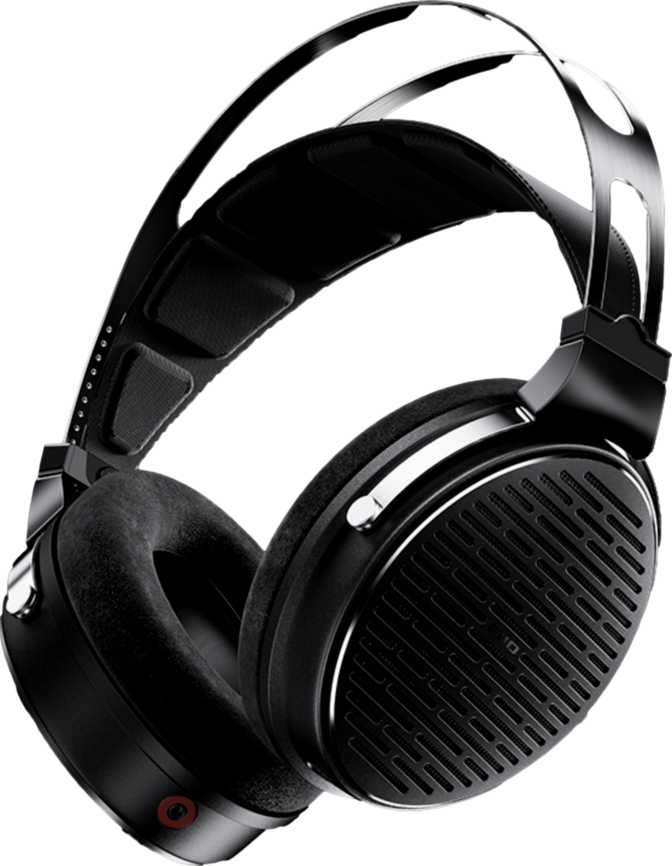
The on-ear fit positions the earcups directly against your ears rather than surrounding them. This is a more compact and lighter arrangement than over-ear designs, though it places all contact pressure on the ear itself. Comfort during long sessions depends significantly on the quality of the ear cushion materials and the clamping force, both of which FiiO has clearly prioritized given the headphone's audiophile positioning.
There is no folding mechanism on the EH11. The headband and cups are fixed in their extended form. This tells you something about who FiiO designed this for: someone with a dedicated listening space, not someone who wants to collapse their headphones into a jacket pocket. There is also no included travel bag, reinforcing that this is a home-first headphone.
The Open-Back Design: What It Means for You
This is the most important physical attribute to understand before purchasing. An open-back headphone has a perforated or grille-backed earcup that allows air — and sound — to pass freely in both directions.
The benefit is a soundstage that sounds and feels spacious and natural. Rather than music appearing to originate from inside your head — a common criticism of closed-back and in-ear designs — open-back headphones create the impression that sound is coming from around you. Instruments feel separated, vocals breathe, and acoustic recordings in particular take on a three-dimensional quality that closed designs struggle to replicate.
Open-back headphones offer no passive noise isolation whatsoever. Everything around you — a conversation across the room, traffic outside, a coffee machine — comes straight through. At the same time, people near you can clearly hear what you're listening to. The EH11 is not a commuter headphone. It is not for open-plan offices. It is not appropriate anywhere that either your environment or your privacy matters.
The EH11 has no active noise cancellation either, which is a deliberate non-feature here. Adding ANC to an open-back design would be acoustically contradictory. FiiO made the correct call by omitting it entirely rather than bolting it on as a marketing checkbox.
Sound Quality: The Technical Foundation
Frequency Range and Driver Engineering
The EH11 uses 40mm dynamic drivers — a mature, well-understood driver size that audiophile headphone designers have refined for decades. Dynamic drivers of this size can move substantial air, which contributes to bass that feels physical and present rather than thin or artificial.
The stated frequency response spans from 17 Hz at the low end to 40,000 Hz at the upper extreme. The low end reaches below the threshold of human hearing, which matters for reproducing the sub-bass rumble in orchestral music, electronic productions, and film soundtracks with physical impact rather than just audible tone. The upper limit of 40,000 Hz extends well into ultrasonic territory — far beyond what human ears can consciously perceive. The reason this matters is that high-resolution audio formats encode content up to these frequencies, and headphones that can reproduce them tend to handle the audible frequency range with greater accuracy and fewer phase-related artifacts in the upper treble, where many listeners notice harshness.
Impedance: Easy to Drive, Naturally Versatile
At 16 Ohms, the EH11 requires very little power to reach listening volumes. This is an important practical consideration for a wireless headphone because the internal amplifier doesn't have to work hard, which supports efficiency and battery life. If you ever want to use the EH11 with a wired source, a smartphone's headphone jack or a portable DAC could drive it without strain.
No Passive Isolation — By Design
The open-back design means your listening environment becomes part of your audio experience. In a quiet room, this is a feature. The soundstage is expansive and natural. In a noisy environment, the intrusion of ambient sound competes directly with your music. The EH11 will reward quiet listening conditions and punish noisy ones.
Wireless Performance and Connectivity
Bluetooth 6.0 and What That Means
The EH11 ships with Bluetooth 6.0, the latest generation of the standard. Practically speaking, Bluetooth 6.0 brings improvements in connection stability, channel sounding for more accurate device positioning, and lower power consumption compared to earlier versions. For a wireless headphone used at home, stability and efficiency are the two most relevant benefits. Dropped connections or pairing interruptions — common frustrations with older Bluetooth headphones — are less likely with this implementation.
The rated wireless range is 10 meters. This is a conservative, realistic figure for indoor use and accounts for typical obstacles like walls and furniture. For home use within a single room or adjacent rooms, it is entirely adequate.
LDAC: High-Resolution Audio Over Bluetooth
LDAC is Sony's wireless audio codec capable of transmitting audio at up to three times the data rate of standard Bluetooth audio. Where conventional Bluetooth audio compresses music significantly to fit within bandwidth constraints, LDAC can transmit at up to 990 kbps — enough to carry high-resolution audio files that approach CD quality or better in terms of data fidelity.
For an open-back headphone positioned toward audiophile listeners, LDAC support is not a box-tick. It is a foundational requirement. There would be little point in building a wide-frequency, acoustically open headphone and then feeding it compressed audio. LDAC ensures the signal reaching the drivers reflects what was actually recorded.
The requirement is that your source device also supports LDAC. Android devices from most major manufacturers support it natively. Apple devices use AAC as their primary Bluetooth codec, and the EH11 supports AAC as well, ensuring high-quality transmission for iPhone and Mac users even without LDAC.
Codec Compatibility at a Glance
- LDAC — supported (Android & Sony devices)
- AAC — supported (iPhone, Mac, iPad)
- aptX / aptX HD / aptX Adaptive — not supported
- LDHC / LE Audio / Auracast — not supported
Multipoint Connection
The EH11 connects to two devices simultaneously. This means you can be paired with a laptop and a phone at the same time, and audio will switch between them as needed. For someone who listens to music on a computer while keeping a phone accessible for calls, this removes the friction of manually re-pairing every time your audio source changes.
Connection Limitations Worth Knowing
There is no NFC pairing on the EH11. Pairing happens through the standard Bluetooth discovery process. There is no Fast Pair support for Android users either, which means the streamlined Google prompt that appears when you open a new headphone won't appear here. These are minor inconveniences during initial setup only — once paired, a Bluetooth device reconnects automatically.
The EH11 does not support Bluetooth LE Audio or Auracast, which are next-generation features primarily relevant for public venue broadcasting and multi-listener scenarios. For personal home listening, neither is relevant.
Battery Life and Charging
Endurance That Removes the Anxiety
Thirty hours of playback on a full charge is substantial. This is roughly a week of serious daily listening for most people — defined as three to four hours per day — before the headphone needs to be plugged in. For a home listener who doesn't use headphones all day, the EH11 might go weeks between charges depending on usage patterns.
Charging takes approximately two hours to restore a full battery. This is a reasonable turnaround — not the fastest in the category, but fast enough that an evening on charge delivers a full week of listening by morning. USB-C is the charging interface, meaning the same cable used for modern phones, laptops, and most current electronics works here. There is no wireless charging.
The EH11 includes a battery level indicator, so you're not left guessing how much power remains or surprised by a sudden shutdown mid-listening session.
Microphone and Communication
The EH11 can function as a headset, meaning it includes a microphone capable of handling calls. The controls are located directly on the headphone itself — no in-line remote on the cable. This makes physical access to playback and call controls straightforward without reaching for a dangling cable.
The open-back design is worth considering in call scenarios. Because ambient sound passes freely through the earcups in both directions, you'll hear everything around you during calls — which can feel natural — but your microphone will also pick up surrounding noise more readily than a closed headphone would. For quiet home office use, this is fine. For calls from noisy environments, it is a limitation.
Who the FiiO EH11 Is For — and Who Should Look Elsewhere
The combination of open-back sound and wireless convenience is genuinely rare and serves a specific use case exceptionally well: the person who wants audiophile-quality sound at home without cables.
The EH11 is designed for the home listener who prioritizes sound quality and comfort above all other considerations. This person:
- Listens in a quiet room — a home office, a dedicated listening chair, a bedroom
- Wants the spaciousness of open-back sound without being tethered to a wired setup
- Uses a device that supports LDAC or AAC for high-quality wireless transmission
- Values long listening sessions without fatigue from weight or heat buildup
- Understands and accepts that the headphone will not work in noisy environments
The EH11 isn't trying to be everything to everyone. Avoid it if you:
- Commute or use public transit — the open design broadcasts your audio and blocks nothing
- Work out — there is no sweat or water resistance of any kind
- Work in an open-plan office — your colleagues will hear everything you listen to
- Travel frequently — non-foldable, no travel case, no noise isolation
- Need active noise cancellation for focus in busy environments
Competitive Positioning
The wireless open-back category is sparsely populated, which works in the EH11's favor. Here is how it stacks up against the most logical alternatives.
| Feature | FiiO EH11 | Typical Closed Wireless ANC | Typical Wired Open-Back |
|---|---|---|---|
| Soundstage | Spacious, natural | Congested, intimate | Spacious, natural |
| Noise Isolation | None | High (ANC) | None |
| Wireless | BT 6.0 + LDAC | Yes | No |
| Weight | 92g | 250–300g typical | Varies widely |
| Battery | 30 hours | 20–35 hours | N/A |
| Best Use Case | Quiet home listening | Commute, travel, office | Home, studio |
Strengths and Honest Weaknesses
What the EH11 Gets Right
The EH11's most compelling qualities are its rarity and coherence as a product. Open-back wireless headphones are genuinely uncommon, and FiiO has built a case for this form with real substance: Bluetooth 6.0 for connection reliability, LDAC for audio quality, a frequency range tuned for high-resolution content, and a driver and impedance combination that suggests the headphone won't strain to perform. The 92-gram weight is a legitimate ergonomic advantage that will matter enormously to anyone who has worn a heavier headphone for more than two hours at a stretch.
The 30-hour battery, two-device multipoint, and USB-C charging reflect a thoughtful approach to daily usability — none of these are afterthoughts. This is a product with a clear point of view that it executes on convincingly.
Where It Falls Short
The weaknesses are inherent to the design category rather than specific failures of execution. The EH11 is inflexible by nature. It cannot fold. It has no bag. It provides no isolation. These are not flaws in the product — they are accurate reflections of what an open-back home headphone should be. But they limit the product's reach to a specific type of listener in a specific type of environment.
The 10-meter Bluetooth range is functional but not generous. In a home with thick walls or multiple floors, signal interruptions are possible if you move significantly away from your source device. This is worth knowing for anyone who likes to wander between rooms while listening.
Frequently Asked Questions
Final Verdict
The FiiO EH11 earns a clear recommendation — with one essential condition attached to it.
If you listen primarily at home, in a quiet environment, and you've been frustrated that the wireless headphone market is dominated by heavily insulated closed-back designs that prioritize isolation over sound openness, the EH11 is built for you. The combination of Bluetooth 6.0 reliability, LDAC high-resolution transmission, extended battery life, and an open-back acoustic design that makes music sound like it's being performed in a real space — not pumped directly into your skull — is rare and genuinely valuable.
The weight alone makes the case for extended listening. At under 100 grams, the EH11 disappears on your head in a way that heavier headphones simply cannot achieve, no matter how well padded they are.
If you need a headphone that travels, blocks noise, or works in busy environments, look elsewhere. The EH11 isn't trying to be that product, and it doesn't pretend to be.
Our Recommendation
For the quiet-room listener who wants wireless freedom with audiophile sensibility, the FiiO EH11 fills a real gap in the market and fills it well.