Edifier NeoBuds Pro 3 Full Review: Hi-Res Codecs Meet 8-Mic ANC
Wireless EarbudsWhat the NeoBuds Pro 3 Actually Delivers
There is a specific type of audio buyer who has been underserved for years: someone who wants genuinely high-resolution wireless sound, effective noise cancellation, and a microphone system good enough for real calls — without spending flagship money. The Edifier NeoBuds Pro 3 positions itself squarely in that gap, and the specification sheet backs up that ambition in some impressive ways. Whether it fully earns that position depends on details that rarely make the marketing copy. This review covers all of them.
- Bluetooth5.4
- Hi-Res CodecsLDAC & LDHC
- Microphones8
- Water RatingIP54
- Total Stamina24 hrs
- Multipoint2 Devices
- Fast ChargingYes, USB-C
Editorial Performance Ratings
Based on specification analysis and feature depth assessed in this review
LDAC + LDHC dual codec, 20–40,000 Hz response
8-mic hybrid ANC + passive isolation layer
8 noise-canceling microphones across both earbuds
8 hrs playback, 24 hrs total with case
Bluetooth 5.4, fast pair, multipoint, AAC
IP54 rated, travel bag included, no wireless charging
Design and Build Quality
Form Factor and Fit
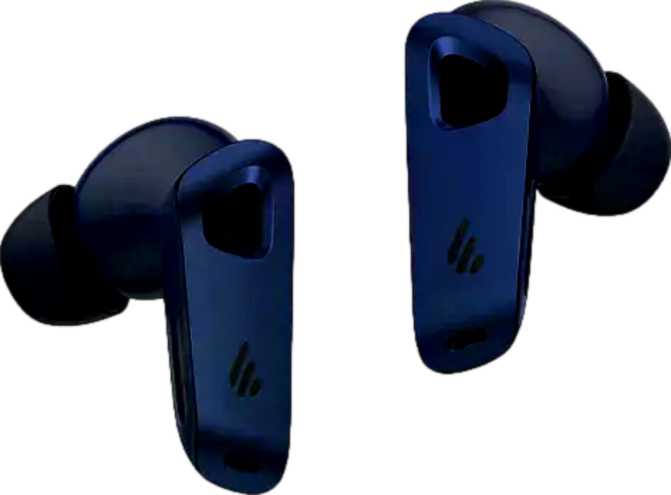
The NeoBuds Pro 3 follows the standard in-ear true wireless form — no neckband, no wingtips, no over-ear hooks. That means fit quality lives entirely in the eartip seal, which is the right approach for noise isolation but requires that you spend a minute finding the correct tip size out of the box. A proper seal is not optional here; it directly affects both bass response and how well passive noise reduction performs before ANC even activates.
The chassis is clean. There is no RGB lighting, which keeps the aesthetic professional and saves battery. These are earbuds that look at home in a boardroom and a gym without announcing themselves either place.
Durability and Weather Resistance
- Dust Rating "5"
- Resists dust effectively — particles cannot damage internal components under normal use conditions.
- Water Rating "4"
- Handles water splashing from any direction — workout sweat, light rain, and unexpected splashes are fully covered.
- Not Covered
- Submersion, swimming, or prolonged heavy rainfall. IP54 is splash and sweat resistance, not waterproofing.
For everyday active use, gym sessions, and commuting in variable weather, the protection level is more than adequate. The included travel bag is a small but meaningful detail — it signals a product intended to travel well.
Sound Quality: The Case for Hi-Res Audio
The NeoBuds Pro 3 earns genuine respect in the areas that matter most for audio quality. From the frequency response capability to the rare dual codec support, the hardware is built to justify its hi-res positioning — not just claim it.
Frequency Range and What It Means
The earbuds reproduce audio from 20 Hz at the low end to 40,000 Hz at the top. Human hearing generally tops out around 20,000 Hz, so the extension well beyond that might seem like a spec-sheet number with no practical value. The reality is more nuanced. High-resolution audio files encode information above the standard 20 kHz ceiling, and transducers capable of reaching into that range tend to handle the upper portion of audible frequencies — cymbals, breath, string overtones, the air around a recorded instrument — with more natural decay and less harshness. The benefit is felt more than consciously heard.
At the bass end, the 20 Hz floor means genuine sub-bass reproduction. Electronic music, orchestral low brass, and cinema-style sound effects reach into that region, and earbuds that roll off early — which is common at this price point — lose body and weight in those moments.
LDAC and LDHC: The Dual Codec Advantage
Support for both LDAC and LDHC (also known as HWA) means the earbuds receive audio at data rates significantly higher than standard Bluetooth streaming. Standard Bluetooth audio compresses a CD-quality signal considerably; LDAC at its highest setting transmits roughly triple the data, and LDHC operates on a comparable principle.
- High-resolution FLAC or ALAC local libraries
- Tidal, Amazon Music HD, or Apple Music Lossless subscribers
- Sony Android devices with native LDAC support
- Huawei devices with native LDHC / HWA support
- Standard Spotify or YouTube streams — codec advantage not audible
AAC is supported for Apple device users. The notable gap: no aptX in any form. For Qualcomm-ecosystem users seeking aptX Adaptive specifically, LDAC covers most of that ground functionally — but it is worth confirming before purchasing.
Active Noise Cancellation
Eight microphones back the ANC system — more hardware resources than most competitors at this price point. This count allows more sophisticated feedforward and feedback ANC configurations, which typically translates to better attenuation across a wider range of noise types: air conditioning hum, traffic, and open-plan office noise.
The physical in-ear seal adds passive noise reduction that layers with the electronics. Together, effective noise reduction is meaningfully better than either approach alone — the two work on different frequency ranges simultaneously.
Spatial Audio
Spatial audio support enables a more three-dimensional sound field — instruments and voices positioned around the listener rather than locked between the ears. This matters most for movies, gaming, and immersive music mixes.
Neither Dolby Atmos nor Dirac Virtuo processing is included — the spatial audio implementation is Edifier's own. For standard stereo music, its contribution is subtle. Whether it impresses or feels unnecessary varies by content type and personal preference.
Sound Pressure Level
At 92 dB per milliwatt, the NeoBuds Pro 3 reaches comfortable listening volume without requiring the driver to work near its limits at moderate playback levels. This figure sits in the healthy range for in-ear headphones — loud enough for noisy environments without the distortion risk of drivers pushed to extremes.
In-ear detection auto-pauses playback when an earbud is removed. Ambient sound mode lets the listener hear their surroundings without removing the earbuds — both expected features at this tier, and both present.
Battery Life and Charging
Daily and Weekly Stamina
Eight hours of playback on a single charge with ANC off is a solid number for in-ear earbuds. With ANC active, that drops to six hours — a two-hour reduction typical for earbuds running active cancellation, since the processing draws continuous power. Six hours covers most full workdays, long flights, and any reasonable commute without a mid-day recharge.
The charging case extends total available playback to around 24 hours combined. For a typical user listening four to six hours daily, this translates to roughly three or four full days of use before the case itself needs a charge — meaning the USB-C cable stays in the bag most of the week.
Charging and Power Management
A full charge from empty completes in about one hour. Fast charging is supported, so a short charge while getting ready in the morning can recover a meaningful amount of playback time quickly. USB-C is universal and compatible with the modern chargers already in most homes and travel bags.
The NeoBuds Pro 3 charges via USB-C cable only. Users who have built their daily routine around a Qi pad on the desk or nightstand will feel this absence every day. It is the most meaningful convenience trade-off in the entire product.
The battery level indicator communicates remaining charge without requiring an app. Voice prompts confirm battery status audibly — you will know when to charge before the earbuds go silent. In-ear detection auto-pauses playback when an earbud is removed, conserving charge during breaks without any manual action required.
Connectivity and Device Management
Bluetooth 5.4
Bluetooth 5.4 is current-generation, bringing connection stability and efficiency improvements over the 5.3 implementations common in competing earbuds. In day-to-day terms this means more consistent pairing, better handling of signal-dense environments, and marginally better power efficiency from the radio itself. It is a forward-looking inclusion that maintains relevance as more devices adopt the standard.
Multipoint Connection
Simultaneous connection to two devices is one of those features whose value is hard to overstate once you rely on it. A call comes in on the phone while music plays from the laptop, and the earbuds manage the switch without manual intervention. For anyone juggling work and personal devices, this removes a persistent daily friction point entirely.
Audio Latency
The 80 millisecond audio latency is honest but worth contextualizing. For music, podcasts, and streaming video where synchronization is handled at the software level, 80 ms is imperceptible. For casual gaming, still acceptable.
For competitive first-person gaming where shot audio timing matters, it would be noticeable. There is no dedicated low-latency gaming mode listed. This latency reflects a deliberate trade-off in favor of audio quality codecs — a choice that aligns with what this product is designed to do.
Fast Pairing and Range
Fast pairing eliminates the manual Bluetooth menu hunting that makes first-time connections tedious. NFC pairing is not included; initial setup uses the standard case-open-and-pair method, which adds only seconds to the process.
The 10-meter Bluetooth range is standard for the category. In open space this provides enough freedom to leave a phone charging across the room. In real-world environments with walls and RF interference, practical range is shorter — keep the source device reasonably close.
Microphone Performance
Eight microphones across two earbuds is a notably high count for true wireless earbuds. The array is paired with noise-canceling microphone processing, which means calls happen with background noise actively suppressed — not just at the playback end, but in the signal sent to the person on the other line.
For work-from-home users who take frequent calls in imperfect acoustic environments — kitchen, open office, coffee shop — this is a meaningful specification, not a marketing headline. The mute function allows one-touch silencing without reaching for a device, which is practical during video calls and back-to-back meetings.
Voice prompts handle connection events, battery status, and mode changes audibly. The result is a communication platform that operates fully and conveniently without requiring a companion app open at all times.
- 8 total microphones — distributed across both earbuds
- Noise-canceling mic processing — suppresses ambient sound for the caller
- Mute function — one-touch silencing during calls
- Full headset capability — complete hands-free call support
- Voice prompts — status feedback without app dependency
Real-World Usage: Who Should Buy This
The NeoBuds Pro 3 is a deliberate product, not a try-everything one. It excels for specific use cases and is genuinely wrong for others. Here is how to decide which side you fall on.
Ideal Users
Remote Workers
The 8-mic array and noise-canceling call performance are genuinely useful for frequent calls. Multipoint switching between work laptop and personal phone is frictionless and automatic.
Hi-Res Listeners
Android users on lossless streaming platforms or FLAC libraries unlock the full performance ceiling via LDAC or LDHC. These codecs can actually use the data your library contains.
Commuters & Travelers
Solid ANC, IP54 durability for variable weather, and enough combined battery stamina to cover a full travel day without anxiety. The travel bag adds practical value for packed bags.
Active Users
IP54 sweat resistance and a secure in-ear fit cover normal workout conditions. The fully wireless design eliminates cable drag entirely, and the clean aesthetic does not look out of place outside the gym.
Who Should Look Elsewhere
iOS-First Gamers
Users who prioritize the lowest possible audio latency for gaming — particularly competitive titles — may prefer earbuds with dedicated gaming modes or aptX Low Latency support. The 80 ms latency and absence of any aptX codec are the relevant limitations here.
Wireless Charging Enthusiasts
Those who have built their charging routine around Qi pads will find the USB-C only case a daily inconvenience. Once wireless charging becomes habit, returning to a cable feels regressive regardless of the product's other merits.
Maximum ANC Priority
Frequent long-haul flyers who prioritize class-leading noise cancellation above all else should benchmark the NeoBuds Pro 3 against dedicated ANC leaders before committing. Brands like Sony and Bose have years of focused ANC engineering behind their top models.
How It Compares to the Competition
The NeoBuds Pro 3 differentiates through codec depth, microphone count, and Bluetooth generation — not by simply ticking the most boxes. Here is where it stands against logical alternatives.
| Feature | Edifier NeoBuds Pro 3 | Mid-Range ANC Rival | Hi-Res Focused Rival |
|---|---|---|---|
| Hi-Res Codecs | LDAC + LDHC | LDAC only | LDAC only |
| Microphone Count | 8 | 6 | 4–6 |
| Active Noise Cancellation | |||
| Spatial Audio | |||
| Wireless Charging | Sometimes | ||
| Bluetooth Version | 5.4 | 5.3 | 5.3 |
| Multipoint Devices | 2 | 2 | 2 |
| Battery (ANC On) | 6 hours | 5–7 hours | 5–6 hours |
| Total with Case | 24 hours | 20–30 hours | 20–28 hours |
| aptX Support | Varies | Varies |
Honest Strengths and Real Weaknesses
The NeoBuds Pro 3 earns genuine respect for its codec depth. Supporting both LDAC and LDHC under one roof is rare at this price — most competitors offer one or the other. Paired with a frequency response that genuinely reaches hi-res territory, the audio hardware is built to justify the premium codec support, not merely list it.
Eight microphones for call quality represents a serious commitment that separates these earbuds from competitors treating the microphone as an afterthought. The mute function, noise-canceling mic processing, and full headset capability together form a communication platform worth paying for.
Bluetooth 5.4 is a forward-looking inclusion. The multipoint connection, fast pairing, and in-ear detection auto-pause add daily convenience that compounds over months of use. These are small features that reduce friction so consistently that their absence becomes noticeable in any future replacement.
The travel bag, the clean aesthetic, and the deliberate absence of RGB gimmickry suggest a product that prioritizes substance. IP54 protection keeps gym and commute use covered without compromise.
The absence of wireless charging is the largest daily-use friction point. It is a feature that, once you have it, feels essential — and its absence will matter more as Qi charging pads become standard fixtures on desks and nightstands. This is the one omission that affects every single day of ownership.
The lack of aptX in any form is a technical gap for Qualcomm-platform users. LDAC covers most of that ground functionally, but users who have specifically pursued aptX Adaptive for its adaptive bitrate benefits will not find it here — and the absence means compatibility with certain source device optimizations is lost.
The 80 millisecond latency is neither impressive nor embarrassing — it reflects a trade-off in favor of audio quality codecs over latency optimization. For most use cases this is entirely irrelevant. For gaming, it is worth knowing in advance.
The 10-meter Bluetooth range provides no buffer beyond the category minimum. In clean, open environments this is adequate. In signal-dense real-world spaces — offices, apartments, public transport — keep the source device nearby.
Common Buyer Questions Answered
These are the questions real buyers search before purchasing — answered directly based on the specifications and feature set of the NeoBuds Pro 3.
Final Verdict
The Edifier NeoBuds Pro 3 is a well-specified set of true wireless earbuds that makes deliberate choices rather than trying to check every possible box. The choice to support both LDAC and LDHC for high-resolution audio while equipping the microphone system with eight microphones and active noise canceling creates a coherent product identity: this is built for people who take both their listening and their communication seriously.
The absence of wireless charging is genuinely inconvenient for users who rely on it, and aptX-ecosystem users should confirm LDAC serves their needs before purchasing. But for the Android user with a high-resolution music library, the remote worker who lives on calls, or the commuter who wants capable ANC and a full day of stamina without daily cable anxiety, the NeoBuds Pro 3 makes a compelling case.
It earns its place as a considered recommendation at its price tier — not by doing everything, but by doing the right things well. If your priorities align with where it excels, very little at this price point competes on the same terms.
- Hi-res audio listeners
- Remote workers & frequent callers
- Android LDAC / LDHC users
- Commuters & active travelers
- Wireless charging users
- aptX Adaptive seekers