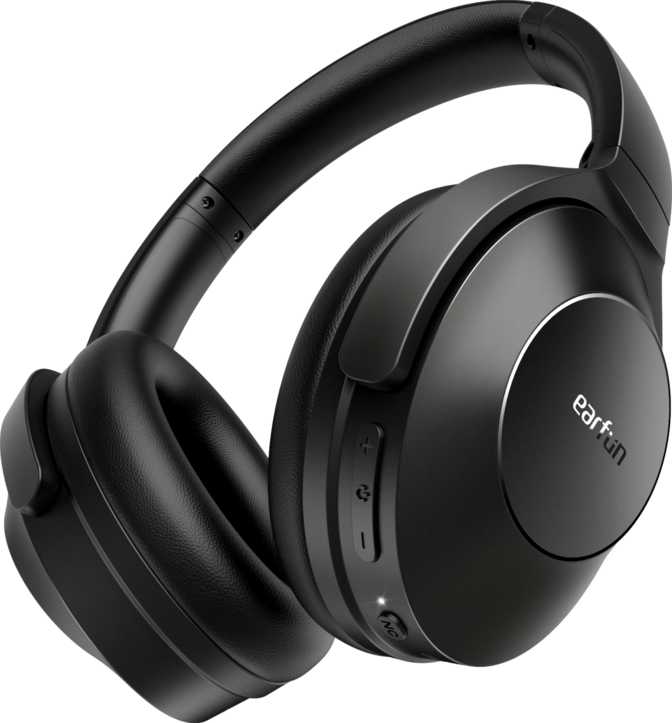
EarFun Wave Life Review: Exceptional Battery, Real Trade-Offs
HeadphonesThere is one question that cuts through almost every over-ear headphone buying decision: how long before you have to think about charging? Most people discover the answer through frustration — mid-flight, mid-commute, mid-focus block. The EarFun Wave Life enters the conversation with a direct answer to that question, and it is an answer few competitors at this price can match. But battery stamina alone does not make a headphone recommendation-worthy, and the Wave Life has a more complicated story to tell once you look past that headline number.
Overall Score
out of 10
Score Breakdown
Design and Build: Practical Over Precious
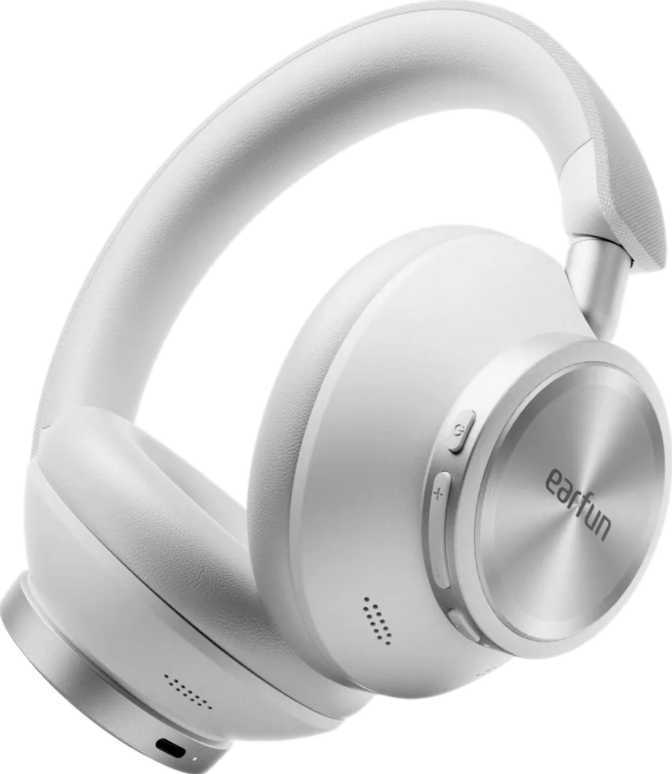
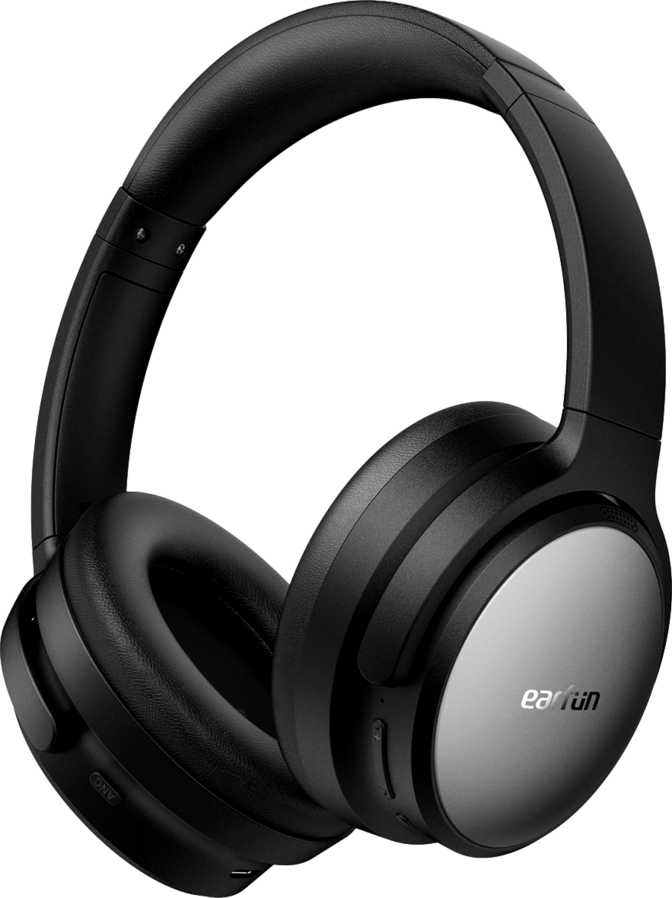
The Wave Life is a closed-back over-ear headphone — a design that physically seals around the ears rather than sitting on top of them or venting sound outward. That choice matters because it creates the acoustic isolation foundation that ANC later reinforces, and it gives the headphone a more private listening profile in public spaces.
At just over a quarter-kilogram, the Wave Life sits in an acceptable range for a full-size over-ear model. It is not ultralight by any measure — listeners who have worn sub-200g headphones will notice the difference during extended sessions — but 264 grams is reasonable for a feature set that includes active electronics and a larger battery. Whether that weight becomes an issue depends heavily on how well the headband distributes it, a factor that specifications cannot fully capture.
The headphone folds flat, which is the practical detail that separates a travel-viable design from a desk-only one. Collapsible hinges let the ear cups fold inward toward the headband, reducing the footprint enough to fit inside most bags without dedicated carrying cases. Speaking of which: no travel case is included in the box. If you plan to pack these regularly, budget for a separate pouch or hard case — it is a gap EarFun chose not to fill at this price point.
The cable situation is handled thoughtfully on one end and left open-ended on the other. The detachable cable means that if the wire ever frays or breaks at the connector — the most common failure point for wired headphones — you replace the cable, not the headphones. The tangle-free design makes the daily experience of pulling it out of a bag less annoying.
Sound Quality: What the Hardware Delivers
The Wave Life uses 40-millimeter drivers — a diameter that represents the mainstream choice for over-ear headphones, large enough to move sufficient air for satisfying low-end response without the diminishing returns of physically oversized drivers. This is the same size found in many well-regarded models across multiple price tiers, so driver diameter alone tells you little; the quality of the materials and tuning behind those drivers is what separates mediocre from memorable.
The frequency response covers the full range of human hearing, from the deepest bass at 20 Hz through the highest register at 20,000 Hz. This is standard specification language that every headphone worth selling claims — the meaningful question is whether the headphone sounds accurate, exciting, or coloured in a particular way. That nuance lives in the tuning decisions EarFun made, which the specifications do not reveal directly.
One hardware detail worth flagging: these drivers do not use neodymium magnets. Most over-ear headphones in this category rely on neodymium as the standard magnet material because it achieves high magnetic field strength in a compact, lightweight package. Alternative magnet types can produce comparable results but often require more physical space or weight to reach similar field strength. It is not an automatic quality indicator either way, but it is an unconventional choice that audiophiles will notice in the specification sheet.
Active Noise Cancellation and the Ambient Mode Balance
Active Noise Cancellation
The Wave Life ships with both active noise cancellation and a passive noise isolation foundation. ANC uses microphones to detect incoming sound and generate counteracting audio signals to reduce it before it reaches your ears — most effective against consistent droning sounds like aircraft engines, air conditioning units, train carriages, and bus hum.
The closed-back design adds a second layer of noise blocking through physical isolation. Together, these two overlapping defenses address the full range of environments where these headphones are most likely to be used: open offices, public transit, and long-haul travel.
The specifications confirm ANC is present, but cannot convey how aggressively it handles midrange frequencies like voices — where cheaper ANC implementations typically fall short. Only real-world evaluation can reveal the quality depth that the spec sheet cannot.
Ambient Sound Mode
Ambient sound mode is the inverse capability: it pipes in controlled amounts of outside sound so you can hear a public address announcement, a colleague calling your name, or street traffic without removing the headphones.
Having both ANC and ambient sound in the same product gives the Wave Life meaningful versatility for commuters and office workers who move between environments that demand opposite things from their headphones hour to hour.
Battery Life: Where the EarFun Wave Life Makes Its Case
Battery Endurance in Context
This is the specification that will stop most buyers in their tracks, and rightly so. Without ANC engaged, the Wave Life is rated for sixty hours of continuous playback. That is roughly two-and-a-half days of uninterrupted listening, which in realistic terms means most people will charge these headphones once a week at most.
With ANC running — which draws additional power for constant microphone processing — the battery drops to thirty-seven hours. That figure is still exceptional. Many competing ANC headphones from well-known brands cite ANC endurance in the twenty-to-thirty-hour range, making thirty-seven hours with noise cancellation active a genuine differentiator, not a minor edge.
The full charge takes two hours from empty. That is not the fastest available — some premium competitors restore significant charge in fifteen to thirty minutes — but given that most users will rarely run the battery fully down before recharging, two hours is rarely going to feel like a hardship. Charging uses USB-C, which means the same cable as most modern Android phones, laptops, and accessories. A battery level indicator on the headphone provides awareness of remaining charge without requiring you to check a connected app. Wireless charging is not supported.
Connectivity: Bluetooth 5.4, Multipoint, and a Critical Codec Gap
The Wave Life runs Bluetooth 5.4, the most current version of the Bluetooth standard. The practical benefits are improved connection stability, better power efficiency compared to older versions, and a more reliable link in environments with many competing wireless signals. The specified wireless range reaches approximately fifteen meters under clean conditions — adequate for moving around a room or stepping briefly into a kitchen, but not for wandering freely across a large open space while your source device stays behind.
Multipoint pairing allows the Wave Life to maintain simultaneous connections with two devices — a phone and a laptop, for example. When audio plays from either one, the headphone switches automatically. This eliminates the routine of manually disconnecting from one device and reconnecting to another, which is a daily friction point for anyone who works across multiple screens.
The Wave Life supports none of the premium wireless audio codecs — no aptX, no aptX HD, no LDAC, no AAC, and no Bluetooth LE Audio. Audio is transmitted via SBC: the baseline Bluetooth codec that applies more compression than any alternative. Listeners who have used LDAC or aptX HD headphones will notice this ceiling. The wired connection bypasses all of this entirely.
Audio latency over Bluetooth sits at fifty-five milliseconds. For music listening, this is imperceptible — there is no visual reference to create comparison. For video watching, it may produce subtle lip-sync drift depending on playback device compensation. For gaming, the figure is unsuitable; low-latency wireless modes exist precisely because this delay is perceptible when sound and action must synchronize tightly.
Wireless Audio Codec Support
| Codec | Status | What This Means for Your Listening |
|---|---|---|
| SBC | Supported | Universal default; present on all Bluetooth devices |
| AAC | Not supported | Better quality codec important for Apple device users |
| aptX | Not supported | Qualcomm standard for improved audio fidelity on Android |
| aptX HD | Not supported | High-resolution wireless codec for Qualcomm-equipped devices |
| LDAC | Not supported | Sony's lossless hi-res wireless codec used for demanding listeners |
| BT LE Audio | Not supported | Next-generation wireless audio standard for future hardware |
Microphone Performance: Four Mics for Calls and Conferences
The Wave Life carries four microphones with dedicated noise-canceling processing for calls and voice communication. More microphone elements generally enable better directional filtering — isolating your voice from background sounds by comparing signals captured from multiple positions and suppressing what is not your voice. Four microphones is a competitive count at this price level, and the noise-canceling processing suggests EarFun has invested in making calls usable in imperfect acoustic environments.
The headphone qualifies as a full headset — it handles both audio playback and voice input for calls, video conferences, and voice assistants. On-device controls are placed on the ear cups themselves, consistent with a primarily wireless-oriented design. There are no inline controls on the cable.
There is no dedicated hardware mute button on the headphone. Muting a call requires software on your connected device or the calling application itself — a real inconvenience during busy conference calls in shared spaces. Ear detection for automatic pause when you take the headphones off is also absent; manual pausing is always required.
Real-World Use Cases: The Right Fit and the Wrong One
Built For You If...
- You work remotely or commute daily in noisy environments and need reliable ANC without charging anxiety throughout the week
- You travel frequently on long-haul flights or trains and want endurance that outlasts the journey by a wide margin
- You are a student or light desk worker looking for capable all-day headphones at a fair price
- You regularly switch between a phone and laptop and want automatic device switching without manual reconnection
- You want a wired fallback for critical listening or gaming where wireless limitations show their ceiling
Look Elsewhere If...
- You subscribe to lossless or hi-res streaming and want wireless audio quality that justifies what you pay for
- You run, exercise, or spend time outdoors where sweat, rain, or physical activity is part of your use case
- You game wirelessly and need low-latency audio where milliseconds of delay are perceptible in play
- You expect a carry case or travel pouch in the box for portable protection on the go
- You rely on auto-pause, fast pairing, or a hardware mute button as core daily conveniences
Competitive Positioning
| Feature | EarFun Wave Life | Typical Budget Competitor | Typical Mid-Range Competitor |
|---|---|---|---|
| Battery (No ANC) | ~60 hours | 30–40 hours | 25–35 hours |
| Battery (ANC On) | ~37 hours | 20–30 hours | 20–30 hours |
| Wireless Codec | SBC only | SBC + AAC common | AAC, aptX, or LDAC common |
| Bluetooth Version | 5.4 | 5.1–5.2 | 5.2–5.3 |
| Multipoint | 2 devices | 1–2 devices | 2 devices |
| Water Resistance | None | IPX4 on some models | IPX4 on some models |
| Spatial Audio | No | Rare | Occasionally |
| Folding Design | Yes | Sometimes | Often |
The Honest Assessment
Where the Wave Life Delivers
The EarFun Wave Life makes a compelling case on the metrics that matter most to heavy, daily users: staying power, noise control, and modern wireless connectivity. Sixty hours of playback without ANC is not a common specification at any price — it is genuinely impressive engineering that reflects deliberate design choices around power management.
The Bluetooth 5.4 implementation, two-device multipoint, and USB-C charging reflect a product that has prioritized current-standard connectivity over outdated choices. For commuters, travelers, and desk workers, these are the right priorities to lead with.
The four-microphone array suggests a call experience that should perform competitively in noisy environments, and having both ANC and ambient mode in the same product gives it meaningful versatility across the different daily contexts where these headphones are likely to be used.
Where It Shows Its Limits
The codec story is the most significant limitation. Shipping a Bluetooth headphone with only SBC support — no AAC, no aptX of any variant, no LDAC — imposes a ceiling on wireless audio quality that no amount of good driver tuning can fully overcome. Listeners who stream lossless audio will get less from these than from a comparably priced headphone with better codec support.
The absence of water resistance, ear detection, wireless charging, and a bundled case are individually forgivable decisions at a given price point. Collectively, they paint a picture of a product that made deliberate trade-offs to fund that battery life and hit a target cost.
A fifty-five-millisecond latency is acceptable for music but impractical for gaming. The missing hardware mute button is a daily friction point for regular video call users. These are not fatal flaws — but competing products at slightly higher prices often address them.
Frequently Asked Questions
Final Verdict
A purpose-built endurance headphone that makes one major promise and keeps it — with notable trade-offs that informed buyers should understand before committing.
Buy the EarFun Wave Life If...
Battery endurance is your highest priority and you spend long stretches in noisy environments. If you commute, travel frequently, work from home across multiple devices, or simply want headphones that last the entire week on a single charge, the Wave Life delivers at a level that is genuinely difficult to match at comparable pricing.
Look Further If...
Audio fidelity from high-quality wireless sources matters to you, you exercise with headphones, or you want a richer feature set that includes auto-pause, fast pairing, or low-latency wireless gaming audio. At a modest step up in budget, those gaps start to close with models that do not sacrifice codec support for battery endurance.